Last Updated: October 25, 2026
Quick Summary
Local florists quality stands out because blooms travel hours rather than weeks, arriving at their peak freshness from regional growers within 1-2 days. This short supply chain means flowers last 7-14 days with proper care, compared to 3-5 days for grocery store flowers that spend days in transit and storage.
- Local florists receive fresh shipments multiple times per week, sometimes daily, keeping inventory fresh.
- Flowers from quality local florists typically last 7-14 days versus 3-5 days from grocery stores.
- Local florists can substitute flowers based on freshness and offer custom designs tailored to your needs.
- Grocery store flowers spend 5-10+ days in the supply chain before reaching shelves.
- Direct communication with local florists lets you ask about flower origin, arrival time, and preservatives used.
Table of Contents
- The Freshness Advantage of Local Florists
- Local Florist vs Grocery Store Flowers: What’s the Real Difference
- Where Do Florists Get Their Flowers and Why It Matters
- How to Tell If Flowers Are Fresh Before You Buy
- How Long Do Fresh Flowers Last When You Choose Quality
- Custom Design and Personalized Recommendations
- Planning Your Next Floral Order with a Local Florist
- Frequently Asked Questions
The Freshness Advantage of Local Florists
When you buy flowers from a local florist, you’re getting blooms that traveled hours, not weeks, which is why local florists quality stands out. This matters more than most people realize. The difference between fresh flowers and stale ones isn’t subtle, it’s the difference between a bouquet that lasts two weeks and one that wilts in three days.
Local florists source their flowers from regional growers or wholesalers within a day or two of design. That short timeline means the flowers arrive at their peak. Grocery store flowers, by contrast, are often shipped across the country or even internationally. They spend time in cold storage, in transit, and sitting on shelves before you ever see them. By the time you bring them home, they’ve already lost days of vase life.
The supply chain matters because flowers are living plants. Every hour in transit, every temperature fluctuation, every delay in hydration chips away at how long they’ll last in your home. At An English Garden, we work with growers and wholesalers we know personally. We can track exactly where our flowers come from and how quickly they reach our design studio. That transparency isn’t a luxury, it’s the foundation of quality.
Local Florist vs Grocery Store Flowers: What’s the Real Difference
The choice between a local florist and a grocery store comes down to one core question: who controls the supply chain? Local florists control theirs. Grocery stores don’t.
When a grocery store orders flowers, they’re buying from the same wholesale distributors as thousands of other retailers. The flowers are packed, shipped, and warehoused for days before arriving at the store. They sit in a cooler under fluorescent lights, often without proper hydration systems. By the time you pick them up, they’ve been through multiple hands and multiple temperature changes. Nobody in that chain has a stake in whether the flowers actually last once you get them home.
A local florist has a stake in your experience. If your flowers die in two days, you’ll remember that. You might tell friends. You won’t come back. That accountability changes everything about how we source, handle, and design flowers.
Here’s the practical difference:
| Factor | Local Florist | Grocery Store |
|---|---|---|
| Time from harvest to design | 1-2 days | 5-10+ days |
| Temperature control in transit | Consistent | Variable |
| Hydration during storage | Active | Minimal |
| Handling by specialists | Yes | Minimal |
| Customization available | Full | Limited |
| Accountability for quality | Direct | Indirect |
Local florists also have the ability to substitute. If a specific flower isn’t available or isn’t fresh enough, we can recommend an alternative that’s equally beautiful and will last longer. Grocery stores follow a set order. If the roses aren’t perfect, they still go on the shelf.
Where Do Florists Get Their Flowers and Why It Matters
Understanding where your flowers come from explains why freshness varies so dramatically between sources.
Most local florists source from one or more of these channels: regional growers within a few hours’ drive, regional wholesalers who work with multiple growers, and sometimes direct relationships with specialty growers for premium blooms. The key is proximity and frequency.
Grocery stores and mass-market florists buy from large national or international distributors. These distributors consolidate flowers from many growers, sometimes from different countries, into massive shipments. The flowers are packed tightly, treated with preservatives, and shipped via refrigerated truck or air freight.
Regional growers understand their local climate and what blooms well seasonally. They can tell us what’s at peak freshness right now, not what’s available year-round through imports. That’s why local florists can offer seasonal arrangements that actually make sense, not just flowers that were flown in from halfway around the world.
The sourcing model also affects price and sustainability. Shorter supply chains mean lower transportation costs and a smaller carbon footprint. You’re also supporting growers and businesses in your region, not funding long-haul air freight for flowers that could have been grown locally.
At An English Garden, we’ve built relationships with growers and wholesalers we trust, and that commitment to local florists quality is evident in every arrangement. We know their practices, their handling standards, and their commitment to quality. That knowledge isn’t something you can get from a grocery store employee restocking the cooler.
How to Tell If Flowers Are Fresh Before You Buy
Freshness is visible if you know what to look for. Before you commit to an arrangement, inspect it carefully.
Start with the stems. Fresh stems are firm and have a bright, clean cut. The color should be vibrant, green or light green, not brown or gray. If the stem feels soft or hollow, the flower has been sitting for days. Bend a stem gently.
Next, check the petals and blooms. Fresh flowers have petals that feel slightly firm and waxy. They should be tightly clustered or just beginning to open, not already fully blown out. Look for any browning, bruising, or translucent spots on the edges.
The leaves matter too. Foliage should be crisp and green, not yellowed or wilted. If leaves are drooping or discolored, the entire arrangement is past its prime.
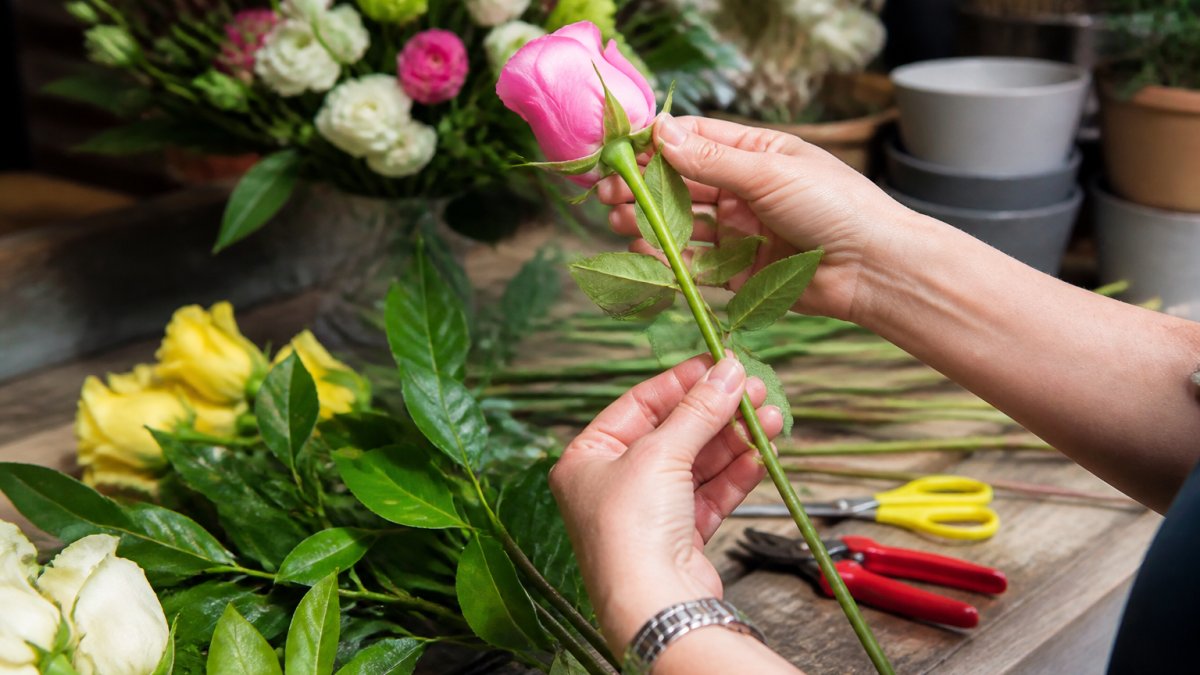
Ask the florist direct questions. How long have these flowers been in the shop? When did they arrive? What preservatives are included? A florist who can answer these questions confidently has nothing to hide. If they can’t or won’t answer, that’s a red flag.
When you order from a local florist like An English Garden, you can call or visit in person. You can see the flowers before they’re arranged. You can ask for specific varieties or colors.
How Long Do Fresh Flowers Last When You Choose Quality
The lifespan of fresh flowers depends almost entirely on how fresh they were when you got them and how well you care for them afterward.
Flowers from a quality local florist typically last 7-14 days with proper care. But the starting point matters enormously. A fresh rose lasts three times longer than an old one.
Grocery store flowers often last only 3-5 days because they’re already partially through their lifespan before you bring them home. You’re not getting a fresh product; you’re getting what’s left after days in transit and storage.
The difference compounds quickly. If you spend the same amount on flowers, you want them to last as long as possible. A local florist’s flowers give you better value because they’re actually fresh when you receive them. You’re paying for quality, not for flowers that are already declining.
To maximize vase life, change the water every two days, trim stems at a 45-degree angle, remove lower leaves, keep flowers away from direct sunlight and heat, and use the flower food included with your arrangement. These steps work best on flowers that started fresh. They can’t resurrect flowers that were already aging.
You can explore more detailed care strategies by reviewing how to keep fresh flowers alive longer, which covers the full range of techniques that extend the life of quality blooms.
Custom Design and Personalized Recommendations
This is where local florists genuinely shine, and where they create value that grocery stores simply can’t match.
When you work with a local florist, you’re not choosing from a pre-made selection. You’re describing what you want, and a designer creates it specifically for you. That process starts with questions: What’s the occasion? Who is this for? What colors do they love? What’s your budget?
A skilled florist listens to the answers and translates them into a design. They know which flowers are in season and will last longest. They know which combinations are visually striking. They know how to work within a budget without compromising on quality or beauty.
This personalization matters for every occasion. For a wedding, a florist consults on design direction, color palettes, and how arrangements will photograph. For a funeral, they understand that the arrangement should reflect the person’s personality and the family’s preferences.
An English Garden specializes in custom design for weddings and special events, including on-site decorating. Explore our Designer Choice Bouquet to see examples of personalized arrangements we create. We work with you to understand your vision, your timeline, and your needs.
The personalized approach also means you get honest feedback. If you love a flower that won’t last long or won’t work with your other choices, a good florist tells you. They suggest alternatives that will give you the result you actually want, not just what you asked for.
Planning Your Next Floral Order with a Local Florist
The process of ordering from a local florist is straightforward, but it’s worth understanding what makes it different from ordering online from a mass-market vendor.
Start by identifying what you need. Are you ordering for a specific date? Do you have preferences for color, style, or type of flowers? What’s your budget?
Contact the florist directly. Call, visit in person, or use their online ordering system if they have one. You can browse our Florist Choice Bouquet to see what’s available or request a custom design.
Discuss timing. When do you need the flowers? If it’s for a specific event, give the florist as much notice as possible. For same-day delivery, call early in the day.
Be specific about delivery. Where should the flowers go? Do they need to arrive at a specific time? For funeral arrangements, coordinate directly with the funeral home or hospital.
Discuss alternatives and substitutions upfront. If a specific flower isn’t available, what would you prefer? A good florist will offer suggestions, but it helps to have a conversation about it before design begins.
Once you’ve placed your order, the florist handles the rest. They source fresh flowers, create the arrangement with care, and ensure delivery happens on schedule.
Choosing where to buy flowers shapes the entire experience, from the moment you place your order to how long the flowers last in your home. A local florist like An English Garden brings expertise, freshness, and accountability to every arrangement.
Frequently Asked Questions
Why do flowers from a local florist often last longer?
Local florists control the entire supply chain from sourcing through delivery, minimizing time in transit and storage. Flowers arrive fresher because they skip the lengthy distribution networks used by grocery stores and shipped arrangements. Professional florists also use proper cold-chain handling, specialized conditioning techniques, and expert arrangement practices that protect stems and extend vase life significantly compared to mass-market alternatives.
What’s the key difference between local florist vs grocery store flowers?
Local florist flowers are typically fresher, sourced through wholesale growers or local suppliers, and arranged by trained professionals who inspect quality before delivery. Grocery store flowers often sit in distribution centers for days, receive minimal care, and are pre-arranged without customization. Local florists offer direct communication, substitution transparency, and expertise in seasonal availability and flower care, services grocery stores cannot match.
How can you tell if cut flowers are fresh?
Check for firm, green stems without browning or sliminess, vibrant petal color without bruising, and flowers that feel crisp rather than wilted. Fresh flowers have tight buds or fully open blooms depending on the variety, not drooping heads. Ask your florist about the harvest date and condition, reputable local florists provide this information and can explain why certain flowers are in season. Avoid arrangements with yellowing leaves or a sour smell.
Where do florists get their flowers, and does it affect quality?
Local florists source from wholesale flower growers, cooperative networks, and sometimes local growers depending on season and availability. This direct sourcing eliminates middlemen and reduces transit time compared to the multi-step distribution used by big retailers. Florists who prioritize local and seasonal sourcing often achieve better freshness and can guarantee availability. Ask your florist about their sourcing practices, transparency here is a sign of quality and commitment to their craft.
