
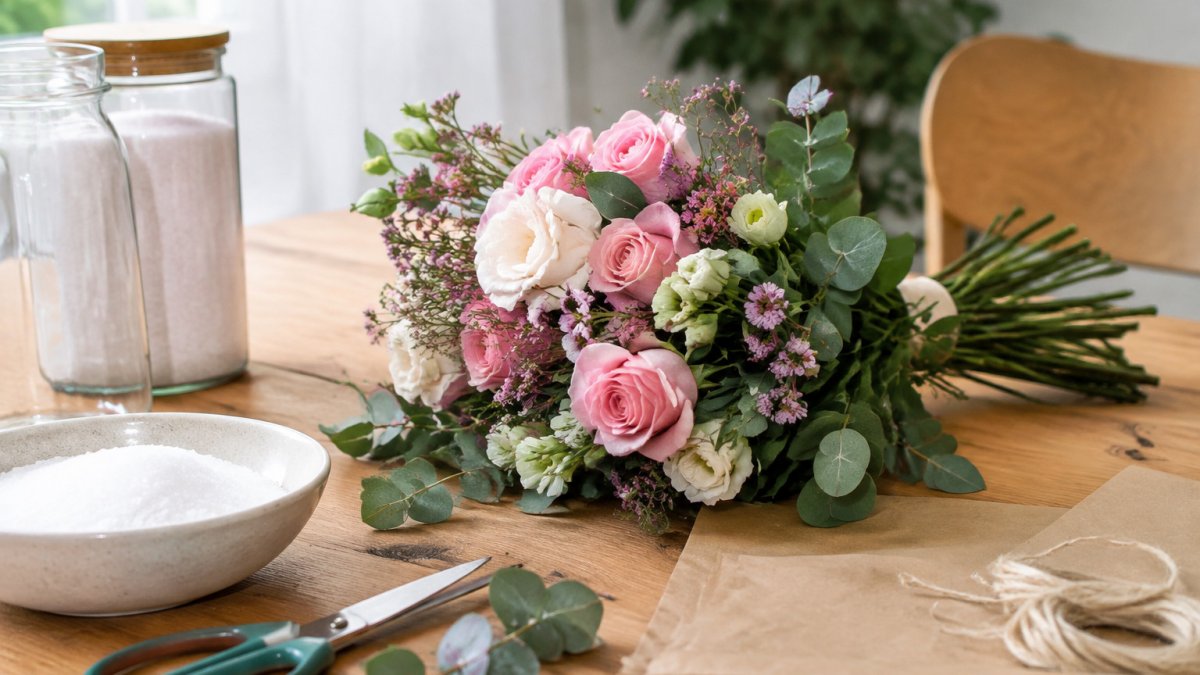
Last Updated: November 4, 2026
Quick Summary
To preserve a bouquet at home, choose a method that matches the flowers and the result you want: air drying keeps long stems but fades color, silica gel holds shape and color, and pressing flattens blooms for framing. Prep stems first, then dry completely and store away from light and humidity.
- Split bouquets into bundles of five to seven stems so moisture does not trap and mold.
- Hang air-dried bundles upside down in a dark, dry, well-ventilated area for two to four weeks.
- Bury blooms in silica gel for three to seven days to keep near-original shape and color.
- Press flowers between absorbent paper in a heavy book for two to four weeks.
- Store preserved flowers in a cool, dark, dry spot away from sunlight and humidity.
Table of Contents
- Pick Your Method Before You Pick a Vase
- Prep the Bouquet So Every Stem Dries Evenly
- The Best Way to Air Dry Flowers: Hang Them Upside Down
- How to Preserve Flowers in Silica Gel for Full Shape and Color
- How to Press Flowers for Framing a Keepsake
- Microwave Drying and Resin Preservation: Fast Fixes and Lasting Casts
- Timelines, Readiness Checks, and Troubleshooting Common Failures
- When to Hand the Bouquet to a Florist Instead
- Frequently Asked Questions
Pick Your Method Before You Pick a Vase
If you want to know how to preserve a bouquet at home, the answer starts with one decision: what should the flowers look like when you’re done? Air drying keeps the stems long but fades color. Silica gel holds shape and color but works best on individual blooms. Pressing flattens flowers for framing.
Most failed preservation attempts start with a method chosen by habit, not by flower type. Below, we’ll show you exactly how to choose, prep, dry, and store a bouquet so it lasts for years.
Bouquet preservation is the process of drying or casting fresh flowers so they hold their shape and meaning long after the stems give out.
Matching the Method to the Flower and the Result You Want
Not every flower dries well. Roses, hydrangeas, lavender, and statice hold up across most methods. Tulips and lilies collapse in air. Daffodils and delphiniums turn brittle and brown.
Use this as your starting filter:
| Method | Best Flowers | Result | Time |
|---|---|---|---|
| Air drying | Lavender, roses, hydrangea, statice | Rustic, faded color, long stems | 2-4 weeks |
| Silica gel | Roses, peonies, dahlias, orchids | Near-original shape and color | 3-7 days |
| Pressing | Pansies, daisies, ferns, small roses | Flat, frameable | 2-4 weeks |
| Microwave | Small blooms, thin petals | Fast but uneven | Minutes |
| Resin | Sturdy, fully dried blooms | Permanent cast | Cures overnight |
Pick the result first. A shadow box needs flat flowers. A vase display needs long stems. A paperweight needs fully dry, sturdy blooms.
Prep the Bouquet So Every Stem Dries Evenly
Moisture is the enemy. A wet stem rots before it dries, and one rotting stem can spoil a whole bundle.
Do this before any method:
- Unwrap and untie the bouquet so stems can breathe.
- Strip lower leaves so nothing touches water or sits against other stems.
- Remove damaged blooms. One bruised flower invites mold.
- Split into smaller bundles of five to seven stems. Tight bunches trap moisture.
- Trim stems at an angle and blot them dry.
A common mistake is skipping the split. A full wedding bouquet dried as one mass will mold in the center while the outside looks fine. Break it into smaller bundles and you’ll get even drying throughout.
The Best Way to Air Dry Flowers: Hang Them Upside Down
A common way to air dry flowers is to tie small bundles and hang them upside down in a dark, dry, well-ventilated area. Gravity keeps stems straight, airflow carries moisture away, and darkness protects color.
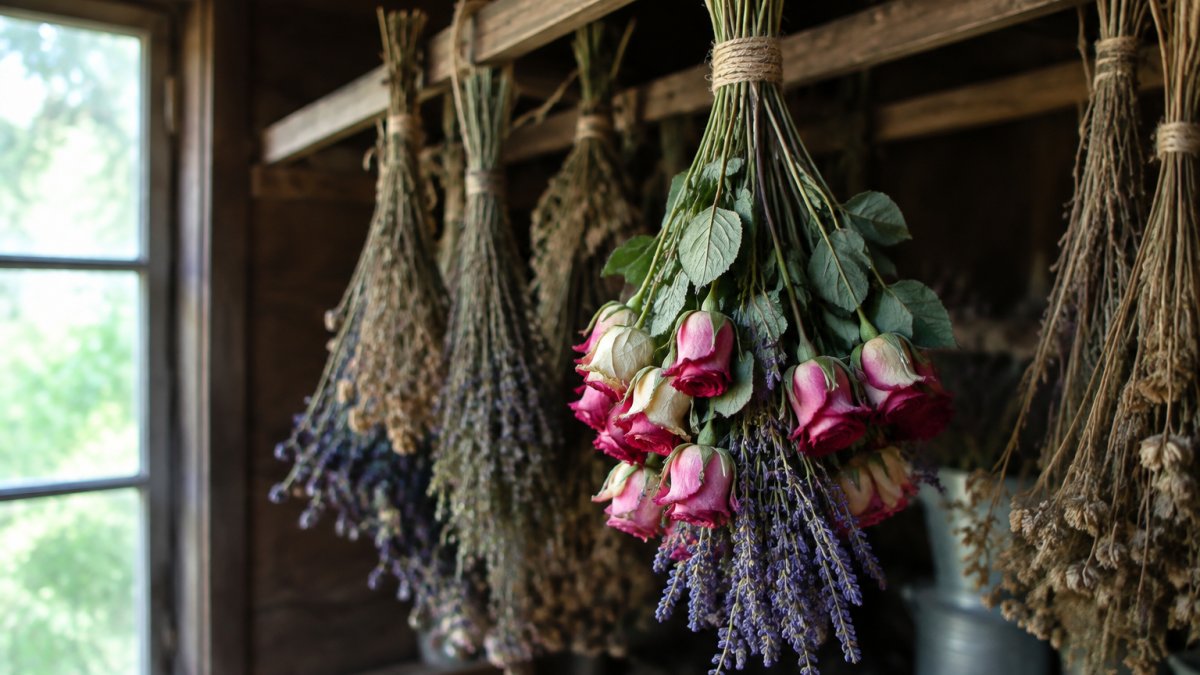
Here’s the routine:
- Tie each bundle with twine about two inches above the stem ends.
- Hang them upside down from a rod, hook, or rack.
- Leave space between bundles for airflow.
- Keep the room dark, cool, and dry.
Avoid kitchens and bathrooms. Steam undoes the process. A closet, attic, or dry garage works well. Drying time runs two to four weeks depending on humidity. Check readiness by bending a stem: it should snap, not bend.
How to Preserve Flowers in Silica Gel for Full Shape and Color
To preserve flowers in silica gel, bury each bloom in a sealed container of fine silica crystals and leave it three to seven days. The crystals pull moisture out fast, so petals keep their shape and color instead of shrinking.
Steps:
- Pour a one-inch layer of silica gel into an airtight container.
- Set each flower face up, then gently pour crystals around and over it.
- Seal the lid and store it somewhere cool.
- Check after three days for thin-petaled flowers, up to seven for dense blooms.
Watch out: silica gel is a desiccant and an eye and skin irritant. Wear gloves, keep it away from children and pets, and follow the package safety instructions. Handle dried blooms with care, since they become brittle.
How to Press Flowers for Framing a Keepsake
How to press flowers for framing comes down to flat, even pressure and patience. Arrange blooms face down between two sheets of absorbent paper, place them inside a heavy book, and leave them two to four weeks. The result is a flat flower illustration ready for a shadow box or frame.
Book pressing works well for small, thin flowers. For thicker blooms, change the paper every few days so moisture doesn’t build up. Keep the book in a dry room and stack a little extra weight on top.
Press flowers soon after you receive them, since a bloom that is already wilting can press with brown edges.
Microwave Drying and Resin Preservation: Fast Fixes and Lasting Casts
Microwave drying is the fast option: bury small blooms in silica gel, microwave in short bursts, and check between each one. It can work for thin-petaled flowers, but it’s easy to overcook. Petals scorch in seconds, so use low power and short intervals.
Resin preservation casts fully dried flowers in clear resin for a permanent keepsake. The catch is that any moisture trapped inside turns cloudy or brown over time. Dry the flowers completely first, then work in a ventilated space and follow the resin manufacturer’s safety guidance.
Neither method is forgiving. If you want a low-risk first attempt, start with air drying or pressing.
Timelines, Readiness Checks, and Troubleshooting Common Failures
Drying methods commonly fail when there is too much moisture, too little airflow, or too much light. Knowing what “done” looks like for each method helps you check early and correct conditions before damage occurs.
Realistic Timelines by Method
Drying times depend on humidity, flower density, and how fresh the bouquet was when you started. Treat these as ranges, not schedules, and check earlier than you think you need to.
| Method | Typical Time | Check First At | Fully Dry When |
|---|---|---|---|
| Air drying | 2-4 weeks | Day 10 | Stem snaps cleanly; petals feel papery, not leathery |
| Silica gel | 3-7 days | Day 3 (thin petals) | Petals feel crisp and separate easily from crystals |
| Pressing | 2-4 weeks | Day 10 | Flower lifts cleanly from paper with no cool or damp spots |
| Microwave | Minutes per batch | After the first 30-second burst | Petals are dry but not scorched; centers are not damp |
| Resin | Overnight cure | After 12 hours | Cast is hard and clear, with no cloudy or sticky areas |
A common pattern is that home dryers stop too early because the outside looks done. The center of a dense bloom holds moisture longest, so squeeze the base of the flower head gently, if it feels cool or soft, give it more time.
Readiness Checks That Actually Work
A fully dry stem snaps cleanly. A stem that bends is still holding moisture. For silica gel, tap the bloom against the container, dry petals sound crisp and separate; damp petals cling. For pressed flowers, lift a corner of the paper: if the flower sticks or feels cool, it needs more time. For air-dried bundles, check the thickest stem in the bundle, not the thinnest, because the thickest dries last.
Troubleshooting Common Failures
| Problem | Likely Cause | Fix |
|---|---|---|
| Mold on stems or in bundle centers | Bundles too tight, humid room, wet stems | Re-bundle looser, move to a drier space, blot stems before hanging |
| Faded color | Direct sunlight, heat | Dry in darkness next time; keep finished pieces out of sun |
| Drooping stems | Hung right-side up, or hung before stems set | Always hang upside down; tie bundles above the stem ends |
| Brittle, shattered petals | Over-dried or overheated | Shorten drying time, check sooner, handle dried blooms by the stem |
| Brown edges when pressed | Flowers pressed too late or paper not changed | Press within a day of receiving; change paper every few days for thick blooms |
| Uneven drying in silica gel | Crystals not fully surrounding the bloom, container not sealed | Bury the bloom completely, seal the lid, store cool |
| Cloudy or sticky resin | Moisture trapped in flowers or incomplete cure | Dry flowers completely first; follow resin cure time and temperature |
Watch out: silica gel that has absorbed moisture stops working. Most crystals change color when saturated, check the package indicator and recharge or replace the crystals before reusing them, or the next batch will dry slowly and unevenly.
Long-Term Storage and Display
Preserved flowers are stable but can still be damaged. Keep them away from sunlight, humidity, and heat, a cool, dark, dry spot protects color and shape for years. Humidity is the quiet killer: a bathroom, kitchen, or damp basement will soften silica-dried blooms and invite mold in air-dried bundles.
For display, a shadow box keeps pressed flowers flat and dust-free, while a sealed glass dome protects silica-dried blooms from humidity and handling. Air-dried bundles can hang as-is, but keep them out of direct sun and away from vents.
If you’d rather display the keepsake in something beautiful, a keepsake ornament or a decorative teacup makes a charming home for dried blooms. And if you want the arrangement itself to be the centerpiece, our Pure Elegance Bouquet in a white mosaic vase gives preserved or fresh flowers an elegant vessel.
When to Hand the Bouquet to a Florist Instead
Some bouquets are too valuable or too delicate to risk on a first attempt. If the arrangement is from a wedding, a funeral, or an anniversary, professional preservation can remove the guesswork.
If you’re working with a sympathy bouquet, it helps to know which flowers suit the occasion before you consult a florist. Our guide to sympathy arrangement flowers walks through appropriate choices. And when you’d rather start fresh with a professionally designed piece, you can order a florist’s choice bouquet and preserve it yourself from day one.
Preserving a bouquet takes a little patience and the right method for the flowers in front of you.
Frequently Asked Questions
How do you preserve an entire bouquet without taking it apart?
You can air-dry a whole bouquet as one unit if the stems are similar in thickness. Tie the bunch tightly with twine, hang it upside down in a dark, dry, well-ventilated area, and leave it for two to three weeks. For mixed bouquets with thick and thin stems, split the arrangement into smaller bundles of three to five stems each so everything dries at the same rate. Silica gel works best on individual blooms rather than a full bunch.
Can you use silica gel to preserve a whole bouquet?
Silica gel is best for individual blooms, not an entire bouquet at once. The crystals need to surround each flower head completely to hold the shape and color, so pack flowers face-up in an airtight container and cover them fully with gel. Larger flowers like roses need two to three days; thinner petals take 24 to 48 hours. A whole bouquet can be done, but the heads will press against each other and dry unevenly.
How long does it take to air-dry a bouquet?
Most bouquets air-dry in two to three weeks in a dark, dry room with good airflow. Thin-petaled flowers like lavender and statice can be ready in seven to ten days, while thick roses and hydrangeas may need up to four weeks. Check readiness by bending a stem near the base: if it snaps cleanly, it is dry. If it bends without breaking, give it another week before moving it to storage.
What is the best method for preserving wedding flowers at home?
The best method depends on the result you want. For a full-bloom keepsake that holds color, silica gel drying works well on roses, peonies, and ranunculus. For flat art you can frame in a shadow box, pressing is the better choice. Air-drying suits bouquets with sturdy stems and a rustic look. If the bouquet has sentimental value, consider asking a florist for guidance before the flowers fade.
