
Posted on — Leave a comment

Tips for Choosing Sympathy Flowers Online

Table of Contents

Last Updated: October 17, 2026

Understand Sympathy Flowers Etiquette Before You Order

Ordering sympathy flowers online requires thoughtfulness and care. You’re expressing condolences during someone’s most difficult time, so getting it right matters. Understanding basic etiquette helps you choose flowers that honor the deceased and comfort the bereaved family.

Sympathy flowers serve a specific purpose. They convey respect, support, and compassion when words feel insufficient. Different arrangements, colors, and flower types carry different meanings, and getting these details right shows genuine consideration.

Start by learning what the bereaved family expects. Some families welcome flowers freely. Others request donations to charity instead, or specify “no flowers” in obituary notices. Always check the funeral home’s website or call ahead to confirm their policies.

At An English Garden, we help families navigate these decisions with personalized guidance. Our team understands that choosing sympathy flowers isn’t just about picking something beautiful, it’s about selecting something meaningful for this specific loss.

Key etiquette points to remember:

  • Send flowers promptly (ideally within 2-3 days of learning about the death)
  • Choose fresh, quality arrangements over artificial flowers
  • Include a sympathy card with a personal message
  • Verify delivery address and timing before ordering
  • Consider the deceased’s personality and preferences when possible

Choose the Right Flowers to Send to a Funeral Home

The best sympathy flowers depend on your relationship to the deceased and the family’s preferences. White and soft-colored blooms are traditional choices for funerals because they symbolize peace, purity, and respect. However, the deceased’s favorite colors or flowers can make an arrangement more personal and meaningful.
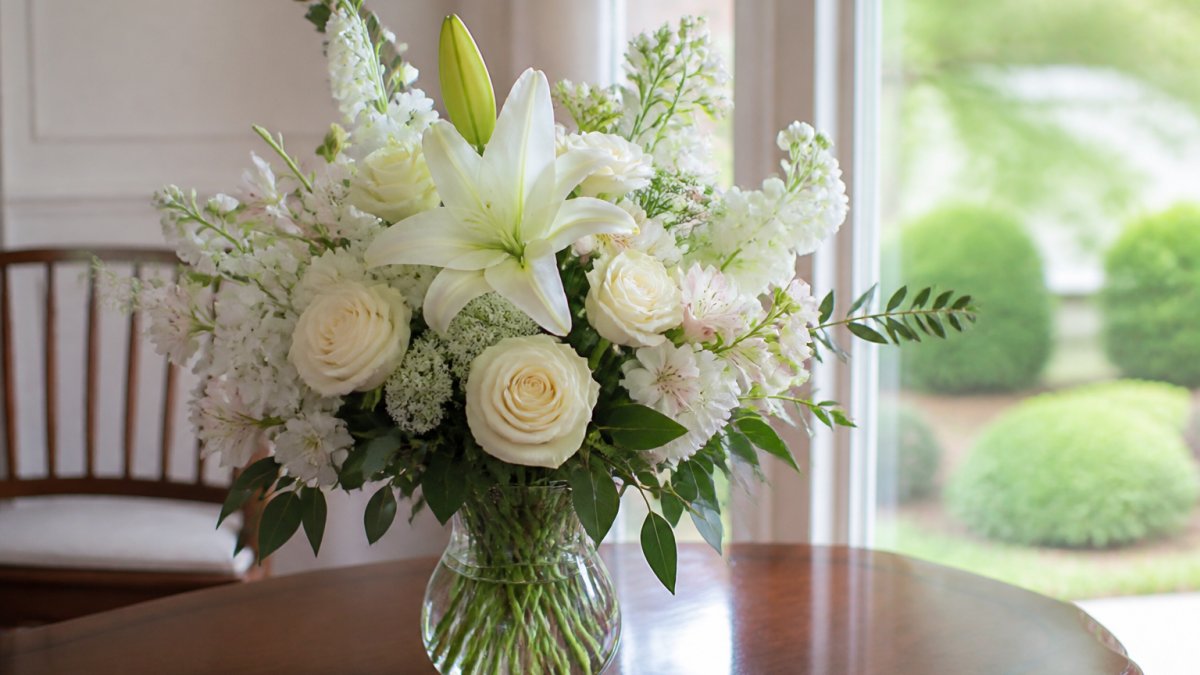
Close-up of a sympathy flower arrangement with white lilies, roses, and soft-colored blooms in a clear vase on a polished wooden table with natural window lighting

Consider these factors when selecting an arrangement:

  • Your relationship: Close family members often send larger, more elaborate arrangements. Coworkers typically choose smaller, simpler bouquets.
  • The service type: Funeral services call for formal arrangements. Memorial services or celebrations of life may allow more colorful, personalized choices.
  • Family preferences: If you knew the deceased, choose flowers they loved. If not, soft colors are always appropriate.
  • Arrangement style: Standing sprays and wreaths work well for the funeral home. Bouquets and baskets suit family homes or hospital rooms.

Lilies are the most popular sympathy flower choice. White lilies symbolize rebirth and peace. They have a strong, recognizable presence in any arrangement and last several days in a vase.

Roses convey deep respect and admiration. White and cream roses are traditional for funerals, though soft pink roses also work well. Red roses are typically avoided for sympathy arrangements because they suggest romantic love.

Chrysanthemums represent truth, loyalty, and devotion. They’re affordable, long-lasting, and available year-round. Many funeral homes feature them in sympathy arrangements.

Carnations symbolize admiration and gratitude. They’re durable, come in many soft colors, and work well in mixed arrangements. White carnations are especially appropriate for funeral services.

Orchids convey sympathy and strength. They’re elegant and last longer than many other cut flowers. Choose white or soft purple varieties for funeral arrangements.

Hydrangeas represent heartfelt emotion and gratitude. Their full, rounded blooms create impressive arrangements. Soft blue, white, and pink hydrangeas suit sympathy settings.

Avoid these flowers for sympathy:

  • Red flowers (suggest romance or celebration)
  • Yellow flowers (often symbolize friendship, not mourning)
  • Sunflowers (too cheerful for funeral settings)
  • Exotic tropical flowers (too festive)

Select Colors and Arrangement Styles for Sympathy

Color choice matters significantly in sympathy flowers. White is the most appropriate color for funerals and formal memorial services. It conveys respect, purity, and peace.

Avoid bright colors like hot pink, orange, or yellow. These feel celebratory rather than solemn.

Arrangement styles serve different purposes at different service locations:

Standing sprays are tall arrangements on a stand. They’re placed beside the casket or urn during the service. They’re formal, impressive, and visible from across the room. Standing sprays work best for close family members or significant relationships.

Wreaths are circular arrangements, often placed on an easel. They symbolize eternal life and are appropriate for all relationships to the deceased. Wreaths work well for funerals, memorials, and celebrations of life.

Casket sprays lay flat across the top of the casket. Only immediate family typically sends these. Coordinate with the funeral director before ordering.

Bouquets are traditional arrangements in a vase. They work well for sending to family homes after the service or to hospital rooms. They’re less formal than standing sprays but still respectful.

Basket arrangements combine flowers with greenery in a decorative basket. They’re versatile and work for funerals, memorials, or family homes. They’re often more affordable than standing sprays.

What to Write on a Sympathy Flower Card

Your card message matters as much as the flowers themselves. Keep it brief, genuine, and sincere. The family will read it during their most difficult days, so make it count.

Start with a simple expression of sympathy:

  • “My deepest condolences to you and your family”
  • “Thinking of you during this difficult time”
  • “Our hearts are with you”

Add a personal touch if you knew the deceased:

  • “I have wonderful memories of [name]. They will be missed.”
  • “[Name] was a kind and generous person. I’m honored to have known them.”
  • “I’ll always remember [name]’s [specific quality or memory].”

For coworkers or acquaintances:

  • “Please accept my sympathy during this time of loss”
  • “Sending love and support to you and your family”
  • “My thoughts are with you”

Keep your message to 2-4 sentences. Avoid:

  • Religious references unless you know the family’s faith
  • Clichés like “they’re in a better place”
  • Lengthy personal stories
  • Anything that might seem insensitive

Sign your name clearly. If ordering from An English Garden, your card message is included with your arrangement.

Plan Your Sympathy Flower Delivery Timeline

Timing matters when sending sympathy flowers. Order as soon as you learn about the death, ideally within 24 hours.

Most funeral services happen 3-7 days after death. Flowers should arrive:

  • 1-2 days before the service (best option)
  • On the day of the service morning (acceptable)
  • Within 2-3 days after the service (for family homes)

If you’re unsure of the service date and time, call the funeral home directly. They can provide exact details. Once you have this information, tell your florist your preferred delivery time.

Consider these timing factors:

Same-day delivery works if you order early in the morning and the service is in the afternoon. This requires ordering with a local florist who can guarantee quick turnaround.

Next-day delivery is the safest option for most situations. It gives the florist time to create a quality arrangement and ensures timely arrival.

Get Started Today →

Weekend and holiday delays happen frequently. If the service falls on a weekend or holiday, order earlier in the week. Florists handle higher volume during these times.

Weather disruptions can delay delivery. Winter storms or extreme heat may slow down florists. Order a day earlier during severe weather forecasts.

Out-of-town delivery takes longer. If sending flowers to another city, order 2-3 days in advance. Coordinate with a local florist in that area to ensure reliable delivery to the funeral home.

Step-by-Step: Ordering Sympathy Flowers Online

Ordering sympathy flowers online is straightforward when you know what to do. Follow these five steps to ensure your arrangement arrives on time and meets the family’s needs.

Step 1: Gather Service Details

Before you start shopping, collect key information:

  • Deceased’s full name
  • Funeral home name and address
  • Service date and time
  • Deceased’s favorite colors (if known)
  • Your relationship to the deceased
  • Any special requests from the family

Call the funeral home if details aren’t in the obituary. Staff can confirm whether flowers are appropriate, where they should be delivered, and any size restrictions. Some funeral homes limit arrangement size or placement location.

If you don’t know all these details, that’s okay. You can still order with general information. An English Garden’s team can help you choose an appropriate arrangement even when service details are incomplete.

Step 2: Choose Your Arrangement Type and Size

Decide which arrangement style fits your relationship and budget:

  • Close family: Standing spray or large casket spray
  • Extended family: Wreath or large bouquet
  • Friends: Medium bouquet or basket arrangement
  • Coworkers: Small bouquet or flowering plant
  • Unsure: Medium wreath (works for all relationships)

Size matters. Larger arrangements (standing sprays, wreaths) cost more but make a stronger visual statement. Smaller arrangements (bouquets, baskets) are more affordable and work well for casual relationships.

Consider what the funeral home can accommodate. Some homes have limited space. Call ahead if you’re unsure whether your chosen arrangement will fit.

Step 3: Verify Delivery Address and Timing

Confirm the exact delivery location before finalizing your order. Flowers go to:

  • Funeral home (most common for services)
  • Family home (after the service)
  • Hospital (if the person is still hospitalized)
  • Cemetery (for graveside services)

Each location has different requirements. Funeral homes need arrangements by service time. Family homes can receive flowers anytime after the service. Hospitals may have restrictions on flower types (some ban lilies due to allergies).

Specify your preferred delivery time. Morning delivery ensures flowers are fresh and visible during the service. Afternoon or next-day delivery works for family homes.

Step 4: Personalize Your Card Message

Write a brief, heartfelt message. Keep it sincere and appropriate:

  • Share a memory if you knew the deceased
  • Express your support for the family
  • Keep it to 2-4 sentences

Avoid religious references unless you know the family’s faith. Don’t use clichés or overly casual language. Sign your name clearly.

Step 5: Confirm Delivery and Payment

Review your order before submitting:

  • Arrangement type and size
  • Delivery address and date
  • Card message and signature
  • Recipient name (how the flowers should be addressed)

Double-check the delivery address, especially if sending to a funeral home. Misspelled names or wrong addresses delay delivery.

When ordering from An English Garden, our secure online ordering system ensures your information is protected and your arrangement arrives on time.

Common Mistakes to Avoid When Ordering Sympathy Flowers

Ordering sympathy flowers is emotional, and mistakes happen easily.

Ordering too late: Waiting until the day of the service risks delays.

Choosing the wrong colors: Bright, cheerful colors feel inappropriate for funerals.

Sending to the wrong address: Always confirm the funeral home address before ordering.

Forgetting the card message: A card makes your flowers personal and meaningful.

Not checking delivery policies: Some funeral homes restrict flower types, sizes, or placement.

Ordering artificial flowers: Fresh flowers show respect and care. Artificial flowers feel impersonal and outdated.

Choosing overly exotic flowers: Unusual or trendy flowers may look impressive but feel out of place at a funeral.

Assuming one arrangement size fits all: Your relationship to the deceased determines appropriate arrangement size. Close family sends larger arrangements.


Sending sympathy flowers is a meaningful way to express condolences.

At An English Garden, we specialize in personalized sympathy and funeral arrangements delivered to local funeral homes and hospitals.

Frequently Asked Questions

What color flowers should you send for sympathy?

White and soft-colored blooms are traditional choices for sympathy flowers, symbolizing peace and respect. Pastels like pale pink, lavender, and cream are also appropriate. Avoid bright reds, oranges, or bold colors, which can feel celebratory rather than respectful. Your florist can help you select soft-colored arrangements that convey comfort and support to the bereaved family.

Should sympathy flowers be sent to the funeral home or the family’s home?

Sending sympathy flowers to the funeral home is the most common choice, as arrangements are displayed during the service where the bereaved family and guests will see them. However, sending flowers to the family’s home after the service is also appropriate and provides lasting comfort. Check the service announcement for the preferred address, or contact the funeral home directly to confirm the best delivery location.

What should you write on a sympathy flower card?

Keep your message brief, sincere, and compassionate. Express your condolences with phrases like ‘With deepest sympathy’ or ‘Thinking of you during this difficult time.’ Include a personal memory if you knew the deceased, or simply offer support to the family. Avoid clichés or overly cheerful language. Sign your name clearly so the family knows who sent the flowers.

How far in advance should you order sympathy flowers?

Order sympathy flowers as soon as you learn of the death, ideally within 24-48 hours before the service. If you’re notified closer to the service date, many florists offer same-day or next-day delivery. Contact your florist immediately with the service date and delivery address to ensure your arrangement arrives on time. If the service date is unknown, order flowers to arrive within a few days of the announcement.
Posted on — Leave a comment

Why Local Flowers Last Longer: A Grower’s Guide

Table of Contents

Last Updated: October 16, 2026

Why Local Flowers Last Longer: The Harvest-to-Vase Timeline

The difference between local flowers and those shipped across the country comes down to time.

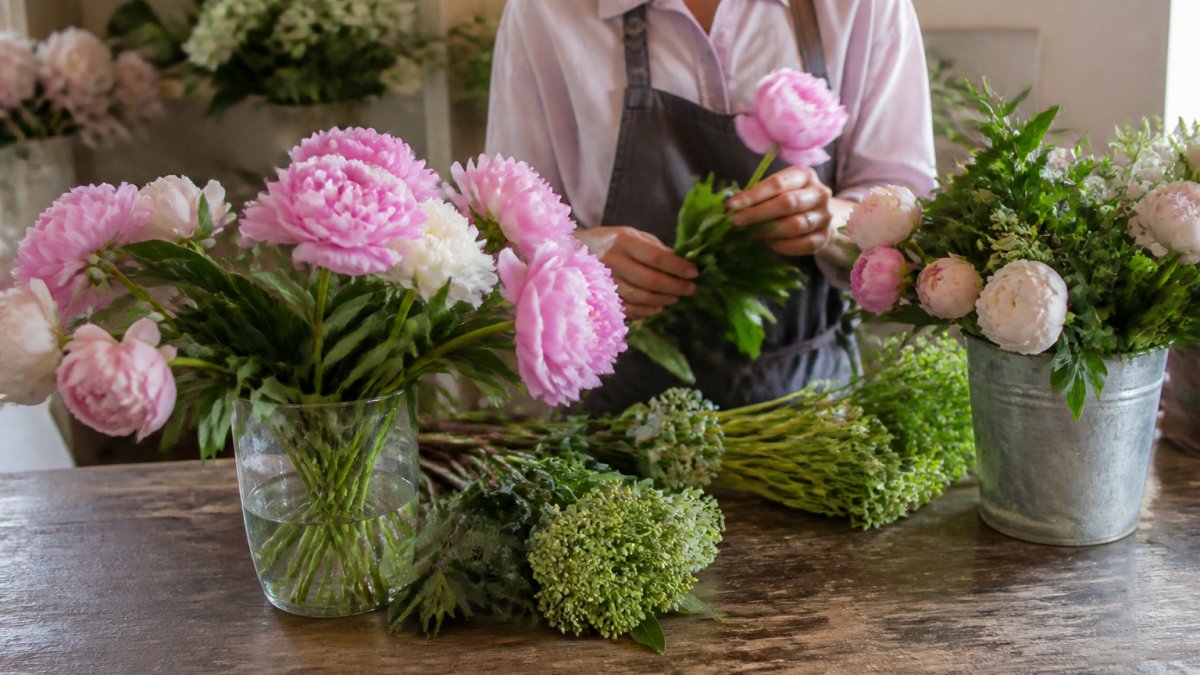
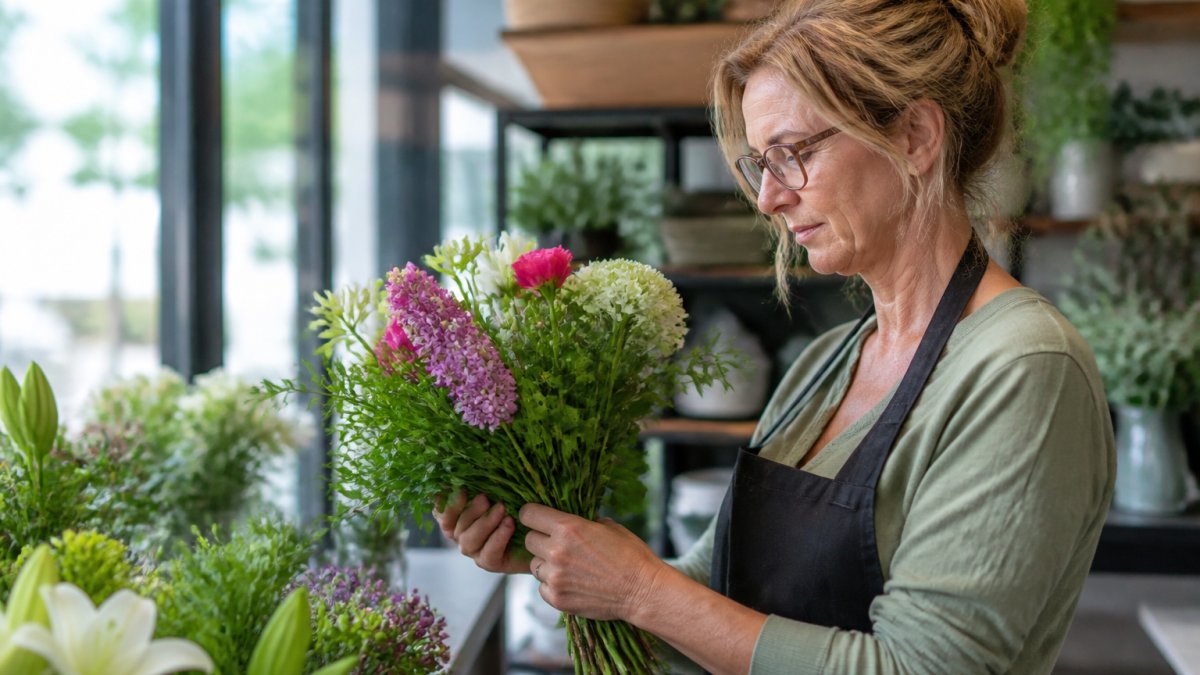
Florist examining freshly cut stems to ensure local flowers last longer in a sunlit shop

Cut flowers are living tissue: the moment a stem is cut, it begins to decline. Every hour in transit is an hour without water, and every delay shortens vase life.

Local flowers last longer because they spend less time stressed. At An English Garden, we work directly with local growers.

The harvest-to-vase timeline is the foundation of flower longevity.

How Long Do Fresh Flowers Last When Sourced Locally

Fresh flowers sourced locally typically last 7 to 14 days in a home vase, depending on the variety and care.

The timeline is longer with local flowers because they start fresher. Imported flowers often arrive already stressed and dehydrated after a week or more in transit.

Local sourcing doesn’t guarantee longevity on its own, a locally grown stem still needs proper care, but it gives you a head start instead of fighting days of transport.

Seasonal availability also plays a role: flowers grown locally in season tend to last longer than those forced into bloom off-season.

How to Make Cut Flowers Last Longer at Home

Making cut flowers last longer starts with what you do the moment they arrive. The first 24 hours are critical. Strip any leaves that would sit below the waterline in your vase. Leaves underwater trap bacteria and accelerate stem decay. Use a sharp knife to cut the stems at a 45-degree angle, which increases the surface area for water absorption.

Conditioning Your Stems

Conditioning prepares stems to absorb water efficiently. Cut your flowers and immediately place them in room-temperature water mixed with flower food. Let them sit in a cool, dark place for two to four hours before arranging them.

Conditioning gives the stem time to recover: the cool environment slows metabolism, water and nutrients move up the vascular system, and the flowers are stronger by the time you arrange them.

Many people skip conditioning and arrange straight from the box. Conditioned stems last noticeably longer, it’s one of the simplest and most effective steps.

Water Quality and Flower Food

Change your vase water every two to three days. Fresh water prevents bacterial buildup that clogs the stem’s water-absorbing channels. Use flower food if it came with your arrangement, it contains nutrients and biocides that extend vase life. If you don’t have flower food, a small amount of sugar and a few drops of bleach in fresh water works as a substitute.

When you change the water, trim about half an inch off the bottom at an angle to remove deteriorating tissue and open a fresh surface for absorption, a small step that extends vase life by days.

Environment Matters

Keep flowers away from direct sunlight, heat sources, and drafts. Sunlight speeds wilting, heat accelerates water loss, and drafts dry out petals. A cool room with indirect light is ideal.

Avoid ripening fruit, whose ethylene gas triggers early aging, and keep flowers away from heating vents and air conditioning. Stable, cool temperatures preserve freshness far longer than fluctuating conditions.

Longest-Lasting Cut Flowers by Season and Type

Vase life is a range, not one number, it shifts with species, harvest maturity, growing conditions, and post-cut handling. A locally grown and an imported stem of the same species can land in very different places on that range. Prioritizing the freshness inherent in locally grown botanicals ensures that your arrangements maintain their vitality and structural integrity far longer than those subjected to the rigors of international transit.

Here is a practical working range most growers and florists use, based on typical home-vase conditions with proper conditioning, cool placement, and water changes every two to three days:

Get Started Today →

Flower Typical vase life Notes on variability
Carnation 10-14 days One of the most durable cut flowers; tolerates warmer rooms better than most
Chrysanthemum 10-14 days Long-lived; benefits from frequent stem re-cuts
Rose 7-12 days Depends heavily on harvest stage; tight buds harvested too early may never open fully
Alstroemeria 7-14 days Long-lasting; sensitive to ethylene
Tulip 5-10 days Continues to grow in the vase; cool water and cool rooms extend life
Daffodil 5-8 days Sap is toxic to other flowers; condition separately
Sunflower 5-8 days Heavy drinker; wilts fast in warm rooms
Dahlia 4-7 days Short vase life even when local and fresh; re-cut stems every other day
Ranunculus 5-7 days Hollow stems; shallow water and cool placement help
Zinnia 5-7 days Sensitive to bacteria; clean water is critical

These ranges are not guarantees, just the middle of what most people see with decent care. A properly conditioned dahlia can outperform a poorly handled carnation.

Why the Same Flower Lasts Different Lengths

Three variables move vase life more than anything else:

  • Harvest maturity. Stems cut at the correct stage, buds showing color but not yet fully open for most species, last longer than stems cut too tight or too open. A grower who cuts to order can time this precisely. A grower cutting for a long supply chain often has to cut earlier to survive transit, which can shorten vase life even when the flower arrives looking fine.
  • Postharvest handling. The first few hours after cutting matter most. Stems that go straight into clean, cool water with flower food retain more of their potential vase life than stems that sit dry in a bucket or a box.
  • Transport temperature. Cool chain matters. Flowers held consistently near 34-38°F travel better than flowers that warm up and cool down repeatedly. A short local drive with minimal temperature swing is easier on stems than a multi-day trip through distribution centers.

Season Changes the Math

Seasonal growing conditions affect stem strength and stored energy. A peony harvested in its natural late-spring window opens more fully and holds longer than one forced under lights, and outdoor summer sunflowers and zinnias have sturdier stems than greenhouse versions sold off-season.

This is where local sourcing helps, not because local is magic, but because local growers sell what is actually in season.

Key Takeaway
Vase life is a range, not a fixed number. Local sourcing tends to push a stem toward the top of its range because it shortens the time between cutting and conditioning, but species, harvest stage, and home care still set the ceiling.

A Fair Comparison

It would be misleading to say every local bouquet outlasts every imported one, a well-handled imported rose can outlast a poorly handled local dahlia. What local sourcing reliably does is reduce the variables working against the stem: less transit time, fewer temperature swings, and a shorter window between harvest and water. That head start is real, but it is a head start, not a guarantee.

How to Tell If Flowers Are Fresh Before You Buy

At a farm stand, farmers market, or florist counter, you usually have a minute or two to judge a bouquet. These checks predict vase life, in the order they matter most.

1. Stem Condition

  • Firm, not soft. Gently pinch the stem just below the flower head. It should feel turgid and slightly cool. A stem that feels mushy, slimy, or hollow-sounding has already begun to break down.
  • Green, not brown. Look at the stem where it meets the water line in the bucket. Brown or black discoloration there means the stem has been sitting in old water and bacteria have started to block the vascular channels.
  • Clean cut, not crushed. A fresh angled cut absorbs water; a crushed or split stem end does not.
  • No visible slime. Any slick film on the submerged portion is a sign of bacterial growth.

2. Bloom Stage

  • Buds showing color, not fully open. For most species, roses, lilies, tulips, peonies, you want buds that are just cracking open or showing color. Fully open blooms have already spent part of their vase life on the plant or in the shop.
  • Some exceptions. Dahlias, zinnias, and sunflowers are usually sold open because they do not open well after cutting. For those, look for blooms that are fully open but still firm, with no brown edges on the petals.
  • No dropped pollen. Yellow pollen dust on the petals or the surface below means the bloom is past its peak.

3. Foliage

  • Crisp, not limp. Leaves should hold their shape. Limp or curling leaves suggest the stem has been out of water too long.
  • Uniform color. Yellowing lower leaves are a normal sign of age. Yellowing upper leaves usually mean the stem is stressed.
  • No spots or mildew. Dark spots, powdery patches, or fuzzy gray areas indicate disease that will spread in the vase.
  • Leaves below the waterline? If the bouquet is already sitting with submerged foliage, that is a red flag, those leaves will rot and feed bacteria.

4. Water Quality in the Display Bucket

  • Clear, not cloudy. Cloudy or discolored water means bacteria are already active in the bucket, and the stems have been drinking it.
  • No debris. Fallen petals, leaves, and stem fragments mean the bucket has not been refreshed.
  • Bucket level. Stems should be sitting in a few inches of water, not submerged halfway up. Deep water on woody stems can cause rot.

5. The Questions Worth Asking

A short conversation tells you more than any visual check:

  • “When were these cut?” A local grower will usually know the day, often the morning.
  • “Were they conditioned?” Conditioning, a few hours in clean water with flower food before arranging, is the single biggest postharvest step most buyers never ask about.
  • “How have they been stored?” Cool, out of direct sun, away from ripening fruit is the right answer.
Pro Tip
If you are buying at a farmers market, go early. The best-conditioned stems are usually gone within the first hour, and the grower is on hand to answer questions about harvest timing and variety.

What Freshness Does Not Tell You

A bouquet can look fresh and still have a short vase life ahead. Flowers cut too tight may never open, flowers held warm may have already lost days, and hidden stem damage below the waterline can cause collapse in 48 hours. That is why the checklist focuses on stem and water, the bloom is the last part to show stress.

A short supply chain makes these checks easier to pass. When flowers were cut yesterday and conditioned properly, the stem is firm, the water is clean, and the grower can tell you exactly when the stems left the field.

What Local Sourcing Does and Doesn’t Guarantee

Local sourcing guarantees shorter time from harvest to vase.

Local flowers arrive fresher, giving them a longer potential lifespan, but potential isn’t guaranteed.

Local sourcing also doesn’t guarantee year-round availability of every variety.

At An English Garden, we’ve built relationships with local growers over our 32 years in business.


Local flowers last longer because time is the enemy of cut blooms. Every hour in transit is an hour of lost freshness and reduced vase life.

Frequently Asked Questions

Why do local flowers last longer than imported ones?

Local flowers spend less time in transit and storage before reaching your vase. Imported cut flowers travel 24-72 hours or longer, during which they lose hydration and accumulate bacteria in the water uptake system. Locally grown stems move from harvest directly to the florist, reducing stress on the flower and preserving vase life significantly. The shorter timeline means fresher flowers with better conditioning and longer longevity.

How long do fresh local flowers typically last in a vase?

Fresh local flowers often last 10-14 days or longer with proper care, compared to 5-7 days for imported varieties. Vase life depends on flower type, season, and water maintenance. Hardy varieties like roses and carnations last longer than delicate blooms. Consistent water changes, cool room temperature, and regular stem trimming extend longevity. Local florists can advise on expected vase life for your specific arrangement.

What should I look for when buying fresh local flowers?

Check for firm, turgid stems that don’t bend or feel soft. Petals should feel crisp and full, not papery or bruised. Foliage should be vibrant green without yellowing or wilting. Ask the florist when the flowers were harvested, locally grown stems harvested within 24 hours are fresher. Avoid blooms with brown edges, drooping heads, or visible bacteria buildup in the water.

How do I make cut flowers last longer at home?

Trim stems at a 45-degree angle under running water before arranging. Use a clean vase with fresh, cool water and flower food to feed the stems and prevent bacteria. Change water every 2-3 days and re-trim stems each time. Place flowers in a cool location away from direct sunlight, heat, drafts, and ripening fruit. Remove lower leaves to prevent bacterial growth. These practices maintain water uptake through the xylem and capillary system, extending vase life significantly.

Posted on — Leave a comment

How to Keep Fresh Flowers Alive Longer: 7 Care Steps

Table of Contents

Last Updated: October 11, 2026

Start With Clean, Cool Water

The single fastest way to shorten a bouquet’s life is to skip the first step. Flowers start losing moisture the moment they’re cut, and clean, cool water is the first thing you need to keep fresh flowers alive.

At An English Garden, we’ve spent 32 years watching how long arrangements last after they leave our shop.

Here’s how to start strong:

  • Scrub the vase with hot, soapy water before use. Skip this and bacteria get a head start.
  • Fill it two-thirds full with cool tap water.
  • Add flower food if you have it (more on that below).
  • Get stems into the water within an hour of cutting.

Warm water can push flowers to open faster, which sounds nice but shortens vase life. Cool water slows that process down.

Pro Tip
If you’re reusing a vase, rinse it with a splash of bleach and water, then rinse again. A vase that smells like old flowers will shorten the life of a new bouquet.

How to Trim Flower Stems the Right Way

Stem trimming is the step most people rush, and it’s the one that decides how well your flowers drink. Cut stems at an angle with a sharp tool, and they’ll take up water properly.

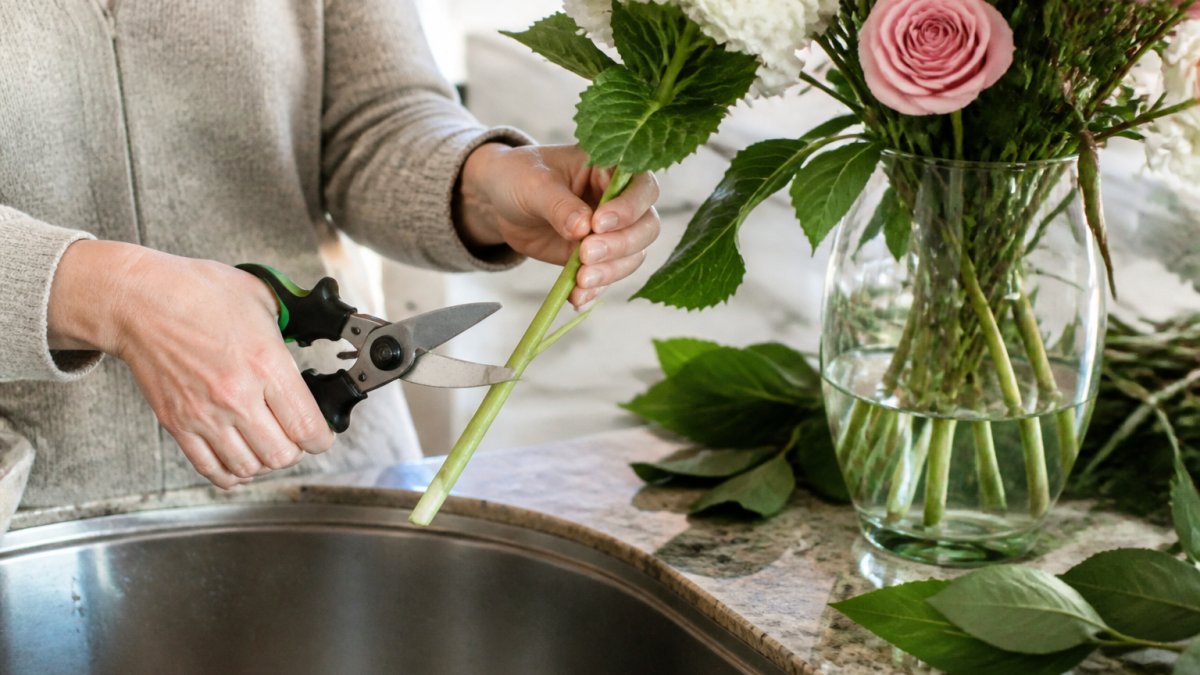
Close-up of hands holding floral shears cutting a flower stem at a 45-degree angle over a kitchen sink, with a glass vase of fresh flowers and loose green leaves on the counter nearby

Why a 45-Degree Angle Matters

A 45-degree angle creates more exposed surface at the stem end, so the flower can pull up more water. It also keeps the cut from sitting flat against the bottom of the vase, which blocks water uptake.

Use sharp floral shears or a clean knife. Dull scissors crush the stem instead of slicing it, and a crushed stem can’t drink.

How Much to Cut and When

Trim about 1 to 2 inches off each stem the moment you unpack the bouquet. Then recut every two to three days when you change the water.

Cut under running water if you can. It stops air from getting pulled into the stem, which can create a blockage. If that’s not practical, cut and get the stem into water fast.

Strip Leaves Below the Waterline

Any leaf sitting under the water will rot. Rot feeds bacteria, bacteria cloud the water, and cloudy water shortens vase life fast.

How to Keep Flowers Fresh

NYT Wirecutter

So pull off every leaf and bit of foliage below the water level. Be gentle near the stem, since tearing the outer layer opens a wound.

A quick check:

  • Hold the stem next to the vase before you fill it.
  • Mark where the water line will fall.
  • Remove all foliage below that point.

This one habit does more for bouquet longevity than most store-bought tricks.

How Often to Change Flower Water

Change the water every two to three days, and recut the stems each time you do it.

Some flowers will want it daily. If the water looks cloudy, smells off, or feels slimy, change it right away, no matter what the calendar says.

Here’s the routine:

  1. Lift the flowers out and set them aside.
  2. Dump the old water and rinse the vase.
  3. Refill with cool, clean water.
  4. Recut each stem at an angle.
  5. Add fresh flower food if you have it.

Clean water and clean stems go together, and both are part of the routine to keep fresh flowers alive.

Does Flower Food Work? What to Know Before You Buy

Yes, flower food works, and it’s the single most reliable add-in you can use. A commercial floral preservative is formulated to do three jobs at once: feed the flowers, acidify the water so it moves up the stem more easily, and slow bacterial growth.

The reason the packet beats a homemade mix is dosing. The sugar-to-acid-to-biocide ratio is tuned so the flowers get food without feeding a bacterial bloom. Get that ratio wrong at home and you can do more harm than good.

Get Started Today →

What the Research Actually Supports

When you compare homemade recipes, the evidence is uneven:

Additive What it does The catch
Commercial flower food Feeds, acidifies, fights bacteria Needs a fresh packet each water change
Sugar + bleach Sugar feeds; bleach sanitizes Easy to overdose the bleach and burn stems; sugar still feeds bacteria if the bleach is too weak
Sugar + vinegar or lemon juice Sugar feeds; acid lowers pH No biocide, so bacteria still win within a day or two
Lemon-lime soda Adds sugar and acid Sticky water and a sugar load that feeds bacteria; diet versions add acid but no food
Crushed aspirin Mild acid No meaningful sugar or biocide; effect is negligible in most trials
Copper penny Nothing reliable Modern pennies are zinc with a thin copper plating; no measurable benefit
Mouthwash or vodka Some antibacterial action Alcohol and additives can damage tissue; not a substitute for a proper biocide

A common pattern in side-by-side home tests is that the commercial packet outperforms every DIY mix, and plain cool water outperforms several of the DIY mixes. That’s the honest takeaway: if you have a packet, use it. If you don’t, a small amount of sugar with a single drop of bleach in a quart of water is a reasonable stand-in, but treat it as a short-term fix, not an equal.

Watch Out
Never combine bleach with a commercial flower-food packet. The packet already contains a biocide, and doubling up can damage stems and petals.

How to Use Flower Food Correctly

  • Mix the packet with the amount of water listed on the wrapper, usually one packet per quart or per pint, depending on brand.
  • Add fresh food every time you change the water, not just on day one.
  • Keep the water level at roughly two-thirds full so stems stay submerged without soaking leaves.
  • If you’re topping off between changes, use plain water; adding more food without dumping the old water concentrates the mix.

If you’d rather not think about ratios, ask your florist for extra packets when you buy. Most shops will hand over a few at no charge, and having them on hand makes the every-two-to-three-days water change effortless.

How to Keep Flowers Fresh Without a Vase

No vase? You can still keep flowers fresh without a vase for a day or two.

Try these stand-ins:

  • A clean mason jar or pitcher
  • A tall glass or water bottle with the top cut off
  • A bowl with a narrow mouth to hold stems upright
  • A damp paper towel wrapped around the stem ends for short trips

If you’re transporting a bouquet or storing it overnight, keep the stems in water and park the whole thing somewhere cool and out of direct sunlight.

At An English Garden, we deliver to local funeral homes and hospitals daily, so we know how much a few hours out of water matters.

Flower-Specific Care and Troubleshooting Wilting

Different flowers have different stem structures, water needs, and sensitivities, and treating them all the same is one of the most common reasons a mixed bouquet fades unevenly. The notes below cover the varieties most people bring home, plus a symptom-based troubleshooting guide for when something goes wrong.

Flower-Specific Care Notes

  • Tulips keep growing after they’re cut and will bend toward light. Keep them in cool water, trim a half inch every couple of days, and rotate the vase so they don’t lean. A few ice cubes in the water slows the opening.
  • Roses want a deep water level and a clean angled cut. A bent neck usually means the stem can’t draw water, recut under water and give it a few hours. Remove the outer guard petals if they look bruised.
  • Hydrangeas drink through their petals as well as their stems. If a head droops, submerge the entire bloom in cool water for 20 to 30 minutes, then return it to the vase. Misting helps in dry rooms.
  • Lilies drop pollen that stains fabric and skin. Snip the stamens as soon as the buds open, before the pollen loosens.

Realistic Vase-Life Expectations

How long a bouquet lasts depends as much on how fresh it was at purchase as on anything you do at home. As a general guide, most cut flowers hold for roughly:

  • 5 to 7 days: tulips, daffodils, iris
  • 7 to 10 days: roses, carnations, alstroemeria, chrysanthemums
  • 7 to 14 days: lilies, sunflowers, hydrangeas (with care)
  • 10 to 14+ days: orchids, some tropicals

If a bouquet fades well short of that range, the problem usually started before it reached your kitchen. Look for tight buds, firm stems, and crisp green leaves at purchase; avoid bunches with brown edges or a strong smell.

Symptom-Based Troubleshooting

When something looks wrong, match the symptom to the fix:

  • Cloudy water, bacteria have taken over. Dump it, scrub the vase with hot soapy water, recut the stems, and refill with fresh cool water and food.
  • Slimy stems, the stem ends are decaying. Cut an inch or two above the slime line and start fresh.
  • Drooping heads with firm stems, likely an air blockage. Recut at an angle under running water and give it a few hours.
  • Drooping heads with soft, mushy stems, the flower is done. Remove it so it doesn’t foul the water for the rest.
Key Takeaway
When in doubt, start with the basics: fresh cool water, a clean vase, a fresh angled cut, and no leaves below the waterline. Most “failing” bouquets recover within a day when those four things are corrected.

If you’re sending flowers for a specific occasion and want the longest-lasting option, ask the florist which varieties are holding up best that week, freshness at the shop matters more than any home remedy.

Conclusion: A Simple Routine That Keeps Fresh Flowers Alive Longer

Most bouquets don’t fail because of bad flowers. They fail because of skipped water changes and dirty vases. Get the basics right and you’ll add days to almost any arrangement.

The routine that keeps fresh flowers alive longer is short: clean, cool water, an angled trim every few days, no leaves below the waterline, and a cool spot away from sun and drafts.

If you’d rather leave the details to us, An English Garden builds every arrangement with care and delivers across the area daily.

Frequently Asked Questions

How often should you change the water in a flower vase?

Change the water every two to three days, or sooner if it looks cloudy. Cloudy water means bacteria have multiplied, and those bacteria clog the stem ends so blooms cannot drink. When you change the water, rinse the vase with soap and warm water, then recut each stem about half an inch at a 45-degree angle. If you skip the recut, the stem ends seal over and the fresh water cannot get in. A quick water change takes two minutes and is the single easiest way to keep fresh flowers alive longer.

Does flower food work, or is it a waste of money?

Commercial flower food works because it contains three things: a sugar for energy, an acidifier that lowers water pH so stems take up water faster, and a small amount of biocide that slows bacteria growth. Used correctly, it extends vase life on most cut flowers. The catch is that flower food cannot fix dirty water or unclipped stems, so pair it with a clean vase and a fresh angled cut. If you run out, a homemade mix can be attempted, but it is less consistent than a commercial preservative.

Can you keep a bouquet fresh without a vase?

Yes. If you have no vase, use any clean container that holds water: a pitcher, a mason jar, a tall drinking glass, or even a clean bucket. The container matters less than the water. Fill it with cool water, strip any leaves that would sit below the waterline, and recut the stems at an angle. If you are transporting the bouquet, wrap the damp stem ends in a wet paper towel and a plastic bag, then keep the flowers out of direct sun and heat until they reach a container.

Where should you place fresh flowers to make them last longer?

Keep the arrangement in a cool spot away from direct sunlight, heating vents, radiators, and drafts from doors or windows. Heat and moving air pull moisture out of petals faster, which shortens vase life. A kitchen counter or entryway table away from a south-facing window works well. Also keep flowers away from ripening fruit. Fruit releases ethylene gas, which speeds up aging in cut flowers. Moving a bouquet just a few feet away from a fruit bowl can add days to how long it stays fresh.