Table of Contents
- Why Local Flowers Last Longer: The Harvest-to-Vase Timeline
- How Long Do Fresh Flowers Last When Sourced Locally
- How to Make Cut Flowers Last Longer at Home
- Longest-Lasting Cut Flowers by Season and Type
- How to Tell If Flowers Are Fresh Before You Buy
- What Local Sourcing Does and Doesn’t Guarantee
- Frequently Asked Questions
Last Updated: October 16, 2026
Why Local Flowers Last Longer: The Harvest-to-Vase Timeline
The difference between local flowers and those shipped across the country comes down to time.
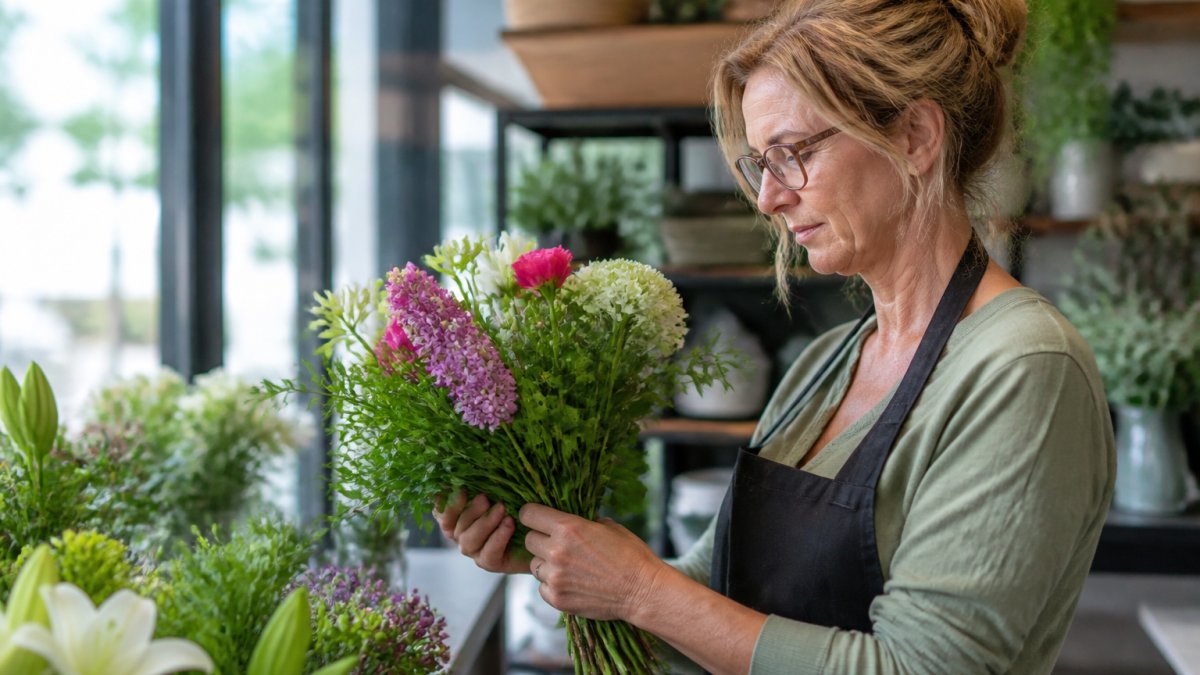
Cut flowers are living tissue: the moment a stem is cut, it begins to decline. Every hour in transit is an hour without water, and every delay shortens vase life.
Local flowers last longer because they spend less time stressed. At An English Garden, we work directly with local growers.
The harvest-to-vase timeline is the foundation of flower longevity.
How Long Do Fresh Flowers Last When Sourced Locally
Fresh flowers sourced locally typically last 7 to 14 days in a home vase, depending on the variety and care.
The timeline is longer with local flowers because they start fresher. Imported flowers often arrive already stressed and dehydrated after a week or more in transit.
Local sourcing doesn’t guarantee longevity on its own, a locally grown stem still needs proper care, but it gives you a head start instead of fighting days of transport.
Seasonal availability also plays a role: flowers grown locally in season tend to last longer than those forced into bloom off-season.
How to Make Cut Flowers Last Longer at Home
Making cut flowers last longer starts with what you do the moment they arrive. The first 24 hours are critical. Strip any leaves that would sit below the waterline in your vase. Leaves underwater trap bacteria and accelerate stem decay. Use a sharp knife to cut the stems at a 45-degree angle, which increases the surface area for water absorption.
Conditioning Your Stems
Conditioning prepares stems to absorb water efficiently. Cut your flowers and immediately place them in room-temperature water mixed with flower food. Let them sit in a cool, dark place for two to four hours before arranging them.
Conditioning gives the stem time to recover: the cool environment slows metabolism, water and nutrients move up the vascular system, and the flowers are stronger by the time you arrange them.
Many people skip conditioning and arrange straight from the box. Conditioned stems last noticeably longer, it’s one of the simplest and most effective steps.
Water Quality and Flower Food
Change your vase water every two to three days. Fresh water prevents bacterial buildup that clogs the stem’s water-absorbing channels. Use flower food if it came with your arrangement, it contains nutrients and biocides that extend vase life. If you don’t have flower food, a small amount of sugar and a few drops of bleach in fresh water works as a substitute.
When you change the water, trim about half an inch off the bottom at an angle to remove deteriorating tissue and open a fresh surface for absorption, a small step that extends vase life by days.
Environment Matters
Keep flowers away from direct sunlight, heat sources, and drafts. Sunlight speeds wilting, heat accelerates water loss, and drafts dry out petals. A cool room with indirect light is ideal.
Avoid ripening fruit, whose ethylene gas triggers early aging, and keep flowers away from heating vents and air conditioning. Stable, cool temperatures preserve freshness far longer than fluctuating conditions.
Longest-Lasting Cut Flowers by Season and Type
Vase life is a range, not one number, it shifts with species, harvest maturity, growing conditions, and post-cut handling. A locally grown and an imported stem of the same species can land in very different places on that range. Prioritizing the freshness inherent in locally grown botanicals ensures that your arrangements maintain their vitality and structural integrity far longer than those subjected to the rigors of international transit.
Here is a practical working range most growers and florists use, based on typical home-vase conditions with proper conditioning, cool placement, and water changes every two to three days:
| Flower | Typical vase life | Notes on variability |
|---|---|---|
| Carnation | 10-14 days | One of the most durable cut flowers; tolerates warmer rooms better than most |
| Chrysanthemum | 10-14 days | Long-lived; benefits from frequent stem re-cuts |
| Rose | 7-12 days | Depends heavily on harvest stage; tight buds harvested too early may never open fully |
| Alstroemeria | 7-14 days | Long-lasting; sensitive to ethylene |
| Tulip | 5-10 days | Continues to grow in the vase; cool water and cool rooms extend life |
| Daffodil | 5-8 days | Sap is toxic to other flowers; condition separately |
| Sunflower | 5-8 days | Heavy drinker; wilts fast in warm rooms |
| Dahlia | 4-7 days | Short vase life even when local and fresh; re-cut stems every other day |
| Ranunculus | 5-7 days | Hollow stems; shallow water and cool placement help |
| Zinnia | 5-7 days | Sensitive to bacteria; clean water is critical |
These ranges are not guarantees, just the middle of what most people see with decent care. A properly conditioned dahlia can outperform a poorly handled carnation.
Why the Same Flower Lasts Different Lengths
Three variables move vase life more than anything else:
- Harvest maturity. Stems cut at the correct stage, buds showing color but not yet fully open for most species, last longer than stems cut too tight or too open. A grower who cuts to order can time this precisely. A grower cutting for a long supply chain often has to cut earlier to survive transit, which can shorten vase life even when the flower arrives looking fine.
- Postharvest handling. The first few hours after cutting matter most. Stems that go straight into clean, cool water with flower food retain more of their potential vase life than stems that sit dry in a bucket or a box.
- Transport temperature. Cool chain matters. Flowers held consistently near 34-38°F travel better than flowers that warm up and cool down repeatedly. A short local drive with minimal temperature swing is easier on stems than a multi-day trip through distribution centers.
Season Changes the Math
Seasonal growing conditions affect stem strength and stored energy. A peony harvested in its natural late-spring window opens more fully and holds longer than one forced under lights, and outdoor summer sunflowers and zinnias have sturdier stems than greenhouse versions sold off-season.
This is where local sourcing helps, not because local is magic, but because local growers sell what is actually in season.
Vase life is a range, not a fixed number. Local sourcing tends to push a stem toward the top of its range because it shortens the time between cutting and conditioning, but species, harvest stage, and home care still set the ceiling.
A Fair Comparison
It would be misleading to say every local bouquet outlasts every imported one, a well-handled imported rose can outlast a poorly handled local dahlia. What local sourcing reliably does is reduce the variables working against the stem: less transit time, fewer temperature swings, and a shorter window between harvest and water. That head start is real, but it is a head start, not a guarantee.
How to Tell If Flowers Are Fresh Before You Buy
At a farm stand, farmers market, or florist counter, you usually have a minute or two to judge a bouquet. These checks predict vase life, in the order they matter most.
1. Stem Condition
- Firm, not soft. Gently pinch the stem just below the flower head. It should feel turgid and slightly cool. A stem that feels mushy, slimy, or hollow-sounding has already begun to break down.
- Green, not brown. Look at the stem where it meets the water line in the bucket. Brown or black discoloration there means the stem has been sitting in old water and bacteria have started to block the vascular channels.
- Clean cut, not crushed. A fresh angled cut absorbs water; a crushed or split stem end does not.
- No visible slime. Any slick film on the submerged portion is a sign of bacterial growth.
2. Bloom Stage
- Buds showing color, not fully open. For most species, roses, lilies, tulips, peonies, you want buds that are just cracking open or showing color. Fully open blooms have already spent part of their vase life on the plant or in the shop.
- Some exceptions. Dahlias, zinnias, and sunflowers are usually sold open because they do not open well after cutting. For those, look for blooms that are fully open but still firm, with no brown edges on the petals.
- No dropped pollen. Yellow pollen dust on the petals or the surface below means the bloom is past its peak.
3. Foliage
- Crisp, not limp. Leaves should hold their shape. Limp or curling leaves suggest the stem has been out of water too long.
- Uniform color. Yellowing lower leaves are a normal sign of age. Yellowing upper leaves usually mean the stem is stressed.
- No spots or mildew. Dark spots, powdery patches, or fuzzy gray areas indicate disease that will spread in the vase.
- Leaves below the waterline? If the bouquet is already sitting with submerged foliage, that is a red flag, those leaves will rot and feed bacteria.
4. Water Quality in the Display Bucket
- Clear, not cloudy. Cloudy or discolored water means bacteria are already active in the bucket, and the stems have been drinking it.
- No debris. Fallen petals, leaves, and stem fragments mean the bucket has not been refreshed.
- Bucket level. Stems should be sitting in a few inches of water, not submerged halfway up. Deep water on woody stems can cause rot.
5. The Questions Worth Asking
A short conversation tells you more than any visual check:
- “When were these cut?” A local grower will usually know the day, often the morning.
- “Were they conditioned?” Conditioning, a few hours in clean water with flower food before arranging, is the single biggest postharvest step most buyers never ask about.
- “How have they been stored?” Cool, out of direct sun, away from ripening fruit is the right answer.
If you are buying at a farmers market, go early. The best-conditioned stems are usually gone within the first hour, and the grower is on hand to answer questions about harvest timing and variety.
What Freshness Does Not Tell You
A bouquet can look fresh and still have a short vase life ahead. Flowers cut too tight may never open, flowers held warm may have already lost days, and hidden stem damage below the waterline can cause collapse in 48 hours. That is why the checklist focuses on stem and water, the bloom is the last part to show stress.
A short supply chain makes these checks easier to pass. When flowers were cut yesterday and conditioned properly, the stem is firm, the water is clean, and the grower can tell you exactly when the stems left the field.
What Local Sourcing Does and Doesn’t Guarantee
Local sourcing guarantees shorter time from harvest to vase.
Local flowers arrive fresher, giving them a longer potential lifespan, but potential isn’t guaranteed.
Local sourcing also doesn’t guarantee year-round availability of every variety.
At An English Garden, we’ve built relationships with local growers over our 32 years in business.
Local flowers last longer because time is the enemy of cut blooms. Every hour in transit is an hour of lost freshness and reduced vase life.
Frequently Asked Questions
Why do local flowers last longer than imported ones?
Local flowers spend less time in transit and storage before reaching your vase. Imported cut flowers travel 24-72 hours or longer, during which they lose hydration and accumulate bacteria in the water uptake system. Locally grown stems move from harvest directly to the florist, reducing stress on the flower and preserving vase life significantly. The shorter timeline means fresher flowers with better conditioning and longer longevity.
How long do fresh local flowers typically last in a vase?
Fresh local flowers often last 10-14 days or longer with proper care, compared to 5-7 days for imported varieties. Vase life depends on flower type, season, and water maintenance. Hardy varieties like roses and carnations last longer than delicate blooms. Consistent water changes, cool room temperature, and regular stem trimming extend longevity. Local florists can advise on expected vase life for your specific arrangement.
What should I look for when buying fresh local flowers?
Check for firm, turgid stems that don’t bend or feel soft. Petals should feel crisp and full, not papery or bruised. Foliage should be vibrant green without yellowing or wilting. Ask the florist when the flowers were harvested, locally grown stems harvested within 24 hours are fresher. Avoid blooms with brown edges, drooping heads, or visible bacteria buildup in the water.
How do I make cut flowers last longer at home?
Trim stems at a 45-degree angle under running water before arranging. Use a clean vase with fresh, cool water and flower food to feed the stems and prevent bacteria. Change water every 2-3 days and re-trim stems each time. Place flowers in a cool location away from direct sunlight, heat, drafts, and ripening fruit. Remove lower leaves to prevent bacterial growth. These practices maintain water uptake through the xylem and capillary system, extending vase life significantly.