Last Updated: November 12, 2026
Quick Summary
Seasonal flower arrangements are bouquets built around blooms at their natural peak, so they are fresher, often longer-lasting, and usually lower in cost than year-round imports. Choosing seasonal flower stems also gives your home more character, since each arrangement reflects the moment it is sent.
- Seasonal flowers are cut near peak with short transit, while imports spend days in transit.
- Fresh flowers typically last five to seven days, but chrysanthemums and carnations can run two weeks or more.
- Trim stems at an angle, strip leaves below the waterline, and change the water every two days.
- Daffodil sap is harmful to other flowers, so condition them in their own vase first.
- Local growing means fewer miles traveled, less refrigeration, and a smaller carbon footprint.
Table of Contents
- Why Seasonal Flower Arrangements Beat Year-Round Imports
- Seasonal Flowers by Month: What to Expect Through the Year
- Seasonal vs. Year-Round Flowers: A Side-by-Side Look
- How Long Do Fresh Flowers Last? Setting Realistic Expectations
- How to Keep Fresh Flowers Alive Longer: Care Tips That Work
- The Mood, Decor, and Sustainability Payoff of Local Blooms
- Ordering Seasonal Arrangements from An English Garden
- Frequently Asked Questions
Why Seasonal Flower Arrangements Beat Year-Round Imports
Seasonal flower arrangements are bouquets built around blooms that are at their natural peak right now, rather than stems flown in from another hemisphere. This simple difference often decides how a bouquet looks on day one and how long it lasts after.
That is the core argument of this guide, and everything below builds on it. Seasonal flowers are not a compromise or a budget substitute. Many people find them the fresher choice.
The difference often shows up in freshness, since locally grown stems can reach the vase sooner, and in character, since a seasonal bouquet reflects the moment it is sent.
Below, we break down what to expect month by month, how seasonal and year-round flowers compare, and how to get the longest life from every stem.
Seasonal Flowers by Month: What to Expect Through the Year
Seasonal flowers by month follow a predictable rhythm, but the exact timing shifts with where you live, the weather that year, and whether stems are field-grown or greenhouse-forced. A useful rule: treat any month-by-month list as a range, not a schedule, and confirm availability with your florist the week you order.
How Region and Growing Zone Shift the Calendar
Many cut flowers sold in the United States are field-grown in warmer growing regions, or in heated greenhouses in cooler ones. That means a “spring” tulip may arrive early from a greenhouse or later from a field, depending on region. If you live in a cold-climate state, your local field season is shorter and starts later; if you live in a warm-climate state, many “summer” blooms appear weeks earlier and last into fall.
A practical approach is to ask three questions before ordering: Is this bloom field-grown or greenhouse-grown right now? Is it coming from a local farm or shipped in? And how many weeks into its natural window are we? A florist who works with local growers may be able to answer all three.
Spring (March-May)
Spring is the season of bulbs and early perennials. Expect tulips, daffodils, hyacinths, and lilac first, followed by ranunculus, anemones, and the earliest peonies in warm zones. In cold-climate regions, spring field blooms may not peak until late April or May, while warm-climate growers may finish tulips by early April. Tulips continue to grow in the vase after cutting, so arrange them with room to spare and expect stems to lean toward light.
Summer (June-August)
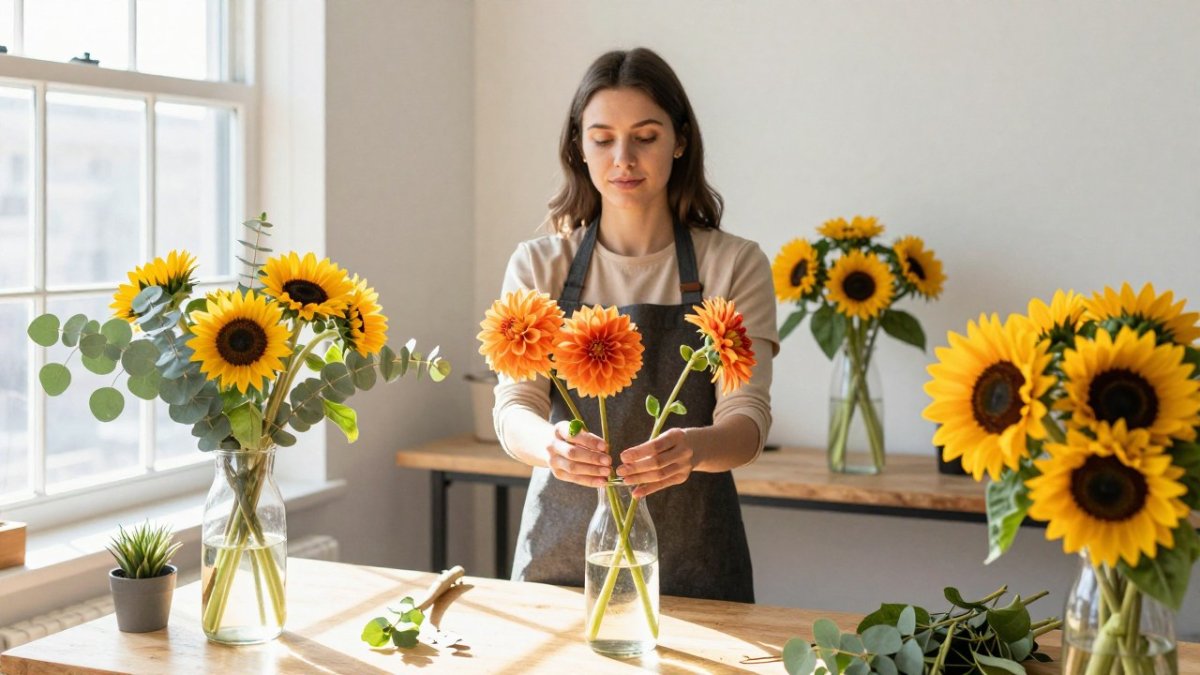
Summer is the most abundant and most affordable window for field-grown flowers. Peonies have a short but intense run, often just three to four weeks in a given region. Sunflowers, zinnias, dahlias, and garden roses follow and hold through the heat. Dahlias are the standout of late summer into early fall in most zones. Warm-climate growers may see summer blooms start in May; cool-climate growers may not hit peak until July.
Fall (September-November)
Fall shifts to chrysanthemums, marigolds, celosia, and dried accents, with dahlias often continuing until the first hard frost. In warm zones, the fall season can stretch into December; in cold zones, field production winds down by October and growers rely on greenhouse and imported stems. This is the season when local availability narrows fastest, so substitutions become more common.
Winter (December-February)
Winter arrangements often rely on greenhouse-grown and imported stems, since field-grown flowers are generally unavailable in cold regions during winter. If winter seasonality matters to you, ask for greenhouse-grown or domestic stems and accept that variety will be narrower.
Seasonal Availability Trade-Offs and Substitutions
A common trade-off of buying seasonally is narrower selection. If you need a specific bloom out of its window, a florist can usually substitute while preserving color, shape, and budget: a white ranunculus can stand in for a white peony, a spray rose for a garden rose, or a chrysanthemum for a dahlia in a pinch. Ask your florist to match the arrangement’s palette and silhouette rather than a single stem, and you will rarely notice the swap. For a look at how this plays out in practice, browse the Fresh Flower Pumpkin for fall, the Winter Moonlight Bouquet for winter, or Spring In The Countryside when the season turns.
Seasonal vs. Year-Round Flowers: A Side-by-Side Look
Seasonal flowers win on freshness, price, and character; year-round imports win on one thing only, exact variety on demand. That trade-off is worth understanding before you order.
| Factor | Seasonal Flowers | Year-Round Imports |
|---|---|---|
| Freshness | Cut near peak, short transit | Days in transit before arrival |
| Vase life | Typically longer | Often shorter |
| Cost | Lower when in abundance | Higher, reflects shipping |
| Variety | What the season offers | Any bloom, any time |
| Character | Reflects the moment | Uniform year-round |
A common approach is to order seasonal for everyday gifts and celebrations, and accept substitutions when a specific bloom is out of season. Most customers find the seasonal version looks better anyway.
How Long Do Fresh Flowers Last? Setting Realistic Expectations
Fresh flowers typically last five to seven days in a vase, though some blooms hold much longer. Chrysanthemums and carnations can run two weeks or more. Delicate blooms like dahlias and sweet peas may fade in four or five days. Tropical stems such as orchids and anthurium often outlast everything else in the arrangement.
Season affects the clock. Warm weather speeds aging, so summer bouquets need more attention than winter ones. Stems harvested at peak and delivered quickly start with an advantage that no amount of care can fully replace in an older stem.
The honest answer: expect about a week from most mixed bouquets, plan on refreshing the water every other day, and you will usually beat that estimate. If a bouquet fades in three days, the problem is almost always handling before it reached you, not the flowers themselves.
How to Keep Fresh Flowers Alive Longer: Care Tips That Work
The single biggest factor in vase life is clean water and a fresh cut. Everything else is secondary.
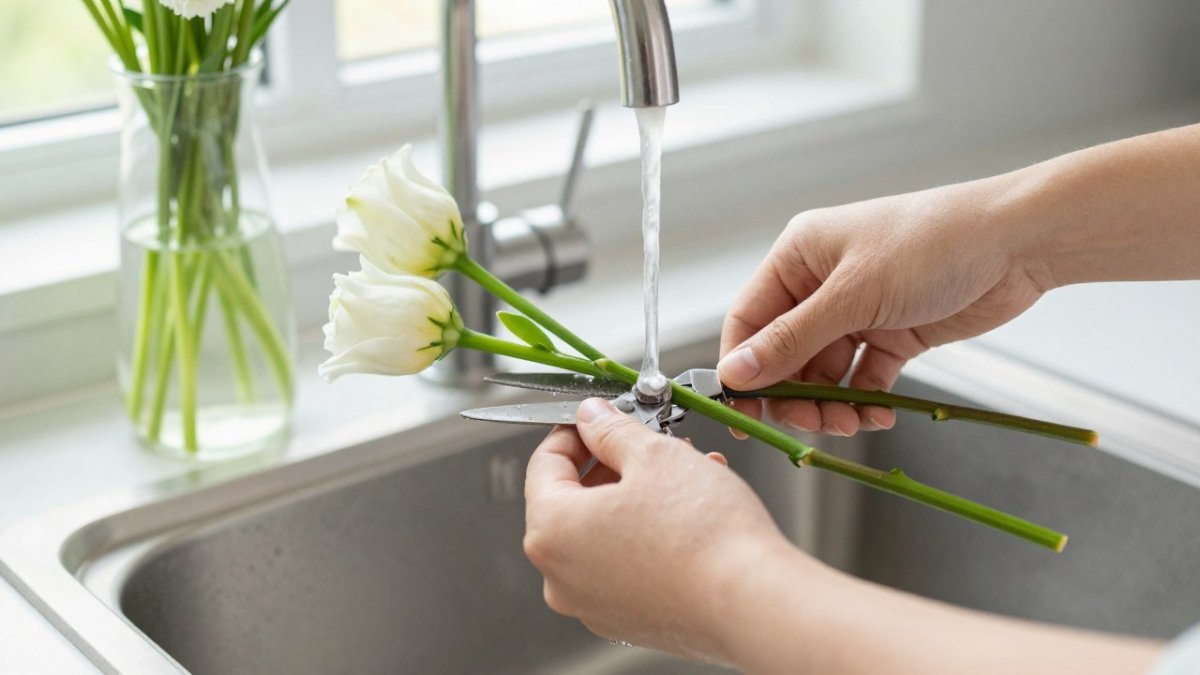
Here is a routine that many florists recommend:
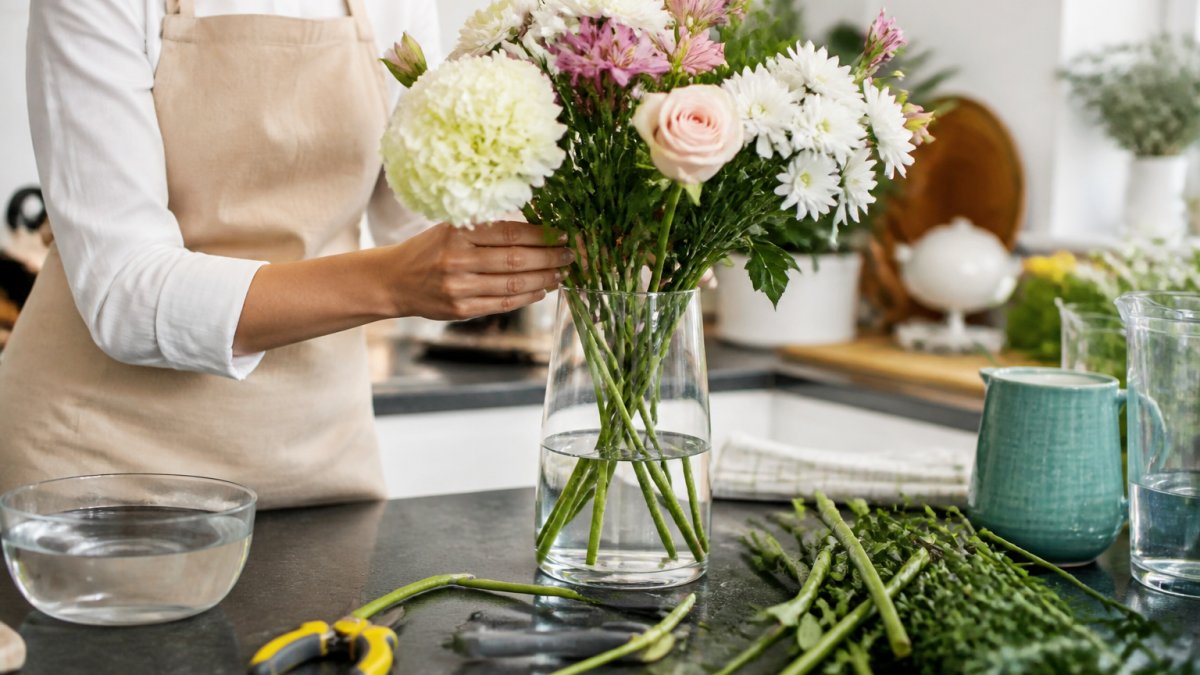
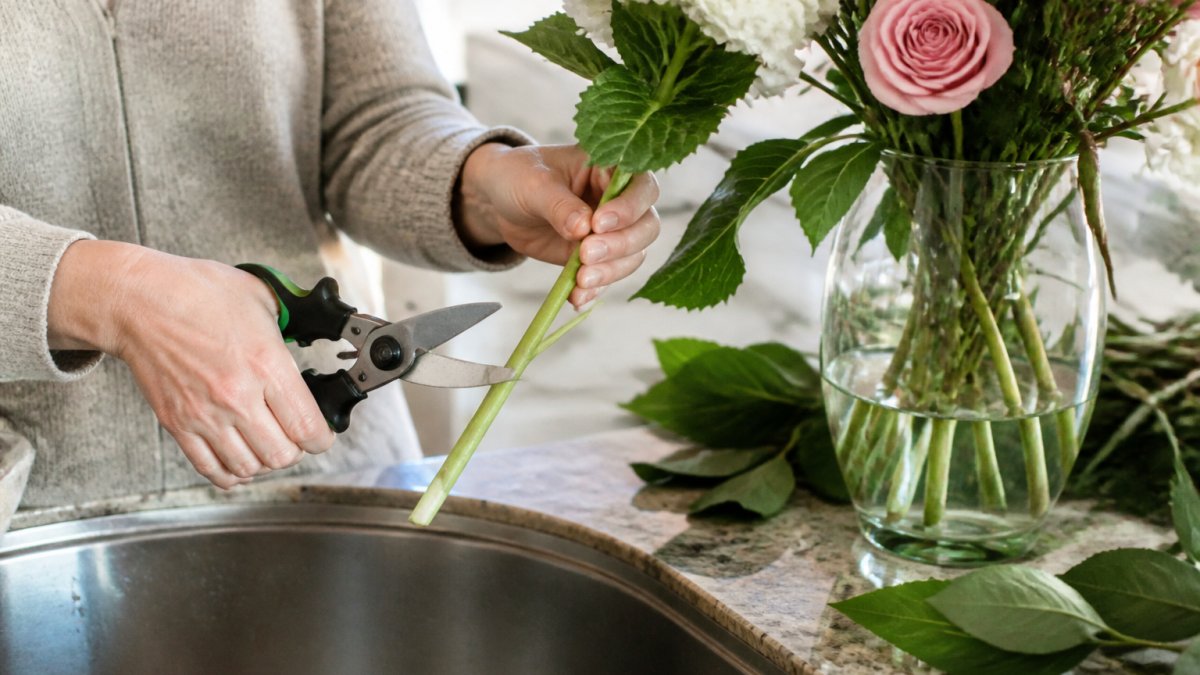
- Trim stems at an angle with sharp shears, removing about an inch. An angled cut exposes more surface for water uptake.
- Strip leaves below the waterline. Submerged foliage rots and clouds the water.
- Use a clean vase. Rinse it with hot water before arranging.
- Change the water every two days and re-trim stems each time.
- Keep flowers out of direct sun and away from ripening fruit, which releases ethylene that speeds wilting.
- Skip the aspirin and pennies. They do not work. A commercial flower food packet does.
Watch out: dropping stems into a vase without a fresh cut is the most common mistake. A stem that has been out of water even an hour seals over at the base and cannot drink.
Flower-by-Flower Conditioning
Different stems need different handling. Tulips and daffodils should be cut and conditioned separately: daffodil sap is harmful to other flowers, so place them in their own vase for a few hours before mixing. Poppies and poinsettias need their stem ends seared with a flame or dipped in boiling water for a few seconds to stop sap flow. Woody stems like lilac and hydrangea benefit from a vertical slit or a light crush at the base to improve water uptake. Hydrangeas wilt easily; if they droop, re-cut the stems and submerge the entire bloom head in cool water for 20 to 30 minutes. Roses should be cut under water if possible and stripped of thorns below the waterline. Dahlias and sweet peas are delicate and do best in shallow, cool water changed daily.
Water Quality and Flower Food
Tap water varies widely in mineral content and pH, and hard water can shorten vase life. If your water is very hard, use filtered water or let tap water sit overnight. Commercial flower food typically contains sugar and other additives; follow the label directions. Homemade mixes of sugar and vinegar or bleach can work in a pinch but are easy to get wrong, and too much sugar feeds bacteria. Stems in flower food often last longer than stems in plain water.
Placement and Temperature
Keep arrangements in a cool spot out of direct sun, heating vents, and drafts. Warm rooms speed aging, so a summer bouquet needs more attention than a winter one. Ethylene from ripening fruit, cigarette smoke, and exhaust can shorten life, so keep flowers away from the fruit bowl and the garage. In warm weather, you can refrigerate arrangements overnight to slow aging, but keep them away from produce.
Troubleshooting Common Problems
If stems go limp while the water is clean, the cut has sealed; re-trim and change the water. If water turns cloudy within a day, bacteria are blooming; clean the vase and re-cut. If blooms fail to open, they were likely cut too tight or stored too cold. If leaves yellow while blooms look fine, submerged foliage is rotting. For the full step-by-step version, read our guide on how to keep fresh flowers alive longer.
The Mood, Decor, and Sustainability Payoff of Local Blooms
Fresh flowers can do more than decorate a room. Many people find that a vase of blooms adds natural fragrance and a focal point to a space.
Local growing shortens the transport distance between field and vase. That means fewer miles traveled, less refrigeration, and a smaller carbon footprint than stems flown in from another continent. Many buyers also value supporting local growers directly, and the quality difference is easy to see.
The environmental case and the quality case point the same direction. A seasonal, locally grown bouquet is usually the fresher, more sustainable, and more distinctive choice. For a deeper look at why local stems outlast imports, see our grower’s guide to why local flowers last longer.
Ordering Seasonal Arrangements from An English Garden
The best way to enjoy seasonal flowers is to order from a florist who works with the season rather than against it. An English Garden has served the area for over 32 years, with secure 24-hour online ordering and delivery to over 30 cities each day.
We also handle occasions that need care and precision, including wedding design with on-site decorating, sympathy and funeral arrangements delivered to local funeral homes and hospitals, and corporate accounts. An award-winning designer is on staff.
Pricing depends on the arrangement, quantity, and delivery date, so check our site for current options or ask for a quote.
Seasonal flowers reward the buyer who plans around what is growing, not against it.
Frequently Asked Questions
Are seasonal flowers fresher than imported flowers?
Many people find seasonal blooms fresher, since they are often harvested closer to peak. Freshness also depends on handling and care after purchase.
Do seasonal flowers cost less than out-of-season flowers?
Often they do. When a flower is in abundance locally, growers and florists can offer more competitive pricing than they can for stems flown in out of season. Exact costs depend on the specific bloom, quantity, and delivery date, so check with your florist for current pricing rather than assuming a fixed number.
How do I choose flowers that are in season?
Ask your local florist what was harvested recently, or check a seasonal flowers by month guide for your region. Look for stems with firm petals, healthy green leaves, and no drooping. In-season blooms like tulips in spring or dahlias in late summer are usually the freshest and most affordable options on the shelf.
Are seasonal flowers more sustainable?
They can be. Locally grown, in-season flowers travel shorter distances, which reduces transport distance and the associated carbon footprint compared with imported or out-of-season stems. Sustainable floristry also favors reusable vessels and fewer chemical treatments, though the exact impact depends on how the flowers were grown and delivered.