Posted on — Leave a comment

9 Low Maintenance Flowers for Office Spaces That Thrive

Last Updated: November 14, 2026

Quick Summary

Low maintenance flowers for office spaces are flowering or foliage plants chosen for tolerance, not glamour, so they handle low light, irregular watering, and dry air without wilting. Snake plant, ZZ plant, and pothos are the best picks for windowless desks, while potted blooms like peace lilies and orchids outlast cut stems.

  • Snake plant tolerates low light and needs water only every two to three weeks.
  • Cut stems typically last 5-7 days, while potted peace lilies hold their display for weeks to months.
  • Water plants on the last workday before a closure and group them so one person can reach them all.
  • Yellow, mushy leaves signal overwatering, the biggest killer of office plants.
  • East and north windows suit peace lilies and orchids; south and west sun can scorch low-light species.
Which flowers survive a windowless desk?An English Garden delivers low-maintenance plants and fresh arrangements to offices, with corporate accounts welcome.

Order Office Flowers

Table of Contents

Why Most Office Flowers Fail (and What Actually Survives)

Low maintenance flowers for office spaces fail for one reason: the office is a hostile environment pretending to be a nice one. Fluorescent light, dry recycled air, weekend neglect, and a cleaning crew that treats every surface the same. Some blooms handle that environment far better than others.

Here’s the uncomfortable truth most plant lists skip: the plant that survives your desk is rarely the prettiest one at the nursery. It’s the one built for neglect.

Low maintenance flowers for office spaces are flowering or foliage plants chosen for tolerance, not glamour. They handle low light, irregular watering, and dry air without dropping leaves or wilting between visits.

Below, we break down what actually survives a windowless desk, how potted blooms compare to cut stems, and how to order flowers that won’t be in the trash by Monday. The University of Minnesota Extension guide to houseplant care is a solid reference for the light and watering basics behind every pick here.

Best Plants for Office Desk With No Windows

The best plants for an office desk with no windows are snake plant, ZZ plant, and pothos. All three tolerate fluorescent-only light, survive missed waterings, and stay compact enough for a standard desk.

Windowless workspaces remove the single biggest variable in plant care: natural sunlight. That eliminates most flowering plants immediately. What’s left are foliage plants with thick leaves built to store water and survive dim conditions.
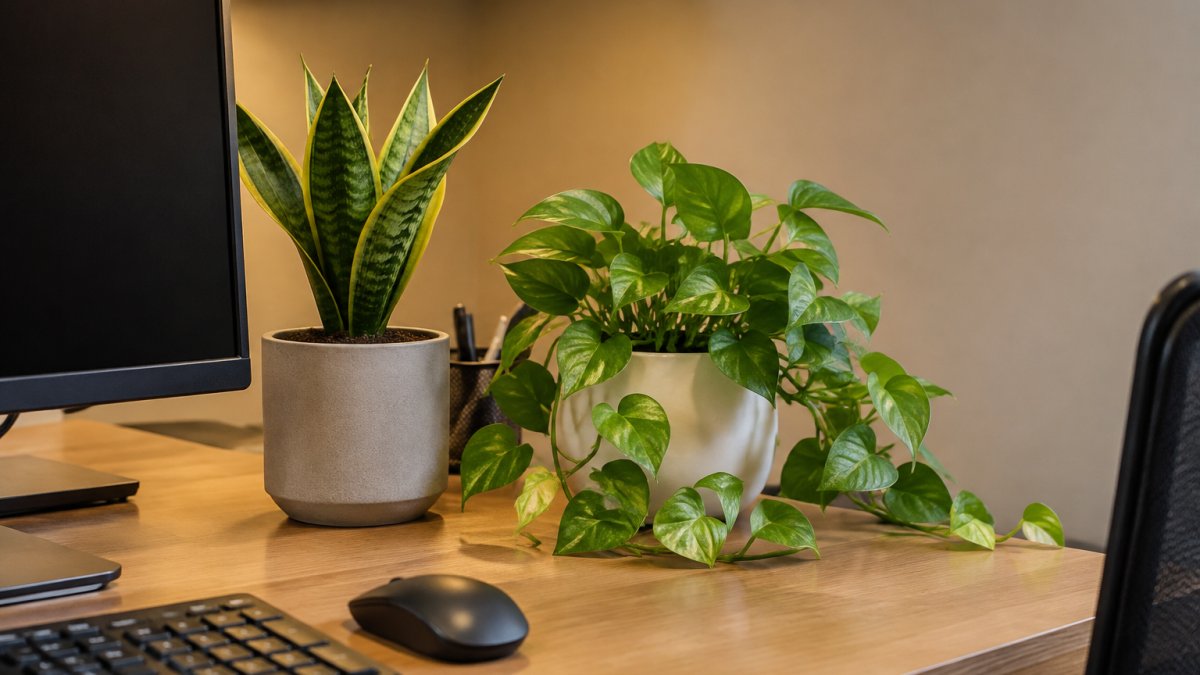
Snake plant and trailing pothos in ceramic pots on an office desk, perfect as low maintenance flowers for office spaces.

Snake Plant, ZZ Plant, and Pothos: The Windowless Workhorses

Snake plant is the most forgiving option on this list. It tolerates low light, requires little water, and its thick leaves hold moisture for weeks. Water it every two to three weeks and ignore it otherwise.

ZZ plant handles the same conditions with glossier foliage. It’s drought-tolerant to the point where overwatering is the only real risk.

Pothos is the one that forgives a forgetful team. It trails nicely off a desk edge and bounces back from a dry spell. A common mistake is placing it in direct sun near a window, which scorches the leaves.

If your office is genuinely dark, our guide on how to choose plants for a low light office goes deeper on matching species to light levels.

Office Desk Flowers That Last: Potted Blooms vs. Cut Stems

Potted flowering plants outlast cut stems by a wide margin. A cut arrangement typically looks its best for about a week, while a potted flowering plant such as a peace lily or orchid can hold its display for weeks or months with minimal care. That single difference should drive most office flower decisions, yet most plant lists blur the two categories together.

This is the distinction most flower lists skip. Cut flowers are an event. Potted blooms are an ongoing presence. Choosing between them is really a question of how much maintenance your office can absorb and how often you want to pay for a refresh.

How Long Cut Flowers Really Last at a Desk

Cut stems generally last only a few days in an office environment, especially when the water is not changed regularly.

Vase life depends on the species and the stem condition. Sturdier stems such as carnations, chrysanthemums, and alstroemeria routinely outlast soft-petaled blooms like tulips and dahlias. You can extend vase life by recutting stems at an angle, changing water every two days, keeping the vase out of direct sun and away from heating vents, and removing leaves that sit below the waterline. A floral preservative packet helps, but clean water and a cool spot do most of the work.

Potted Blooms: Longer Display, Different Care

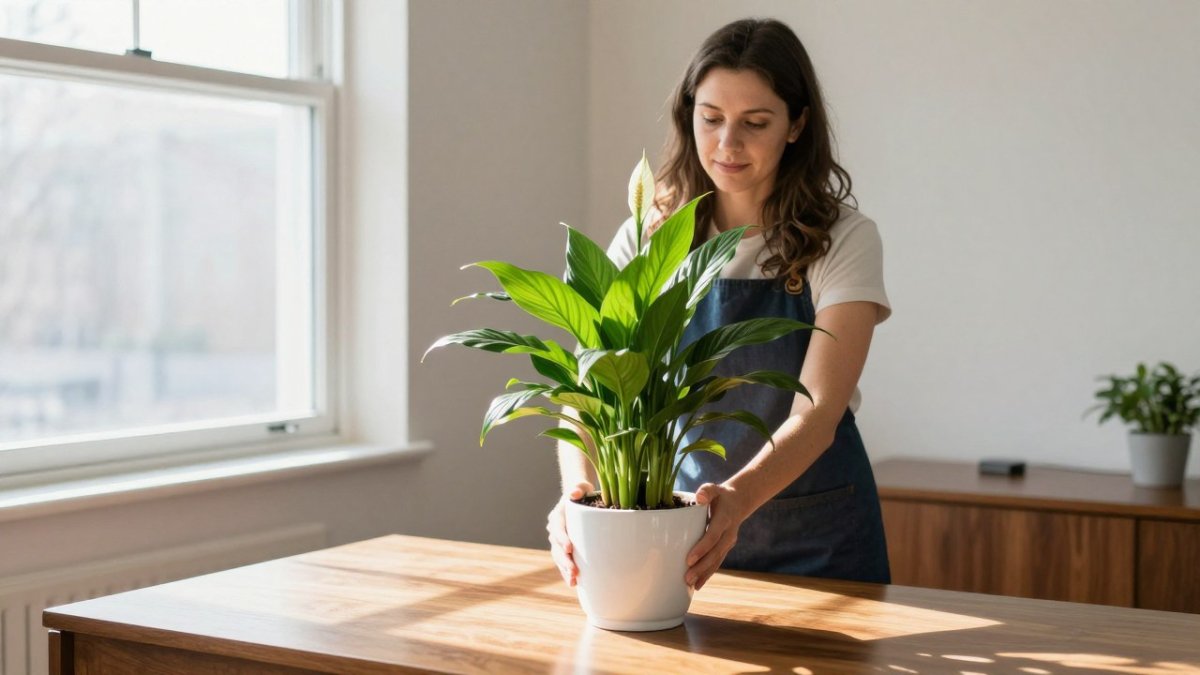
Potted flowering plants change the math. A peace lily tolerates low light and tells you when it’s thirsty by drooping, then recovering after a watering. An orchid needs bright indirect light and very little water, making it a strong desk choice near a window. Both hold their display far longer than cut stems, but they fail for different reasons: peace lilies suffer from overwatering, orchids from being kept too wet at the roots.

A potted bloom is not maintenance-free. It needs the right light, a pot with drainage, and a watering owner. What it saves is replacement cost and the weekly logistics of a fresh arrangement.

Cost and Effort Over Time

Option Typical Display Life Watering Best For
Cut stems in a vase 5-7 days Water change every 2 days Reception, events
Potted peace lily Weeks to months Weekly, when soil dries Desks, low light
Potted orchid Weeks in bloom Every 7-10 days Bright indirect light
Snake plant Year-round foliage Every 2-3 weeks Windowless desks

For teams leaning toward potted blooms, you can shop a peace lily in a marbled ceramic pot as a low-effort starting point.

Watch out: cut stems left in stagnant water grow bacteria that shorten vase life and smell, so assign someone to change the water even if no one is watering plants.

Low-Maintenance Indoor Plants for Office Teams That Travel

Teams that travel need plants that survive being ignored. The rule is simple: choose species that tolerate missed waterings, and skip anything that wilts within days of neglect. Weekend watering is the baseline, but a team offsite or a holiday week stretches that gap. Drought-tolerant species handle it; most flowering plants don’t.

What most plant lists miss is that office neglect is not one problem. It is a set of specific conditions: two-day weekends, occasional four-day holiday closures, air conditioning that dries the air, heating that dries it further, cleaning crews that move or overwater things, and no convenient sink for refilling a watering can. A plant that survives a dark corner may still fail because no one can reach it with water on a Friday.

Species That Tolerate Missed Watering

  • Snake plant: survives two to three weeks without water and tolerates low light.
  • ZZ plant: stores water in its rhizomes and shrugs off dry spells; overwatering is its main risk.
  • Spider plant: forgiving, though it prefers slightly more frequent watering and will brown at the tips in dry air.
  • Philodendron: tolerates low light and irregular schedules.
  • Pothos: bounces back from a dry spell and trails well off a desk edge.

A spathiphyllum is a practical pick for a traveling team because it signals thirst clearly by drooping without dying outright. You can order a spathiphyllum plant for an office that needs a hardy, forgiving option.

Planning Around Weekends, Holidays, and Shared Spaces

The practical fix is to water on the last workday before a closure and to group plants so one person can reach them all. Plants near a sink or break room are easier to maintain than those in a conference room no one enters on a Friday. If a holiday closure runs longer than a week, move drought-tolerant plants out of direct sun and away from heating vents so they dry out more slowly.

Air conditioning and heating both lower humidity. Brown, crispy leaf edges are the usual sign. Grouping plants together raises local humidity slightly, and keeping them away from vents prevents the worst damage.

Watch out: the biggest killer of office plants isn’t neglect, it’s a well-meaning colleague overwatering. Assign one owner per plant and note the watering day on the pot so a second person doesn’t water on top of the first.

Plants for Office With Windows: Where Light Changes the List

Windows change everything. Once a space gets bright indirect light, the list expands to include flowering plants that would fail on a dark desk.

East and north windows give soft morning or consistent indirect light, which suits peace lilies, orchids, and most foliage plants. South and west windows bring stronger afternoon sun that can scorch low-light species but suits succulents and flowering plants that want more light.

Placement matters as much as species. A plant that tolerates low light will still stretch and pale if pushed into a dark corner. The Clemson Cooperative Extension home and garden information covers light requirements by plant type if you want to match species to a specific window.

A Simple Care and Troubleshooting Guide for Office Plants

Most office plant problems trace to three causes: too much water, too little light, or dry air. Fix those and the plant usually recovers.

  • Yellow, mushy leaves: overwatering. Let the soil dry out and cut back.
  • Brown, crispy leaf edges: dry office air or underwatering. Move away from vents.
  • Leggy, pale growth: not enough light. Relocate closer to a window.
  • Drooping despite wet soil: root rot from standing water. Repot and reduce watering.
  • No blooms on a flowering plant: insufficient light, the most common cause indoors.

Keep a simple schedule: water most species weekly or when the top inch of soil is dry, rotate plants toward light monthly, and dust leaves so they can absorb what light they get.

Ordering Office Flowers for Your Workspace

Ordering office flowers works best when you match the order to the space. Cut arrangements suit reception areas and client-facing desks where impact matters for a week. Potted plants suit workstations where longevity matters more than a fresh cut.

Our corporate flower delivery guide for offices walks through matching arrangements to reception, desks, and client spaces. Businesses weighing a recurring arrangement can read up on corporate flower gifting program benefits before committing.

Pricing depends on quantity, dates, and delivery, so visit the An English Garden website or request a quote for current rates.


Most offices don’t fail at flowers because they picked the wrong bloom. They fail because no one owns the watering can. Pick species built for neglect, assign one caretaker per plant, and match cut stems to events and potted plants to desks. That’s the whole system.

An English Garden has served the Mokena area for over 32 years, offering secure 24-hour online ordering, delivery to more than 30 cities each day, and a welcoming approach to corporate accounts.

Frequently Asked Questions

What are the lowest-maintenance office flowers?

Potted flowering plants beat cut stems for low upkeep. Peace lilies, orchids, and flowering succulents need water roughly once a week and tolerate fluorescent light. Cut carnations and chrysanthemums are the easiest cut options, lasting seven to ten days with a water change every two days. If your office is windowless, skip blooms that need bright light and choose foliage plants like snake plant or ZZ plant instead.

How often should office flowers be watered?

Most potted office plants want water every seven to ten days, once the top inch of soil feels dry. Succulents and snake plants can stretch to two or three weeks. Cut flowers need fresh water every two days plus a stem trim. Overwatering kills more office plants than neglect, so when in doubt, wait. A plant sitting near a heating vent dries out faster than one in a shaded corner.

Are low-maintenance office plants better than cut flowers?

It depends on what you want. Potted plants generally last months or years, while cut flowers provide instant color. Cut flowers give instant color and need no soil or sunlight, which suits reception desks and conference tables. Many offices use both: a potted plant for permanence and a rotating cut arrangement for client-facing spaces. Replacement schedules matter more than the initial choice.

Which plants work best in an office with no windows?

Snake plant, ZZ plant, pothos, philodendron, and spider plant all tolerate fluorescent-only light. Keep them within a few feet of a ceiling fixture and rotate pots monthly so growth stays even. Avoid flowering plants in windowless rooms, since most need some natural sunlight to bloom. Water sparingly, because low light means slow growth and slow water use.

Posted on — Leave a comment

Benefits of Seasonal Flower Arrangements for Your Home

Last Updated: November 12, 2026

Quick Summary

Seasonal flower arrangements are bouquets built around blooms at their natural peak, so they are fresher, often longer-lasting, and usually lower in cost than year-round imports. Choosing seasonal flower stems also gives your home more character, since each arrangement reflects the moment it is sent.

  • Seasonal flowers are cut near peak with short transit, while imports spend days in transit.
  • Fresh flowers typically last five to seven days, but chrysanthemums and carnations can run two weeks or more.
  • Trim stems at an angle, strip leaves below the waterline, and change the water every two days.
  • Daffodil sap is harmful to other flowers, so condition them in their own vase first.
  • Local growing means fewer miles traveled, less refrigeration, and a smaller carbon footprint.
Why do seasonal bouquets last longer?An English Garden builds each arrangement around fresh, in-season blooms and delivers them daily across the area.

Order Seasonal Flowers

Table of Contents

Why Seasonal Flower Arrangements Beat Year-Round Imports

Seasonal flower arrangements are bouquets built around blooms that are at their natural peak right now, rather than stems flown in from another hemisphere. This simple difference often decides how a bouquet looks on day one and how long it lasts after.

That is the core argument of this guide, and everything below builds on it. Seasonal flowers are not a compromise or a budget substitute. Many people find them the fresher choice.

The difference often shows up in freshness, since locally grown stems can reach the vase sooner, and in character, since a seasonal bouquet reflects the moment it is sent.

Below, we break down what to expect month by month, how seasonal and year-round flowers compare, and how to get the longest life from every stem.

Seasonal Flowers by Month: What to Expect Through the Year

Seasonal flowers by month follow a predictable rhythm, but the exact timing shifts with where you live, the weather that year, and whether stems are field-grown or greenhouse-forced. A useful rule: treat any month-by-month list as a range, not a schedule, and confirm availability with your florist the week you order.

How Region and Growing Zone Shift the Calendar

Many cut flowers sold in the United States are field-grown in warmer growing regions, or in heated greenhouses in cooler ones. That means a “spring” tulip may arrive early from a greenhouse or later from a field, depending on region. If you live in a cold-climate state, your local field season is shorter and starts later; if you live in a warm-climate state, many “summer” blooms appear weeks earlier and last into fall.

A practical approach is to ask three questions before ordering: Is this bloom field-grown or greenhouse-grown right now? Is it coming from a local farm or shipped in? And how many weeks into its natural window are we? A florist who works with local growers may be able to answer all three.

Spring (March-May)

Spring is the season of bulbs and early perennials. Expect tulips, daffodils, hyacinths, and lilac first, followed by ranunculus, anemones, and the earliest peonies in warm zones. In cold-climate regions, spring field blooms may not peak until late April or May, while warm-climate growers may finish tulips by early April. Tulips continue to grow in the vase after cutting, so arrange them with room to spare and expect stems to lean toward light.

Summer (June-August)

Summer is the most abundant and most affordable window for field-grown flowers. Peonies have a short but intense run, often just three to four weeks in a given region. Sunflowers, zinnias, dahlias, and garden roses follow and hold through the heat. Dahlias are the standout of late summer into early fall in most zones. Warm-climate growers may see summer blooms start in May; cool-climate growers may not hit peak until July.

Fall (September-November)

Fall shifts to chrysanthemums, marigolds, celosia, and dried accents, with dahlias often continuing until the first hard frost. In warm zones, the fall season can stretch into December; in cold zones, field production winds down by October and growers rely on greenhouse and imported stems. This is the season when local availability narrows fastest, so substitutions become more common.

Winter (December-February)

Winter arrangements often rely on greenhouse-grown and imported stems, since field-grown flowers are generally unavailable in cold regions during winter. If winter seasonality matters to you, ask for greenhouse-grown or domestic stems and accept that variety will be narrower.

Seasonal Availability Trade-Offs and Substitutions

A common trade-off of buying seasonally is narrower selection. If you need a specific bloom out of its window, a florist can usually substitute while preserving color, shape, and budget: a white ranunculus can stand in for a white peony, a spray rose for a garden rose, or a chrysanthemum for a dahlia in a pinch. Ask your florist to match the arrangement’s palette and silhouette rather than a single stem, and you will rarely notice the swap. For a look at how this plays out in practice, browse the Fresh Flower Pumpkin for fall, the Winter Moonlight Bouquet for winter, or Spring In The Countryside when the season turns.

Seasonal vs. Year-Round Flowers: A Side-by-Side Look

Seasonal flowers win on freshness, price, and character; year-round imports win on one thing only, exact variety on demand. That trade-off is worth understanding before you order.

Factor Seasonal Flowers Year-Round Imports
Freshness Cut near peak, short transit Days in transit before arrival
Vase life Typically longer Often shorter
Cost Lower when in abundance Higher, reflects shipping
Variety What the season offers Any bloom, any time
Character Reflects the moment Uniform year-round

A common approach is to order seasonal for everyday gifts and celebrations, and accept substitutions when a specific bloom is out of season. Most customers find the seasonal version looks better anyway.

How Long Do Fresh Flowers Last? Setting Realistic Expectations

Fresh flowers typically last five to seven days in a vase, though some blooms hold much longer. Chrysanthemums and carnations can run two weeks or more. Delicate blooms like dahlias and sweet peas may fade in four or five days. Tropical stems such as orchids and anthurium often outlast everything else in the arrangement.

Season affects the clock. Warm weather speeds aging, so summer bouquets need more attention than winter ones. Stems harvested at peak and delivered quickly start with an advantage that no amount of care can fully replace in an older stem.

The honest answer: expect about a week from most mixed bouquets, plan on refreshing the water every other day, and you will usually beat that estimate. If a bouquet fades in three days, the problem is almost always handling before it reached you, not the flowers themselves.

How to Keep Fresh Flowers Alive Longer: Care Tips That Work

The single biggest factor in vase life is clean water and a fresh cut. Everything else is secondary.

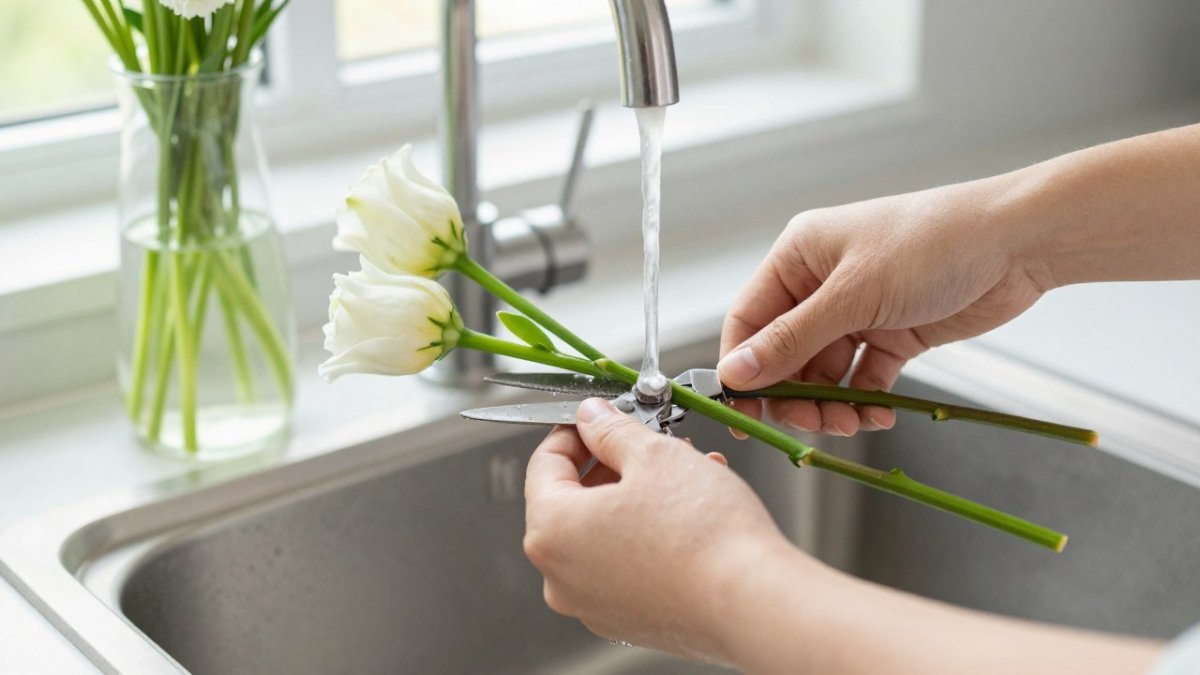
Hands trimming a seasonal flower stem at an angle under running water in a kitchen sink before placing it in a vase

Here is a routine that many florists recommend:

  1. Trim stems at an angle with sharp shears, removing about an inch. An angled cut exposes more surface for water uptake.
  2. Strip leaves below the waterline. Submerged foliage rots and clouds the water.
  3. Use a clean vase. Rinse it with hot water before arranging.
  4. Change the water every two days and re-trim stems each time.
  5. Keep flowers out of direct sun and away from ripening fruit, which releases ethylene that speeds wilting.
  6. Skip the aspirin and pennies. They do not work. A commercial flower food packet does.

Watch out: dropping stems into a vase without a fresh cut is the most common mistake. A stem that has been out of water even an hour seals over at the base and cannot drink.

Flower-by-Flower Conditioning

Different stems need different handling. Tulips and daffodils should be cut and conditioned separately: daffodil sap is harmful to other flowers, so place them in their own vase for a few hours before mixing. Poppies and poinsettias need their stem ends seared with a flame or dipped in boiling water for a few seconds to stop sap flow. Woody stems like lilac and hydrangea benefit from a vertical slit or a light crush at the base to improve water uptake. Hydrangeas wilt easily; if they droop, re-cut the stems and submerge the entire bloom head in cool water for 20 to 30 minutes. Roses should be cut under water if possible and stripped of thorns below the waterline. Dahlias and sweet peas are delicate and do best in shallow, cool water changed daily.

Water Quality and Flower Food

Tap water varies widely in mineral content and pH, and hard water can shorten vase life. If your water is very hard, use filtered water or let tap water sit overnight. Commercial flower food typically contains sugar and other additives; follow the label directions. Homemade mixes of sugar and vinegar or bleach can work in a pinch but are easy to get wrong, and too much sugar feeds bacteria. Stems in flower food often last longer than stems in plain water.

Placement and Temperature

Keep arrangements in a cool spot out of direct sun, heating vents, and drafts. Warm rooms speed aging, so a summer bouquet needs more attention than a winter one. Ethylene from ripening fruit, cigarette smoke, and exhaust can shorten life, so keep flowers away from the fruit bowl and the garage. In warm weather, you can refrigerate arrangements overnight to slow aging, but keep them away from produce.

Troubleshooting Common Problems

If stems go limp while the water is clean, the cut has sealed; re-trim and change the water. If water turns cloudy within a day, bacteria are blooming; clean the vase and re-cut. If blooms fail to open, they were likely cut too tight or stored too cold. If leaves yellow while blooms look fine, submerged foliage is rotting. For the full step-by-step version, read our guide on how to keep fresh flowers alive longer.

The Mood, Decor, and Sustainability Payoff of Local Blooms

Fresh flowers can do more than decorate a room. Many people find that a vase of blooms adds natural fragrance and a focal point to a space.

Local growing shortens the transport distance between field and vase. That means fewer miles traveled, less refrigeration, and a smaller carbon footprint than stems flown in from another continent. Many buyers also value supporting local growers directly, and the quality difference is easy to see.

The environmental case and the quality case point the same direction. A seasonal, locally grown bouquet is usually the fresher, more sustainable, and more distinctive choice. For a deeper look at why local stems outlast imports, see our grower’s guide to why local flowers last longer.

Ordering Seasonal Arrangements from An English Garden

The best way to enjoy seasonal flowers is to order from a florist who works with the season rather than against it. An English Garden has served the area for over 32 years, with secure 24-hour online ordering and delivery to over 30 cities each day.

We also handle occasions that need care and precision, including wedding design with on-site decorating, sympathy and funeral arrangements delivered to local funeral homes and hospitals, and corporate accounts. An award-winning designer is on staff.

Pricing depends on the arrangement, quantity, and delivery date, so check our site for current options or ask for a quote.


Seasonal flowers reward the buyer who plans around what is growing, not against it.

Frequently Asked Questions

Are seasonal flowers fresher than imported flowers?

Many people find seasonal blooms fresher, since they are often harvested closer to peak. Freshness also depends on handling and care after purchase.

Do seasonal flowers cost less than out-of-season flowers?

Often they do. When a flower is in abundance locally, growers and florists can offer more competitive pricing than they can for stems flown in out of season. Exact costs depend on the specific bloom, quantity, and delivery date, so check with your florist for current pricing rather than assuming a fixed number.

How do I choose flowers that are in season?

Ask your local florist what was harvested recently, or check a seasonal flowers by month guide for your region. Look for stems with firm petals, healthy green leaves, and no drooping. In-season blooms like tulips in spring or dahlias in late summer are usually the freshest and most affordable options on the shelf.

Are seasonal flowers more sustainable?

They can be. Locally grown, in-season flowers travel shorter distances, which reduces transport distance and the associated carbon footprint compared with imported or out-of-season stems. Sustainable floristry also favors reusable vessels and fewer chemical treatments, though the exact impact depends on how the flowers were grown and delivered.

Posted on — Leave a comment

How to Hire a Local Wedding Florist

Last Updated: October 26, 2026

Quick Summary

A local wedding florist provides venue familiarity, direct supplier relationships, reliable delivery logistics, and day-of responsiveness that nonlocal services cannot match. Hiring a local wedding florist means flowers arrive fresher, designs are customized through face-to-face consultations, and someone can return immediately if problems arise on your wedding day.

  • A local florist with experience at your venue arrives with a site plan already in mind, knowing ceiling heights, load-in doors, and setup timing.
  • Local florists buy from regional wholesalers and growers, allowing them to source comparable stems at the same price tier when specific blooms are unavailable.
  • A local florist can deliver fresh flowers, make a second trip if arrangements are damaged, and return after the ceremony to move arrangements between spaces.
  • Ask prospective florists three concrete questions: how many events at your venue, which wholesalers they buy from, and what their delivery radius is.
  • An English Garden has served the area for over 32 years and offers bridal consultations, professional setup, and day-of availability for wedding flowers.

Table of Contents

Why Hiring a Local Wedding Florist Matters

Most articles about wedding flowers explain why a professional florist beats DIY. The difference is operational, and it shows up in four places: venue knowledge, supplier access, delivery logistics, and day-of responsiveness. Learn more about why local florists provide better quality.

Venue familiarity. A local florist has likely installed flowers at your venue before. That means knowing the ceiling height for hanging installations, where load-in doors are, whether the site has a freight elevator, which outlets support uplighting, and how early the venue allows setup.

Local supplier relationships. Local florists buy from regional wholesalers and, in many cases, directly from nearby growers. Those relationships affect two things couples care about: substitution quality and lead time.

Delivery logistics. Local matters most in the final 24 hours.

Day-of responsiveness. Weddings produce small emergencies: a broken vase, a wilted boutonniere, a centerpiece that blocks a sightline. A local florist can send someone back with a replacement. A florist three states away cannot.

Pro Tip
When you interview florists, ask three concrete questions: How many events have you done at my venue? Which wholesalers or growers do you buy from? What is your delivery radius, and what happens if something needs replacing on the day?

Local also affects sourcing and seasonality. A florist who buys regionally can tell you which stems will be at peak quality on your date, which reduces both cost and the risk of substitutions. That connection between local sourcing and seasonal availability is covered in more detail below.

Finally, local businesses tend to be accountable to the same community they serve. That is a real benefit, but it is a secondary one.

Professional Floral Design and Personalized Bouquets

Your bridal bouquet and bridesmaids’ arrangements deserve expert design, not a template. A professional florist creates custom designs that reflect your style, wedding theme, and personal preferences. When you work with a local wedding florist, the designer learns your vision during face-to-face consultations rather than through emails and generic questionnaires.

Professional floral design means understanding color theory, seasonal availability, and how flowers photograph under different lighting. It means knowing which blooms hold up through a full day of celebrations and which ones might wilt. An English Garden has an award-winning designer on staff who brings this level of expertise to every bouquet, ensuring your flowers look fresh and stunning from ceremony through the last dance.

Personalized bouquets aren’t just about picking flowers you like. They’re about creating arrangements that match your skin tone, complement your dress, and tell your story. A local wedding florist can adjust designs in real time if you change your mind after seeing samples, and they can source specific flowers that might not be available through larger online services.

Ceremony and Reception Decor with Floral Installations

Your ceremony and reception spaces need floral arrangements that match your venue’s scale and style. Ceremony flowers frame the moment you exchange vows, while reception centerpieces set the mood for your celebration. Explore the best flowers for wedding centerpieces to find options that match your vision. A local wedding florist understands how to balance drama with functionality, creating installations that photograph beautifully and don’t obstruct sightlines.

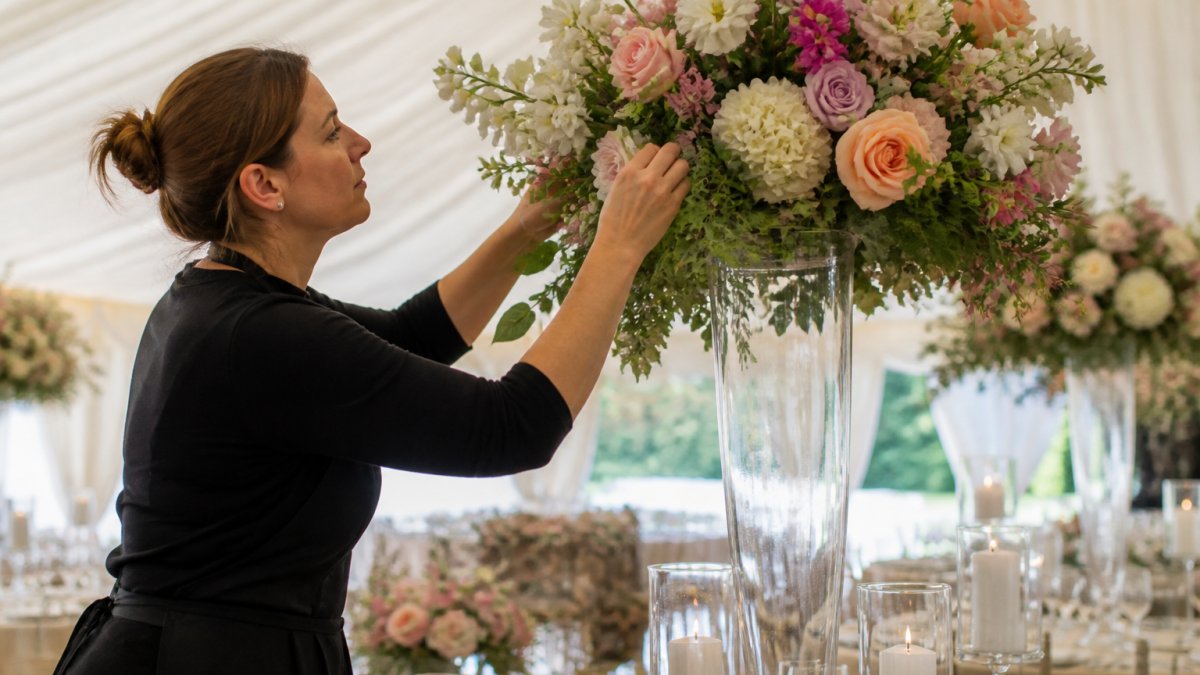
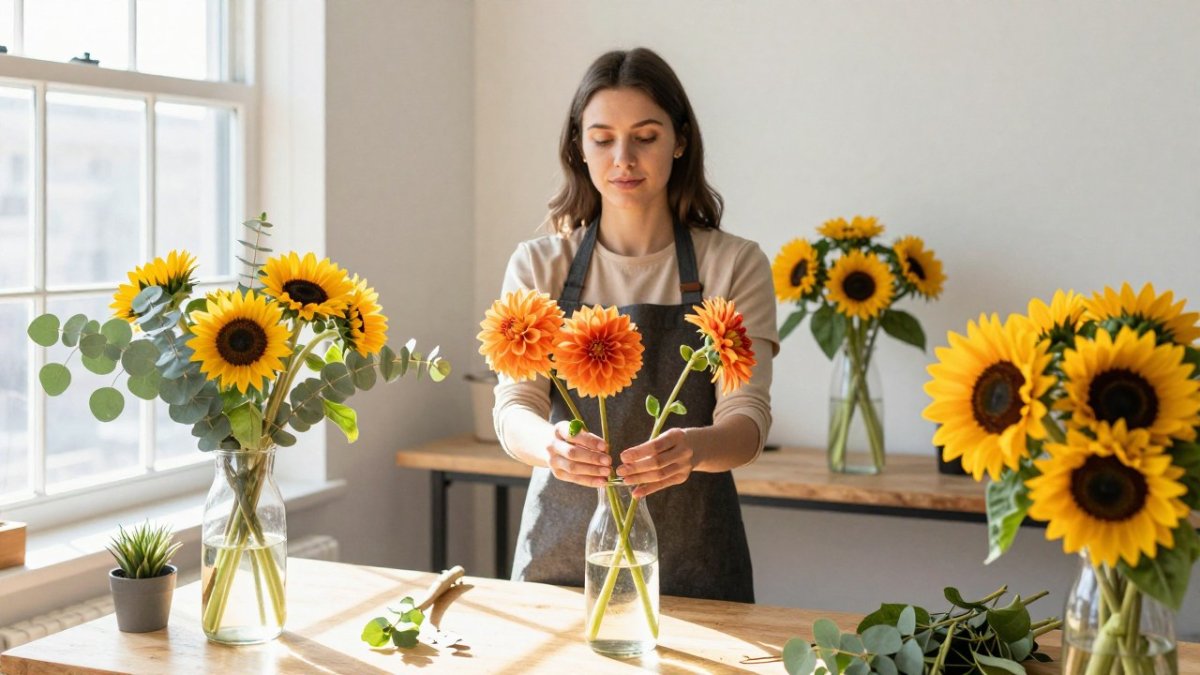
A local wedding florist arranges vibrant fresh flowers in tall glass vases at an elegant reception venue.

Floral installations, archways, backdrops, and statement arrangements, require technical skill and on-site coordination. An English Garden specializes in expert design services for weddings and special events, including on-site decorating. This means we can install arrangements the morning of your wedding, adjust them as needed, and ensure everything stays fresh throughout your celebration. We handle the logistics so you can focus on enjoying your day.

Local florists also understand your specific venue’s constraints: ceiling heights, electrical access, whether you need to work around existing décor. This knowledge comes from experience, not guesswork.

Questions to Ask Your Wedding Florist Before Booking

Before you commit to a local wedding florist, ask these key questions to ensure they’re the right fit for your vision and needs.

How long have you been designing wedding flowers? Experience matters. Ask about their design background and how many weddings they’ve done.

Can you work within my budget? Discuss your total floral budget and what that includes. Does it cover bridal and bridesmaids’ bouquets, ceremony flowers, reception centerpieces, and installations? A good local wedding florist will help you prioritize where to invest based on what guests will see most.

What happens if a flower isn’t available on my wedding day? Ask about their substitution policy. A reliable florist will show you alternatives that match your vision rather than making changes without your input.

Will you be involved on wedding day? Confirm that your local wedding florist will personally oversee setup and be available if issues arise. This is a critical difference between local service and ordering from a national website.

Can you coordinate with my other vendors? Your florist should communicate with your venue coordinator, photographer, and planner to ensure everything flows smoothly.

The Wedding Flower Consultation Process

The consultation is where your vision becomes real. During your initial meeting with a local wedding florist, you’ll discuss your wedding date, venue, wedding style, color palette, and budget. This is your chance to share inspiration photos, talk about flowers you love, and ask questions about what’s realistic.

Get Started Today →

At An English Garden, we offer bridal consultation appointments where we listen to your ideas and share our expertise. We show you flower samples, discuss seasonal availability, and create a design plan that works for your timeline and budget. A good consultation takes time, rushing through this step often leads to disappointment later.

During the consultation, ask to see the florist’s portfolio of past wedding work. Look for designs that match your aesthetic and venue type. A local wedding florist’s portfolio should show variety, attention to detail, and a clear design point of view.

The consultation also establishes your timeline. Discuss delivery and setup times, and confirm who’s responsible for transporting arrangements to different locations.

DIY Wedding Flowers vs. Hiring a Professional Florist

Couples usually compare three options, not two: DIY, an online or national floral service, and a local florist. Each trades off differently on cost, control, customization, and risk.

DIY. DIY is cheapest on paper and most expensive in time.

Online and national services. These services offer convenience and predictable packaging, and they can be a reasonable fit for elopements or very small events. The trade-offs are customization and day-of support.

Local florist. A local florist costs more than DIY and is usually comparable to or somewhat above online services once delivery and setup are included, but the scope is different.

Key Takeaway
A simple decision rule: choose DIY if your guest count is small and your designs are simple; choose an online service only for very small events where template designs are acceptable; choose a local florist when customization, venue fit, and day-of reliability matter more than the lowest line-item price.

What DIY actually involves. Even simple arrangements require conditioning, stripping lower leaves, arranging in foam or vessels, and securing with tape or wire. Multiply that by bouquets for you and your attendants, plus centerpieces for every table and ceremony pieces. Most couples who choose DIY underestimate this by a wide margin.

What a professional handles. Your florist arrives with finished arrangements, installs them, adjusts as needed, and manages problems.

A note on nonlocal florists. A florist based far from your venue can still do excellent design work, but they face the same constraints as online services on delivery and day-of fixes.

Each option trades off differently on cost, control, customization, and risk.

Option Best For Key Trade-offs
DIY Small weddings with simple designs Cheapest upfront; most time-consuming; you absorb all risk
Online and national services Elopements or very small events Convenient and predictable; template-based designs; no day-of support
Local florist Customization and venue fit matter most Higher cost; includes design, delivery, setup, and day-of reliability

Wedding Flower Delivery and Setup on Your Wedding Day

On your wedding day, reliable delivery and setup make all the difference. Your flowers arrive fresh, stay cool until the last moment, and get installed by someone who understands your vision. A local wedding florist coordinates timing with your venue, photographer, and other vendors to ensure flowers are in place at the right moment.

An English Garden offers convenient daily floral delivery to venues throughout the area. We arrive with your arrangements, set them up according to your design plan, and confirm everything looks exactly as you envisioned. If a centerpiece needs adjustment or a ceremony arrangement shifts during setup, we handle it immediately.

Professional setup also means your flowers are protected during the chaos of wedding day. Your florist knows how to position arrangements so they’re safe from spills, aren’t in the photographer’s way, and survive the activity of your celebration. This attention to detail is what separates a beautiful flower delivery from flowers that look great all day long.

Booking Your Local Wedding Florist

Once you’ve found a local wedding florist who understands your vision and fits your budget, the booking process should be straightforward. A good florist provides a written proposal that details all floral arrangements, delivery and setup fees, timeline, and payment terms.

Confirm all details in writing: wedding date, venue address, delivery time, setup location, and contact information for the day of your wedding. Ask about payment schedule, many florists require a deposit to secure your date and final payment before delivery.

Work with a local wedding florist who makes you feel heard and supported. Your flowers are a significant investment in your wedding day, and you deserve a vendor who takes that seriously. An English Garden’s professional, warm, and community-focused approach means you’re not just getting beautiful flowers, you’re getting a partner invested in making your wedding day perfect.


Choosing a local wedding florist transforms your wedding from a beautiful event into a thoughtfully designed celebration. The expertise, reliability, and personal attention a professional brings can’t be replicated through online ordering or DIY efforts.

Frequently Asked Questions

What should I ask a wedding florist before hiring them?

Ask about their experience with weddings, portfolio examples, availability on your date, pricing structure, whether they handle setup and delivery, their flower sourcing practices, and how they handle substitutions if certain flowers aren’t available. Request references from past couples and clarify their response time if issues arise on the wedding day. Understanding their process for consultations and revisions helps ensure they align with your vision.

How far in advance should I book a wedding florist?

Booking your local wedding florist in advance gives them time to block your date, plan your floral design, source seasonal and specialty flowers, and coordinate with your venue and other vendors. Earlier booking generally provides more flexibility.

Is hiring a wedding florist worth the cost?

Yes. A professional florist reduces your wedding-planning stress, brings design expertise you may not have, handles flower care and preparation, manages delivery and setup logistics, and solves unexpected problems on the day. They source fresh, quality flowers, create cohesive floral design across your ceremony and reception, and coordinate with your venue and other vendors. The time and labor you save, plus the polished result, typically justify the investment.

Can a wedding florist help with setup and delivery?

Yes. Most local wedding florists offer wedding flower delivery and setup as part of their service. They arrange flowers at your ceremony location, set up centerpieces and installations at your reception, and coordinate timing with your venue coordinator and photographer. Confirm these services, associated fees, and their arrival time during your wedding flower consultation so everything is coordinated smoothly on your wedding day.