Posted on — Leave a comment

A Guide to Mokena Wedding Florist On Site Decorating

Last Updated: November 10, 2026

Quick Summary

On-site wedding decorating means your wedding florist delivers, builds, places, and later removes every floral and decor element at your venue instead of handing you boxes to arrange yourself. A typical decorating day runs delivery and staging, ceremony install, reception build, a final walkthrough, and teardown at an agreed time.

  • Bring your venue name, guest count, and a realistic total flower budget to the consultation.
  • A complete quote should itemize delivery, labor and installation, rentals, and taxes and fees separately.
  • Confirm in writing whether your florist handles the ceremony-to-reception transition and how long the venue allows.
  • Ask for the substitution policy in writing, including whether you are notified before the event.
  • An English Garden has served the community for over 32 years and delivers to over 30 cities daily.
Planning wedding flowers in Mokena?We design, deliver, install, and tear down wedding florals on site.

Book a Decorating Consultation

Table of Contents

What On-Site Wedding Decorating Actually Covers

On-site wedding decorating is the service where a florist delivers, builds, places, and later removes every floral and decor element at your venue, rather than handing you boxes to arrange yourself.
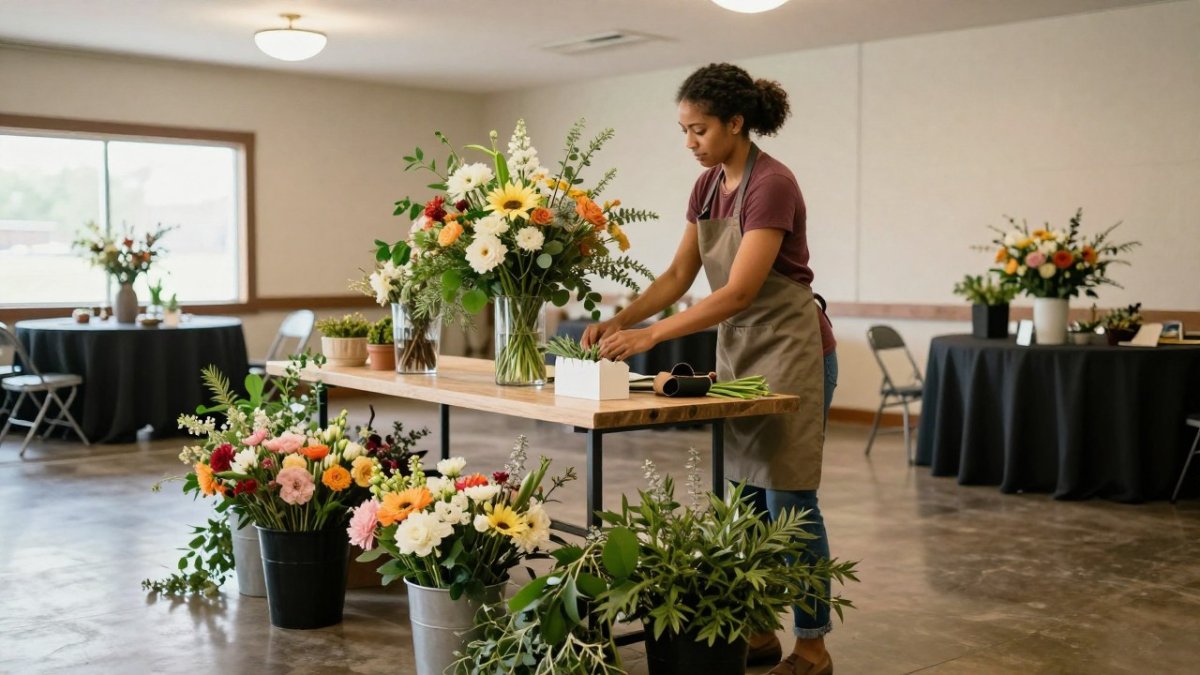
Infographic illustrating the wedding florist process for setting up floral centerpieces at a banquet hall.

A centerpiece looks simple on a table, but building it on site at the right height, with the right water source and lighting, is a different job entirely. That is what you are paying for.

From Delivery Van to Teardown: The Full Setup Sequence

A typical on-site decorating day runs in a fixed order, and knowing it helps you plan your own schedule around it.

  1. Delivery and staging. Flowers arrive in buckets and are staged in a service area, not the main room.
  2. Ceremony install first. Arbors, aisle pieces, and entry arrangements go up before the room fills.
  3. Reception build. Centerpieces, head table, bar, and accent arrangements are placed and leveled.
  4. Final walkthrough. The lead designer checks sightlines, water levels, and placement against the floor plan.
  5. Teardown. The team returns at an agreed time to strike the setup and remove rentals.

Your Wedding Flower Consultation and Design Proposal

A wedding flower consultation is a working session where you and the designer settle on floral style, color, budget, and scope, and it should end with a written design proposal. That proposal is your contract in plain language: what is being built, how many pieces, and what it costs to install.

Bring three things to the consultation: your venue name, your overall guest count, and a realistic total budget for flowers. From there, the designer can translate inspiration into pieces that fit the room. If you are still shaping centerpiece ideas, browsing best flowers for wedding centerpieces before the meeting gives you a concrete starting point.

The proposal should list every arrangement by name and quantity, note the installation window, and state clearly what happens with rentals.

How Wedding Florist Prices Are Built in the Mokena Area

Wedding florist prices are built from four inputs: the flower varieties you choose, the number of pieces, the labor to install them, and delivery distance. Two florists can price the same bouquet list differently because one includes on-site labor and one does not.

Pricing depends on quantity, dates, and delivery, so we recommend requesting a quote for each wedding individually. Couples working to a tighter number can review affordable wedding flower packages to see how piece counts and varieties shift the total.

The Cost Drivers That Move a Quote Most

When couples ask why one proposal is higher than another for what looks like the same wedding, the answer usually sits in one of these drivers:

  • Variety and stem count. A centerpiece built from garden roses and peonies costs more in stems than one built from carnations, mums, and greenery.
  • Piece count and scale. Tall centerpieces, large arbors, and hanging installations use more material and labor per piece than low centerpieces.
  • Installation labor. On-site decorating is time-based work, and the labor line is where quotes most often diverge.

Line Items You Should See on Any Quote

A complete quote separates these categories. If several are missing, ask why.

Line Item What It Covers Why It Matters
Personal flowers Bouquets, boutonnieres, corsages Often quoted as a bundle, so check counts
Ceremony flowers Arbor, aisle, entry pieces Installation labor should appear separately
Reception flowers Centerpieces, head table, bar Quantity per table must be explicit
Delivery fee Transport to venue Distance and trip count drive this
Labor and installation Setup and teardown time The most commonly omitted line
Rentals Vases, stands, arbors Confirm whether return shipping is included
Taxes and fees Sales tax, service charges Should be itemized, not folded into the total

How to Compare Two Proposals Side by Side

A lower total is not automatically the better value. To compare proposals fairly, line them up against the same questions:

  1. Does each quote include installation and teardown, or is that billed separately?
  2. Are piece counts and stem counts comparable?
  3. Is the ceremony-to-reception transition included, and by whom?
  4. Are rentals included, and who handles their return?
  5. Is delivery one trip or several, and is the venue within the standard radius?
  6. Are taxes and fees itemized?
  7. What is the substitution policy, and does it affect price?

Watch out: a quote that lists a single lump sum with no breakdown makes it impossible to compare scope, so ask for an itemized version before signing.

Questions to Ask a Wedding Florist Before You Sign

The right questions surface how a florist handles the day itself, not how they photograph. Ask about responsiveness on the wedding day, who the lead designer will be, and the backup plan if a variety is unavailable.

A common mistake is choosing on price per centerpiece alone. If you want a structured way to vet providers, this step-by-step guide on how to choose a wedding florist in Mokena walks through the full set of questions.

What Wedding Floral Setup Looks Like on the Day

On the wedding day, floral setup is a timed operation, not a single delivery. The team arrives within an agreed window, builds the ceremony pieces first, then moves to the reception while the ceremony is underway or after it clears.

What most guides miss is the ceremony-to-reception transition. To picture the finished setup, browse best wedding floral arrangements and note which elements repeat from ceremony to reception.

Venue Logistics, Weather, and Flower Substitutions

Venue logistics decide more of your floral plan than your inspiration board does. Load-in windows, service elevator access, table sizes, and open-flame rules all constrain what can be built and how long installation takes. Share the venue name at the consultation so the florist can confirm the venue’s rules with the coordinator.

What to Confirm With the Venue Before Design Approval

Most venues publish or provide a vendor packet, and the floral-relevant details usually live in a few specific places. Ask the coordinator to confirm each of these in writing:

  • Load-in and load-out windows. When can vendors enter, and is there a hard out time?
  • Access route. Is there a loading dock, service elevator, or freight entrance, and are there stairs or thresholds that affect large arbor pieces?
  • Setup restrictions. Are hanging installations allowed, and are there weight limits or rigging points vendors must use?

Watch out: a venue that allows candles at the reception may prohibit them during the ceremony, or restrict them to enclosed holders only, so confirm the policy for each space rather than assuming one rule covers the day.

Ceremony-to-Reception Transitions and Room Flips

If your ceremony and reception share a space, the room flip is the most schedule-sensitive part of the floral plan. Repurposing ceremony pieces at the reception requires hands and a scheduled window. Confirm in writing with your florist how the move will be handled and how long the venue allows for the flip.

Weather, Seasonality, and Backup Plans for Outdoor Ceremonies

Outdoor ceremonies in the region face real seasonal swings. Summer heat wilts delicate varieties such as hydrangea and sweet pea quickly, and direct sun on an arch can undo wiring and ribbon work within hours.

Ask what the backup plan is if the ceremony moves indoors on short notice. Ask whether a weather-driven relocation would change the installation window or require additional labor.

How Flower Substitutions Actually Work

Fresh flowers are agricultural, and no florist can promise an exact variety months out. A substitution policy should state what happens when a variety is unavailable: whether the florist substitutes a comparable flower in the same color and price range, whether you are notified before the event, and whether any cost difference is passed through or absorbed. Ask for the policy in writing before signing, and read the wedding flower substitution policy so you know how swaps are handled.

Planning Timeline and Booking Checklist

Booking a wedding florist works best on a timeline that starts well before the wedding, not weeks out. Peak-season dates fill first, and the consultation and proposal stage takes real time. Use this checklist to keep the sequence straight.

  • Book the venue and confirm load-in and load-out windows
  • Set a total floral budget and a per-category split
  • Schedule the consultation at least several months ahead
  • Receive the written design proposal and review every line item

Book Your On-Site Decorating Consultation

The couples who end up relaxed on the wedding day settled the logistics months earlier: a written proposal, a confirmed installation window, a named lead designer, and a substitution policy you have actually read.

An English Garden has served this community for over 32 years, with expert design services for weddings and special events, including on-site decorating. Our award-winning designer on staff, secure 24-hour online ordering, and delivery to over 30 cities each day support your planning.

Frequently Asked Questions

What does on-site wedding floral decorating include?

On-site decorating typically covers delivery and placement of the arrangements at the venue. A wedding florist brings bouquets, ceremony pieces, centerpieces, and table arrangements to the venue, then positions each item according to the approved design plan. Setup usually includes pinning personal flowers, dressing the ceremony arch or aisle, and placing reception centerpieces. Ask your florist exactly where setup ends and teardown begins so nothing is left for your family to handle.

How much does wedding floral decorating cost?

Wedding florist prices depend on the number of arrangements, flower varieties, season, delivery distance, and how much labor the on-site setup requires. A small ceremony with bouquets and a few centerpieces costs far less than a full reception with installations and rentals. Because every wedding differs, most florists build a custom quote after a consultation. Request an itemized proposal so you can see delivery fees, labor, and container rentals separately, then compare proposals on scope rather than the bottom line alone.

When should I book a wedding florist?

Book six to twelve months before the wedding for peak spring and fall dates, and earlier if your venue requires a preferred vendor or your date falls near a holiday. Start with a wedding flower consultation once you have a venue and a rough guest count, since both shape the design and the budget. Popular Mokena-area dates fill quickly, so secure your florist before finalizing smaller details. A signed contract with a deposit locks in your date and gives you time to refine the design.

What questions should I ask a wedding florist before booking?

Ask how long they have worked in the area, whether they handle setup and teardown themselves, and what happens if a flower variety is unavailable. Confirm delivery fees, labor charges, and whether containers are rented or included. Request references or reviews from recent weddings at your venue. Also ask who your day-of contact will be and how they coordinate with the venue coordinator. Clear answers to these questions to ask a wedding florist reveal whether the team can deliver on the day.

How long does wedding floral setup take?

Setup time depends on the scale of the design and the venue’s access rules. A simple ceremony and reception might take two to four hours, while installations, large centerpieces, and multiple rooms can require a full morning. Most florists arrive several hours before guests and work around the venue’s load-in window. Confirm the setup schedule in your contract and check whether the venue charges for early access. Building in a buffer protects your timeline if delivery runs late.

Can one florist decorate both the ceremony and reception?

Yes, and using one florist for both keeps your style consistent and often reduces cost. A single team can repurpose ceremony pieces, such as aisle arrangements or arch flowers, into the reception space during cocktail hour. This approach can reduce duplicate arrangements and simplify coordination. Ask your florist whether they plan for repurposing and who handles moving the flowers. Confirm the venue allows the transition and that staffing covers the extra labor.

Posted on — Leave a comment

How to Hire a Local Wedding Florist

Last Updated: October 26, 2026

Quick Summary

A local wedding florist provides venue familiarity, direct supplier relationships, reliable delivery logistics, and day-of responsiveness that nonlocal services cannot match. Hiring a local wedding florist means flowers arrive fresher, designs are customized through face-to-face consultations, and someone can return immediately if problems arise on your wedding day.

  • A local florist with experience at your venue arrives with a site plan already in mind, knowing ceiling heights, load-in doors, and setup timing.
  • Local florists buy from regional wholesalers and growers, allowing them to source comparable stems at the same price tier when specific blooms are unavailable.
  • A local florist can deliver fresh flowers, make a second trip if arrangements are damaged, and return after the ceremony to move arrangements between spaces.
  • Ask prospective florists three concrete questions: how many events at your venue, which wholesalers they buy from, and what their delivery radius is.
  • An English Garden has served the area for over 32 years and offers bridal consultations, professional setup, and day-of availability for wedding flowers.

Table of Contents

Why Hiring a Local Wedding Florist Matters

Most articles about wedding flowers explain why a professional florist beats DIY. The difference is operational, and it shows up in four places: venue knowledge, supplier access, delivery logistics, and day-of responsiveness. Learn more about why local florists provide better quality.

Venue familiarity. A local florist has likely installed flowers at your venue before. That means knowing the ceiling height for hanging installations, where load-in doors are, whether the site has a freight elevator, which outlets support uplighting, and how early the venue allows setup.

Local supplier relationships. Local florists buy from regional wholesalers and, in many cases, directly from nearby growers. Those relationships affect two things couples care about: substitution quality and lead time.

Delivery logistics. Local matters most in the final 24 hours.

Day-of responsiveness. Weddings produce small emergencies: a broken vase, a wilted boutonniere, a centerpiece that blocks a sightline. A local florist can send someone back with a replacement. A florist three states away cannot.

Pro Tip
When you interview florists, ask three concrete questions: How many events have you done at my venue? Which wholesalers or growers do you buy from? What is your delivery radius, and what happens if something needs replacing on the day?

Local also affects sourcing and seasonality. A florist who buys regionally can tell you which stems will be at peak quality on your date, which reduces both cost and the risk of substitutions. That connection between local sourcing and seasonal availability is covered in more detail below.

Finally, local businesses tend to be accountable to the same community they serve. That is a real benefit, but it is a secondary one.

Professional Floral Design and Personalized Bouquets

Your bridal bouquet and bridesmaids’ arrangements deserve expert design, not a template. A professional florist creates custom designs that reflect your style, wedding theme, and personal preferences. When you work with a local wedding florist, the designer learns your vision during face-to-face consultations rather than through emails and generic questionnaires.

Professional floral design means understanding color theory, seasonal availability, and how flowers photograph under different lighting. It means knowing which blooms hold up through a full day of celebrations and which ones might wilt. An English Garden has an award-winning designer on staff who brings this level of expertise to every bouquet, ensuring your flowers look fresh and stunning from ceremony through the last dance.

Personalized bouquets aren’t just about picking flowers you like. They’re about creating arrangements that match your skin tone, complement your dress, and tell your story. A local wedding florist can adjust designs in real time if you change your mind after seeing samples, and they can source specific flowers that might not be available through larger online services.

Ceremony and Reception Decor with Floral Installations

Your ceremony and reception spaces need floral arrangements that match your venue’s scale and style. Ceremony flowers frame the moment you exchange vows, while reception centerpieces set the mood for your celebration. Explore the best flowers for wedding centerpieces to find options that match your vision. A local wedding florist understands how to balance drama with functionality, creating installations that photograph beautifully and don’t obstruct sightlines.

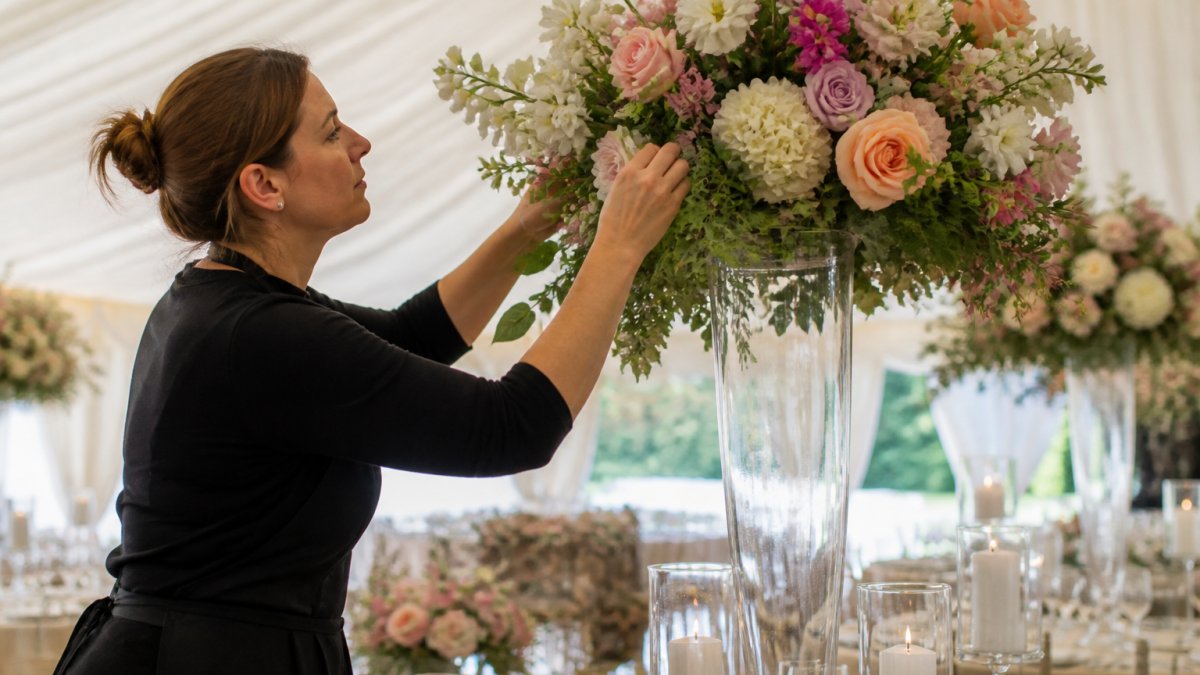
A local wedding florist arranges vibrant fresh flowers in tall glass vases at an elegant reception venue.

Floral installations, archways, backdrops, and statement arrangements, require technical skill and on-site coordination. An English Garden specializes in expert design services for weddings and special events, including on-site decorating. This means we can install arrangements the morning of your wedding, adjust them as needed, and ensure everything stays fresh throughout your celebration. We handle the logistics so you can focus on enjoying your day.

Local florists also understand your specific venue’s constraints: ceiling heights, electrical access, whether you need to work around existing décor. This knowledge comes from experience, not guesswork.

Questions to Ask Your Wedding Florist Before Booking

Before you commit to a local wedding florist, ask these key questions to ensure they’re the right fit for your vision and needs.

How long have you been designing wedding flowers? Experience matters. Ask about their design background and how many weddings they’ve done.

Can you work within my budget? Discuss your total floral budget and what that includes. Does it cover bridal and bridesmaids’ bouquets, ceremony flowers, reception centerpieces, and installations? A good local wedding florist will help you prioritize where to invest based on what guests will see most.

What happens if a flower isn’t available on my wedding day? Ask about their substitution policy. A reliable florist will show you alternatives that match your vision rather than making changes without your input.

Will you be involved on wedding day? Confirm that your local wedding florist will personally oversee setup and be available if issues arise. This is a critical difference between local service and ordering from a national website.

Can you coordinate with my other vendors? Your florist should communicate with your venue coordinator, photographer, and planner to ensure everything flows smoothly.

The Wedding Flower Consultation Process

The consultation is where your vision becomes real. During your initial meeting with a local wedding florist, you’ll discuss your wedding date, venue, wedding style, color palette, and budget. This is your chance to share inspiration photos, talk about flowers you love, and ask questions about what’s realistic.

Get Started Today →

At An English Garden, we offer bridal consultation appointments where we listen to your ideas and share our expertise. We show you flower samples, discuss seasonal availability, and create a design plan that works for your timeline and budget. A good consultation takes time, rushing through this step often leads to disappointment later.

During the consultation, ask to see the florist’s portfolio of past wedding work. Look for designs that match your aesthetic and venue type. A local wedding florist’s portfolio should show variety, attention to detail, and a clear design point of view.

The consultation also establishes your timeline. Discuss delivery and setup times, and confirm who’s responsible for transporting arrangements to different locations.

DIY Wedding Flowers vs. Hiring a Professional Florist

Couples usually compare three options, not two: DIY, an online or national floral service, and a local florist. Each trades off differently on cost, control, customization, and risk.

DIY. DIY is cheapest on paper and most expensive in time.

Online and national services. These services offer convenience and predictable packaging, and they can be a reasonable fit for elopements or very small events. The trade-offs are customization and day-of support.

Local florist. A local florist costs more than DIY and is usually comparable to or somewhat above online services once delivery and setup are included, but the scope is different.

Key Takeaway
A simple decision rule: choose DIY if your guest count is small and your designs are simple; choose an online service only for very small events where template designs are acceptable; choose a local florist when customization, venue fit, and day-of reliability matter more than the lowest line-item price.

What DIY actually involves. Even simple arrangements require conditioning, stripping lower leaves, arranging in foam or vessels, and securing with tape or wire. Multiply that by bouquets for you and your attendants, plus centerpieces for every table and ceremony pieces. Most couples who choose DIY underestimate this by a wide margin.

What a professional handles. Your florist arrives with finished arrangements, installs them, adjusts as needed, and manages problems.

A note on nonlocal florists. A florist based far from your venue can still do excellent design work, but they face the same constraints as online services on delivery and day-of fixes.

Each option trades off differently on cost, control, customization, and risk.

Option Best For Key Trade-offs
DIY Small weddings with simple designs Cheapest upfront; most time-consuming; you absorb all risk
Online and national services Elopements or very small events Convenient and predictable; template-based designs; no day-of support
Local florist Customization and venue fit matter most Higher cost; includes design, delivery, setup, and day-of reliability

Wedding Flower Delivery and Setup on Your Wedding Day

On your wedding day, reliable delivery and setup make all the difference. Your flowers arrive fresh, stay cool until the last moment, and get installed by someone who understands your vision. A local wedding florist coordinates timing with your venue, photographer, and other vendors to ensure flowers are in place at the right moment.

An English Garden offers convenient daily floral delivery to venues throughout the area. We arrive with your arrangements, set them up according to your design plan, and confirm everything looks exactly as you envisioned. If a centerpiece needs adjustment or a ceremony arrangement shifts during setup, we handle it immediately.

Professional setup also means your flowers are protected during the chaos of wedding day. Your florist knows how to position arrangements so they’re safe from spills, aren’t in the photographer’s way, and survive the activity of your celebration. This attention to detail is what separates a beautiful flower delivery from flowers that look great all day long.

Booking Your Local Wedding Florist

Once you’ve found a local wedding florist who understands your vision and fits your budget, the booking process should be straightforward. A good florist provides a written proposal that details all floral arrangements, delivery and setup fees, timeline, and payment terms.

Confirm all details in writing: wedding date, venue address, delivery time, setup location, and contact information for the day of your wedding. Ask about payment schedule, many florists require a deposit to secure your date and final payment before delivery.

Work with a local wedding florist who makes you feel heard and supported. Your flowers are a significant investment in your wedding day, and you deserve a vendor who takes that seriously. An English Garden’s professional, warm, and community-focused approach means you’re not just getting beautiful flowers, you’re getting a partner invested in making your wedding day perfect.


Choosing a local wedding florist transforms your wedding from a beautiful event into a thoughtfully designed celebration. The expertise, reliability, and personal attention a professional brings can’t be replicated through online ordering or DIY efforts.

Frequently Asked Questions

What should I ask a wedding florist before hiring them?

Ask about their experience with weddings, portfolio examples, availability on your date, pricing structure, whether they handle setup and delivery, their flower sourcing practices, and how they handle substitutions if certain flowers aren’t available. Request references from past couples and clarify their response time if issues arise on the wedding day. Understanding their process for consultations and revisions helps ensure they align with your vision.

How far in advance should I book a wedding florist?

Booking your local wedding florist in advance gives them time to block your date, plan your floral design, source seasonal and specialty flowers, and coordinate with your venue and other vendors. Earlier booking generally provides more flexibility.

Is hiring a wedding florist worth the cost?

Yes. A professional florist reduces your wedding-planning stress, brings design expertise you may not have, handles flower care and preparation, manages delivery and setup logistics, and solves unexpected problems on the day. They source fresh, quality flowers, create cohesive floral design across your ceremony and reception, and coordinate with your venue and other vendors. The time and labor you save, plus the polished result, typically justify the investment.

Can a wedding florist help with setup and delivery?

Yes. Most local wedding florists offer wedding flower delivery and setup as part of their service. They arrange flowers at your ceremony location, set up centerpieces and installations at your reception, and coordinate timing with your venue coordinator and photographer. Confirm these services, associated fees, and their arrival time during your wedding flower consultation so everything is coordinated smoothly on your wedding day.