Posted on — Leave a comment

A Guide to Mokena Wedding Florist On Site Decorating

Last Updated: November 10, 2026

Quick Summary

On-site wedding decorating means your wedding florist delivers, builds, places, and later removes every floral and decor element at your venue instead of handing you boxes to arrange yourself. A typical decorating day runs delivery and staging, ceremony install, reception build, a final walkthrough, and teardown at an agreed time.

  • Bring your venue name, guest count, and a realistic total flower budget to the consultation.
  • A complete quote should itemize delivery, labor and installation, rentals, and taxes and fees separately.
  • Confirm in writing whether your florist handles the ceremony-to-reception transition and how long the venue allows.
  • Ask for the substitution policy in writing, including whether you are notified before the event.
  • An English Garden has served the community for over 32 years and delivers to over 30 cities daily.
Planning wedding flowers in Mokena?We design, deliver, install, and tear down wedding florals on site.

Book a Decorating Consultation

Table of Contents

What On-Site Wedding Decorating Actually Covers

On-site wedding decorating is the service where a florist delivers, builds, places, and later removes every floral and decor element at your venue, rather than handing you boxes to arrange yourself.
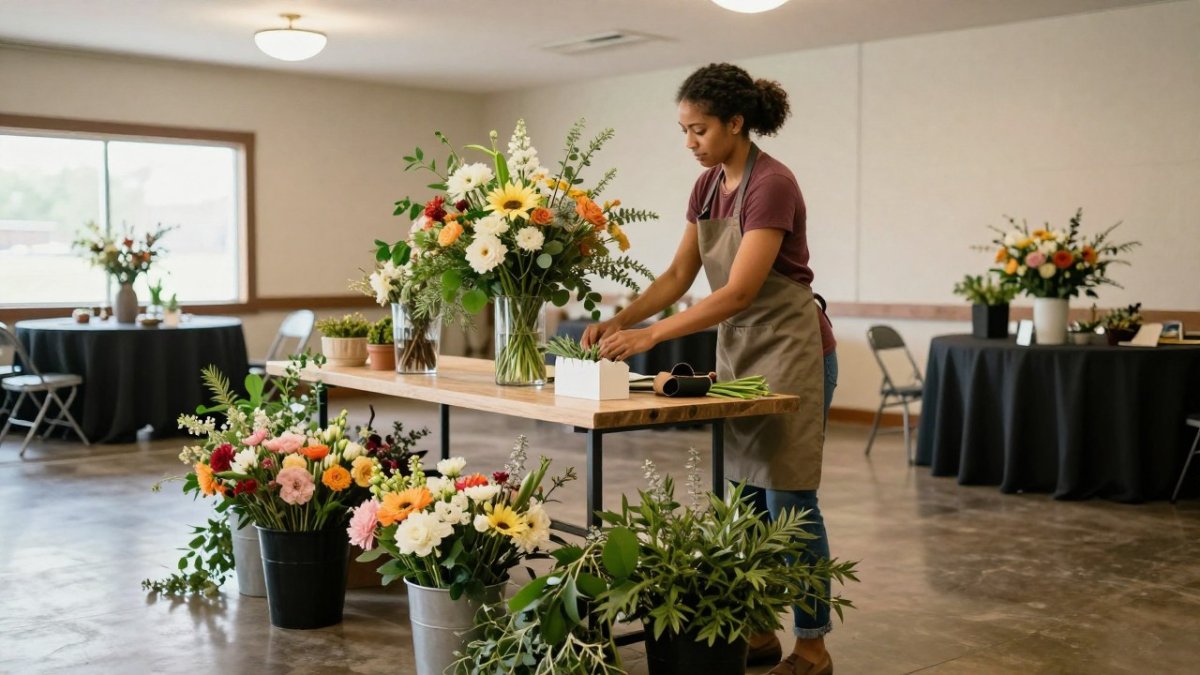
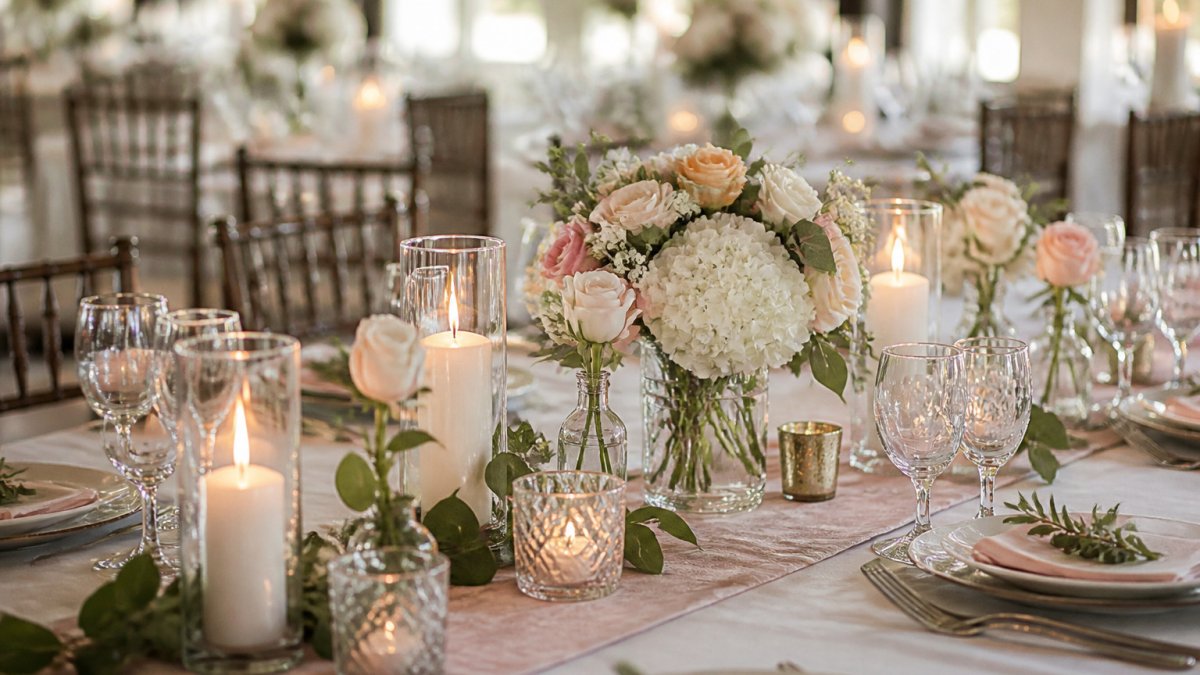
Infographic illustrating the wedding florist process for setting up floral centerpieces at a banquet hall.

A centerpiece looks simple on a table, but building it on site at the right height, with the right water source and lighting, is a different job entirely. That is what you are paying for.

From Delivery Van to Teardown: The Full Setup Sequence

A typical on-site decorating day runs in a fixed order, and knowing it helps you plan your own schedule around it.

  1. Delivery and staging. Flowers arrive in buckets and are staged in a service area, not the main room.
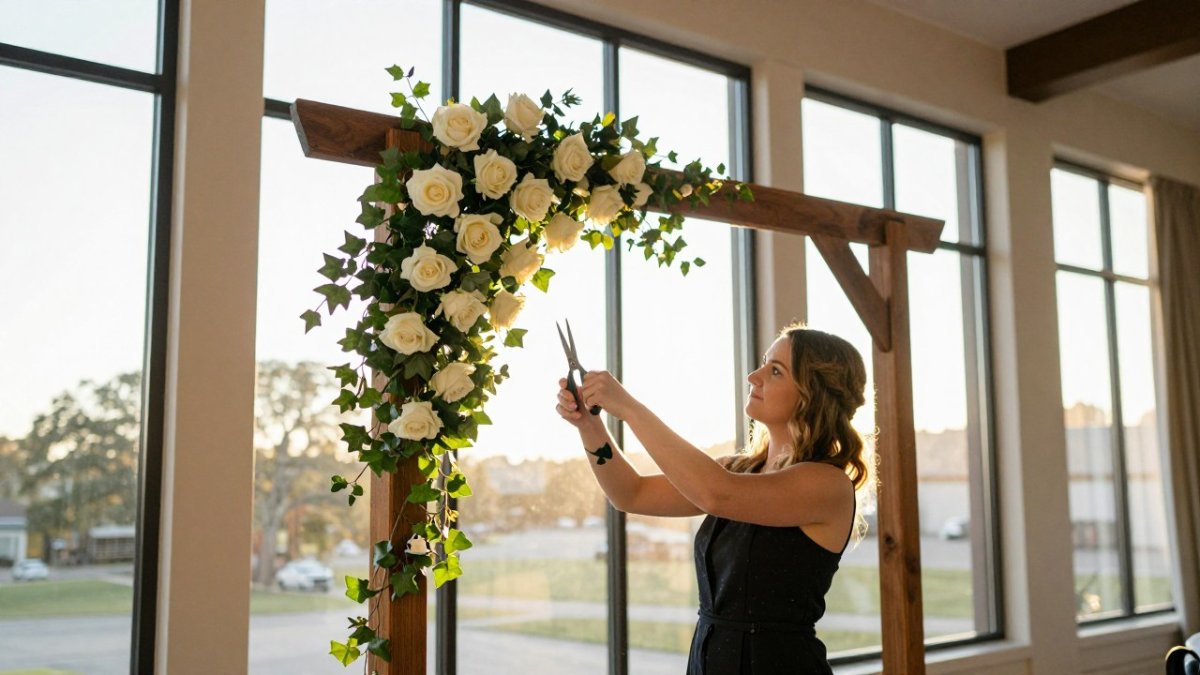
  2. Ceremony install first. Arbors, aisle pieces, and entry arrangements go up before the room fills.
  3. Reception build. Centerpieces, head table, bar, and accent arrangements are placed and leveled.
  4. Final walkthrough. The lead designer checks sightlines, water levels, and placement against the floor plan.
  5. Teardown. The team returns at an agreed time to strike the setup and remove rentals.

Your Wedding Flower Consultation and Design Proposal

A wedding flower consultation is a working session where you and the designer settle on floral style, color, budget, and scope, and it should end with a written design proposal. That proposal is your contract in plain language: what is being built, how many pieces, and what it costs to install.

Bring three things to the consultation: your venue name, your overall guest count, and a realistic total budget for flowers. From there, the designer can translate inspiration into pieces that fit the room. If you are still shaping centerpiece ideas, browsing best flowers for wedding centerpieces before the meeting gives you a concrete starting point.

The proposal should list every arrangement by name and quantity, note the installation window, and state clearly what happens with rentals.

How Wedding Florist Prices Are Built in the Mokena Area

Wedding florist prices are built from four inputs: the flower varieties you choose, the number of pieces, the labor to install them, and delivery distance. Two florists can price the same bouquet list differently because one includes on-site labor and one does not.

Pricing depends on quantity, dates, and delivery, so we recommend requesting a quote for each wedding individually. Couples working to a tighter number can review affordable wedding flower packages to see how piece counts and varieties shift the total.

The Cost Drivers That Move a Quote Most

When couples ask why one proposal is higher than another for what looks like the same wedding, the answer usually sits in one of these drivers:

  • Variety and stem count. A centerpiece built from garden roses and peonies costs more in stems than one built from carnations, mums, and greenery.
  • Piece count and scale. Tall centerpieces, large arbors, and hanging installations use more material and labor per piece than low centerpieces.
  • Installation labor. On-site decorating is time-based work, and the labor line is where quotes most often diverge.

Line Items You Should See on Any Quote

A complete quote separates these categories. If several are missing, ask why.

Line Item What It Covers Why It Matters
Personal flowers Bouquets, boutonnieres, corsages Often quoted as a bundle, so check counts
Ceremony flowers Arbor, aisle, entry pieces Installation labor should appear separately
Reception flowers Centerpieces, head table, bar Quantity per table must be explicit
Delivery fee Transport to venue Distance and trip count drive this
Labor and installation Setup and teardown time The most commonly omitted line
Rentals Vases, stands, arbors Confirm whether return shipping is included
Taxes and fees Sales tax, service charges Should be itemized, not folded into the total

How to Compare Two Proposals Side by Side

A lower total is not automatically the better value. To compare proposals fairly, line them up against the same questions:

  1. Does each quote include installation and teardown, or is that billed separately?
  2. Are piece counts and stem counts comparable?
  3. Is the ceremony-to-reception transition included, and by whom?
  4. Are rentals included, and who handles their return?
  5. Is delivery one trip or several, and is the venue within the standard radius?
  6. Are taxes and fees itemized?
  7. What is the substitution policy, and does it affect price?

Watch out: a quote that lists a single lump sum with no breakdown makes it impossible to compare scope, so ask for an itemized version before signing.

Questions to Ask a Wedding Florist Before You Sign

The right questions surface how a florist handles the day itself, not how they photograph. Ask about responsiveness on the wedding day, who the lead designer will be, and the backup plan if a variety is unavailable.

A common mistake is choosing on price per centerpiece alone. If you want a structured way to vet providers, this step-by-step guide on how to choose a wedding florist in Mokena walks through the full set of questions.

What Wedding Floral Setup Looks Like on the Day

On the wedding day, floral setup is a timed operation, not a single delivery. The team arrives within an agreed window, builds the ceremony pieces first, then moves to the reception while the ceremony is underway or after it clears.

What most guides miss is the ceremony-to-reception transition. To picture the finished setup, browse best wedding floral arrangements and note which elements repeat from ceremony to reception.

Venue Logistics, Weather, and Flower Substitutions

Venue logistics decide more of your floral plan than your inspiration board does. Load-in windows, service elevator access, table sizes, and open-flame rules all constrain what can be built and how long installation takes. Share the venue name at the consultation so the florist can confirm the venue’s rules with the coordinator.

What to Confirm With the Venue Before Design Approval

Most venues publish or provide a vendor packet, and the floral-relevant details usually live in a few specific places. Ask the coordinator to confirm each of these in writing:

  • Load-in and load-out windows. When can vendors enter, and is there a hard out time?
  • Access route. Is there a loading dock, service elevator, or freight entrance, and are there stairs or thresholds that affect large arbor pieces?
  • Setup restrictions. Are hanging installations allowed, and are there weight limits or rigging points vendors must use?

Watch out: a venue that allows candles at the reception may prohibit them during the ceremony, or restrict them to enclosed holders only, so confirm the policy for each space rather than assuming one rule covers the day.

Ceremony-to-Reception Transitions and Room Flips

If your ceremony and reception share a space, the room flip is the most schedule-sensitive part of the floral plan. Repurposing ceremony pieces at the reception requires hands and a scheduled window. Confirm in writing with your florist how the move will be handled and how long the venue allows for the flip.

Weather, Seasonality, and Backup Plans for Outdoor Ceremonies

Outdoor ceremonies in the region face real seasonal swings. Summer heat wilts delicate varieties such as hydrangea and sweet pea quickly, and direct sun on an arch can undo wiring and ribbon work within hours.

Ask what the backup plan is if the ceremony moves indoors on short notice. Ask whether a weather-driven relocation would change the installation window or require additional labor.

How Flower Substitutions Actually Work

Fresh flowers are agricultural, and no florist can promise an exact variety months out. A substitution policy should state what happens when a variety is unavailable: whether the florist substitutes a comparable flower in the same color and price range, whether you are notified before the event, and whether any cost difference is passed through or absorbed. Ask for the policy in writing before signing, and read the wedding flower substitution policy so you know how swaps are handled.

Planning Timeline and Booking Checklist

Booking a wedding florist works best on a timeline that starts well before the wedding, not weeks out. Peak-season dates fill first, and the consultation and proposal stage takes real time. Use this checklist to keep the sequence straight.

  • Book the venue and confirm load-in and load-out windows
  • Set a total floral budget and a per-category split
  • Schedule the consultation at least several months ahead
  • Receive the written design proposal and review every line item

Book Your On-Site Decorating Consultation

The couples who end up relaxed on the wedding day settled the logistics months earlier: a written proposal, a confirmed installation window, a named lead designer, and a substitution policy you have actually read.

An English Garden has served this community for over 32 years, with expert design services for weddings and special events, including on-site decorating. Our award-winning designer on staff, secure 24-hour online ordering, and delivery to over 30 cities each day support your planning.

Frequently Asked Questions

What does on-site wedding floral decorating include?

On-site decorating typically covers delivery and placement of the arrangements at the venue. A wedding florist brings bouquets, ceremony pieces, centerpieces, and table arrangements to the venue, then positions each item according to the approved design plan. Setup usually includes pinning personal flowers, dressing the ceremony arch or aisle, and placing reception centerpieces. Ask your florist exactly where setup ends and teardown begins so nothing is left for your family to handle.

How much does wedding floral decorating cost?

Wedding florist prices depend on the number of arrangements, flower varieties, season, delivery distance, and how much labor the on-site setup requires. A small ceremony with bouquets and a few centerpieces costs far less than a full reception with installations and rentals. Because every wedding differs, most florists build a custom quote after a consultation. Request an itemized proposal so you can see delivery fees, labor, and container rentals separately, then compare proposals on scope rather than the bottom line alone.

When should I book a wedding florist?

Book six to twelve months before the wedding for peak spring and fall dates, and earlier if your venue requires a preferred vendor or your date falls near a holiday. Start with a wedding flower consultation once you have a venue and a rough guest count, since both shape the design and the budget. Popular Mokena-area dates fill quickly, so secure your florist before finalizing smaller details. A signed contract with a deposit locks in your date and gives you time to refine the design.

What questions should I ask a wedding florist before booking?

Ask how long they have worked in the area, whether they handle setup and teardown themselves, and what happens if a flower variety is unavailable. Confirm delivery fees, labor charges, and whether containers are rented or included. Request references or reviews from recent weddings at your venue. Also ask who your day-of contact will be and how they coordinate with the venue coordinator. Clear answers to these questions to ask a wedding florist reveal whether the team can deliver on the day.

How long does wedding floral setup take?

Setup time depends on the scale of the design and the venue’s access rules. A simple ceremony and reception might take two to four hours, while installations, large centerpieces, and multiple rooms can require a full morning. Most florists arrive several hours before guests and work around the venue’s load-in window. Confirm the setup schedule in your contract and check whether the venue charges for early access. Building in a buffer protects your timeline if delivery runs late.

Can one florist decorate both the ceremony and reception?

Yes, and using one florist for both keeps your style consistent and often reduces cost. A single team can repurpose ceremony pieces, such as aisle arrangements or arch flowers, into the reception space during cocktail hour. This approach can reduce duplicate arrangements and simplify coordination. Ask your florist whether they plan for repurposing and who handles moving the flowers. Confirm the venue allows the transition and that staffing covers the extra labor.

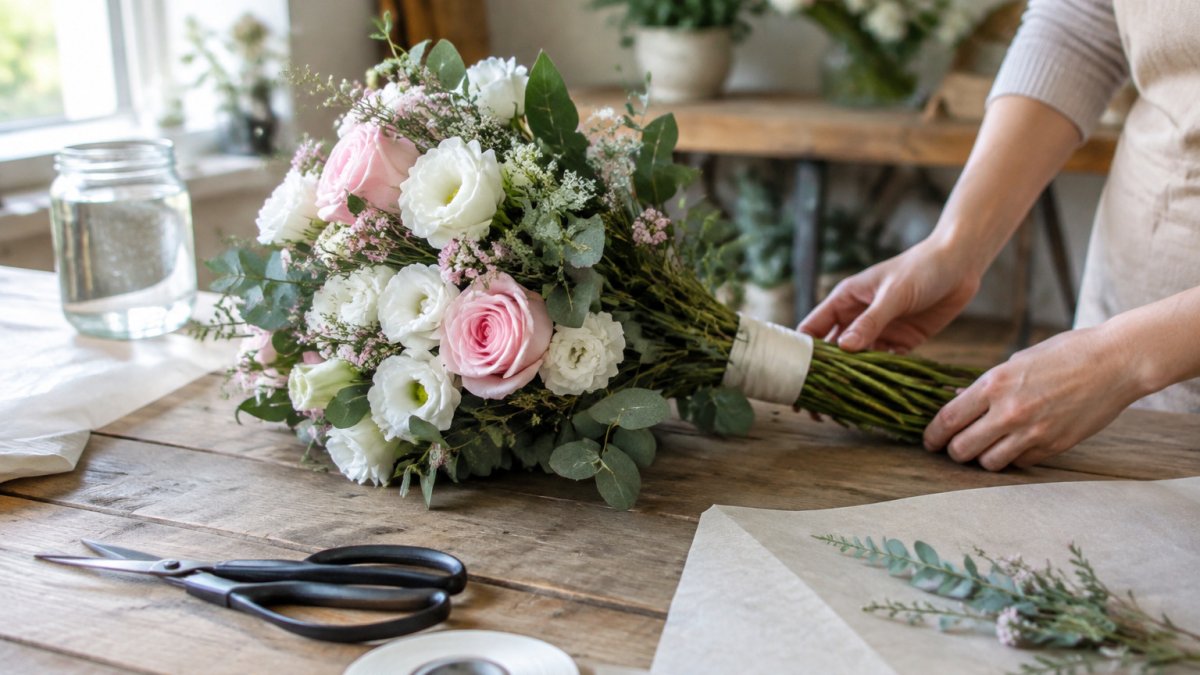
Posted on — Leave a comment

How Do You Preserve a Wedding Bouquet at Home?

Quick Summary

The most reliable ways to preserve a wedding bouquet at home are silica gel drying, air drying, and pressing. Silica gel gives the most lifelike results, while air drying costs almost nothing. Start within 48 hours of the wedding for the best outcome.

  • Start preserving within 48 hours of the wedding, before the flowers wilt.
  • Silica gel drying takes five to seven days in a sealed container.
  • Air drying usually takes two to three weeks, hung upside down in a dry, dark room.
  • Keep preserved flowers out of direct sun, heat, and humid rooms like bathrooms.
  • Dust with a soft brush and never wipe petals with a damp cloth.

Table of Contents

Last Updated: November 5, 2026

How do you preserve a wedding bouquet at home? The most reliable methods are silica gel drying, air drying, and pressing, and each one suits different flowers and budgets. This guide walks through the options, the timing, and the mistakes that tend to ruin an otherwise beautiful bouquet. Understanding the natural decay process of your chosen blooms helps manage expectations for their final appearance, a topic explored further in our flower longevity guide.

Preserving a bouquet is worth considering because the flowers carried on your wedding day are often the only physical element of the ceremony you can keep. Fresh flowers last only days, but a properly dried bouquet can be displayed for years. Many couples choose to preserve it for an anniversary display, a shadow box, or a keepsake that sits alongside their wedding photos.

Choosing the Right Flowers for Drying

Not every bloom responds well to preservation. Flowers with thick, sturdy petals such as roses, statice, lavender, and strawflowers tend to hold their shape and color, while delicate, watery blooms are often better suited to pressing than to air drying.

Before the wedding, ask your florist which stems were chosen with preservation in mind.

How to Preserve a Wedding Bouquet with Silica Gel

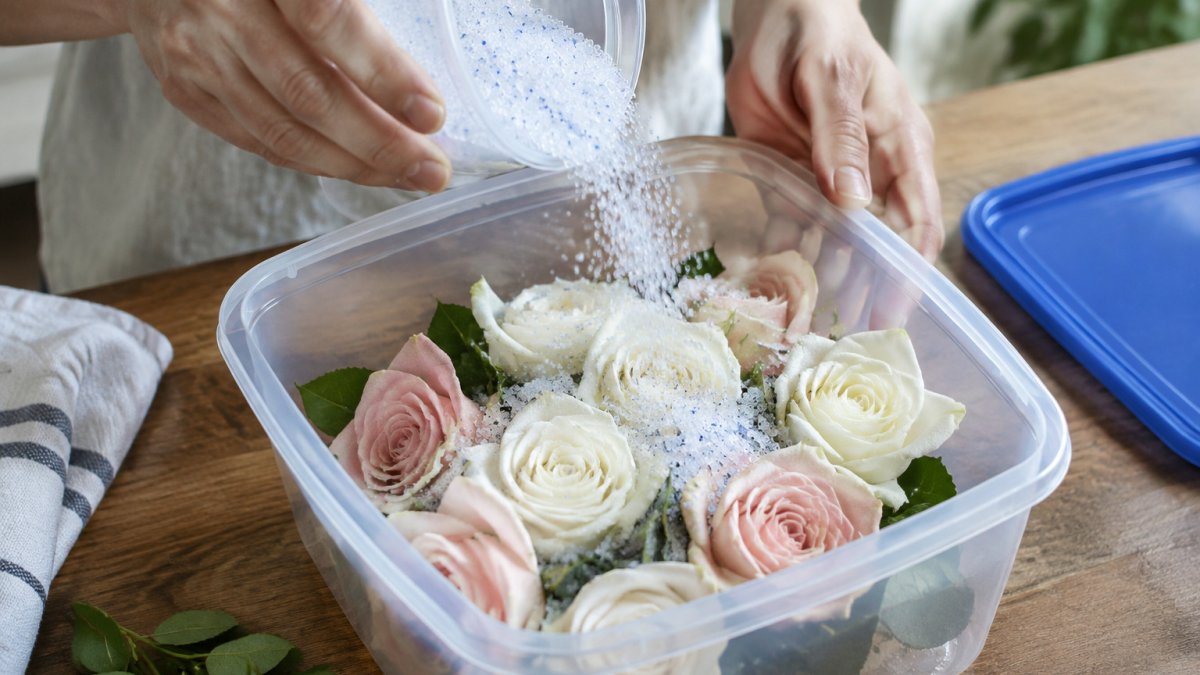
Silica gel, a desiccant that draws moisture out of plant tissue, is the method most often recommended for keeping a bouquet’s shape and color. It takes longer than air drying but produces the most lifelike results.

Step-by-step process of covering a wedding bouquet with silica gel inside an airtight container

Preparing Flowers and the Right Timeline (48-Hour Rule)

Start within 48 hours of the wedding. Flowers that have been out of water for longer tend to wilt before the drying process can lock in their shape. Remove foliage, trim stems to about one inch, and keep the bouquet in a cool, dark space with good ventilation until you begin.

Step-by-Step Silica Gel Process

  1. Choose an airtight container large enough for the blooms to lie flat.
  2. Pour a layer of silica gel into the bottom, about half an inch deep.
  3. Place the flowers face up and gently cover them with more gel, working it between the petals with a soft brush.
  4. Seal the container and leave it undisturbed for five to seven days.
  5. Carefully lift the flowers out and brush off any remaining crystals.

Watch out: silica gel that has absorbed moisture stops working, so keep the container sealed between uses and replace the gel if it no longer looks crisp and dry.

Air Drying Wedding Flowers: The Low-Cost Option

Air drying costs almost nothing and works well for sturdy, low-moisture flowers. Hang the bouquet upside down in a dry, dark room with good airflow, such as a closet or attic. Drying usually takes two to three weeks. The result is softer and more muted than silica gel, which many couples find charming.

A common mistake is hanging the bouquet in a humid bathroom or a sunlit window, where it fades or develops mold.

Wedding Bouquet Preservation Kit vs. DIY Supplies

Preservation kits bundle a container, gel, and instructions, which suits first-time preservers. Buying supplies separately, such as a sealed container, a bag of silica gel, and a soft brush, lets you reuse materials for future projects.

Option Best For Effort Level
Preservation kit First-time preservers Low
DIY silica gel supplies Budget-conscious couples Medium
Air drying Sturdy, low-moisture blooms Low
Pressing Flat keepsakes and frames Medium

What Professional Wedding Flower Preservation Costs

Pricing for professional preservation depends on factors such as the size and complexity of the bouquet, the method chosen, the display finish, and the turnaround time. For current pricing and a quote, contact An English Garden directly or check the website.

A useful way to think about the decision is to compare any professional quote against the value you place on the bouquet and how long you want to display it.

Ask any preservation provider these questions before you commit:

Get Started Today →

  • What is the total price, and what does it include (cleaning, drying, design, display vessel, shipping)?
  • Is there a deposit, and is it refundable if a bloom fails during drying?
  • What is the turnaround time in weeks, and is rush service available at an added cost?
  • What happens if a flower in the bouquet cannot be preserved and must be substituted or omitted?
  • Is there a warranty or rework policy if the finished piece arrives damaged?

Watch out: a low quote that excludes the display vessel, shipping, or design labor can end up costing more than a quote that bundles those items.

Timing affects results as much as method, so confirm any drop-off window with your provider in writing. Get the quote and the terms in writing before shipping or delivering your bouquet, and keep a photo record of the bouquet as it looked on the wedding day in case a substitution question arises later.

Displaying, Caring for, and Troubleshooting Your Preserved Bouquet

The longer game is keeping color, shape, and structure intact for years, and that comes down to controlling three enemies: ultraviolet light, humidity, and physical contact.

Display. Keep preserved flowers out of direct sun and away from heat sources such as radiators, fireplaces, and kitchen stoves. A glass shadow box or a sealed display case slows dust and humidity exposure, but even an open frame should sit in a room with stable temperature and moderate humidity. Rotate the piece occasionally so one side does not fade faster than the other. Avoid hanging preserved bouquets in bathrooms, basements, or attics, where humidity swings are largest.

Long-term care. Dust with a soft brush or a can of compressed air held at a distance; never wipe petals with a damp cloth, which can lift color and soften the dried tissue. Keep silica gel packets in the display case if it is sealed, and replace them when they lose their crisp feel. Handle the piece by the frame or base, not the blooms, since dried petals detach easily.

Flower-specific expectations. Roses and statice tend to hold color and shape well for years; lavender can shed florets over time; delicate blooms like hydrangea and peonies are the first to brown or crumble, so they are better suited to pressing or resin than to open-air display. If your bouquet mixes sturdy and delicate stems, expect the delicate ones to set the lifespan of the piece.

Troubleshooting. If petals crumble, the flowers were likely not fully dried before storage; the fix is longer drying time next attempt, not more handling. If color fades rapidly, light exposure is the usual cause, so move the piece to a darker spot. If you see fuzzy gray or white growth, moisture was trapped during drying or storage; isolate the piece, improve airflow, and discard any blooms with active mold rather than trying to salvage them. If petals drop on handling, the piece is likely too dry or was exposed to heat, and the best response is to stop touching it and stabilize the environment.

Eco-friendly alternatives. If chemical desiccants or resin are a concern, pressing into a frame and air drying sturdy stems are the lowest-impact options, and both avoid the non-biodegradable materials that resin and some kits use. Whichever method you choose, the display and care routine above is what determines whether the piece lasts one season or ten.

Booking Your Bouquet Care and Design Consultation

If you would rather have professionals handle the process, An English Garden offers wedding design consultations, and our team can help you choose stems that dry well from the start. You can book a bridal consultation to discuss your bouquet and preservation plans directly.

For guidance on selecting blooms that hold up well, see our wedding flower selection guide, and if you’re weighing at-home methods, our bouquet preservation comparison covers other options that avoid wilting.

Frequently Asked Questions

How can I preserve my wedding bouquet myself?

You can preserve a wedding bouquet at home using silica gel or air drying. Start within 48 hours of the wedding, remove excess foliage, and keep the stems trimmed. For silica gel, bury the blooms in a sealed container of desiccant for roughly one to two weeks, depending on flower thickness. For air drying, hang the bouquet upside down in a cool, dark, ventilated space for several weeks. Both methods work best for flowers with sturdy petals, such as roses, hydrangeas and statice.

Is preserving a wedding bouquet worth it?

Preserving a bouquet is worth it if the flowers held sentimental value and you want a lasting keepsake. Results vary by flower type, so delicate blooms may lose color or shape. A preserved bouquet displayed in a shadow box or glass dome can hold its look for years when kept out of direct sunlight and away from humidity. If you care most about the exact look of the day, a professional photo of the bouquet may be a better fit.

What does it cost to preserve a wedding bouquet?

Professional preservation pricing depends on bouquet size, flower types, and turnaround time. For current pricing, contact An English Garden directly for a quote or check the website for available options.

How soon after the wedding should I preserve my bouquet?

Preserve the bouquet within 48 hours of the wedding, while the flowers are still fresh and hydrated. Waiting longer makes it harder to retain color and petal structure. If you cannot dry it right away, store it in a cool place out of direct sun, but do not refrigerate it for long periods.

Posted on — Leave a comment

The Best Floral Decor for Events: A Complete Guide

Last Updated: October 28, 2026

Quick Summary

The best floral decor for events supports the room rather than competing with it, balancing scale, color, placement, and durability so guests notice the atmosphere first. Start with the room, guest count, and sightlines before choosing any stems.

  • Match arrangement scale to the space and the height of the furniture.
  • Keep table centerpieces under about 12 inches so guests can see each other.
  • Choose two or three in-season anchor blooms and approve substitutions in advance.
  • Use lightly scented or unscented blooms near dining and buffet areas.
  • Check venue rules on ceiling hanging and wall attachments early.

Table of Contents

What Makes Floral Decor Work for Events

Floral decor works for events when it supports the room rather than competing with it. The best floral decor for events balances scale, color, and placement so guests notice the atmosphere first and the flowers second. That balance is what separates a space that feels considered from one that feels like an afterthought.

Most planners start with the flowers they like and work backward. The stronger approach starts with the room, the guest count, and the sightlines. A low arrangement that looks lush on a table can disappear in a ballroom, and a towering installation can block the conversation it was meant to frame. Before choosing a single stem, measure where people will stand, sit, and walk.

Four factors shape nearly every successful event floral plan:

  • Scale: Arrangements should match the size of the space and the height of the furniture.
  • Color: Palettes tied to the event theme or company colors feel intentional in photos and in person.
  • Placement: Focal points belong where guests naturally look, such as the entry, the stage, or the dessert table.
  • Durability: Flowers must hold up for the full event, including warm rooms and long evenings.

Watch out: Heavy fragrance near food and buffet areas can bother guests with sensitivities. Choose lightly scented or unscented blooms for dining and serving zones.

Event Floral Centerpieces That Suit Your Tables

Centerpieces are the most common entry point for event floral decor, and they are also the easiest place to go wrong. The right height depends on how guests sit and talk. A centerpiece that blocks eye contact across a round table defeats its own purpose, so most planners keep the composition either well below or well above seated eye level.

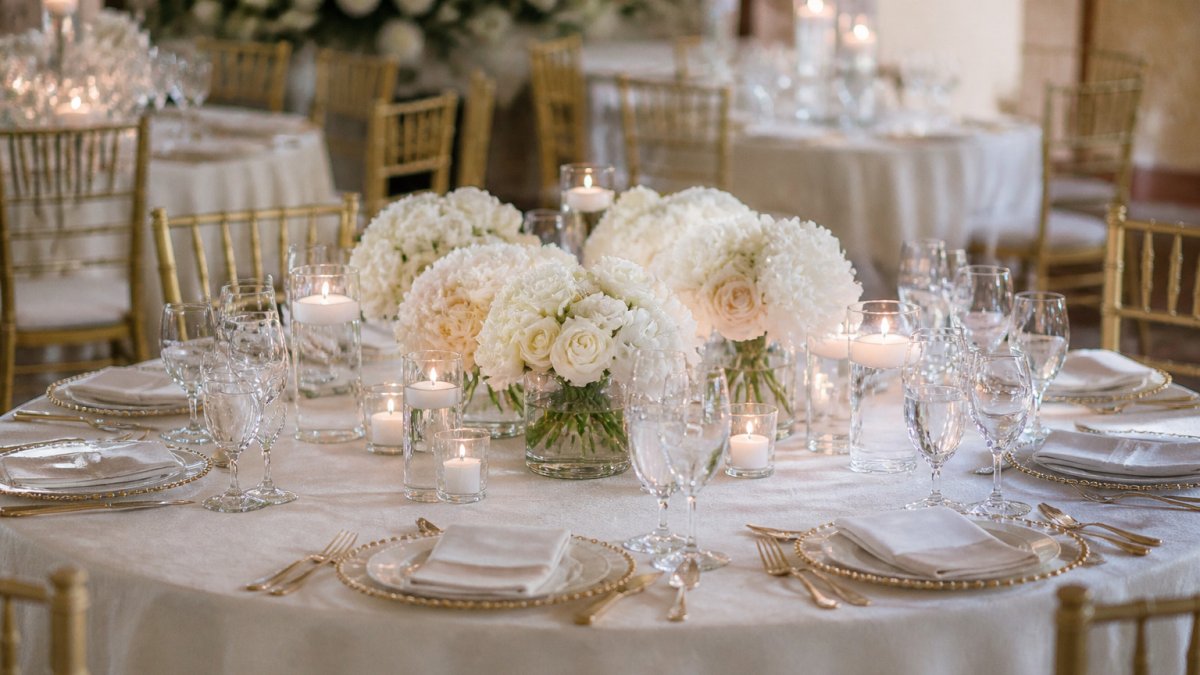
Infographic mapping the best floral decor for events with low rose and peony centerpieces for wedding tables

Round banquet tables set for a reception benefit from a low, dense arrangement at the center, repeated with a similar piece on every table so the room reads as unified. Long rectangular tables work well with a runner of smaller clusters spaced down the center, which keeps sightlines open from one end to the other.

Low Arrangements for Conversation

Low arrangements keep guests connected across the table. Keep them under about 12 inches tall so faces remain visible, and use shallow containers that let stems spread outward. Mixed garden blooms, roses, and greenery are common choices because they look full from every angle without rising into the line of sight.

Tall Arrangements and Mason Jar Displays

Tall arrangements add vertical drama to larger rooms, but they belong at the perimeter of a table, on a sideboard, or on a stand near the walls. For a more relaxed or rustic look, clusters of small blooms in mason jars or glass bottles create a casual feel. Group them in odd numbers and vary the heights so the arrangement looks collected rather than uniform.

The article sets clear height limits for centerpieces, so here is a quick reference.

Centerpiece type Best for Key guideline
Low arrangement Conversation across the table Keep under about 12 inches tall
Tall arrangement Larger rooms, perimeter or sideboard Place at table edge or on a stand
Mason jar cluster Casual or rustic look Group in odd numbers, vary heights

Floral Installation Ideas for Events

Installations turn a room into a destination. Arches, hanging arrangements, and wall or column treatments give guests something to photograph and move toward, and they often anchor the entry or the ceremony area. Because they are large, they need planning for weight, anchoring, and access before the event day.

Common installation options include:

  1. Ceremony or entry arches, which frame a walkway or stage and draw guests forward.
  2. Hanging florals suspended over a dance floor or lounge area, adding height without taking up floor space.
  3. Column or wall treatments that soften structural elements and create backdrops for photo areas.
  4. Stage and podium arrangements that frame speakers and keep the focus where it belongs.

Plan installations around how people move. An arch placed where guests bunch up at check-in will create a bottleneck, while one placed at the start of a natural walking route guides traffic smoothly. Check venue rules on ceiling hanging and wall attachments early, since many spaces restrict what can be fixed to walls or rafters.

Flowers for Corporate Events and Branded Spaces

Corporate events call for a different tone than weddings. The goal is usually to reinforce a brand, welcome clients, or recognize employees without overwhelming a professional setting. Arrangements that echo company colors, paired with clean greenery, tend to read as polished and appropriate.

Registration tables, reception desks, and lobby displays are high-value spots for florals because they greet every attendee. Keep these pieces compact enough that they do not crowd the check-in process, and position them so staff can move around them easily. For conferences and larger gatherings, repeat a consistent look across the venue so attendees recognize the event as a single experience.

Flowers also work well as thoughtful gifts in a business setting. A well-chosen arrangement delivered to a client office or a team member’s desk can support relationships and recognition. Ask whether the program can deliver on a predictable schedule, since consistent quality matters more when orders repeat.

Choosing Seasonal Flowers for Events

Seasonal flowers are usually fresher, more affordable, and easier to source locally than out-of-season imports. Spring events often feature tulips, ranunculus, and lilac, while summer favors dahlias, sunflowers, and hydrangeas. Autumn brings chrysanthemums and berries, and winter events typically rely on evergreens, amaryllis, and white blooms.

Get Started Today →

The stronger approach is to treat seasonality as a design constraint rather than a shopping list. Start with the event date and the palette, then identify which blooms are reliably available in that window. Build the design around two or three anchor flowers that are in season, and use greenery, fillers, and texture to carry the look if a preferred bloom is short-lived or unavailable. This keeps the arrangement coherent even when a specific variety cannot be sourced.

A season-by-season planning frame helps:

  • Spring: Cool-season blooms often have shorter vase life in warm rooms. Plan delivery close to the event and keep arrangements out of direct sun.
  • Summer: Heat is the main risk. Hydrangeas and similar blooms wilt quickly without water, so choose containers that hold moisture and plan for mid-event checks on focal pieces.
  • Autumn: Textural elements such as berries and dried accents add depth, but some berries and foliage are not safe around food service or small children. Confirm toxicity and placement before using them near dining areas.
  • Winter: Evergreens and forced bulbs provide color when few fresh stems are available. Evergreen pieces can be assembled earlier than fresh blooms, which helps with tight setup windows.

Booking flowers in season also reduces the risk of substitutions. When a specific variety is out of season, a florist may need to swap it, which can change the palette. Discuss flexible color ranges early so the design still works if availability shifts. A useful mechanism is to approve a primary bloom, a secondary option, and a color range in advance, so substitutions stay within the approved design rather than becoming a last-minute negotiation.

Artificial and dried flowers are a practical alternative for venues that restrict live plant material or for events with long setup windows. Silk arrangements hold their shape and color without water, though they lack the scent and natural movement of fresh stems. Dried florals can suit rustic or outdoor themes, but they need to be kept away from heat and humidity to hold their color. For venues with fire rules or food-service restrictions, confirm whether dried material and candles can be used together before finalizing the design.

Key Takeaway
Choose two or three in-season anchor blooms, approve a substitution range in advance, and let greenery and texture carry the design when availability shifts. That approach protects both the palette and the budget.

Budgeting for Event Floral Decor

Floral budgets vary widely because cost depends on quantity, flower variety, installation complexity, delivery, and setup time. Rather than guessing at a total, build the budget from the decor plan. List every area that needs flowers, estimate how many pieces each requires, and then price the options that fit your timeline and venue.

A practical way to structure the number is to separate it into four buckets: product, labor, logistics, and contingency. Product covers stems, containers, foam-free mechanics, and rental pieces. Labor covers design time, on-site installation, and teardown. Logistics covers delivery, vehicle access, and any venue fees for load-in or after-hours work. Contingency is the buffer most first-time planners forget; a common pattern is to hold back a small percentage of the total for substitutions, extra pieces, or a last-minute focal arrangement.

Several choices move costs more than others:

  • Flower variety: Out-of-season or specialty blooms cost more than seasonal staples. A single statement bloom used sparingly often costs less than filling the same space with a premium variety throughout.
  • Quantity and density: Full, dense arrangements use more stems than loose designs. Airy, garden-style compositions can read as lush while using fewer stems per piece.
  • Installations: Arches and hanging pieces require labor, materials, and sometimes rental equipment. They also carry higher risk, so budget for a site check and a backup plan.
  • Labor and setup: On-site design and teardown add time that should appear in the budget. Venues with tight load-in windows can push labor into premium hours.
  • Containers and rentals: Vases, stands, and mechanical bases are often rented rather than bought. Rental reduces upfront cost but adds return logistics and damage liability.

For current pricing and a quote tailored to your event, contact An English Garden directly.

Pro Tip
Build the floral budget last, after the guest count, venue, and floor plan are set. Those three inputs determine how many pieces you need and where the high-impact spend belongs.

Booking Your Event Florals With An English Garden

An English Garden has served the Mokena, Illinois area for over 32 years, providing expert design services for weddings and special events, including on-site decorating.

We welcome corporate accounts and offer secure 24-hour online ordering.

Frequently Asked Questions

What flowers are best for event decorations?

The best pick depends on the event style: classic blooms suit formal weddings, while mixed garden flowers suit relaxed gatherings.

How do you choose flowers for an event?

Start with the event style, venue colors and the number of guests. Match the flower palette to your company colors or wedding theme, then consider scale: large venues need statement installations, while intimate dinners work with compact centerpieces. Check whether guests have allergies, and confirm that the venue allows open flames or heavy foliage.

How do you choose flowers for corporate events?

Corporate events usually call for restrained color that reflects the company brand, along with arrangements that do not block sightlines between attendees. Registration tables, stages and cocktail areas each need a different scale.

How much should you budget for flowers at an event?

For current prices and a quote tailored to your guest count and venue, contact An English Garden directly through the website.

How far in advance should you order event flowers?

Order as early as your florist recommends, especially for weddings and large corporate events, because seasonal availability and specialty blooms can book up. Confirm delivery windows and setup times at least a few weeks ahead, and review the final design close to the date so any substitutions can be discussed before the event.

How can you make event flowers last longer?

Keep arrangements out of direct sun, heat and drafts, and avoid placing them near food areas that give off heat. Fresh flowers last longer when water is changed and stems are trimmed, which your florist can arrange if you are using a full service. For longer-lasting displays, ask about hardier varieties or a mix of fresh and dried elements, and plan a teardown schedule so flowers are not left out past their useful life.

Can event flowers be reused after the event?

Yes. Centerpieces and installations can often be moved to offices, lobbies, or donated to hospitals, senior living centers or local nonprofits. Discuss reuse with your florist before the event so the design, containers and delivery plan support a second location.

Posted on — Leave a comment

Corporate Flower Gifting Program Benefits for Business

Last Updated: October 23, 2026

Quick Summary

A corporate flower gifting program builds recurring floral deliveries into your calendar for employees, clients, and partners, so recognition happens on schedule instead of when someone remembers to order. The benefits include visible employee appreciation, warmer client relationships, and consistent delivery, with setup taking about two weeks.

  • Flowers sit on a desk for a week, giving recognition visibility that digital perks cannot match.
  • A bouquet arriving the day after a contract signs outperforms a larger one sent three weeks late.
  • Under IRS Publication 463, you can generally deduct up to $25 per recipient per year for business gifts.
  • Launching a program takes about two weeks of setup, mostly deciding who gets what.
  • Track cost per recipient and acknowledgment rate quarterly rather than total spend or order count.

Table of Contents

Why Corporate Flower Gifting Programs Work

A corporate flower gifting program is a structured, recurring approach to sending floral arrangements and plants to employees, clients, and partners on defined occasions. Unlike one-off orders, a program builds recognition into your calendar, so gratitude stops depending on someone remembering to place an order.

At An English Garden, we have watched corporate accounts discover the same thing: a thoughtful gift lands differently than a gift card. Flowers sit on a desk for a week. Everyone walking past sees them. That visibility is the benefit no digital perk can match.

Below, we break down what a program actually delivers, what it costs in administration, and how to launch one without creating a scheduling mess.

Key Takeaway
The benefit of corporate flower gifting is not the flowers. It is the repeated, visible signal that your company notices people, sent on a schedule rather than when someone remembers.

Employee Appreciation and Workplace Perks That Stick

Most workplace perks get used once and forgotten. A floral delivery gets seen by everyone in the room, which is why employee appreciation programs built around visible gifts tend to hold attention longer than a subscription nobody mentions.

Recognition works best when it is specific and timely. A bouquet that arrives the week someone ships a hard project says more than a plaque handed out at year-end.

The practical benefit is morale, and morale is hard to fake. A common mistake is ordering one large arrangement for a shared kitchen. Individual deliveries, even small ones, do more for recognition because the recipient keeps it at their own desk.

A smiling employee receiving a fresh flower bouquet at a bright office desk, with coworkers looking on warmly

Client Appreciation and Relationship Building

Client relationships cool quietly. Nobody complains; the emails just get shorter. A scheduled floral gesture, sent after a closed deal or on the anniversary of a partnership, gives your account team a reason to reach out that is not a request for anything.

The elegance of flowers as a business gift is that they carry no implied obligation. They are not a branded mug or a box of logoed swag. Recipients read them as gratitude, and gratitude is what keeps a customer relationship from drifting toward whoever called last.

Timing matters more than price. A bouquet that arrives the day after a contract signs outperforms a larger one that shows up three weeks late. Build the trigger into your CRM so the order goes out while the moment is still warm.

Bulk Corporate Gift Basket Ideas for Every Occasion

Gift baskets solve the problem flowers cannot: shelf life. A gourmet basket or snack assortment works for a whole team, a remote employee, or a client whose office has no vase. Pairing a floral delivery with a basket gives you options across budgets and dietary needs.

Here is how we would map baskets to occasions:

Occasion Recommended Gift Why It Works
New client welcome Gourmet basket Shareable, no vase required
Team milestone Snack basket for the group Feeds the whole room
Individual recognition Small bouquet plus candy bouquet Personal and visible
Holiday thank-you Plant or basket Lasts past the season
Sympathy or illness Plant with a card Appropriate and lasting

For a deeper list, our team keeps a running guide to bulk corporate gift basket ideas organized by occasion and budget. If you want something tailored rather than off-the-shelf, you can order a custom gourmet gift basket built around your recipient list.

Watch Out
Ordering perishable baskets without confirming delivery dates is the most common bulk-order failure. A basket that arrives after the event reads as an afterthought, not a thank-you.

Corporate Floral Subscription Services and Scheduled Delivery

A subscription turns gifting from a task into a system.

Get Started Today →

Scheduled delivery is the operational core of any program. You define the dates once, and the florist handles the rest.

Recipient data collection. For employee programs, you need a reliable way to capture home addresses, delivery preferences, and opt-outs.

Substitution and freshness policy. Flowers are agricultural. A specific stem may be unavailable in a given week, and a vendor that substitutes without telling you creates inconsistency across a program.

Recurring office flowers also change the workplace itself. Add a custom card to each delivery with your own message, and the gesture stays personal even on autopilot.

Pro Tip
Before signing a recurring contract, request one test delivery to a real recipient address and time it. A vendor that cannot hit a Tuesday morning office window on a trial run will not hit it across a full program.

Corporate Gifting Tax Deduction Rules You Need to Know

The IRS treats business gifts as deductible, but with a hard ceiling per recipient per year. Under IRS Publication 463, you can generally deduct up to $25 for business gifts given directly or indirectly to any one person during your tax year, and the deduction requires substantiation.

That cap is why floral gifts are usually treated as client entertainment or employee recognition rather than pure gifting. Employee awards and recognition items follow different rules than client gifts, so the classification matters. Keep receipts, record the recipient and business purpose, and confirm treatment with your accountant before you build a large program.

The compliance angle competitors skip: a program with documented recipients, dates, and purposes is far easier to defend than a pile of untracked receipts. Design the recordkeeping before the first order ships.

How to Launch Your Corporate Flower Gifting Program

Launching takes about two weeks of setup, and most of that is deciding who gets what and how you will know it worked. Here is the sequence we recommend, followed by the measurement framework most guides leave out.

  1. Define your occasions. List every moment worth marking: hires, anniversaries, promotions, client wins, holidays, and sympathy. Rank them by volume so you can budget realistically, work anniversaries alone can outnumber every other occasion combined at a mid-size company.
  2. Set a budget per recipient tier. Separate employee recognition from client gifting so the numbers stay clean. A common pattern is a modest per-person allowance for recurring recognition and a higher ceiling for client milestones, with a hard annual cap per recipient to stay inside gifting policy.
  3. Build the recipient list. Names, addresses, delivery windows, and any allergies or scent sensitivities. Assign one owner for list maintenance; programs fail when nobody owns the data.
  4. Choose your formats. Bouquets, plants, and baskets each suit different moments and workspaces. Plants travel better to hospital and sympathy settings; baskets work for shared team spaces and remote employees without a vase.
  5. Set the schedule. Lock recurring dates and one-off triggers into a shared calendar. If your CRM or HR platform supports it, tie client triggers to deal-close dates and employee triggers to start dates so orders fire automatically.
  6. Add personalization. Cards, printed ribbon, and consistent messaging. Our corporate flower delivery guide walks through ordering and logistics in more detail, and printed ribbon lets you put your company mark on every arrangement.
  7. Confirm delivery coordination. Verify receiving hours, front-desk contacts, and hospital or funeral home procedures where relevant.
  8. Set approval and spend controls. Decide who can authorize orders above a threshold and how exceptions are handled. Without a written approval path, well-meaning managers order outside the program and blow the budget by Q2.

Measuring Whether the Program Works

Most gifting guides stop at launch. The programs that survive budget season are the ones with numbers attached. You do not need a formal study; you need a handful of practical indicators tracked consistently.

  • Participation rate. What share of eligible employees or clients received a gift in the period? A low rate usually signals a stale recipient list, not a stingy budget.
  • Redemption or acknowledgment rate. If gifts require any action, claiming a delivery window, choosing a plant versus bouquet, track how many recipients respond. Silence is data.
  • Retention and tenure signals. Compare turnover or client renewal rates for gift recipients against comparable non-recipients. You cannot prove causation from this alone, but a persistent gap is worth investigating.
  • Cost per recipient. Divide total program spend, including delivery and administration time, by recipients served. This is the number finance will ask for.
  • Qualitative feedback. A one-question follow-up, “Did the gift arrive on time and feel appropriate?”, surfaces delivery failures and mismatched formats faster than any dashboard.
Watch Out
Do not measure the program by total spend or number of orders. Those numbers rise with volume regardless of whether anyone noticed. Track cost per recipient and acknowledgment rate instead, and review them quarterly.

Compliance and Recordkeeping

Gifting rules vary by jurisdiction and by company policy, so confirm the tax treatment and any spending limits with your accountant before scaling. The practical safeguard is documentation: a program with recorded recipients, dates, purposes, and amounts is far easier to defend than a pile of untracked receipts. Build the recordkeeping into the workflow from the first order, not after an audit request.

Pro Tip
Ask about scent-free and allergy-friendly options before your first bulk order. Some recipients cannot keep lilies or heavily scented stems in a shared office, and a substitution policy agreed up front prevents awkward calls later.

Conclusion

Building a gifting program that runs on schedule, stays within budget, and respects every recipient is harder than it looks. An English Garden handles corporate accounts with secure 24-hour online ordering, and a full range of arrangements, plants, and gourmet baskets for any budget. Get started with An English Garden and put your recognition calendar on autopilot. Refining your approach to ordering custom corporate gifts ensures that every gesture remains both thoughtful and consistent throughout the upcoming year.

Frequently Asked Questions

What are the primary benefits of a corporate flower gifting program?

A corporate flower gifting program delivers fresh arrangements to employees and clients on milestones, holidays, and thank-you moments. The main benefits include higher employee engagement, stronger client retention, improved team morale, and a more welcoming office atmosphere. Flowers also create a memorable, thoughtful gesture that stands out from standard branded merchandise. For businesses, the program simplifies ordering through scheduled delivery and bulk orders, while corporate discounts keep costs predictable. The result is a consistent recognition and rewards system that builds business relationships without adding administrative burden.

Are corporate flower gifts tax-deductible business expenses?

Under IRS rules, business gifts are generally deductible up to $25 per recipient per year, and that limit applies to flowers sent to clients or employees. However, certain employee awards and recognition gifts may qualify for different treatment, and flowers used for office decoration or events can be deducted as ordinary business expenses. Keep detailed records of recipients, dates, and business purpose. Because corporate gifting tax deduction rules can vary by situation, confirm your specific program with a qualified tax professional before filing.

How can a corporate floral subscription service simplify office gifting?

A corporate floral subscription service handles recurring deliveries on a set schedule, so you never scramble before a holiday or employee anniversary. You choose the frequency, budget, and recipient list, and the florist manages ordering, delivery coordination, and substitutions. This removes the manual work of placing individual orders and helps you maintain a consistent recognition program. Subscription services also make it easier to plan around peak occasions and keep spending within a predictable range. Ask your florist about customization options and delivery windows for multiple office locations.

What should I look for when choosing a corporate florist for bulk orders?

Look for a florist with proven capacity for bulk orders, reliable scheduled delivery, and clear communication about substitutions. Ask about corporate discounts, minimum order quantities, and how they coordinate deliveries to multiple addresses. Confirm whether they offer personalization such as co-branded gifts or custom notes, and check their policy on recipient preferences and allergies. A local florist can handle volume while keeping arrangements fresh and on-brand. Request references and review their ordering process before committing to a program.

Posted on — Leave a comment

Best Flowers for Wedding Centerpieces 2026

Last Updated: October 23, 2026

Quick Summary

The best flowers for wedding centerpieces in 2026 blend sculptural drama with romantic softness, pairing unexpected botanicals with timeless garden favorites like garden roses, ranunculus, dahlias, proteas, and orchids. Choose flowers that work with your wedding date’s seasonal availability to ensure fresher stems, more design flexibility, and lower costs.

  • Garden roses, ranunculus, and dahlias create full, rounded forms ideal for low centerpieces that let guests see across tables.
  • In-season, domestic flowers cost significantly less than out-of-season imports; May-June and September-October offer the most affordable premium options.
  • Standard low centerpieces typically cost $75-$150 each for 20-30 stems; premium designs run $150-$300 with 35-50 stems.
  • Greenery-forward arrangements using eucalyptus, ruscus, and salal with a few focal flowers reduce costs while remaining striking.
  • Garden roses last 7-10 days, while orchids and proteas often stay fresh two weeks or longer with proper care and water changes.

Table of Contents

Top Flowers for Wedding Centerpieces in 2026

At An English Garden, we find centerpiece flowers set the tone for your celebration.

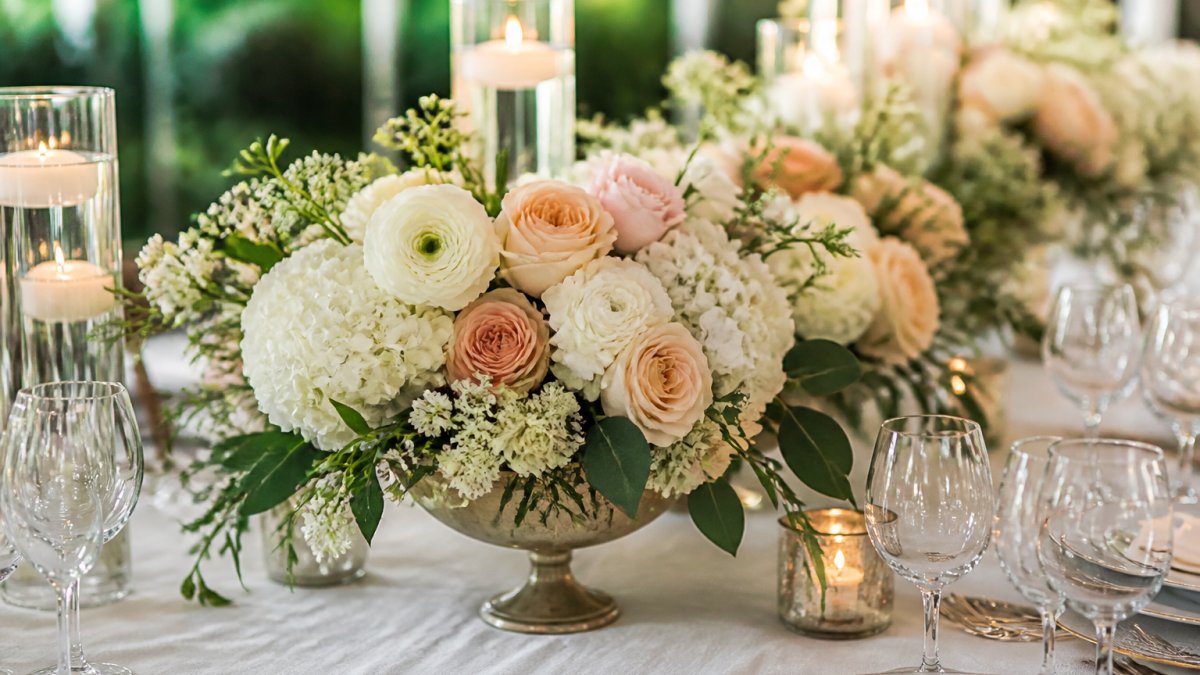
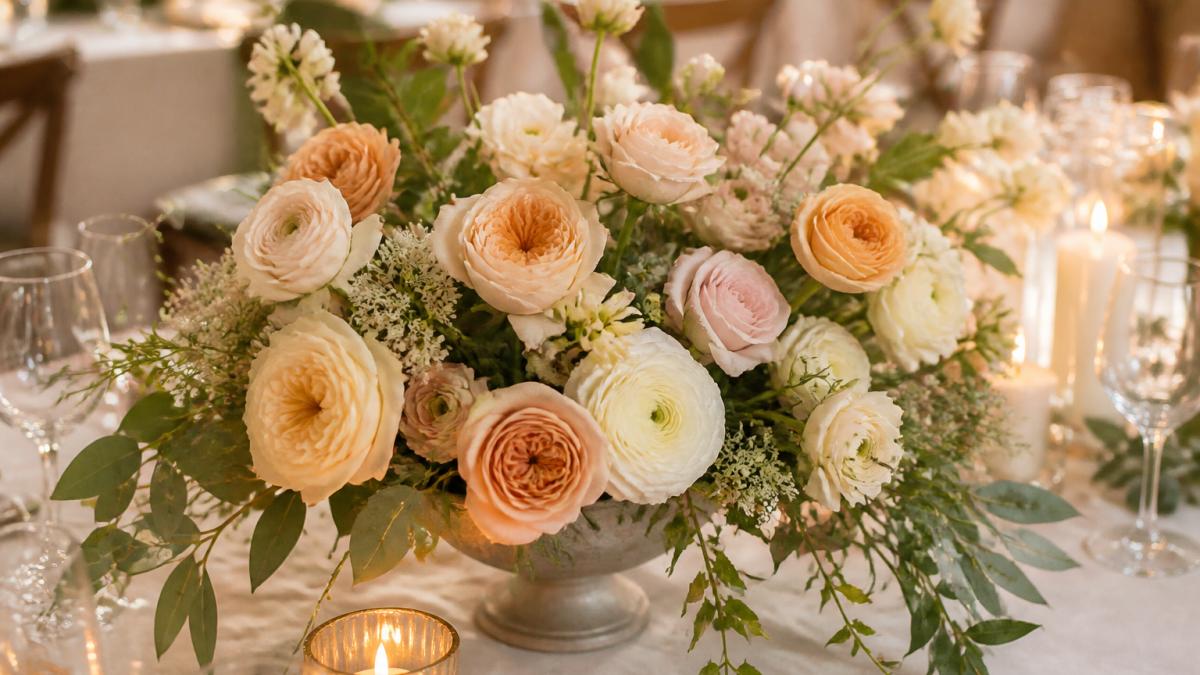
Close-up of an elegant wedding centerpiece featuring mixed garden roses, ranunculus, and soft greenery with varying heights and natural textures arranged in a low vase with candlelight

Your flowers should work across the entire venue, from ceremony arrangements to the bridal bouquet. Choosing centerpiece flowers early ensures consistency, simplifies ordering, and gives your florist time to source premium stems.

Sculptural and Statement Blooms

Sculptural flowers command attention without overwhelming a table, with architectural shapes that create interest even in minimalist arrangements. Proteas, anthuriums, and orchids lead this year because they hold their form and photograph beautifully.

Ranunculus remains a favorite for its layered petals, which create depth and movement. Poppies and cosmos add an unexpected edge for modern or garden-inspired aesthetics. Use these as focal flowers, paired with softer supporting blooms.

Romantic and Garden-Inspired Choices

Garden roses, sweet peas, and dahlias create the romantic, gathered-from-the-garden feeling many couples prefer. Garden roses offer rich color options and full, luxurious blooms that make even simple arrangements feel special.

Combine garden roses with clematis, astilbe, or soft greenery like eucalyptus for natural movement and texture. This works especially well for low centerpieces where guests need to see across the table.

Unexpected and Unconventional Botanicals

Couples are embracing unconventional choices that set their weddings apart. Amaranthus adds dramatic draping, stock provides architectural vertical lines, and chamomile, daisies, and ornamental grasses bring an earthy quality.

Balance is key: pair one or two unconventional elements with familiar flowers so arrangements feel intentional rather than random. A few stems of amaranthus with garden roses and ranunculus creates interest without chaos, and unusual botanicals often cost less than premium roses.

Seasonal Wedding Flowers and Regional Availability

Seasonality is the single biggest lever on what your centerpieces look like and what they cost. A peony in October is an imported, premium-priced stem; a dahlia in October is domestic, abundant, and a fraction of the cost.

How flower availability really works

Three supply streams feed the U.S. wedding market:

  • Domestic field-grown. Follows a natural season, peaks spring through early fall, and is the most affordable and freshest option when available.
  • Domestic greenhouse-grown. Extends the season for crops like roses, tulips, and lilies. More consistent year-round, priced between field-grown and imported.
  • Imported. Fills gaps, especially in winter and for out-of-season blooms. Adds freight, cold-chain, and sometimes tariff costs, and stems may be older by the time they reach your florist.

Month-by-month centerpiece guidance

Use this as a starting point, then confirm with your florist, since timing shifts with weather and region.

  • January-February: Tulips, anemones, ranunculus, and forced branches lead. Evergreens, berries, and dried botanicals carry texture. Orchids and anthuriums are reliable greenhouse/import options.
  • March-April: Tulips peak, ranunculus and anemones are strong, and early peonies and sweet peas begin. Daffodils and hyacinths add scent and value.
  • May-June: The peak wedding window. Peonies, garden roses, sweet peas, and early dahlias are at their best and most affordable, the easiest months to design around seasonality.
Key Takeaway
If your date falls in the May-June or September-October windows, you can build a premium-looking centerpiece almost entirely from in-season domestic stems. If your date falls in winter, budget more per stem and lean on evergreens, dried elements, and greenhouse blooms for value.

Regional availability: why your zip code matters

Availability is also regional. Growers in milder climates supply field-grown blooms earlier and later than colder regions, and local growers deliver fresher stems with less transit time. Couples in strong flower-farming regions can often source a wider in-season palette at lower cost.

Ask your florist two questions early:

  1. Which of my chosen flowers can be sourced domestically and in season on my date?
  2. Which will need to be imported, and what does that do to price and stem quality?

Substitution logic: what to swap when a bloom isn’t available

Every trend flower has a comparable stand-in. Knowing the swaps in advance keeps your design intact when a stem is unavailable, over budget, or unsuitable for the venue.

  • Peony → garden rose or ranunculus. Similar full, layered form; garden roses are more available year-round.
  • Garden rose → standard rose or spray rose. Less ruffled, but reliable and often cheaper.
  • Ranunculus → stock or lisianthus. Similar density and softness; lisianthus holds up well in heat.
Pro Tip
Build a substitution list into your floral contract. If a specific bloom is unavailable on your date, your florist should have pre-approved swaps that preserve the design and the budget, not a last-minute surprise.

The practical takeaway

Choose your date first, then your flowers. Couples who pick blooms before confirming the date pay a premium for out-of-season stems and accept older, imported product. Letting the season lead gets you fresher flowers, more design flexibility, and a lower per-centerpiece cost.

2026 centerpiece trends favor bold monochromatic palettes or carefully curated multi-color combinations.

For bolder statements, jewel tones like emerald, sapphire, and burgundy are trending, working especially well in evening receptions or venues with dramatic lighting.

The modern approach emphasizes movement and varying heights. Rather than uniform, symmetrical arrangements, 2026 centerpieces feature stems at different lengths for a natural, slightly asymmetrical look that feels like a curated garden moment.

Low Wedding Centerpieces: Design and Flower Selection

Low centerpieces, typically 12 inches or shorter, remain essential because they let guests see and converse across the table. The best flowers for low wedding centerpieces have full, rounded forms like garden roses, ranunculus, and dahlias, visual impact without height.

Focus on density and texture rather than vertical drama.

Pair low centerpieces with bud vases as accents: small arrangements between larger ones add detail without blocking sightlines and let you incorporate more varieties.

Wedding Centerpiece Flower Cost and Budget Planning

Most centerpiece budget advice stops at “it depends.” Here is the practical framework florists actually use to price centerpieces.

Get Started Today →

What actually drives the price of a centerpiece

Four variables account for nearly all centerpiece cost variation:

  1. Focal flower choice. A garden rose, peony, or orchid stem costs several times what a stem of stock, carnation, or chrysanthemum costs. Two or three focal blooms per arrangement is typical; more and the price climbs quickly.
  2. Stem count and arrangement size. A low centerpiece in a 6-inch vessel might use 15-25 stems; a lush 10-inch design can use 40-60. Stem count, not vase size, is the real cost driver.
  3. Design complexity. Hand-tied, foam-free, cascading, or asymmetrical designs take more labor than a simple rounded arrangement. Labor is often 40-60% of a centerpiece’s price.
  4. Season and sourcing. In-season, domestic stems are consistently cheaper than out-of-season imports. A peony in May and a peony in December are not the same purchase.

Realistic per-centerpiece tiers

Use these as planning ranges, not quotes, pricing varies by market, venue access, and delivery:

  • Bud vases and accents, roughly $15-$40 each. A few stems in a small vessel. Best used in clusters of three to five between larger designs.
  • Standard low centerpiece, roughly $75-$150 each. A rounded, garden-style arrangement in a 6-8 inch vessel, 20-30 stems, mixed focal and filler.
  • Premium low centerpiece, roughly $150-$300 each. Larger vessel, 35-50 stems, premium focals like garden roses or peonies, more texture and trailing elements.
Pro Tip
Ask your florist for a per-centerpiece price at three stem counts (for example, 20, 30, and 40 stems) for the same design. Seeing the marginal cost of each additional tier is the fastest way to right-size your order.

The table-count math most couples skip

Centerpiece budget is a multiplication problem. A 150-guest wedding with 15 round tables needs 15 centerpieces. At $125 each, that’s $1,875 before tax, delivery, and setup; at $250 each, it’s $3,750, same guest count, double the floral line item.

Three levers reduce that total without gutting the look:

  • Mix tiers across tables. Put premium designs on the head table and guest-of-honor tables, standard designs on the rest. Guests rarely compare tables side by side.
  • Alternate centerpieces with bud-vase clusters. Every other table gets a full arrangement; the rest get three to five bud vases. The room still reads as floral, and the per-table cost drops sharply.
  • Reduce table count, not quality. Longer tables or a mix of rounds and longs can cut the number of arrangements while keeping the same guest capacity.

Where the hidden costs live

Watch for line items outside the per-centerpiece price:

  • Delivery and setup. Venue distance, load-in time, and whether your florist must return for breakdown all affect this. It’s frequently a flat fee plus a percentage of the floral total.
  • Vessel rental. Many florists rent vases and stands rather than sell them; rental is usually cheaper but must be returned.
  • Strike and cleanup. Removing arrangements after the event is sometimes a separate charge.

A simple budgeting sequence

  1. Set your total floral budget and reserve 10-15% for delivery, setup, tax, and contingency.
  2. Decide your table count and layout.
  3. Choose a per-centerpiece tier that fits the remaining budget.
  4. Pick focal flowers that are in season for your date (see the seasonal section).
  5. Ask for a written quote broken out by arrangement type, quantity, and fees, not a single lump sum.

That last step matters. A quote you can read line by line is a quote you can adjust line by line.

Affordable Wedding Centerpiece Flowers and Alternatives

If your budget is tight, several flowers offer excellent value.

Greenery-forward arrangements cut costs while remaining striking. Use eucalyptus, ruscus, salal, and other foliage as the foundation, then add a few premium focal flowers for sophisticated centerpieces at a fraction of the cost.

Seasonal flowers are always more affordable than out-of-season alternatives: a spring wedding with abundant tulips and peonies costs less than requesting those same flowers in December.

Flower Longevity, Care, and Sustainable Sourcing

Knowing how long centerpiece flowers last helps you plan timing. Garden roses typically last 7-10 days with proper care, ranunculus and dahlias similar, and orchids and proteas often stay fresh two weeks or longer.

Proper care extends flower life significantly: keep arrangements cool, change water every two days, and remove lower leaves that sit in water to prevent bacterial growth. Florists condition flowers with preservative and should deliver centerpieces as late as possible, ideally just before guests arrive.

Sustainable sourcing matters to many couples: locally grown flowers reduce transportation emissions and support regional growers, while seasonal selections minimize hothouse production. Locally grown flowers reduce transportation emissions and support regional growers, while seasonal selections minimize hothouse production.

Creating Your Centerpiece Selection Framework

Start by defining your style: romantic and garden-inspired, modern and minimalist, bold and dramatic, or naturally gathered and eclectic. This clarity guides every decision about flower selection, color palette, and design.

Next, identify your constraints: wedding date, venue style, budget, and table count. These determine which flowers are available, what they’ll cost, and how many arrangements you need, so discuss them with your florist early.

Then select 2-3 focal flower types to anchor each arrangement, add supporting flowers that complement them in color, texture, and form, and finish with greenery and filler for movement and volume. This structured approach ensures cohesive centerpieces throughout your reception.

Frequently Asked Questions

What are the best flowers for wedding centerpieces in 2026?

The top choices for 2026 include garden roses, ranunculus, calla lilies, orchids, and sculptural blooms like protea and anthuriums. Trending styles favor mixed-variety designs that combine soft blooms with statement flowers, natural textures, and varying heights. Your choice depends on your color palette, season, budget, and the overall aesthetic you want, romantic, modern, garden-inspired, or bold and unexpected.

Which flowers are most affordable for wedding centerpieces?

Affordable options include sunflowers, daisies, stock, tulips, and chamomile. Greenery and filler flowers like amaranthus also stretch your budget while adding movement and texture. Mixing one or two statement blooms with budget-friendly fillers creates impact without overspending. Pricing depends on quantity, dates, and delivery, contact An English Garden for a quote tailored to your needs.

How much do wedding flower centerpieces typically cost?

Centerpiece costs vary based on flower type, arrangement size, quantity needed, season, and delivery. Premium blooms like garden roses and orchids cost more than sunflowers or daisies. Seasonal flowers are generally less expensive than out-of-season imports. For accurate pricing based on your specific vision, table count, and wedding date, reach out to An English Garden for a personalized quote.

What flowers work best for low wedding centerpieces?

Low centerpieces suit ranunculus, garden roses, dahlias, calla lilies, and mixed blooms with draping or cascading stems. Keep arrangements under 12 inches tall to maintain sightlines across tables. Combine varying heights of flowers with moss, bud vases, and natural textures to create visual interest without height. This style works well for intimate gatherings and modern, minimalist aesthetics.

Can you mix fresh and dried flowers in wedding centerpieces?

Yes. Combining fresh and dried flowers adds texture, movement, and longevity to centerpieces. Dried amaranthus, pampas grass, and preserved greenery pair beautifully with fresh roses, ranunculus, and orchids. This mix works especially well for garden-inspired and modern designs. Dried elements also reduce overall floral costs and allow arrangements to last longer, which is practical for multi-day events or if you want to preserve centerpieces after the wedding.

How far in advance should I choose my wedding centerpiece flowers?

Choose flowers 2-3 months before your wedding to allow time for seasonal planning, cost estimation, and design consultations. For peak seasons (spring and summer), book earlier, 4-6 months ahead, to secure preferred blooms. Confirm final quantities and color details 2-3 weeks before the wedding. An English Garden’s experienced team can guide you through the timeline and help you make substitutions if needed.

What are the best seasonal flowers for wedding centerpieces?

Spring (March-May) offers tulips, ranunculus, peonies, and sweet peas. Summer (June-August) features garden roses, orchids, sunflowers, and cosmos. Fall (September-November) brings dahlias, protea, and amaranthus. Winter (December-February) offers roses, calla lilies, and imported blooms. Seasonal flowers are fresher, more affordable, and more sustainable. Discuss your wedding date with your florist to select the best in-season options for your centerpieces.

Should I choose local and sustainable flowers for my wedding centerpieces?

Locally sourced and sustainable flowers reduce environmental impact, support regional growers, and often cost less than imported blooms. They’re typically fresher and last longer. Many beautiful 2026 trends, garden-inspired, natural textures, and mixed botanicals, align perfectly with local sourcing. Ask your florist about regional availability for your wedding date. An English Garden can recommend sustainable options that fit your vision and budget.


When you’re ready to transform your centerpiece vision into reality, An English Garden offers expert design consultation and custom floral arrangements for your wedding. We handle delivery and on-site setup, ensuring your centerpieces are perfectly positioned and fresh when your guests arrive. Contact us to discuss your wedding flower needs and discover how we can create beautiful, memorable centerpieces for your celebration.