Last Updated: October 28, 2026
Quick Summary
The best floral decor for events supports the room rather than competing with it, balancing scale, color, placement, and durability so guests notice the atmosphere first. Start with the room, guest count, and sightlines before choosing any stems.
- Match arrangement scale to the space and the height of the furniture.
- Keep table centerpieces under about 12 inches so guests can see each other.
- Choose two or three in-season anchor blooms and approve substitutions in advance.
- Use lightly scented or unscented blooms near dining and buffet areas.
- Check venue rules on ceiling hanging and wall attachments early.
Table of Contents
- What Makes Floral Decor Work for Events
- Event Floral Centerpieces That Suit Your Tables
- Floral Installation Ideas for Events
- Flowers for Corporate Events and Branded Spaces
- Choosing Seasonal Flowers for Events
- Budgeting for Event Floral Decor
- Booking Your Event Florals With An English Garden
- Frequently Asked Questions
What Makes Floral Decor Work for Events
Floral decor works for events when it supports the room rather than competing with it. The best floral decor for events balances scale, color, and placement so guests notice the atmosphere first and the flowers second. That balance is what separates a space that feels considered from one that feels like an afterthought.
Most planners start with the flowers they like and work backward. The stronger approach starts with the room, the guest count, and the sightlines. A low arrangement that looks lush on a table can disappear in a ballroom, and a towering installation can block the conversation it was meant to frame. Before choosing a single stem, measure where people will stand, sit, and walk.
Four factors shape nearly every successful event floral plan:
- Scale: Arrangements should match the size of the space and the height of the furniture.
- Color: Palettes tied to the event theme or company colors feel intentional in photos and in person.
- Placement: Focal points belong where guests naturally look, such as the entry, the stage, or the dessert table.
- Durability: Flowers must hold up for the full event, including warm rooms and long evenings.
Watch out: Heavy fragrance near food and buffet areas can bother guests with sensitivities. Choose lightly scented or unscented blooms for dining and serving zones.
Event Floral Centerpieces That Suit Your Tables
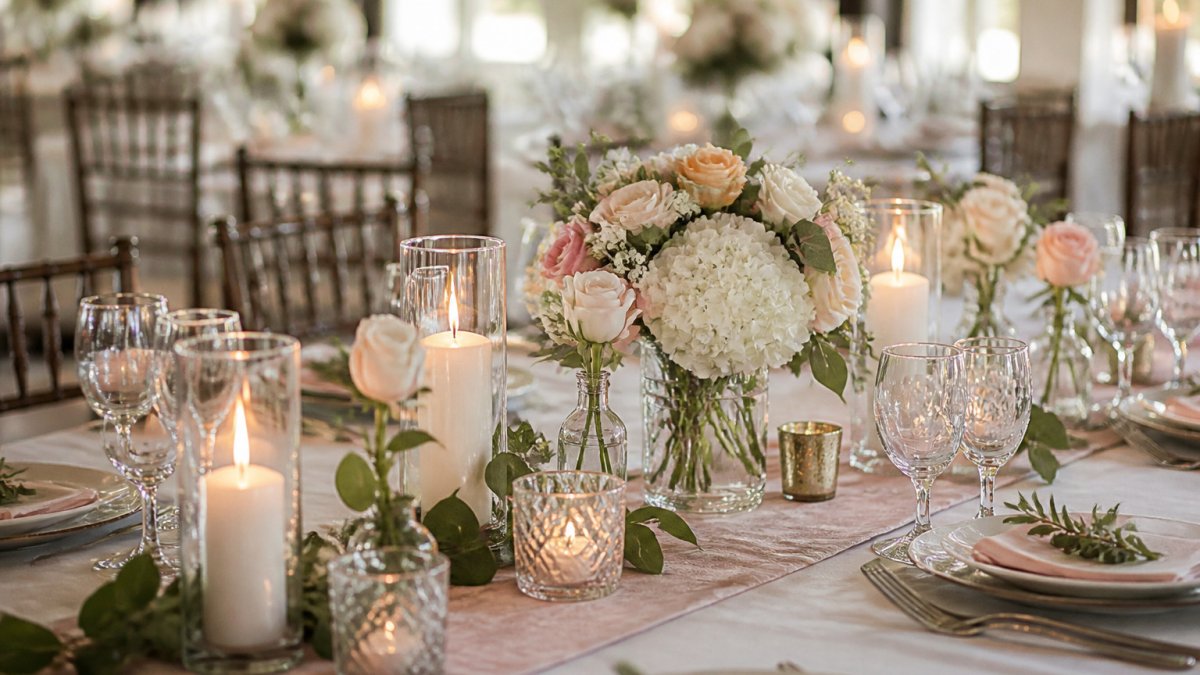
Centerpieces are the most common entry point for event floral decor, and they are also the easiest place to go wrong. The right height depends on how guests sit and talk. A centerpiece that blocks eye contact across a round table defeats its own purpose, so most planners keep the composition either well below or well above seated eye level.
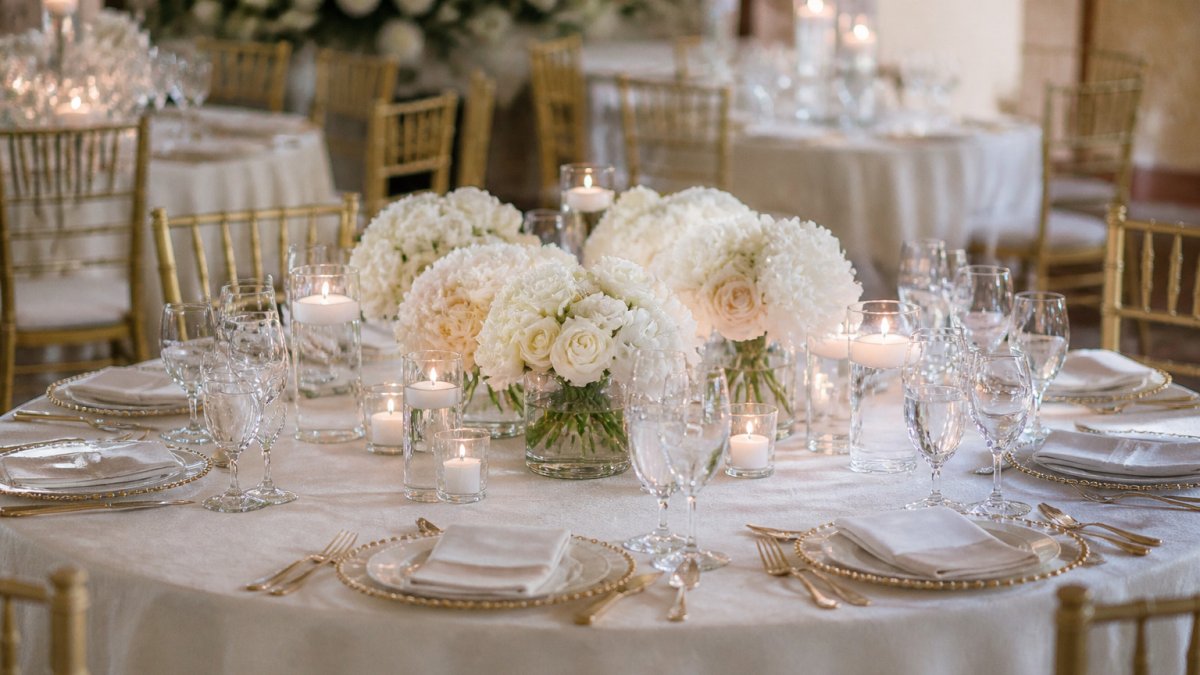
Round banquet tables set for a reception benefit from a low, dense arrangement at the center, repeated with a similar piece on every table so the room reads as unified. Long rectangular tables work well with a runner of smaller clusters spaced down the center, which keeps sightlines open from one end to the other.
Low Arrangements for Conversation
Low arrangements keep guests connected across the table. Keep them under about 12 inches tall so faces remain visible, and use shallow containers that let stems spread outward. Mixed garden blooms, roses, and greenery are common choices because they look full from every angle without rising into the line of sight.
Tall Arrangements and Mason Jar Displays
Tall arrangements add vertical drama to larger rooms, but they belong at the perimeter of a table, on a sideboard, or on a stand near the walls. For a more relaxed or rustic look, clusters of small blooms in mason jars or glass bottles create a casual feel. Group them in odd numbers and vary the heights so the arrangement looks collected rather than uniform.
The article sets clear height limits for centerpieces, so here is a quick reference.
| Centerpiece type | Best for | Key guideline |
|---|---|---|
| Low arrangement | Conversation across the table | Keep under about 12 inches tall |
| Tall arrangement | Larger rooms, perimeter or sideboard | Place at table edge or on a stand |
| Mason jar cluster | Casual or rustic look | Group in odd numbers, vary heights |
Floral Installation Ideas for Events
Installations turn a room into a destination. Arches, hanging arrangements, and wall or column treatments give guests something to photograph and move toward, and they often anchor the entry or the ceremony area. Because they are large, they need planning for weight, anchoring, and access before the event day.
Common installation options include:
- Ceremony or entry arches, which frame a walkway or stage and draw guests forward.
- Hanging florals suspended over a dance floor or lounge area, adding height without taking up floor space.
- Column or wall treatments that soften structural elements and create backdrops for photo areas.
- Stage and podium arrangements that frame speakers and keep the focus where it belongs.
Plan installations around how people move. An arch placed where guests bunch up at check-in will create a bottleneck, while one placed at the start of a natural walking route guides traffic smoothly. Check venue rules on ceiling hanging and wall attachments early, since many spaces restrict what can be fixed to walls or rafters.
Flowers for Corporate Events and Branded Spaces
Corporate events call for a different tone than weddings. The goal is usually to reinforce a brand, welcome clients, or recognize employees without overwhelming a professional setting. Arrangements that echo company colors, paired with clean greenery, tend to read as polished and appropriate.
Registration tables, reception desks, and lobby displays are high-value spots for florals because they greet every attendee. Keep these pieces compact enough that they do not crowd the check-in process, and position them so staff can move around them easily. For conferences and larger gatherings, repeat a consistent look across the venue so attendees recognize the event as a single experience.
Flowers also work well as thoughtful gifts in a business setting. A well-chosen arrangement delivered to a client office or a team member’s desk can support relationships and recognition. Ask whether the program can deliver on a predictable schedule, since consistent quality matters more when orders repeat.
Choosing Seasonal Flowers for Events
Seasonal flowers are usually fresher, more affordable, and easier to source locally than out-of-season imports. Spring events often feature tulips, ranunculus, and lilac, while summer favors dahlias, sunflowers, and hydrangeas. Autumn brings chrysanthemums and berries, and winter events typically rely on evergreens, amaryllis, and white blooms.
The stronger approach is to treat seasonality as a design constraint rather than a shopping list. Start with the event date and the palette, then identify which blooms are reliably available in that window. Build the design around two or three anchor flowers that are in season, and use greenery, fillers, and texture to carry the look if a preferred bloom is short-lived or unavailable. This keeps the arrangement coherent even when a specific variety cannot be sourced.
A season-by-season planning frame helps:
- Spring: Cool-season blooms often have shorter vase life in warm rooms. Plan delivery close to the event and keep arrangements out of direct sun.
- Summer: Heat is the main risk. Hydrangeas and similar blooms wilt quickly without water, so choose containers that hold moisture and plan for mid-event checks on focal pieces.
- Autumn: Textural elements such as berries and dried accents add depth, but some berries and foliage are not safe around food service or small children. Confirm toxicity and placement before using them near dining areas.
- Winter: Evergreens and forced bulbs provide color when few fresh stems are available. Evergreen pieces can be assembled earlier than fresh blooms, which helps with tight setup windows.
Booking flowers in season also reduces the risk of substitutions. When a specific variety is out of season, a florist may need to swap it, which can change the palette. Discuss flexible color ranges early so the design still works if availability shifts. A useful mechanism is to approve a primary bloom, a secondary option, and a color range in advance, so substitutions stay within the approved design rather than becoming a last-minute negotiation.
Artificial and dried flowers are a practical alternative for venues that restrict live plant material or for events with long setup windows. Silk arrangements hold their shape and color without water, though they lack the scent and natural movement of fresh stems. Dried florals can suit rustic or outdoor themes, but they need to be kept away from heat and humidity to hold their color. For venues with fire rules or food-service restrictions, confirm whether dried material and candles can be used together before finalizing the design.
Choose two or three in-season anchor blooms, approve a substitution range in advance, and let greenery and texture carry the design when availability shifts. That approach protects both the palette and the budget.
Budgeting for Event Floral Decor
Floral budgets vary widely because cost depends on quantity, flower variety, installation complexity, delivery, and setup time. Rather than guessing at a total, build the budget from the decor plan. List every area that needs flowers, estimate how many pieces each requires, and then price the options that fit your timeline and venue.
A practical way to structure the number is to separate it into four buckets: product, labor, logistics, and contingency. Product covers stems, containers, foam-free mechanics, and rental pieces. Labor covers design time, on-site installation, and teardown. Logistics covers delivery, vehicle access, and any venue fees for load-in or after-hours work. Contingency is the buffer most first-time planners forget; a common pattern is to hold back a small percentage of the total for substitutions, extra pieces, or a last-minute focal arrangement.
Several choices move costs more than others:
- Flower variety: Out-of-season or specialty blooms cost more than seasonal staples. A single statement bloom used sparingly often costs less than filling the same space with a premium variety throughout.
- Quantity and density: Full, dense arrangements use more stems than loose designs. Airy, garden-style compositions can read as lush while using fewer stems per piece.
- Installations: Arches and hanging pieces require labor, materials, and sometimes rental equipment. They also carry higher risk, so budget for a site check and a backup plan.
- Labor and setup: On-site design and teardown add time that should appear in the budget. Venues with tight load-in windows can push labor into premium hours.
- Containers and rentals: Vases, stands, and mechanical bases are often rented rather than bought. Rental reduces upfront cost but adds return logistics and damage liability.
For current pricing and a quote tailored to your event, contact An English Garden directly.
Build the floral budget last, after the guest count, venue, and floor plan are set. Those three inputs determine how many pieces you need and where the high-impact spend belongs.
Booking Your Event Florals With An English Garden
An English Garden has served the Mokena, Illinois area for over 32 years, providing expert design services for weddings and special events, including on-site decorating.
We welcome corporate accounts and offer secure 24-hour online ordering.
Frequently Asked Questions
What flowers are best for event decorations?
The best pick depends on the event style: classic blooms suit formal weddings, while mixed garden flowers suit relaxed gatherings.
How do you choose flowers for an event?
Start with the event style, venue colors and the number of guests. Match the flower palette to your company colors or wedding theme, then consider scale: large venues need statement installations, while intimate dinners work with compact centerpieces. Check whether guests have allergies, and confirm that the venue allows open flames or heavy foliage.
How do you choose flowers for corporate events?
Corporate events usually call for restrained color that reflects the company brand, along with arrangements that do not block sightlines between attendees. Registration tables, stages and cocktail areas each need a different scale.
How much should you budget for flowers at an event?
For current prices and a quote tailored to your guest count and venue, contact An English Garden directly through the website.
How far in advance should you order event flowers?
Order as early as your florist recommends, especially for weddings and large corporate events, because seasonal availability and specialty blooms can book up. Confirm delivery windows and setup times at least a few weeks ahead, and review the final design close to the date so any substitutions can be discussed before the event.
How can you make event flowers last longer?
Keep arrangements out of direct sun, heat and drafts, and avoid placing them near food areas that give off heat. Fresh flowers last longer when water is changed and stems are trimmed, which your florist can arrange if you are using a full service. For longer-lasting displays, ask about hardier varieties or a mix of fresh and dried elements, and plan a teardown schedule so flowers are not left out past their useful life.
Can event flowers be reused after the event?
Yes. Centerpieces and installations can often be moved to offices, lobbies, or donated to hospitals, senior living centers or local nonprofits. Discuss reuse with your florist before the event so the design, containers and delivery plan support a second location.
