Last Updated: November 10, 2026
Quick Summary
On-site wedding decorating means your wedding florist delivers, builds, places, and later removes every floral and decor element at your venue instead of handing you boxes to arrange yourself. A typical decorating day runs delivery and staging, ceremony install, reception build, a final walkthrough, and teardown at an agreed time.
- Bring your venue name, guest count, and a realistic total flower budget to the consultation.
- A complete quote should itemize delivery, labor and installation, rentals, and taxes and fees separately.
- Confirm in writing whether your florist handles the ceremony-to-reception transition and how long the venue allows.
- Ask for the substitution policy in writing, including whether you are notified before the event.
- An English Garden has served the community for over 32 years and delivers to over 30 cities daily.
Table of Contents
- What On-Site Wedding Decorating Actually Covers
- Your Wedding Flower Consultation and Design Proposal
- How Wedding Florist Prices Are Built in the Mokena Area
- Questions to Ask a Wedding Florist Before You Sign
- What Wedding Floral Setup Looks Like on the Day
- Venue Logistics, Weather, and Flower Substitutions
- Planning Timeline and Booking Checklist
- Book Your On-Site Decorating Consultation
- Frequently Asked Questions
What On-Site Wedding Decorating Actually Covers
On-site wedding decorating is the service where a florist delivers, builds, places, and later removes every floral and decor element at your venue, rather than handing you boxes to arrange yourself.
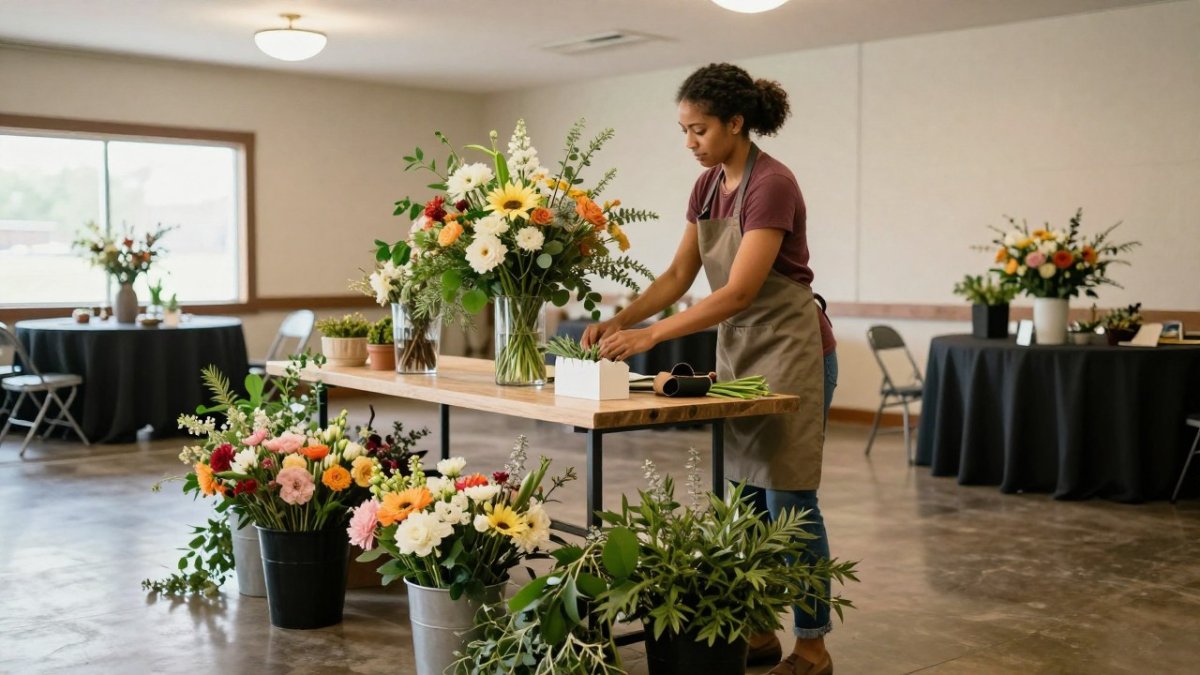
A centerpiece looks simple on a table, but building it on site at the right height, with the right water source and lighting, is a different job entirely. That is what you are paying for.
From Delivery Van to Teardown: The Full Setup Sequence
A typical on-site decorating day runs in a fixed order, and knowing it helps you plan your own schedule around it.
- Delivery and staging. Flowers arrive in buckets and are staged in a service area, not the main room.
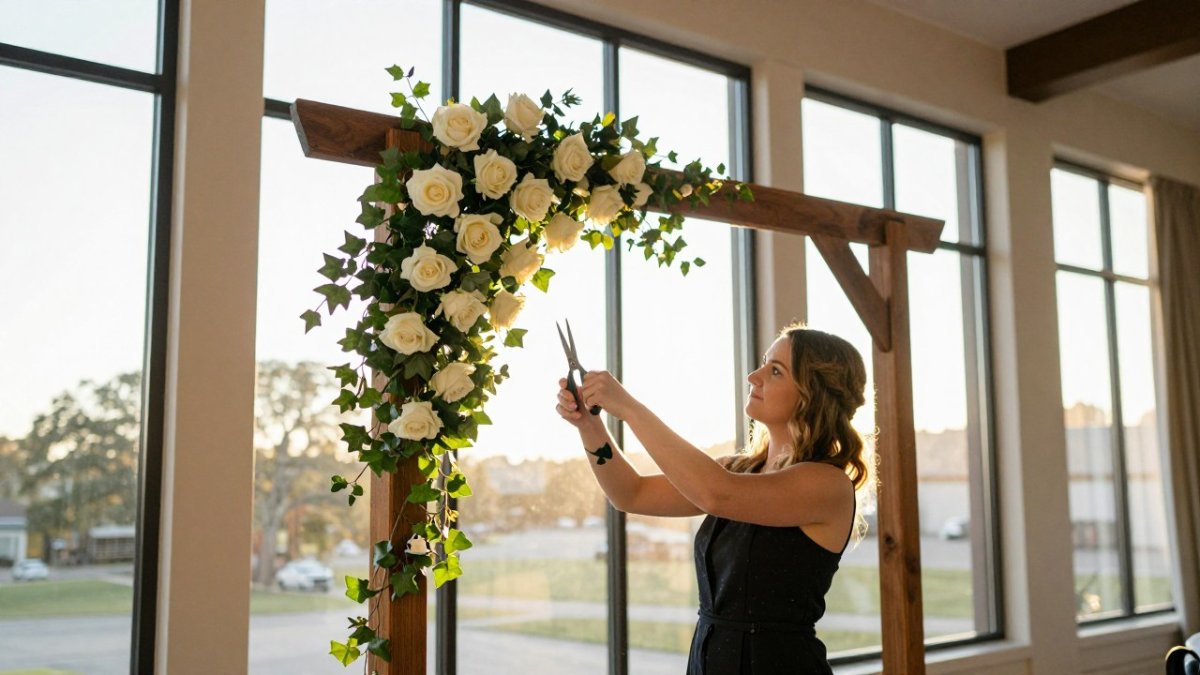
- Ceremony install first. Arbors, aisle pieces, and entry arrangements go up before the room fills.
- Reception build. Centerpieces, head table, bar, and accent arrangements are placed and leveled.
- Final walkthrough. The lead designer checks sightlines, water levels, and placement against the floor plan.
- Teardown. The team returns at an agreed time to strike the setup and remove rentals.
Your Wedding Flower Consultation and Design Proposal
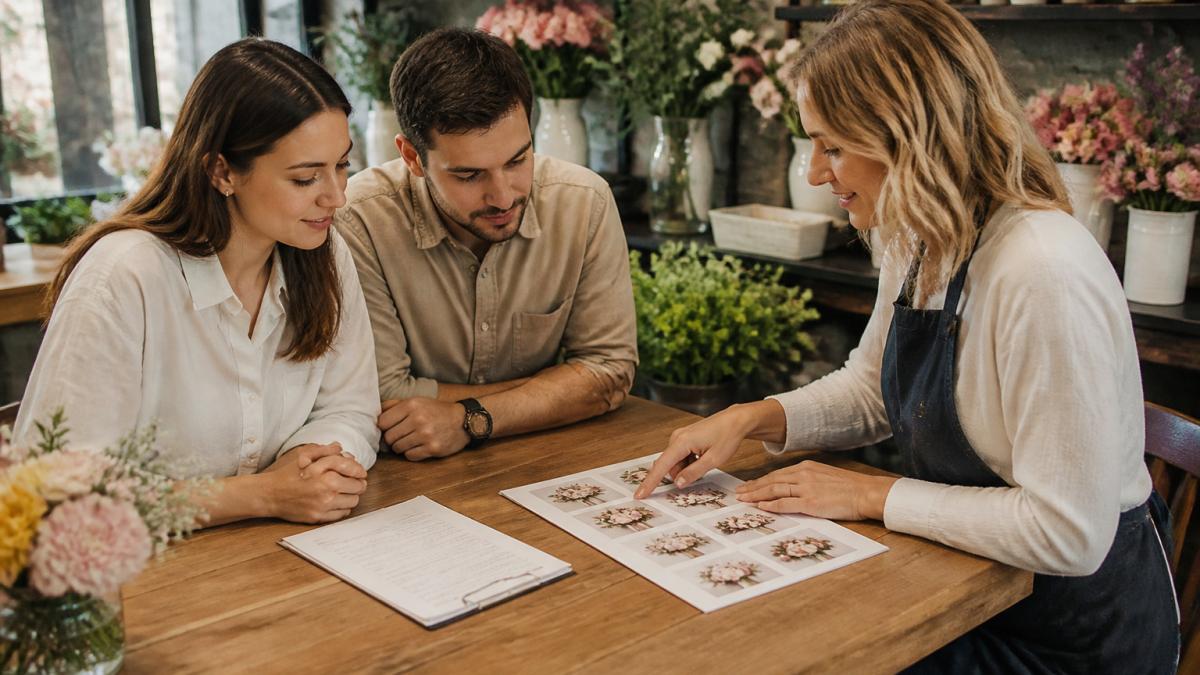
A wedding flower consultation is a working session where you and the designer settle on floral style, color, budget, and scope, and it should end with a written design proposal. That proposal is your contract in plain language: what is being built, how many pieces, and what it costs to install.
Bring three things to the consultation: your venue name, your overall guest count, and a realistic total budget for flowers. From there, the designer can translate inspiration into pieces that fit the room. If you are still shaping centerpiece ideas, browsing best flowers for wedding centerpieces before the meeting gives you a concrete starting point.
The proposal should list every arrangement by name and quantity, note the installation window, and state clearly what happens with rentals.
How Wedding Florist Prices Are Built in the Mokena Area
Wedding florist prices are built from four inputs: the flower varieties you choose, the number of pieces, the labor to install them, and delivery distance. Two florists can price the same bouquet list differently because one includes on-site labor and one does not.
Pricing depends on quantity, dates, and delivery, so we recommend requesting a quote for each wedding individually. Couples working to a tighter number can review affordable wedding flower packages to see how piece counts and varieties shift the total.
The Cost Drivers That Move a Quote Most
When couples ask why one proposal is higher than another for what looks like the same wedding, the answer usually sits in one of these drivers:
- Variety and stem count. A centerpiece built from garden roses and peonies costs more in stems than one built from carnations, mums, and greenery.
- Piece count and scale. Tall centerpieces, large arbors, and hanging installations use more material and labor per piece than low centerpieces.
- Installation labor. On-site decorating is time-based work, and the labor line is where quotes most often diverge.
Line Items You Should See on Any Quote
A complete quote separates these categories. If several are missing, ask why.
| Line Item | What It Covers | Why It Matters |
|---|---|---|
| Personal flowers | Bouquets, boutonnieres, corsages | Often quoted as a bundle, so check counts |
| Ceremony flowers | Arbor, aisle, entry pieces | Installation labor should appear separately |
| Reception flowers | Centerpieces, head table, bar | Quantity per table must be explicit |
| Delivery fee | Transport to venue | Distance and trip count drive this |
| Labor and installation | Setup and teardown time | The most commonly omitted line |
| Rentals | Vases, stands, arbors | Confirm whether return shipping is included |
| Taxes and fees | Sales tax, service charges | Should be itemized, not folded into the total |
How to Compare Two Proposals Side by Side
A lower total is not automatically the better value. To compare proposals fairly, line them up against the same questions:
- Does each quote include installation and teardown, or is that billed separately?
- Are piece counts and stem counts comparable?
- Is the ceremony-to-reception transition included, and by whom?
- Are rentals included, and who handles their return?
- Is delivery one trip or several, and is the venue within the standard radius?
- Are taxes and fees itemized?
- What is the substitution policy, and does it affect price?
Watch out: a quote that lists a single lump sum with no breakdown makes it impossible to compare scope, so ask for an itemized version before signing.
Questions to Ask a Wedding Florist Before You Sign
The right questions surface how a florist handles the day itself, not how they photograph. Ask about responsiveness on the wedding day, who the lead designer will be, and the backup plan if a variety is unavailable.
A common mistake is choosing on price per centerpiece alone. If you want a structured way to vet providers, this step-by-step guide on how to choose a wedding florist in Mokena walks through the full set of questions.
What Wedding Floral Setup Looks Like on the Day
On the wedding day, floral setup is a timed operation, not a single delivery. The team arrives within an agreed window, builds the ceremony pieces first, then moves to the reception while the ceremony is underway or after it clears.
What most guides miss is the ceremony-to-reception transition. To picture the finished setup, browse best wedding floral arrangements and note which elements repeat from ceremony to reception.
Venue Logistics, Weather, and Flower Substitutions
Venue logistics decide more of your floral plan than your inspiration board does. Load-in windows, service elevator access, table sizes, and open-flame rules all constrain what can be built and how long installation takes. Share the venue name at the consultation so the florist can confirm the venue’s rules with the coordinator.
What to Confirm With the Venue Before Design Approval
Most venues publish or provide a vendor packet, and the floral-relevant details usually live in a few specific places. Ask the coordinator to confirm each of these in writing:
- Load-in and load-out windows. When can vendors enter, and is there a hard out time?
- Access route. Is there a loading dock, service elevator, or freight entrance, and are there stairs or thresholds that affect large arbor pieces?
- Setup restrictions. Are hanging installations allowed, and are there weight limits or rigging points vendors must use?
Watch out: a venue that allows candles at the reception may prohibit them during the ceremony, or restrict them to enclosed holders only, so confirm the policy for each space rather than assuming one rule covers the day.
Ceremony-to-Reception Transitions and Room Flips
If your ceremony and reception share a space, the room flip is the most schedule-sensitive part of the floral plan. Repurposing ceremony pieces at the reception requires hands and a scheduled window. Confirm in writing with your florist how the move will be handled and how long the venue allows for the flip.
Weather, Seasonality, and Backup Plans for Outdoor Ceremonies
Outdoor ceremonies in the region face real seasonal swings. Summer heat wilts delicate varieties such as hydrangea and sweet pea quickly, and direct sun on an arch can undo wiring and ribbon work within hours.
Ask what the backup plan is if the ceremony moves indoors on short notice. Ask whether a weather-driven relocation would change the installation window or require additional labor.
How Flower Substitutions Actually Work
Fresh flowers are agricultural, and no florist can promise an exact variety months out. A substitution policy should state what happens when a variety is unavailable: whether the florist substitutes a comparable flower in the same color and price range, whether you are notified before the event, and whether any cost difference is passed through or absorbed. Ask for the policy in writing before signing, and read the wedding flower substitution policy so you know how swaps are handled.
Planning Timeline and Booking Checklist
Booking a wedding florist works best on a timeline that starts well before the wedding, not weeks out. Peak-season dates fill first, and the consultation and proposal stage takes real time. Use this checklist to keep the sequence straight.
- Book the venue and confirm load-in and load-out windows
- Set a total floral budget and a per-category split
- Schedule the consultation at least several months ahead
- Receive the written design proposal and review every line item
Book Your On-Site Decorating Consultation
The couples who end up relaxed on the wedding day settled the logistics months earlier: a written proposal, a confirmed installation window, a named lead designer, and a substitution policy you have actually read.
An English Garden has served this community for over 32 years, with expert design services for weddings and special events, including on-site decorating. Our award-winning designer on staff, secure 24-hour online ordering, and delivery to over 30 cities each day support your planning.
Frequently Asked Questions
What does on-site wedding floral decorating include?
On-site decorating typically covers delivery and placement of the arrangements at the venue. A wedding florist brings bouquets, ceremony pieces, centerpieces, and table arrangements to the venue, then positions each item according to the approved design plan. Setup usually includes pinning personal flowers, dressing the ceremony arch or aisle, and placing reception centerpieces. Ask your florist exactly where setup ends and teardown begins so nothing is left for your family to handle.
How much does wedding floral decorating cost?
Wedding florist prices depend on the number of arrangements, flower varieties, season, delivery distance, and how much labor the on-site setup requires. A small ceremony with bouquets and a few centerpieces costs far less than a full reception with installations and rentals. Because every wedding differs, most florists build a custom quote after a consultation. Request an itemized proposal so you can see delivery fees, labor, and container rentals separately, then compare proposals on scope rather than the bottom line alone.
When should I book a wedding florist?
Book six to twelve months before the wedding for peak spring and fall dates, and earlier if your venue requires a preferred vendor or your date falls near a holiday. Start with a wedding flower consultation once you have a venue and a rough guest count, since both shape the design and the budget. Popular Mokena-area dates fill quickly, so secure your florist before finalizing smaller details. A signed contract with a deposit locks in your date and gives you time to refine the design.
What questions should I ask a wedding florist before booking?
Ask how long they have worked in the area, whether they handle setup and teardown themselves, and what happens if a flower variety is unavailable. Confirm delivery fees, labor charges, and whether containers are rented or included. Request references or reviews from recent weddings at your venue. Also ask who your day-of contact will be and how they coordinate with the venue coordinator. Clear answers to these questions to ask a wedding florist reveal whether the team can deliver on the day.
How long does wedding floral setup take?
Setup time depends on the scale of the design and the venue’s access rules. A simple ceremony and reception might take two to four hours, while installations, large centerpieces, and multiple rooms can require a full morning. Most florists arrive several hours before guests and work around the venue’s load-in window. Confirm the setup schedule in your contract and check whether the venue charges for early access. Building in a buffer protects your timeline if delivery runs late.
Can one florist decorate both the ceremony and reception?
Yes, and using one florist for both keeps your style consistent and often reduces cost. A single team can repurpose ceremony pieces, such as aisle arrangements or arch flowers, into the reception space during cocktail hour. This approach can reduce duplicate arrangements and simplify coordination. Ask your florist whether they plan for repurposing and who handles moving the flowers. Confirm the venue allows the transition and that staffing covers the extra labor.