Posted on — Leave a comment

Affordable Wedding Flower Packages: A Budget Guide

Last Updated: October 31, 2026

Quick Summary

Affordable wedding flower packages bundle the bridal bouquet, bridesmaid bouquets, boutonnieres and some ceremony or reception arrangements into one quoted price. Pricing depends on quantity, date, flower variety and delivery, so request a current quote from An English Garden for exact figures.

  • Set your total floral budget as a dollar figure before requesting any quotes.
  • Divide the floral budget into four buckets: personal flowers, ceremony, reception and contingency.
  • Commonly reserve 5% to 10% of the floral total as a contingency fund.
  • Request an itemized quote listing each piece, delivery, setup, rentals and tax.
  • Confirm whether delivery, setup and breakdown are included before comparing package prices.

Table of Contents

What Affordable Wedding Flower Packages Include

Wedding flower packages often bundle the core floral pieces a wedding needs into a single quoted price, rather than charging for each arrangement separately. A bundle typically covers the bridal bouquet, bridesmaid bouquets, boutonnieres and at least some ceremony or reception arrangements. Pricing depends on quantity, date, flower variety and delivery, so request a current quote from An English Garden for exact figures.

Bridal bouquets, bridesmaid bouquets and boutonnieres

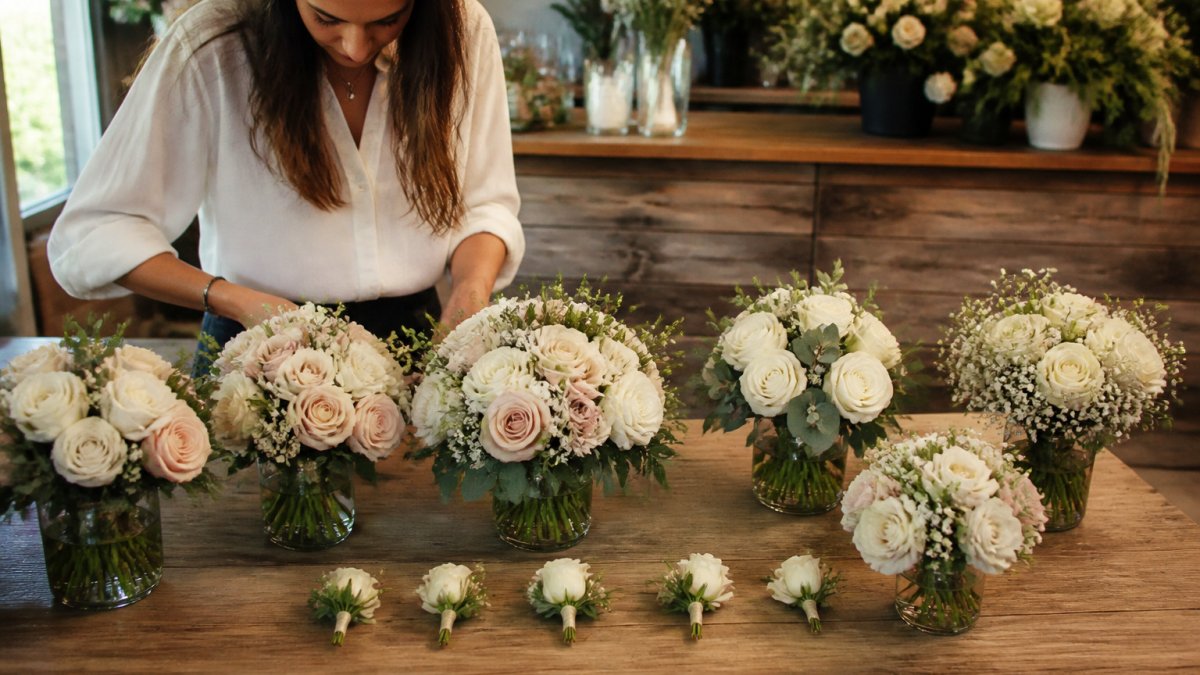
The bridal bouquet is usually the centerpiece of the floral budget. Bridesmaid bouquets and boutonnieres are smaller, so they keep costs down when the design stays simple. Many couples ask for matching bouquets, and that consistency is often built into the package. Confirm whether the quote lists each piece separately or as a group, since that changes how easy it is to swap items later.

Ceremony, reception and centerpiece arrangements

Ceremony arrangements, reception décor and table centerpieces are where package totals grow quickly. A package that includes these pieces saves time, but only if the arrangements match the venue size and guest count. Check whether setup and breakdown are included, because labor for placing arrangements at the venue is a common hidden cost.

Wedding Flower Budget Breakdown: Setting and Allocating Your Spend

Most couples who overspend on wedding flowers do not do it in one big decision, they do it in a dozen small ones. A written budget breakdown prevents that. Here is a practical method you can run before you request a single quote.

Infographic showing how to allocate a budget for wedding flower packages while planning with a partner at home.

Step 1: Set the total floral number first

Decide what percentage of your overall wedding budget flowers can take, then convert it to a single dollar figure. Couples commonly set aside a share of their total wedding budget for flowers, and that share varies with their priorities. Write the number down. Every later decision gets measured against it, not against what a florist’s sample package happens to cost.

Step 2: Allocate by priority, not by category equally

Divide the total into four buckets and assign a share to each before you shop:

  • Bridal bouquet and personal flowers, the bridal bouquet, bridesmaid bouquets, and boutonnieres. This is usually the highest-visibility spend and the easiest to protect.
  • Ceremony flowers, altar or arch pieces, aisle markers, and any entry arrangements.
  • Reception flowers, centerpieces, head-table arrangements, and bar or buffet accents.
  • Contingency, a small reserve, commonly 5% to 10% of the floral total, for substitutions, added pieces, or delivery surprises.

Adjust the shares of your floral budget to match what you actually care about, such as moving ceremony money to the reception if the ceremony is short.

Step 3: Convert buckets into piece counts

Percentages mean nothing until they become items. Multiply your guest count by your table plan to get a centerpiece count, then price that count against your reception bucket. If the math does not fit, you have three levers: fewer centerpieces, smaller centerpieces, or more greenery and candles per table. Decide which lever you will pull before you talk to a florist, so the quote you request already fits your budget.

Step 4: Hold a per-piece ceiling

Set a maximum you will pay for each item type, bridal bouquet, bridesmaid bouquet, boutonniere, centerpiece, and treat it as a filter when comparing quotes. A quote that blows past one ceiling but comes in under another is a signal about where that florist’s strengths and costs sit, and it tells you what to negotiate.

Pro Tip
Bring your four bucket totals and your per-piece ceilings to the consultation. Florists can design to a number far more accurately than they can guess at one, and a quote built around your buckets compares cleanly against the next florist’s quote.
::: Allocating a portion of your floral budget toward rose petals for weddings provides an elegant and cost-effective way to enhance your ceremony aisle or exit without requiring the complex structural work of large arrangements.

Step 5: Track the real total, including delivery and tax

Your floral budget is not the sum of the arrangements. Add delivery, setup labor, rentals, and applicable sales tax before you declare the budget met. Couples who forget these line items are the ones who discover a gap in the final invoice. Keep a single running total that includes every fee, and update it each time a quote changes.

A budget you can defend line by line is the strongest negotiating tool you have. It also makes the next section, comparing package tiers, far easier, because you already know which tier fits your number.

The article’s four-bucket method gives a quick way to see where the floral budget is allocated.

Bucket What it covers Typical guidance
Bridal bouquet and personal flowers Bridal bouquet, bridesmaid bouquets, boutonnieres Usually the highest-visibility spend
Ceremony flowers Altar or arch pieces, aisle markers, entry arrangements Set a share before shopping
Reception flowers Centerpieces, head-table, bar or buffet accents Convert to a piece count
Contingency Substitutions, added pieces, delivery surprises Commonly 5% to 10% of the floral total

Package Tiers and Itemized Pricing Examples in Mokena

Many studios group wedding flowers into tiers, but the tier names can hide the real differences. What matters is what each tier actually contains and how the line items are priced. Below is the structure to expect and the questions that turn a vague tier into a comparable quote.

Get Started Today →

What each tier typically contains

  • Basic / elopement tier, bridal bouquet, a small number of boutonnieres, and often a single ceremony or entry piece. Best for small guest counts, courthouse ceremonies, or couples handling reception flowers separately.
  • Mid-range tier, bridal bouquet, bridesmaid bouquets, boutonnieres, ceremony pieces, and a set number of centerpieces. This is the most common tier for weddings with a seated reception, and the tier where the centerpiece count drives most of the price.
  • Full-service tier, everything in the mid-range tier plus reception décor, head-table and accent arrangements, delivery, on-site setup, and breakdown. The labor and logistics are the value here, not just more flowers.

Turn each tier into an itemized quote

Ask for the quote broken into line items rather than a single package price. A useful itemized quote lists, at minimum:

  • Bridal bouquet, quantity and per-piece price
  • Bridesmaid bouquets, quantity and per-piece price
  • Boutonnieres, quantity and per-piece price
  • Ceremony arrangements, quantity, type, and per-piece price
  • Centerpieces, quantity, size, and per-piece price
  • Delivery fee
  • Setup and breakdown labor
  • Rentals (vases, arches, stands), if used
  • Applicable sales tax
  • Deposit amount and payment schedule

When two florists quote the same line items, the comparison is real. When one quotes a bundle and the other quotes line items, you are comparing a guess to a number.

A worked example of how tiers diverge

Imagine a 100-guest wedding with 10 reception tables. A mid-range quote might include one bridal bouquet, four bridesmaid bouquets, six boutonnieres, two ceremony pieces, and 10 centerpieces. A full-service quote for the same wedding adds head-table arrangements, bar and buffet accents, delivery, setup, and breakdown. The flower count difference may be modest; the labor and logistics difference is often the larger share of the gap. That is why comparing tiers on arrangement count alone misleads couples, always compare the full line-item list.

Do not accept a package price without a written itemization. A bundle that looks cheaper can cost more once delivery, setup, rentals, and tax are added, and a bundle that looks expensive can include labor the cheaper quote charges separately.

Questions that expose what a tier really includes

  • Is delivery included, and is there a minimum order for delivery to my venue?
  • Is setup and breakdown included, or billed hourly?
  • Are vases and stands rented or purchased?
  • How many centerpieces does the tier assume, and what happens if my table count changes?
  • What is the deposit, and what are the cancellation terms?
  • Is sales tax included in the quoted figure?

Why itemization matters for affordability

Affordability is not the lowest package price, it is the lowest total for the flowers you actually need. Itemization lets you cut what you do not value (extra ceremony pieces, premium blooms in low-visibility spots) and protect what you do (the bridal bouquet, the head table). It also lets you ask a florist to re-quote a single line rather than re-quote the whole package, which is the fastest way to bring a tier into budget without losing the design.

Request a line-item quote for your date and guest count directly from An English Garden, since pricing depends on quantity, dates and delivery.

Seasonal Wedding Flowers and How Substitutions Affect Cost

Flower availability and prices can change with the growing season, and out-of-season varieties may cost more. If a specific flower is important to you, ask your florist what a substitute would be and how it would change the price. A similar-looking bloom in season can keep the look you want while lowering the cost. Always confirm substitutions in writing before the wedding day.

Wedding Florist Consultation Questions to Ask Before You Book

Use the consultation to learn how a florist works, not just what they sell. Ask whether the package includes delivery, setup and breakdown. Use this step-by-step guide to choose a wedding florist in Mokena and organize your questions. Ask what happens if a flower is unavailable on the day. Clear answers to these questions tell you whether the florist can handle your order reliably.

Wedding Flower Quote Checklist: Comparing Florists Side by Side

When you compare quotes, check each one against the same list:

  • Bridal bouquet, bridesmaid bouquets and boutonnieres listed separately
  • Ceremony and reception arrangements, with the quantity of each
  • Delivery fee and setup or breakdown labor
  • Substitution policy for out-of-season flowers
  • Deposit amount, payment schedule and cancellation terms
  • Contact person for the wedding day

Quotes that cover the same items make the real price difference obvious.

Booking Your Wedding Flowers with An English Garden

An English Garden has served the Mokena community for over 32 years and offers expert wedding design services, including on-site decorating. To request a quote tailored to your date and guest count, contact the studio directly. Learn how to hire a local wedding florist before you commit. Pricing depends on quantity, dates and delivery, so a personal quote gives you the most accurate figure.

Frequently Asked Questions

How much do wedding flowers typically cost?

Wedding flower costs vary widely based on guest count, the number of arrangements, flower varieties and the date of your wedding. An English Garden does not publish standard package prices in this article, so pricing depends on quantity, dates and delivery. The most reliable way to plan is to set a total flower budget first, then request a written quote that itemizes bridal bouquets, bridesmaid bouquets, boutonnieres, ceremony arrangements and reception centerpieces. Ask whether setup and delivery are included, since those line items can change the total noticeably.

What flowers are most affordable for a wedding?

The most affordable choice often depends on your wedding date. Many couples choose mixed bouquets, garden-style blooms and greenery to fill arrangements, which can keep a full look. Discuss substitutions with your florist early so you can compare options before you commit.

How can I save money on wedding flowers without sacrificing style?

Focus your budget on high-impact pieces such as the bridal bouquet and ceremony arrangements, then use simpler designs for tables and secondary spots. Choosing seasonal flowers, limiting the number of flower varieties and using repeated arrangements across tables can all help manage the total. Ask your florist which pieces are included in any quote you receive.

How do I compare wedding flower quotes?

Compare quotes line by line rather than by the total alone. Confirm the number of bridal bouquets, bridesmaid bouquets, boutonnieres, ceremony pieces and centerpieces, plus the flower varieties and any delivery fee or setup charge. Ask how substitutions are handled if a flower is unavailable on your wedding day, and make sure every detail you discussed appears in the written agreement.

Posted on — Leave a comment

Best Flowers for Wedding Centerpieces 2026

Last Updated: October 23, 2026

Quick Summary

The best flowers for wedding centerpieces in 2026 blend sculptural drama with romantic softness, pairing unexpected botanicals with timeless garden favorites like garden roses, ranunculus, dahlias, proteas, and orchids. Choose flowers that work with your wedding date’s seasonal availability to ensure fresher stems, more design flexibility, and lower costs.

  • Garden roses, ranunculus, and dahlias create full, rounded forms ideal for low centerpieces that let guests see across tables.
  • In-season, domestic flowers cost significantly less than out-of-season imports; May-June and September-October offer the most affordable premium options.
  • Standard low centerpieces typically cost $75-$150 each for 20-30 stems; premium designs run $150-$300 with 35-50 stems.
  • Greenery-forward arrangements using eucalyptus, ruscus, and salal with a few focal flowers reduce costs while remaining striking.
  • Garden roses last 7-10 days, while orchids and proteas often stay fresh two weeks or longer with proper care and water changes.

Table of Contents

Top Flowers for Wedding Centerpieces in 2026

At An English Garden, we find centerpiece flowers set the tone for your celebration.

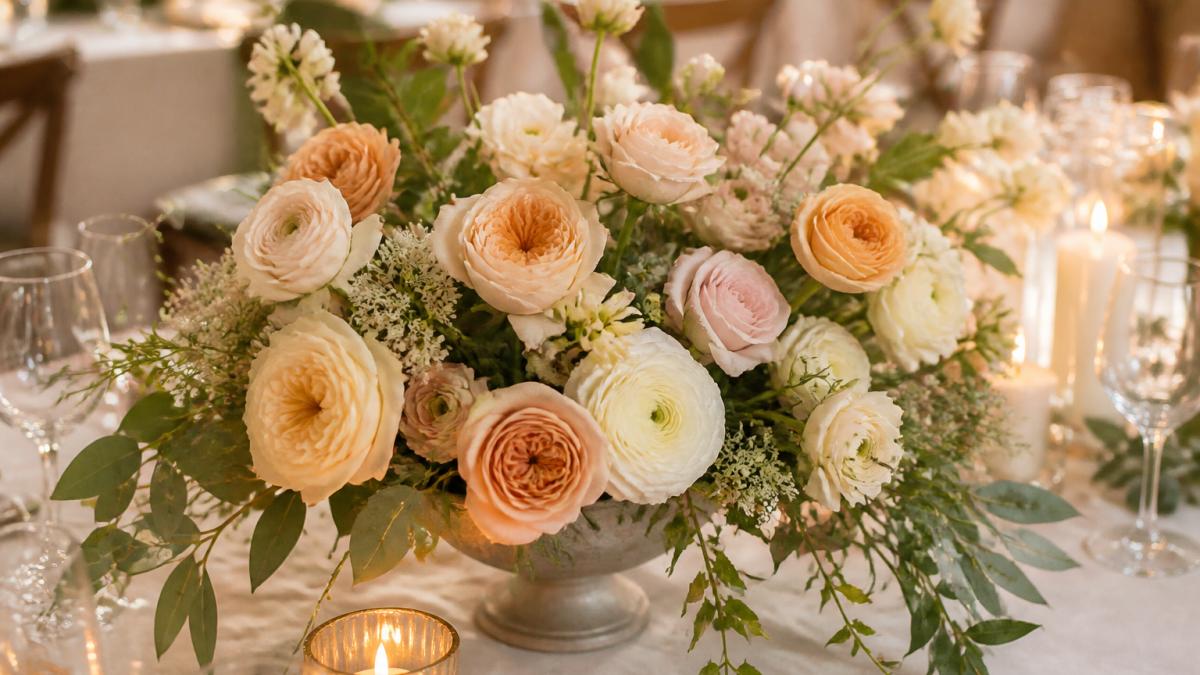
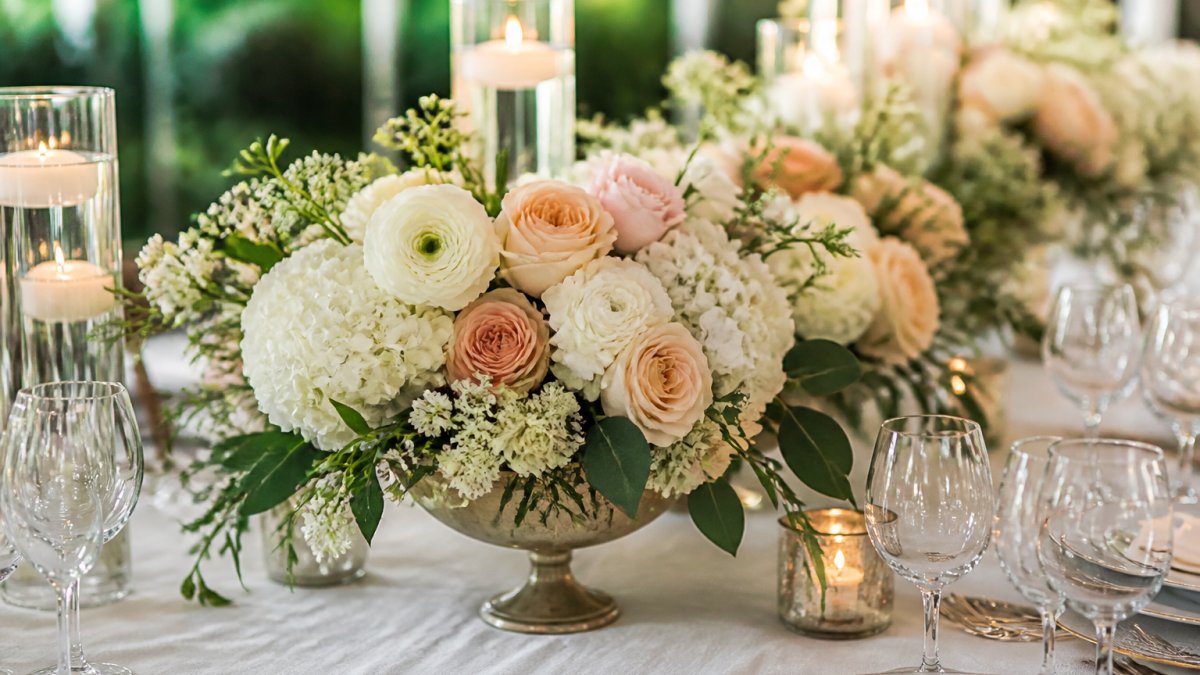
Close-up of an elegant wedding centerpiece featuring mixed garden roses, ranunculus, and soft greenery with varying heights and natural textures arranged in a low vase with candlelight

Your flowers should work across the entire venue, from ceremony arrangements to the bridal bouquet. Choosing centerpiece flowers early ensures consistency, simplifies ordering, and gives your florist time to source premium stems.

Sculptural and Statement Blooms

Sculptural flowers command attention without overwhelming a table, with architectural shapes that create interest even in minimalist arrangements. Proteas, anthuriums, and orchids lead this year because they hold their form and photograph beautifully.

Ranunculus remains a favorite for its layered petals, which create depth and movement. Poppies and cosmos add an unexpected edge for modern or garden-inspired aesthetics. Use these as focal flowers, paired with softer supporting blooms.

Romantic and Garden-Inspired Choices

Garden roses, sweet peas, and dahlias create the romantic, gathered-from-the-garden feeling many couples prefer. Garden roses offer rich color options and full, luxurious blooms that make even simple arrangements feel special.

Combine garden roses with clematis, astilbe, or soft greenery like eucalyptus for natural movement and texture. This works especially well for low centerpieces where guests need to see across the table.

Unexpected and Unconventional Botanicals

Couples are embracing unconventional choices that set their weddings apart. Amaranthus adds dramatic draping, stock provides architectural vertical lines, and chamomile, daisies, and ornamental grasses bring an earthy quality.

Balance is key: pair one or two unconventional elements with familiar flowers so arrangements feel intentional rather than random. A few stems of amaranthus with garden roses and ranunculus creates interest without chaos, and unusual botanicals often cost less than premium roses.

Seasonal Wedding Flowers and Regional Availability

Seasonality is the single biggest lever on what your centerpieces look like and what they cost. A peony in October is an imported, premium-priced stem; a dahlia in October is domestic, abundant, and a fraction of the cost.

How flower availability really works

Three supply streams feed the U.S. wedding market:

  • Domestic field-grown. Follows a natural season, peaks spring through early fall, and is the most affordable and freshest option when available.
  • Domestic greenhouse-grown. Extends the season for crops like roses, tulips, and lilies. More consistent year-round, priced between field-grown and imported.
  • Imported. Fills gaps, especially in winter and for out-of-season blooms. Adds freight, cold-chain, and sometimes tariff costs, and stems may be older by the time they reach your florist.

Month-by-month centerpiece guidance

Use this as a starting point, then confirm with your florist, since timing shifts with weather and region.

  • January-February: Tulips, anemones, ranunculus, and forced branches lead. Evergreens, berries, and dried botanicals carry texture. Orchids and anthuriums are reliable greenhouse/import options.
  • March-April: Tulips peak, ranunculus and anemones are strong, and early peonies and sweet peas begin. Daffodils and hyacinths add scent and value.
  • May-June: The peak wedding window. Peonies, garden roses, sweet peas, and early dahlias are at their best and most affordable, the easiest months to design around seasonality.
Key Takeaway
If your date falls in the May-June or September-October windows, you can build a premium-looking centerpiece almost entirely from in-season domestic stems. If your date falls in winter, budget more per stem and lean on evergreens, dried elements, and greenhouse blooms for value.

Regional availability: why your zip code matters

Availability is also regional. Growers in milder climates supply field-grown blooms earlier and later than colder regions, and local growers deliver fresher stems with less transit time. Couples in strong flower-farming regions can often source a wider in-season palette at lower cost.

Ask your florist two questions early:

  1. Which of my chosen flowers can be sourced domestically and in season on my date?
  2. Which will need to be imported, and what does that do to price and stem quality?

Substitution logic: what to swap when a bloom isn’t available

Every trend flower has a comparable stand-in. Knowing the swaps in advance keeps your design intact when a stem is unavailable, over budget, or unsuitable for the venue.

  • Peony → garden rose or ranunculus. Similar full, layered form; garden roses are more available year-round.
  • Garden rose → standard rose or spray rose. Less ruffled, but reliable and often cheaper.
  • Ranunculus → stock or lisianthus. Similar density and softness; lisianthus holds up well in heat.
Pro Tip
Build a substitution list into your floral contract. If a specific bloom is unavailable on your date, your florist should have pre-approved swaps that preserve the design and the budget, not a last-minute surprise.

The practical takeaway

Choose your date first, then your flowers. Couples who pick blooms before confirming the date pay a premium for out-of-season stems and accept older, imported product. Letting the season lead gets you fresher flowers, more design flexibility, and a lower per-centerpiece cost.

2026 centerpiece trends favor bold monochromatic palettes or carefully curated multi-color combinations.

For bolder statements, jewel tones like emerald, sapphire, and burgundy are trending, working especially well in evening receptions or venues with dramatic lighting.

The modern approach emphasizes movement and varying heights. Rather than uniform, symmetrical arrangements, 2026 centerpieces feature stems at different lengths for a natural, slightly asymmetrical look that feels like a curated garden moment.

Low Wedding Centerpieces: Design and Flower Selection

Low centerpieces, typically 12 inches or shorter, remain essential because they let guests see and converse across the table. The best flowers for low wedding centerpieces have full, rounded forms like garden roses, ranunculus, and dahlias, visual impact without height.

Focus on density and texture rather than vertical drama.

Pair low centerpieces with bud vases as accents: small arrangements between larger ones add detail without blocking sightlines and let you incorporate more varieties.

Wedding Centerpiece Flower Cost and Budget Planning

Most centerpiece budget advice stops at “it depends.” Here is the practical framework florists actually use to price centerpieces.

Get Started Today →

What actually drives the price of a centerpiece

Four variables account for nearly all centerpiece cost variation:

  1. Focal flower choice. A garden rose, peony, or orchid stem costs several times what a stem of stock, carnation, or chrysanthemum costs. Two or three focal blooms per arrangement is typical; more and the price climbs quickly.
  2. Stem count and arrangement size. A low centerpiece in a 6-inch vessel might use 15-25 stems; a lush 10-inch design can use 40-60. Stem count, not vase size, is the real cost driver.
  3. Design complexity. Hand-tied, foam-free, cascading, or asymmetrical designs take more labor than a simple rounded arrangement. Labor is often 40-60% of a centerpiece’s price.
  4. Season and sourcing. In-season, domestic stems are consistently cheaper than out-of-season imports. A peony in May and a peony in December are not the same purchase.

Realistic per-centerpiece tiers

Use these as planning ranges, not quotes, pricing varies by market, venue access, and delivery:

  • Bud vases and accents, roughly $15-$40 each. A few stems in a small vessel. Best used in clusters of three to five between larger designs.
  • Standard low centerpiece, roughly $75-$150 each. A rounded, garden-style arrangement in a 6-8 inch vessel, 20-30 stems, mixed focal and filler.
  • Premium low centerpiece, roughly $150-$300 each. Larger vessel, 35-50 stems, premium focals like garden roses or peonies, more texture and trailing elements.
Pro Tip
Ask your florist for a per-centerpiece price at three stem counts (for example, 20, 30, and 40 stems) for the same design. Seeing the marginal cost of each additional tier is the fastest way to right-size your order.

The table-count math most couples skip

Centerpiece budget is a multiplication problem. A 150-guest wedding with 15 round tables needs 15 centerpieces. At $125 each, that’s $1,875 before tax, delivery, and setup; at $250 each, it’s $3,750, same guest count, double the floral line item.

Three levers reduce that total without gutting the look:

  • Mix tiers across tables. Put premium designs on the head table and guest-of-honor tables, standard designs on the rest. Guests rarely compare tables side by side.
  • Alternate centerpieces with bud-vase clusters. Every other table gets a full arrangement; the rest get three to five bud vases. The room still reads as floral, and the per-table cost drops sharply.
  • Reduce table count, not quality. Longer tables or a mix of rounds and longs can cut the number of arrangements while keeping the same guest capacity.

Where the hidden costs live

Watch for line items outside the per-centerpiece price:

  • Delivery and setup. Venue distance, load-in time, and whether your florist must return for breakdown all affect this. It’s frequently a flat fee plus a percentage of the floral total.
  • Vessel rental. Many florists rent vases and stands rather than sell them; rental is usually cheaper but must be returned.
  • Strike and cleanup. Removing arrangements after the event is sometimes a separate charge.

A simple budgeting sequence

  1. Set your total floral budget and reserve 10-15% for delivery, setup, tax, and contingency.
  2. Decide your table count and layout.
  3. Choose a per-centerpiece tier that fits the remaining budget.
  4. Pick focal flowers that are in season for your date (see the seasonal section).
  5. Ask for a written quote broken out by arrangement type, quantity, and fees, not a single lump sum.

That last step matters. A quote you can read line by line is a quote you can adjust line by line.

Affordable Wedding Centerpiece Flowers and Alternatives

If your budget is tight, several flowers offer excellent value.

Greenery-forward arrangements cut costs while remaining striking. Use eucalyptus, ruscus, salal, and other foliage as the foundation, then add a few premium focal flowers for sophisticated centerpieces at a fraction of the cost.

Seasonal flowers are always more affordable than out-of-season alternatives: a spring wedding with abundant tulips and peonies costs less than requesting those same flowers in December.

Flower Longevity, Care, and Sustainable Sourcing

Knowing how long centerpiece flowers last helps you plan timing. Garden roses typically last 7-10 days with proper care, ranunculus and dahlias similar, and orchids and proteas often stay fresh two weeks or longer.

Proper care extends flower life significantly: keep arrangements cool, change water every two days, and remove lower leaves that sit in water to prevent bacterial growth. Florists condition flowers with preservative and should deliver centerpieces as late as possible, ideally just before guests arrive.

Sustainable sourcing matters to many couples: locally grown flowers reduce transportation emissions and support regional growers, while seasonal selections minimize hothouse production. Locally grown flowers reduce transportation emissions and support regional growers, while seasonal selections minimize hothouse production.

Creating Your Centerpiece Selection Framework

Start by defining your style: romantic and garden-inspired, modern and minimalist, bold and dramatic, or naturally gathered and eclectic. This clarity guides every decision about flower selection, color palette, and design.

Next, identify your constraints: wedding date, venue style, budget, and table count. These determine which flowers are available, what they’ll cost, and how many arrangements you need, so discuss them with your florist early.

Then select 2-3 focal flower types to anchor each arrangement, add supporting flowers that complement them in color, texture, and form, and finish with greenery and filler for movement and volume. This structured approach ensures cohesive centerpieces throughout your reception.

Frequently Asked Questions

What are the best flowers for wedding centerpieces in 2026?

The top choices for 2026 include garden roses, ranunculus, calla lilies, orchids, and sculptural blooms like protea and anthuriums. Trending styles favor mixed-variety designs that combine soft blooms with statement flowers, natural textures, and varying heights. Your choice depends on your color palette, season, budget, and the overall aesthetic you want, romantic, modern, garden-inspired, or bold and unexpected.

Which flowers are most affordable for wedding centerpieces?

Affordable options include sunflowers, daisies, stock, tulips, and chamomile. Greenery and filler flowers like amaranthus also stretch your budget while adding movement and texture. Mixing one or two statement blooms with budget-friendly fillers creates impact without overspending. Pricing depends on quantity, dates, and delivery, contact An English Garden for a quote tailored to your needs.

How much do wedding flower centerpieces typically cost?

Centerpiece costs vary based on flower type, arrangement size, quantity needed, season, and delivery. Premium blooms like garden roses and orchids cost more than sunflowers or daisies. Seasonal flowers are generally less expensive than out-of-season imports. For accurate pricing based on your specific vision, table count, and wedding date, reach out to An English Garden for a personalized quote.

What flowers work best for low wedding centerpieces?

Low centerpieces suit ranunculus, garden roses, dahlias, calla lilies, and mixed blooms with draping or cascading stems. Keep arrangements under 12 inches tall to maintain sightlines across tables. Combine varying heights of flowers with moss, bud vases, and natural textures to create visual interest without height. This style works well for intimate gatherings and modern, minimalist aesthetics.

Can you mix fresh and dried flowers in wedding centerpieces?

Yes. Combining fresh and dried flowers adds texture, movement, and longevity to centerpieces. Dried amaranthus, pampas grass, and preserved greenery pair beautifully with fresh roses, ranunculus, and orchids. This mix works especially well for garden-inspired and modern designs. Dried elements also reduce overall floral costs and allow arrangements to last longer, which is practical for multi-day events or if you want to preserve centerpieces after the wedding.

How far in advance should I choose my wedding centerpiece flowers?

Choose flowers 2-3 months before your wedding to allow time for seasonal planning, cost estimation, and design consultations. For peak seasons (spring and summer), book earlier, 4-6 months ahead, to secure preferred blooms. Confirm final quantities and color details 2-3 weeks before the wedding. An English Garden’s experienced team can guide you through the timeline and help you make substitutions if needed.

What are the best seasonal flowers for wedding centerpieces?

Spring (March-May) offers tulips, ranunculus, peonies, and sweet peas. Summer (June-August) features garden roses, orchids, sunflowers, and cosmos. Fall (September-November) brings dahlias, protea, and amaranthus. Winter (December-February) offers roses, calla lilies, and imported blooms. Seasonal flowers are fresher, more affordable, and more sustainable. Discuss your wedding date with your florist to select the best in-season options for your centerpieces.

Should I choose local and sustainable flowers for my wedding centerpieces?

Locally sourced and sustainable flowers reduce environmental impact, support regional growers, and often cost less than imported blooms. They’re typically fresher and last longer. Many beautiful 2026 trends, garden-inspired, natural textures, and mixed botanicals, align perfectly with local sourcing. Ask your florist about regional availability for your wedding date. An English Garden can recommend sustainable options that fit your vision and budget.


When you’re ready to transform your centerpiece vision into reality, An English Garden offers expert design consultation and custom floral arrangements for your wedding. We handle delivery and on-site setup, ensuring your centerpieces are perfectly positioned and fresh when your guests arrive. Contact us to discuss your wedding flower needs and discover how we can create beautiful, memorable centerpieces for your celebration.

Posted on — Leave a comment

Best Wedding Floral Arrangements 2026

Table of Contents

Last Updated: October 13, 2026

Wedding flowers are moving away from predictable pastels toward bold, intentional design.

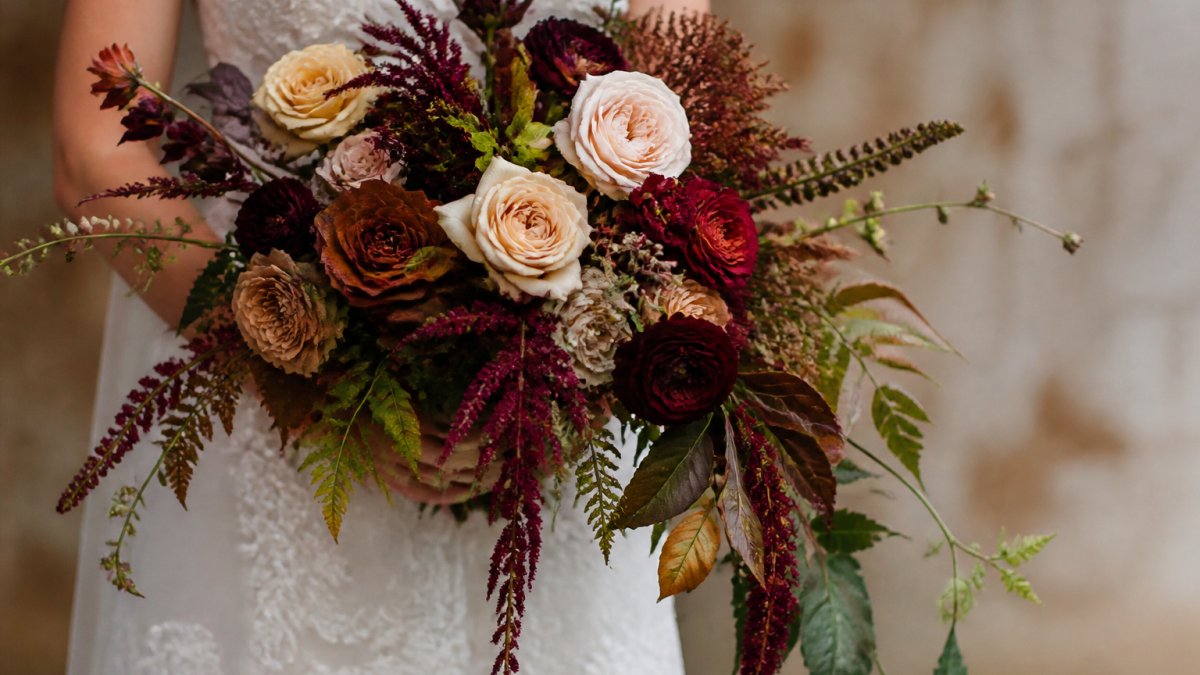
Close-up of a sculptural bridal bouquet featuring garden roses, burgundy blooms, and trailing amaranthus against a soft neutral background, showcasing rich earth tones and modern arrangement technique

Sculptural and Editorial Floral Design

Sculptural arrangements dominate 2026 wedding floral design, replacing soft, rounded bouquets with dramatic angles, asymmetrical shapes, and flowers positioned for depth and movement.

Work with a florist who understands proportion and composition, not just flower selection; sculptural arrangements use fewer stems positioned strategically, which can help with budget.

Bold Color Palettes and Color Stories

Couples are abandoning the “safe” palette of blush, ivory, and sage for jewel tones, unexpected contrasts, and a cohesive “color story” reflecting their taste.

Saturated deep plum, burnt orange, and rich navy appear alongside metallics and unexpected textures, with every flower choice reinforcing the overall vision.

Warm Earth Tones and Rich Burgundy-Green Combinations

Among bold palettes, warm earth tones and burgundy-green combinations are especially strong in 2026. Burgundy reads as sophisticated without feeling heavy, and paired with olive or sage green it creates a naturally luxurious, modern yet timeless look.

These combinations work across seasons and venues because they’re grounded in nature, pairing beautifully with garden roses, ranunculus, and unexpected blooms like celosia or scabiosa.

Wedding Bouquet Styles 2026: Shapes and Design Approaches

Wedding bouquet styles have diversified dramatically, with no single shape dominating. Couples choose based on venue, dress, and aesthetic, from tight, architectural forms to loose, garden-inspired bundles.

Monofloral and Minimalist Designs

Monofloral bouquets, featuring a single flower variety, have gained traction among couples seeking clarity and impact. A bouquet of only garden roses or ranunculus creates visual power through repetition and texture variation.

Minimalist designs use fewer stems positioned deliberately, feeling more contemporary and photographing exceptionally well.

Elongated and Trailing Arrangements

Elongated and trailing arrangements create movement and drama, extending downward with cascading amaranthus, smilax vine, or trailing greenery.

Trailing arrangements require structural support and careful construction, so they demand a florist with technical skill, striking in formal venues with high ceilings or dramatic backdrops.

Garden-Inspired and Meadow-Style Florals

Garden-inspired and meadow-style florals push back against overly structured design, looking gathered from a cutting garden: loose, organic, with visible greenery and unexpected texture.

This style suits outdoor weddings, barn venues, and relaxed aesthetics, but requires a florist who can balance looseness with structure.

Choosing flowers means balancing availability, seasonality, and design impact. The most successful wedding floral arrangements in 2026 mix classic luxury blooms with unexpected choices that add personality and texture.

Classic Luxury Blooms

Garden roses remain the gold standard, endlessly versatile thanks to their full, romantic form and color range.

Hydrangeas provide volume in nearly any palette, calla lilies bring architectural elegance, and spray roses offer abundance without overwhelming a design. Dendrobium and phalaenopsis orchids add contemporary edge and exceptional longevity.

Contemporary and Unexpected Choices

The 2026 editorial trend gives unexpected blooms real attention. Celosia adds texture and sculptural quality, scabiosa brings movement and a cottage-garden feel, and amaranthus provides trailing drama that works beautifully in monofloral arrangements.

Astilbe’s feathery texture softens bolder palettes, spray chrysanthemums offer surprising color and form, and ornamental grasses and preserved foliage are now primary design elements rather than filler.

Wedding Ceremony Flower Arrangements: Design by Venue and Scale

Ceremony arrangements set the tone for the event. The best wedding ceremony flower arrangements work within your venue’s architecture and scale appropriately to the space.

Altar and Aisle Installations

Altar arrangements must read from the back of the ceremony space without upstaging the couple, where sculptural design shines, with clear lines and intentional composition.

Aisle installations range from simple markers to elaborate designs. Consider aisle length, natural lighting, and whether arrangements must withstand wind or weather.

Reception and Statement Floral Displays

Reception arrangements have more flexibility because guests view them from closer range. Statement florals, oversized, impactful arrangements, work beautifully as centerpieces, entryway installations, or backdrop elements.

These arrangements let you be bold with color and form. Consider table size, ceiling height, and sightlines, and echo your bouquet’s design language for visual cohesion throughout the space.

Seasonal Wedding Flowers: Availability and Cost Advantages

Seasonality is the single biggest lever on both quality and price, and the part of floral planning most couples underuse. A bloom at its natural peak is larger, more fragrant, and longer-lasting than the same variety forced or flown in off-season, and usually costs less because supply is abundant.

Month-by-Month Availability Snapshot

Use this as a starting point, not a guarantee. Exact timing shifts with weather, growing region, and the specific farm, so confirm your date with your florist before committing to a signature bloom.

Get Started Today →

  • January-February: amaryllis, anemone, tulips, ranunculus, orchids, forced branches (forsythia, quince), preserved foliage.
  • March-April: tulips, daffodils, hyacinth, anemone, ranunculus, early peonies in warmer regions, sweet pea.
  • May-June: peonies, garden roses, ranunculus, sweet pea, lilac, stock, nigella, bachelor’s button.

Two patterns matter more than any single month. Late spring and early fall are the sweet spots for variety and value because the widest range of blooms overlaps.

Regional Reality Check

Availability is not just about the calendar, it is about where the flowers are grown. A couple marrying in a warm southern climate may see peonies in April, while a couple in a colder northern region may not see them until late May or June.

Pro Tip
Ask your florist for a “peak, shoulder, and off-season” read on your top three flower choices for your exact date. That single conversation prevents the most common wedding-flower disappointment: a bloom that looked perfect in an inspiration photo but is out of season and priced accordingly.

How Seasonality Drives Cost

The cost logic is straightforward. When a flower is in peak local supply, growers harvest more of it, shipping distances are shorter, and loss is lower, so the price per stem drops.

This is why a spring wedding built around peonies and ranunculus can cost meaningfully less than a winter wedding built around the same blooms, even with identical arrangement counts.

Working With What Is Abundant

The most resilient approach is to choose a color story and texture direction first, then let your florist fill it with whatever is at peak for your date.

If a specific flower is non-negotiable, plan around it rather than against it.

Wedding Flower Budget: Planning, Substitutions, and Value

Floral budgets are the least transparent part of wedding planning, and most couples walk into their first florist meeting without a framework. Pricing varies enormously by region, season, and design complexity, so the goal here is to show what actually drives cost so you can make deliberate trade-offs instead of guessing.

What Actually Drives the Price

Every floral quote comes down to a handful of variables. Understanding them lets you control the total without gutting the design.

  • Stem count and variety. More stems cost more, and rare or out-of-season varieties cost more per stem than common ones. Twenty stems of a single in-season bloom is usually cheaper than twenty stems across six varieties.
  • Bloom size and grade. Large-headed garden roses and premium peonies cost more per stem than spray roses or standard roses. A higher-grade stem is bigger, straighter, and more uniform.
  • Labor and mechanics. Trailing bouquets, arch installations, and hanging pieces require structural work, wiring, and on-site assembly. Labor is often the largest hidden line item in a complex design.

A Simple Allocation Framework

Rather than budgeting by arrangement count, budget by visual impact. Experienced planners weight spending toward the pieces that appear in the most photographs and set the tone for the room.

  • Highest impact: bridal bouquet, ceremony focal point (altar, arch, or chuppah), and the entry or welcome arrangement guests see first.
  • Medium impact: aisle markers, bridesmaid bouquets, and the head or sweetheart table.
  • Lower impact: guest table centerpieces, cocktail-hour accents, and restroom or lounge touches.

This is why so many couples choose lush ceremony florals that can be repurposed at the reception.

Key Takeaway
Design for reuse from the start. If your florist knows a ceremony piece will double as a reception centerpiece, they can build it in a vessel and structure that survives the move, which stretches your budget without reducing the visual impact.

Substitutions That Do Not Read as Compromises

Substitution is not about downgrading, it is about matching function. When you swap, match the role the flower plays in the design, not just its color.

  • For volume: hydrangea, mums, and stock fill space affordably; use them as the base and let premium blooms sit on top.
  • For texture: scabiosa, astilbe, celosia, and ornamental grasses add movement and interest at low cost per stem.
  • For a rose look: spray roses and ranunculus deliver layered petals at a lower price point than large garden roses.

A useful rule: keep one or two hero blooms per arrangement and let seasonal, lower-cost stems carry the rest.

Reducing Cost Without Reducing Impact

  • Narrow the palette. Fewer colors mean fewer varieties to source, lowering cost and simplifying the design.
  • Choose an off-peak date or season. Late fall, winter, and early spring dates often price better than peak May-through-October Saturdays.
  • Go foam-free and vessel-based. Simple stem-in-vessel designs reduce labor and mechanics cost and are easier to reuse.

Getting an Accurate Quote

Bring your florist four things: your venue and its dimensions, your guest count, your date, and your color and style direction. Then ask for a quote broken out by piece, not a lump sum, so you can see where the money goes and adjust.

Watch Out
Beware of any quote that does not separate labor, delivery, and setup from the flowers themselves. Those line items are often where budgets quietly overrun, and a florist who hides them is harder to negotiate with later.

wedding flower cost planning guide

Care, Transport, and Durability for Your Wedding Day

Wedding flowers endure significant stress, transport, temperature changes, handling, and extended display time.

Bouquets need hydration before the ceremony; a florist typically delivers yours with a water source and care instructions.

Position ceremony arrangements away from direct sun and heat vents.

Certain flowers are more durable than others. Roses, hydrangeas, and calla lilies hold up well.

Booking Your Wedding Florist: Timeline and Planning Checklist

Booking your florist early ensures you secure your preferred date and have adequate time for design consultation.

Your initial consultation should cover budget, flower preferences, color palette, venue details, and design inspiration.

Confirm delivery and setup details. Understand what’s included in your florist’s services, delivery, setup, breakdown, or on-site decorating.

At An English Garden, we guide couples through each step of floral planning, ensuring your wedding flowers reflect your vision and enhance your celebration. With over 32 years of experience in wedding design and on-site decorating, we understand how thoughtful floral choices create lasting memories. Wedding flower design trends for 2026 and seasonal flower availability guide offer additional inspiration as you plan.

Frequently Asked Questions

What are the trendy wedding flowers for 2026?

2026 wedding floral arrangements emphasize sculptural design, bold color palettes, and seasonal blooms. Trending styles include monofloral bouquets, garden-inspired meadow florals, and arrangements featuring garden roses, peonies, ranunculus, and unexpected blooms like dendrobium orchids. Warm earth tones, burgundy, and olive green dominate color stories, while minimalist and editorial designs appeal to couples seeking contemporary aesthetics.

How do I choose wedding flowers that fit my style and budget?

Start by identifying your design preference: sculptural, minimalist, garden-inspired, or opulent. Prioritize seasonal flowers available during your wedding date, as they cost less and ensure availability. Work with your florist to allocate your wedding flower budget across ceremony arrangements, bridal bouquet, and reception displays. Consider cost-saving substitutions without compromising visual impact.

What wedding flowers are in season in 2026?

Seasonal availability varies by month. Spring brings peonies, ranunculus, and garden roses; summer offers hydrangeas, spray roses, and orchids; fall features rich burgundy blooms and earth-toned flowers; winter includes amaranthus and dendrobium orchids. Booking seasonal flowers reduces costs and guarantees freshness. Your florist can recommend which varieties are at their peak during your wedding date and offer the best value.

How far in advance should I book a wedding florist?

Book your florist 6-12 months before your wedding, especially if you’re planning a large celebration or have specific floral vision. Early booking ensures availability of your preferred flowers, allows time for design consultations, and gives your florist adequate time for on-site decorating coordination. For smaller weddings or flexible designs, 3-6 months may work, but earlier is always better for peace of mind.


Planning wedding flowers requires balancing inspiration with practicality. The best wedding floral arrangements in 2026 reflect your personal style while working within your venue, season, and budget. An English Garden has spent over three decades helping couples navigate these choices, combining expert design with the personal attention that ensures your flowers exceed expectations. Reach out to discuss your vision, we’re here to create arrangements that make your wedding day unforgettable.