Table of Contents
- What’s Trending in Wedding Floral Arrangements for 2026
- Wedding Bouquet Styles 2026: Shapes and Design Approaches
- Popular Wedding Flower Varieties and Unexpected Blooms
- Wedding Ceremony Flower Arrangements: Design by Venue and Scale
- Seasonal Wedding Flowers: Availability and Cost Advantages
- Wedding Flower Budget: Planning, Substitutions, and Value
- Care, Transport, and Durability for Your Wedding Day
- Booking Your Wedding Florist: Timeline and Planning Checklist
- Frequently Asked Questions
Last Updated: October 13, 2026
What’s Trending in Wedding Floral Arrangements for 2026
Wedding flowers are moving away from predictable pastels toward bold, intentional design.
Sculptural and Editorial Floral Design
Sculptural arrangements dominate 2026 wedding floral design, replacing soft, rounded bouquets with dramatic angles, asymmetrical shapes, and flowers positioned for depth and movement.
Work with a florist who understands proportion and composition, not just flower selection; sculptural arrangements use fewer stems positioned strategically, which can help with budget.
Bold Color Palettes and Color Stories
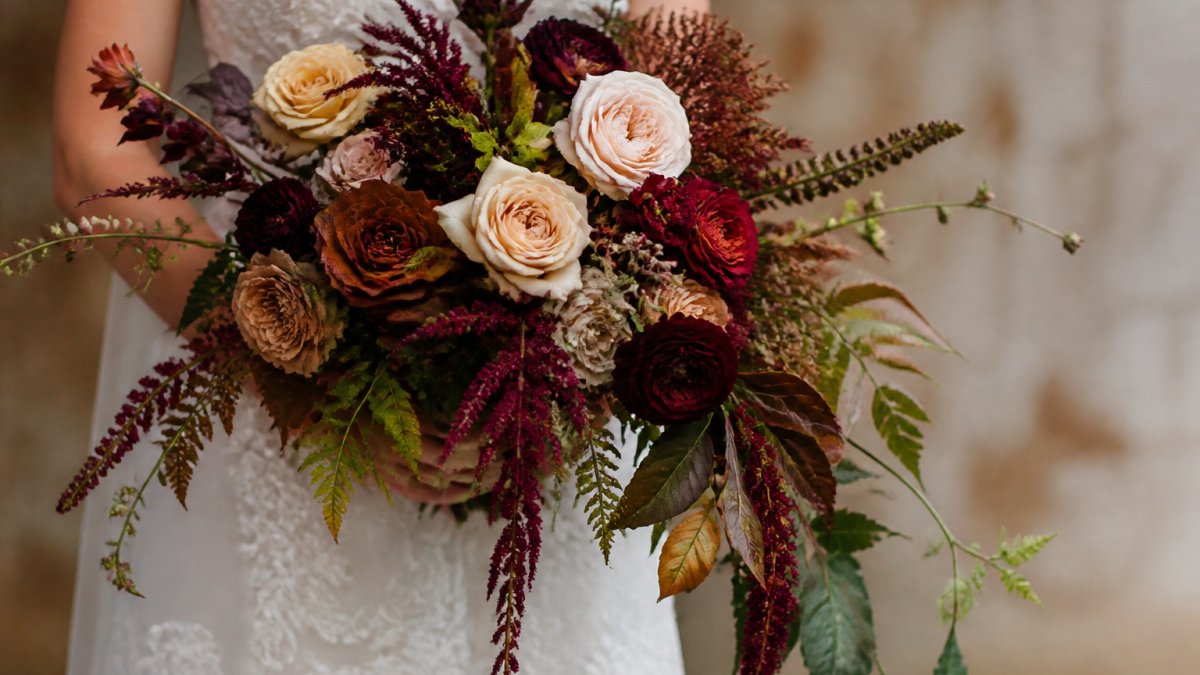
Couples are abandoning the “safe” palette of blush, ivory, and sage for jewel tones, unexpected contrasts, and a cohesive “color story” reflecting their taste.
Saturated deep plum, burnt orange, and rich navy appear alongside metallics and unexpected textures, with every flower choice reinforcing the overall vision.
Warm Earth Tones and Rich Burgundy-Green Combinations
Among bold palettes, warm earth tones and burgundy-green combinations are especially strong in 2026. Burgundy reads as sophisticated without feeling heavy, and paired with olive or sage green it creates a naturally luxurious, modern yet timeless look.
These combinations work across seasons and venues because they’re grounded in nature, pairing beautifully with garden roses, ranunculus, and unexpected blooms like celosia or scabiosa.
Wedding Bouquet Styles 2026: Shapes and Design Approaches
Wedding bouquet styles have diversified dramatically, with no single shape dominating. Couples choose based on venue, dress, and aesthetic, from tight, architectural forms to loose, garden-inspired bundles.
Monofloral and Minimalist Designs
Monofloral bouquets, featuring a single flower variety, have gained traction among couples seeking clarity and impact. A bouquet of only garden roses or ranunculus creates visual power through repetition and texture variation.
Minimalist designs use fewer stems positioned deliberately, feeling more contemporary and photographing exceptionally well.
Elongated and Trailing Arrangements
Elongated and trailing arrangements create movement and drama, extending downward with cascading amaranthus, smilax vine, or trailing greenery.
Trailing arrangements require structural support and careful construction, so they demand a florist with technical skill, striking in formal venues with high ceilings or dramatic backdrops.
Garden-Inspired and Meadow-Style Florals
Garden-inspired and meadow-style florals push back against overly structured design, looking gathered from a cutting garden: loose, organic, with visible greenery and unexpected texture.
This style suits outdoor weddings, barn venues, and relaxed aesthetics, but requires a florist who can balance looseness with structure.
Popular Wedding Flower Varieties and Unexpected Blooms
Choosing flowers means balancing availability, seasonality, and design impact. The most successful wedding floral arrangements in 2026 mix classic luxury blooms with unexpected choices that add personality and texture.
Classic Luxury Blooms
Garden roses remain the gold standard, endlessly versatile thanks to their full, romantic form and color range.
Hydrangeas provide volume in nearly any palette, calla lilies bring architectural elegance, and spray roses offer abundance without overwhelming a design. Dendrobium and phalaenopsis orchids add contemporary edge and exceptional longevity.
Contemporary and Unexpected Choices
The 2026 editorial trend gives unexpected blooms real attention. Celosia adds texture and sculptural quality, scabiosa brings movement and a cottage-garden feel, and amaranthus provides trailing drama that works beautifully in monofloral arrangements.
Astilbe’s feathery texture softens bolder palettes, spray chrysanthemums offer surprising color and form, and ornamental grasses and preserved foliage are now primary design elements rather than filler.
Wedding Ceremony Flower Arrangements: Design by Venue and Scale
Ceremony arrangements set the tone for the event. The best wedding ceremony flower arrangements work within your venue’s architecture and scale appropriately to the space.
Altar and Aisle Installations
Altar arrangements must read from the back of the ceremony space without upstaging the couple, where sculptural design shines, with clear lines and intentional composition.
Aisle installations range from simple markers to elaborate designs. Consider aisle length, natural lighting, and whether arrangements must withstand wind or weather.
Reception and Statement Floral Displays
Reception arrangements have more flexibility because guests view them from closer range. Statement florals, oversized, impactful arrangements, work beautifully as centerpieces, entryway installations, or backdrop elements.
These arrangements let you be bold with color and form. Consider table size, ceiling height, and sightlines, and echo your bouquet’s design language for visual cohesion throughout the space.
Seasonal Wedding Flowers: Availability and Cost Advantages
Seasonality is the single biggest lever on both quality and price, and the part of floral planning most couples underuse. A bloom at its natural peak is larger, more fragrant, and longer-lasting than the same variety forced or flown in off-season, and usually costs less because supply is abundant.
Month-by-Month Availability Snapshot
Use this as a starting point, not a guarantee. Exact timing shifts with weather, growing region, and the specific farm, so confirm your date with your florist before committing to a signature bloom.
- January-February: amaryllis, anemone, tulips, ranunculus, orchids, forced branches (forsythia, quince), preserved foliage.
- March-April: tulips, daffodils, hyacinth, anemone, ranunculus, early peonies in warmer regions, sweet pea.
- May-June: peonies, garden roses, ranunculus, sweet pea, lilac, stock, nigella, bachelor’s button.
Two patterns matter more than any single month. Late spring and early fall are the sweet spots for variety and value because the widest range of blooms overlaps.
Regional Reality Check
Availability is not just about the calendar, it is about where the flowers are grown. A couple marrying in a warm southern climate may see peonies in April, while a couple in a colder northern region may not see them until late May or June.
Ask your florist for a “peak, shoulder, and off-season” read on your top three flower choices for your exact date. That single conversation prevents the most common wedding-flower disappointment: a bloom that looked perfect in an inspiration photo but is out of season and priced accordingly.
How Seasonality Drives Cost
The cost logic is straightforward. When a flower is in peak local supply, growers harvest more of it, shipping distances are shorter, and loss is lower, so the price per stem drops.
This is why a spring wedding built around peonies and ranunculus can cost meaningfully less than a winter wedding built around the same blooms, even with identical arrangement counts.
Working With What Is Abundant
The most resilient approach is to choose a color story and texture direction first, then let your florist fill it with whatever is at peak for your date.
If a specific flower is non-negotiable, plan around it rather than against it.
Wedding Flower Budget: Planning, Substitutions, and Value
Floral budgets are the least transparent part of wedding planning, and most couples walk into their first florist meeting without a framework. Pricing varies enormously by region, season, and design complexity, so the goal here is to show what actually drives cost so you can make deliberate trade-offs instead of guessing.
What Actually Drives the Price
Every floral quote comes down to a handful of variables. Understanding them lets you control the total without gutting the design.
- Stem count and variety. More stems cost more, and rare or out-of-season varieties cost more per stem than common ones. Twenty stems of a single in-season bloom is usually cheaper than twenty stems across six varieties.
- Bloom size and grade. Large-headed garden roses and premium peonies cost more per stem than spray roses or standard roses. A higher-grade stem is bigger, straighter, and more uniform.
- Labor and mechanics. Trailing bouquets, arch installations, and hanging pieces require structural work, wiring, and on-site assembly. Labor is often the largest hidden line item in a complex design.
A Simple Allocation Framework
Rather than budgeting by arrangement count, budget by visual impact. Experienced planners weight spending toward the pieces that appear in the most photographs and set the tone for the room.
- Highest impact: bridal bouquet, ceremony focal point (altar, arch, or chuppah), and the entry or welcome arrangement guests see first.
- Medium impact: aisle markers, bridesmaid bouquets, and the head or sweetheart table.
- Lower impact: guest table centerpieces, cocktail-hour accents, and restroom or lounge touches.
This is why so many couples choose lush ceremony florals that can be repurposed at the reception.
Design for reuse from the start. If your florist knows a ceremony piece will double as a reception centerpiece, they can build it in a vessel and structure that survives the move, which stretches your budget without reducing the visual impact.
Substitutions That Do Not Read as Compromises
Substitution is not about downgrading, it is about matching function. When you swap, match the role the flower plays in the design, not just its color.
- For volume: hydrangea, mums, and stock fill space affordably; use them as the base and let premium blooms sit on top.
- For texture: scabiosa, astilbe, celosia, and ornamental grasses add movement and interest at low cost per stem.
- For a rose look: spray roses and ranunculus deliver layered petals at a lower price point than large garden roses.
A useful rule: keep one or two hero blooms per arrangement and let seasonal, lower-cost stems carry the rest.
Reducing Cost Without Reducing Impact
- Narrow the palette. Fewer colors mean fewer varieties to source, lowering cost and simplifying the design.
- Choose an off-peak date or season. Late fall, winter, and early spring dates often price better than peak May-through-October Saturdays.
- Go foam-free and vessel-based. Simple stem-in-vessel designs reduce labor and mechanics cost and are easier to reuse.
Getting an Accurate Quote
Bring your florist four things: your venue and its dimensions, your guest count, your date, and your color and style direction. Then ask for a quote broken out by piece, not a lump sum, so you can see where the money goes and adjust.
Beware of any quote that does not separate labor, delivery, and setup from the flowers themselves. Those line items are often where budgets quietly overrun, and a florist who hides them is harder to negotiate with later.
wedding flower cost planning guide
Care, Transport, and Durability for Your Wedding Day
Wedding flowers endure significant stress, transport, temperature changes, handling, and extended display time.
Bouquets need hydration before the ceremony; a florist typically delivers yours with a water source and care instructions.
Position ceremony arrangements away from direct sun and heat vents.
Certain flowers are more durable than others. Roses, hydrangeas, and calla lilies hold up well.
Booking Your Wedding Florist: Timeline and Planning Checklist
Booking your florist early ensures you secure your preferred date and have adequate time for design consultation.
Your initial consultation should cover budget, flower preferences, color palette, venue details, and design inspiration.
Confirm delivery and setup details. Understand what’s included in your florist’s services, delivery, setup, breakdown, or on-site decorating.
At An English Garden, we guide couples through each step of floral planning, ensuring your wedding flowers reflect your vision and enhance your celebration. With over 32 years of experience in wedding design and on-site decorating, we understand how thoughtful floral choices create lasting memories. Wedding flower design trends for 2026 and seasonal flower availability guide offer additional inspiration as you plan.
Frequently Asked Questions
What are the trendy wedding flowers for 2026?
2026 wedding floral arrangements emphasize sculptural design, bold color palettes, and seasonal blooms. Trending styles include monofloral bouquets, garden-inspired meadow florals, and arrangements featuring garden roses, peonies, ranunculus, and unexpected blooms like dendrobium orchids. Warm earth tones, burgundy, and olive green dominate color stories, while minimalist and editorial designs appeal to couples seeking contemporary aesthetics.
How do I choose wedding flowers that fit my style and budget?
Start by identifying your design preference: sculptural, minimalist, garden-inspired, or opulent. Prioritize seasonal flowers available during your wedding date, as they cost less and ensure availability. Work with your florist to allocate your wedding flower budget across ceremony arrangements, bridal bouquet, and reception displays. Consider cost-saving substitutions without compromising visual impact.
What wedding flowers are in season in 2026?
Seasonal availability varies by month. Spring brings peonies, ranunculus, and garden roses; summer offers hydrangeas, spray roses, and orchids; fall features rich burgundy blooms and earth-toned flowers; winter includes amaranthus and dendrobium orchids. Booking seasonal flowers reduces costs and guarantees freshness. Your florist can recommend which varieties are at their peak during your wedding date and offer the best value.
How far in advance should I book a wedding florist?
Book your florist 6-12 months before your wedding, especially if you’re planning a large celebration or have specific floral vision. Early booking ensures availability of your preferred flowers, allows time for design consultations, and gives your florist adequate time for on-site decorating coordination. For smaller weddings or flexible designs, 3-6 months may work, but earlier is always better for peace of mind.
Planning wedding flowers requires balancing inspiration with practicality. The best wedding floral arrangements in 2026 reflect your personal style while working within your venue, season, and budget. An English Garden has spent over three decades helping couples navigate these choices, combining expert design with the personal attention that ensures your flowers exceed expectations. Reach out to discuss your vision, we’re here to create arrangements that make your wedding day unforgettable.