Last Updated: November 16, 2026
Quick Summary
The best plants for a small apartment desk are snake plant, ZZ plant, pothos, and peace lily, which all tolerate indirect light and forgive an occasional missed watering. Keep the pot and foliage under about 10 inches wide and 12 inches tall so you still have room to work.
- Watch your desk at mid-morning, early afternoon, and late afternoon to judge its real light level.
- Snake plant and ZZ plant handle dry apartment air because their thick leaves lose water slowly.
- For a windowless desk, keep two plants and swap them every two to four weeks near a bright window.
- Water on a fixed day, such as the first Monday of the month, to keep easy-care plants on schedule.
- Peace lily, pothos, and philodendron are toxic to pets and children if chewed, so keep them out of reach.
Table of Contents
- How to Choose a Plant for a Small Apartment Desk
- Low-Light Desk Plants That Tolerate Dim Corners
- Plants for an Office Desk With No Windows
- Low-Maintenance Indoor Plants for an Office Schedule
- Pet and Child Safety on a Small Apartment Desk
- Pot Size, Drainage, and Apartment Humidity
- Best Fake Desk Plants When Real Ones Keep Dying
- Picking Your Plant at An English Garden
- Frequently Asked Questions
How to Choose a Plant for a Small Apartment Desk
Finding the best plants for a small apartment desk starts with two measurements: how much light reaches the spot and how much surface you can spare. Choosing plants that fit real rooms, not showrooms, starts with the same two checks. Most desk plants fail for one of those two reasons, not because the owner has a black thumb.
Match the Plant to Your Light Level
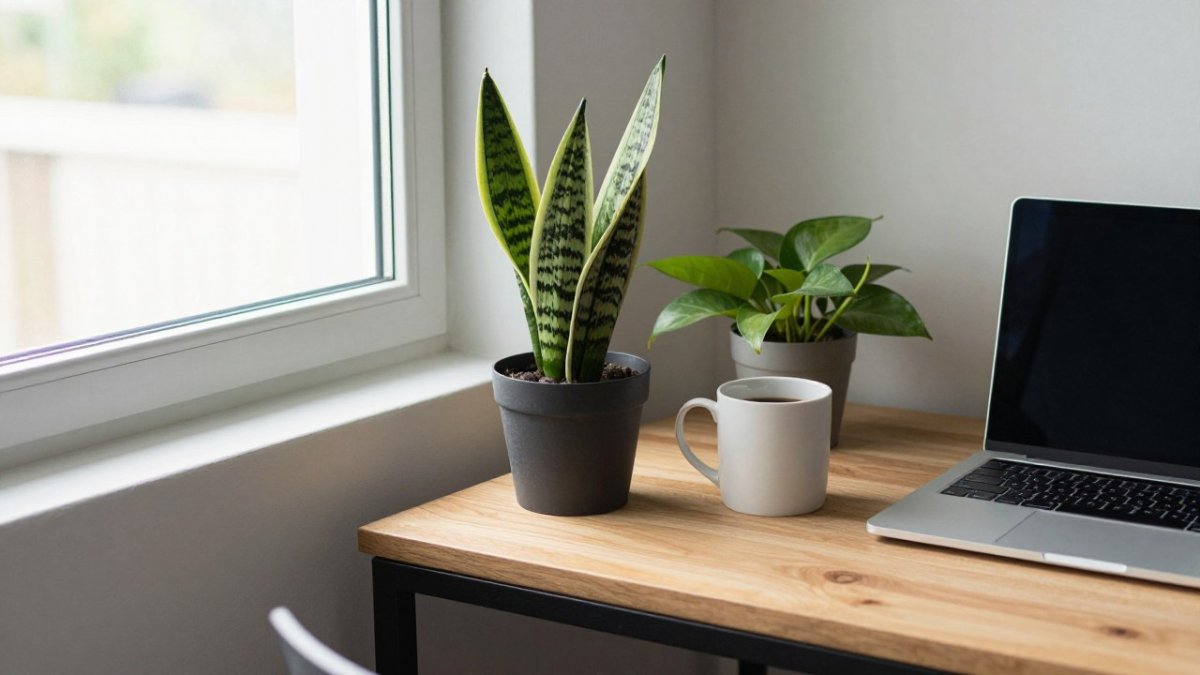
Light is the deciding factor, and it is easy to misjudge. A desk three feet from a window gets far less usable light than the windowsill itself, and a north-facing apartment may never deliver direct sun.
Low-light plants tolerate dim corners, but “low light” does not mean no light. If your office gets only a sliver of daylight, our guide on how to choose plants for a low light office walks through the trade-offs.
Measure Your Desk Before You Buy
A desk plant should leave you room to work. As a rule, keep the pot and foliage under about 10 inches wide and 12 inches tall for a standard apartment desk, and leave at least half the surface clear for your laptop and papers.
Check the mature size on the plant tag, not the size in the pot today. A plant that looks tiny now can double in width within a season.
Low-Light Desk Plants That Tolerate Dim Corners
The best low-light desk plants are snake plant, ZZ plant, pothos, and peace lily. Each tolerates indirect light and forgives an occasional missed watering, making them reliable for an apartment desk that never sees direct sun. But “low light” is a label, not a measurement, and these plants usually fail because the owner guessed wrong about how much light the spot actually gets.
Assess Your Desk’s Light Before You Shop
Spend one workday watching the spot where the plant will sit, and check it at three times: mid-morning, early afternoon, and late afternoon. Note which of these describes it:
- Bright indirect: You can read a book without a lamp, and the desk is within about three feet of a window but out of direct sun. Most desk plants thrive here.
- Medium indirect: The desk is four to six feet from a window, or the window is shaded by a building or tree. Snake plant, ZZ plant, and pothos will hold steady; peace lily will grow but bloom less.
- Low ambient: No window nearby, or only a north-facing window across the room. Only the toughest plants persist, and growth will be slow.
A phone light meter app is a rough guide, but the read-a-book test is more practical. If you cannot read comfortably without a lamp at noon, treat the spot as low ambient and choose accordingly.
How the Four Compare on a Small Desk
| Plant | Light Needs | Watering | Mature Size | Pot Footprint | Best For |
|---|---|---|---|---|---|
| Snake plant | Low to bright indirect | Every 2-3 weeks | 6-12 in. wide, 12-24 in. tall | 6-8 in. pot | Forgetful waterers; tight corners |
| ZZ plant | Low indirect | Every 2-3 weeks | 8-12 in. wide, 12-18 in. tall | 6-8 in. pot | Windowless desks; dry air |
| Pothos | Low to medium indirect | Weekly | Trails 2-6 ft., stays compact if pruned | 6 in. pot | Desks with a shelf above |
| Peace lily | Low to medium indirect | Weekly | 12-16 in. wide, 12-24 in. tall | 8 in. pot | A little drama and white blooms |
A peace lily in a ceramic pot is a classic low-light pick and arrives ready to set down. You can browse our Peace Lily in Ceramic Pot if you want a plant that looks finished the moment it lands on the desk.
Apartment Conditions That Change the Rules
Apartment air is drier than most people expect, especially from October through March when heating runs, and again in summer under air conditioning. Snake plant and ZZ plant handle dry air without complaint because their thick leaves lose water slowly.
Watch out: in low light, soil stays wet far longer than near a bright window, so a plant that sulks in a dim corner is usually overwatered rather than starved of light.
Placement on a Small Desk
Keep the pot and foliage under about 10 inches wide and 12 inches tall so you still have room to work, and leave at least half the surface clear for your laptop and papers. Trailing pothos works best when the pot sits at the back corner and the vines are trimmed to stay above the desk edge. Snake plant and ZZ plant are upright, so they suit a narrow desk where horizontal space is tighter than vertical space.
Plants for an Office Desk With No Windows
Plants for an office desk with no windows need to survive on overhead light alone. Few plants thrive in that setup, but several can hold on for a while if you choose carefully and rotate them. The key is to stop thinking of the desk as a dark spot and start measuring the light it actually receives from the fixtures above it.
What Overhead Light Actually Delivers
A standard office ceiling fixture delivers a fraction of the light that reaches a windowsill, and the amount drops sharply with distance.
A plant under a desk lamp on a regular work schedule does better than one relying on ceiling light alone, because the lamp provides consistent intensity at close range. LED bulbs run cool enough that they will not scorch leaves at that distance; older incandescent bulbs should stay farther away.
The Toughest Picks and Why They Work
ZZ plant and snake plant are the toughest. Their tolerance for dim corners makes them reliable desk companions, and Cynthia Gardens can help you consider other plants suited to low-light apartment spaces.
Pothos and spider plant can also manage, though they will look better if you take them home for a weekend near a window now and then to recharge.
A Realistic Rotation Schedule
If you want a windowless desk to look good year-round, treat it as a rotation rather than a permanent home. A common pattern is to keep two plants per desk and swap them every two to four weeks, giving each one a recovery period near a bright window at home. This is more reliable than expecting any plant to thrive indefinitely under ceiling light alone.
Why Windowless Desk Plants Decline
Watch out: a plant that sulks in a windowless office is usually drowning, not starving. Overwatering in low light is the most common way desk plants die, because the soil stays wet far longer without sun and air movement to dry it. Water less often than the care tag suggests, check the top inch of soil before watering, and make sure the pot has a drainage hole with a saucer you empty after each watering.
Size and Potting for a Windowless Desk
Because growth is slow, you can choose a plant near its mature size without worrying that it will outgrow the desk quickly. A 6- to 8-inch pot suits most windowless desks, and an upright snake plant or ZZ plant keeps the footprint narrow. Skip large floor-style pots and anything that needs repotting every season; in low light, repotting stresses the plant more than it helps.
Low-Maintenance Indoor Plants for an Office Schedule
The best low-maintenance indoor plants for an office are succulents, snake plant, and kalanchoe, all of which tolerate a busy schedule and a week or two between waterings. If your week disappears into meetings, pick a plant that prefers neglect to attention.
A few habits make easy-care plants even easier:
- Water on a fixed day, such as the first Monday of the month
- Use a pot with a drainage hole and empty the saucer after watering
- Keep plants out of direct drafts from air conditioning vents
Kalanchoe is a low-maintenance succulent that suits a busy office schedule and adds a splash of color when it blooms. Our Kalanchoe Plant is a good fit for a desk that gets bright indirect light. If you want more options beyond this list, we keep a roundup of low maintenance flowers for office spaces that thrive with minimal fuss.
Pet and Child Safety on a Small Apartment Desk
Some of the most popular desk plants are toxic to pets and children if chewed, and a small apartment puts everyone closer together.
That does not mean you cannot keep them. Set toxic plants on a high shelf or a desk a pet cannot reach, and keep trailing vines trimmed so they do not dangle within reach of a cat.
If you want peace of mind, choose nontoxic options: spider plant, Boston fern, and most true succulents like echeveria are safer picks. If a peace lily is the look you want, our Spathiphyllum Plant for Sympathy is a thoughtful gift, but keep it out of reach in a home with pets or small children.
Pot Size, Drainage, and Apartment Humidity
Small pots and drainage decide whether a desk plant survives apartment conditions. A pot that is too large holds excess soil that stays wet, and a pot with no drainage hole traps water at the roots (Get Started | Houseplants | Illinois Extension).
Choose a pot only an inch or two wider than the root ball, and always confirm there is a drainage hole. If you love a decorative pot without one, keep the plant in a nursery pot inside it and lift it out to water. Empty the outer pot completely before setting the plant back.
Apartment air, especially with heating and air conditioning running, is dry. Ferns, peace lily, and spider plant appreciate extra humidity.
Best Fake Desk Plants When Real Ones Keep Dying
The best fake desk plants are high-quality silk or preserved options that copy the real thing closely: snake plant, succulents, and small ferns.
Look for these signs of a good fake:
- Leaves with slight variation in color, not one flat green
- A pot weighted so it will not tip
- Realistic proportions that match the mature size of the real plant
Fake plants need care too. Dust them monthly, keep them out of direct sun so they do not fade, and rotate them now and then so the light hits evenly. A well-chosen faux plant is a practical answer, not a compromise.
Picking Your Plant at An English Garden
Choosing the best plants for a small apartment desk comes down to light, size, and how much care you will realistically give.
We offer secure 24-hour online ordering, delivery to more than 30 cities each day, and a wide selection of plants and gifts for any budget.
Ready to green up your workspace? An English Garden can help you choose a plant that fits your light, your space, and your schedule.
Frequently Asked Questions
What is a good small office desk plant for a beginner?
A snake plant or ZZ plant is a strong first pick. Both tolerate low light, need watering only every two to three weeks, and stay compact enough for a narrow desk. A pothos works too if you have brighter indirect light and want something that trails. Whichever you choose, use a pot with a drainage hole and empty the saucer so roots do not sit in water.
Which apartment desk plants survive a desk with no windows?
Snake plants, ZZ plants, and peace lilies handle windowless spots better than most. They still need some light, so keep a desk lamp on during work hours or rotate the plant near a window on weekends. Growth will be slower and watering less frequent than in a bright room. Avoid ferns and succulents in a windowless corner, since they usually decline without natural light.
Are fake desk plants a good option for a small apartment?
They are a practical choice for dark corners, desks you travel away from, or rooms with pets that chew. Quality faux plants look convincing and need no watering or light. The trade-off is no air-purifying effect and a plastic look up close. Many people keep one real low-maintenance plant plus a faux accent for spots where nothing living survives.
How do I keep a desk plant alive in an air-conditioned apartment?
Air conditioning dries the air, so group your plant with others or set it on a pebble tray to raise humidity. Keep it away from direct vents and cold drafts. Water when the top inch of soil feels dry rather than on a fixed schedule, and check the saucer weekly. In winter, when heating runs, expect to water slightly more often.