
Table of Contents
- Understanding Sympathy Flowers and Their Meanings
- Lilies: The Traditional Choice for Sympathy
- Roses, Carnations, and Chrysanthemums for Remembrance
- White Flowers, Hydrangeas, and Garden-Style Arrangements
- Sympathy Flower Etiquette and Delivery Considerations
- What to Write on a Sympathy Flower Card
- Sympathy Plants as Lasting Tributes
- Religious, Cultural, and Personal Preferences
- Frequently Asked Questions
Last Updated: October 12, 2026
Understanding Sympathy Flowers and Their Meanings
When someone you care about is grieving, flowers offer a way to express compassion when words feel inadequate. The best flowers for sympathy arrangements carry centuries of meaning, chosen deliberately to convey respect, love, and support during difficult times. Selecting sympathy flowers requires more than picking what looks beautiful; it’s about choosing blooms that honor the person being remembered and comfort those left behind.
Sympathy flowers communicate what silence cannot. Each flower type carries its own language: lilies speak of restored innocence and peace, roses express deep love and respect, and chrysanthemums symbolize truth and devoted love in many cultures. Understanding these meanings helps you select arrangements that feel personal and intentional rather than generic.
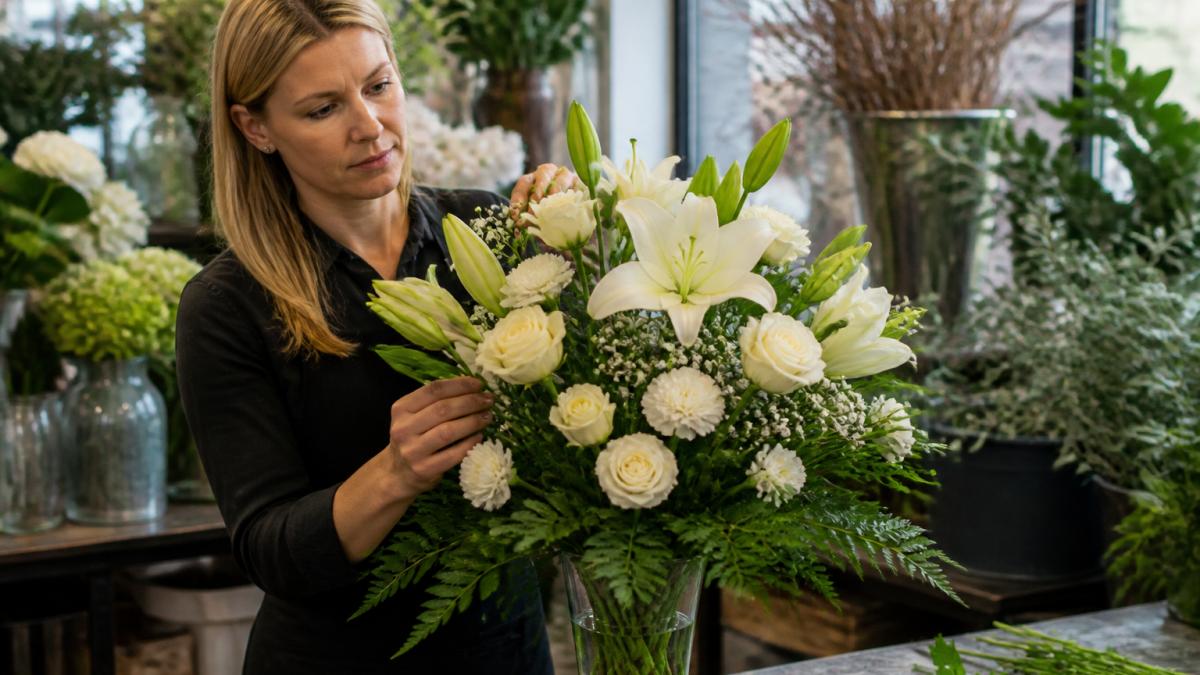
The tradition of sending sympathy flowers dates back generations. Different cultures and religions have developed their own preferences, some favor white blooms for purity and peace, others prefer deeper colors for solemnity and respect. What matters most is that your choice reflects genuine care and acknowledges the loss with dignity.
Lilies: The Traditional Choice for Sympathy
White lilies are the most recognized sympathy flower, representing restored innocence, purity, and the soul’s return to peace. They appear in nearly every sympathy arrangement, and for good reason, their elegant appearance and powerful fragrance create a meaningful presence in any space.
Lilies come in several varieties, each with slightly different symbolism. Oriental lilies have large, fragrant blooms and are popular for their dramatic presence. Asiatic lilies offer a softer appearance with less fragrance. Stargazer lilies, with their distinctive pink-and-white coloring, convey admiration alongside sympathy. White Casablanca lilies remain the most traditional choice for funeral arrangements.
A practical consideration: lilies have prominent stamens that can stain clothing and surfaces. Many florists remove these before delivery, but it’s worth asking. If someone receiving flowers has allergies or sensitivities, lilies’ strong fragrance can be overwhelming in enclosed spaces like hospital rooms. We can create lily arrangements tailored to the recipient’s environment and preferences, ensuring your gesture brings comfort rather than distress.
Lilies last longer than many other sympathy flowers, typically one to two weeks with proper care. This longevity makes them practical for families managing arrangements alongside funeral arrangements and gatherings. The flowers remain fresh through the service and into the grieving period that follows.
Roses, Carnations, and Chrysanthemums for Remembrance
These three flowers form the backbone of traditional sympathy arrangements, each carrying distinct meanings that resonate across cultures.
Roses and Respect
Red roses symbolize deep love and respect, making them powerful choices for honoring someone’s memory. While red roses are often associated with romantic love, in the context of sympathy they express profound respect and admiration for the person who has passed. They’re especially appropriate when honoring a parent, mentor, or respected community member.
White roses convey reverence and humility, often used to express that the deceased’s memory will live on. Pink roses communicate gratitude and appreciation, suitable when acknowledging someone who made a positive impact. Yellow roses symbolize friendship and caring, making them appropriate for arrangements honoring colleagues or friends.
Roses integrate beautifully into mixed arrangements alongside lilies and other flowers. They add depth and formality to bouquets and standing sprays. Because roses are widely available year-round, they’re reliable choices regardless of season.
Carnations and Mourning Traditions
Carnations carry meaning in many cultures and are deeply connected to mourning traditions. White carnations represent pure love and good luck, while pink carnations symbolize affection and gratitude. Red carnations express admiration and deep love. In some European traditions, carnations are the primary flower for funeral services.
Carnations offer practical advantages: they’re long-lasting (often two to three weeks), affordable, and available in numerous colors. They hold their appearance well in various arrangements and don’t require the special handling that lilies demand. For families creating multiple arrangements or sending flowers across several days, carnations provide consistency and reliability.
Chrysanthemums Across Cultures
Chrysanthemums, often called mums, carry different meanings depending on culture and color. In the United States and many Western countries, white and yellow chrysanthemums represent truth, loyalty, and devoted love. In Asian cultures, particularly Japan and China, chrysanthemums are strongly associated with death and mourning, making them the primary choice for funeral flowers.
Red chrysanthemums express deep love and respect. Bronze and burgundy mums convey warmth and comfort. The flower’s full, layered petals create visual impact in arrangements, and mums last exceptionally well, often remaining fresh for three weeks or longer.
Understanding cultural context matters when selecting chrysanthemums. If the deceased or family members have Asian heritage, chrysanthemums may be the most meaningful choice. For other backgrounds, they work beautifully alongside roses and lilies in mixed arrangements.
White Flowers, Hydrangeas, and Garden-Style Arrangements
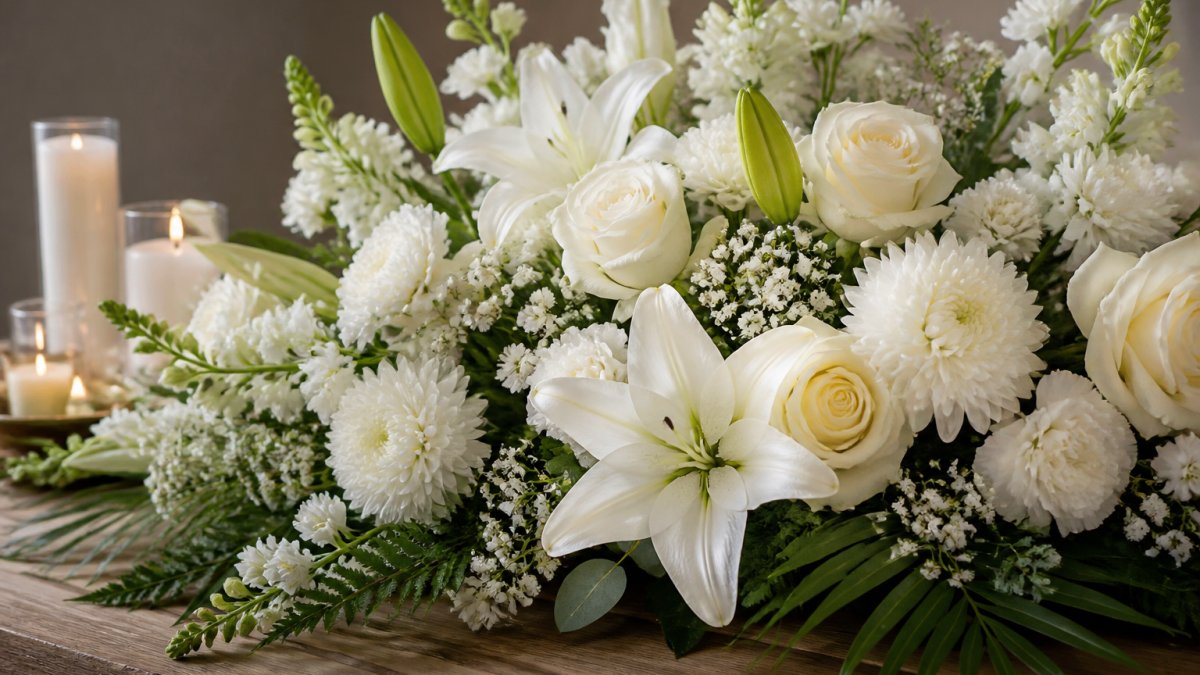
White flowers collectively represent peace, purity, and the hope of eternal rest. Beyond lilies and roses, white carnations, white chrysanthemums, and white hydrangeas create serene, contemplative arrangements that feel appropriate for any loss.
Hydrangeas deserve special attention in sympathy arrangements. These voluminous flowers with their clustered blooms create full, garden-style arrangements that feel less formal than traditional funeral sprays. Blue hydrangeas symbolize gratitude and apology; white hydrangeas represent grace and elegance; pink hydrangeas convey heartfelt emotion.
Garden-style arrangements, looser, more natural compositions that look like flowers picked fresh from a garden, have become increasingly popular for sympathy occasions. These arrangements feel more personal and less “funeral-like” than structured standing sprays. They work well for home displays, hospital rooms, and casual memorial gatherings.
White flowers in combination create powerful visual impact. A mix of white lilies, white hydrangeas, white roses, and white carnations with greenery produces an arrangement that feels both elegant and comforting. These arrangements photograph well and maintain their beauty throughout viewing and memorial services.
Sympathy Flower Etiquette and Delivery Considerations
Timing matters significantly when sending sympathy flowers. Ideally, arrange delivery for the day before the service or the morning of the service itself. Flowers arriving too early may wilt before the service; flowers arriving after the service may feel delayed.
Delivery location requires careful consideration. Funeral homes typically have specific florist partnerships and delivery procedures. Hospital rooms have space limitations and may restrict certain flowers due to patient allergies. Home delivery works well when the family is receiving visitors. Confirm the recipient’s preferred delivery location before ordering.
We handle delivery coordination with local funeral homes and hospitals, ensuring your arrangement arrives exactly when and where it’s needed. We understand the logistics of sympathy delivery and manage timing to support the family during their difficult period.
Consider the recipient’s living situation. A large standing spray works beautifully in a funeral home but may overwhelm a hospital room or small apartment. A potted plant or garden-style arrangement offers flexibility, it can be displayed during services and then taken home for long-term enjoyment.
Seasonal availability affects flower selection. Winter months may limit certain varieties, making substitutions necessary. Spring and summer offer the widest selection. Discussing seasonal options with your florist ensures you get the most beautiful arrangement possible within availability constraints.
What to Write on a Sympathy Flower Card
The card accompanying your flowers carries as much weight as the flowers themselves. Keep your message brief, sincere, and focused on the recipient’s feelings rather than the deceased’s death.
Effective sympathy messages include:
- “Thinking of you during this difficult time”
- “Please accept my deepest condolences”
- “Wishing you peace and comfort in the days ahead”
- “I’m here for you, please reach out if you need anything”
- “Cherishing memories of [name] with you”
Avoid clichés like “they’re in a better place” or “everything happens for a reason.” These phrases, while well-intentioned, often feel dismissive of genuine grief. Instead, acknowledge the loss directly and express your presence and support.
If you knew the deceased personally, a brief memory or specific quality you admired shows thoughtfulness: “I’ll always remember [name]’s kindness and humor” or “I’m grateful for the time I spent with [name].” Personal touches transform a standard condolence into a meaningful tribute.
For professional relationships, keep the message formal but warm: “Please accept my sincere condolences on the loss of [name]. I was honored to know them.” For close relationships, more emotion is appropriate: “I’m heartbroken over [name]’s passing. You’re in my thoughts constantly.”
Sympathy Plants as Lasting Tributes
Potted plants offer an alternative or complement to cut flowers, providing a living tribute that grows and endures beyond the immediate grieving period. Peace lilies, orchids, and flowering plants like azaleas create lasting reminders of your care and support.
Peace lilies are particularly popular for sympathy occasions. These plants symbolize sympathy and rebirth, and they’re relatively easy to maintain indoors. They produce elegant white flowers and adapt well to various light conditions.
Orchids convey elegance, strength, and enduring beauty. They’re sophisticated choices for professional relationships or formal occasions. Orchids require more specific care than peace lilies, but their longevity, they can bloom for months, makes them meaningful long-term tributes.
Pothos plants, also called devil’s ivy, are nearly impossible to kill, making them excellent choices for families who may not have energy for plant care during grief. These trailing plants symbolize affection and are often given as expressions of support and care.
The advantage of plants over cut flowers is their permanence. While flowers fade within days or weeks, plants can thrive for years, providing a continuous reminder of your sympathy and support. Many families appreciate this lasting quality, as it extends the comfort of your gesture far beyond the funeral service.
Religious, Cultural, and Personal Preferences
Flower preferences vary significantly across religious and cultural traditions. Understanding these preferences ensures your gesture honors the deceased and family wishes appropriately.
In Christian traditions, lilies represent resurrection and eternal life, making them the standard choice for many Protestant and Catholic funerals. Red roses express love and respect.
Jewish traditions often discourage sending flowers, as the focus should remain on the mourning family rather than decorations. However, when flowers are sent, white flowers are preferred.
Islamic traditions generally discourage flowers at funerals, with mourning practices focused on prayer and family gathering.
Hindu traditions may incorporate marigolds, which are sacred in Hindu culture and symbolize life and death. Flowers may be part of cremation ceremonies or memorial services.
Buddhist traditions often feature white flowers and lotus flowers, which symbolize enlightenment and purity. Chrysanthemums are also appropriate in many Buddhist contexts.
Beyond religious traditions, personal preferences matter greatly. Some families have specific flower requests. Some prefer vibrant colors that celebrate the deceased’s life rather than somber white arrangements.
Cultural background influences color symbolism too. In some Asian cultures, white flowers are associated with death and should be avoided for celebrations but are appropriate for sympathy.
Selecting the right flowers for sympathy requires understanding both traditional meanings and personal preferences.
Frequently Asked Questions
What flowers show sympathy and respect?
Lilies, roses, carnations, and chrysanthemums are the most traditional sympathy flowers. White lilies symbolize peace and purity, red or pink roses express love and respect, carnations represent remembrance, and chrysanthemums convey support and comfort. The choice depends on your relationship to the deceased and cultural traditions. Many people combine these flowers in a mixed arrangement to express multiple sentiments. An English Garden can help you select flowers that best match your intentions.
Should sympathy flowers be sent to the funeral home or the family’s home?
Both are appropriate, but funeral homes are the traditional choice during the service period. Flowers at the funeral home honor the deceased and provide comfort during the ceremony. Sending flowers to the family’s home after the service extends support during their grieving period. If you’re unsure, contact the funeral home directly or ask the family’s preference. An English Garden can coordinate delivery to funeral homes and hospitals to ensure timely arrival.
What should I write on a sympathy flower card?
Keep your message brief, sincere, and personal. Express your condolences, share a memory if appropriate, and offer support. Examples: ‘Thinking of you during this difficult time’ or ‘Our hearts are with you and your family.’ Avoid clichés and focus on genuine sentiment. If you knew the deceased, mention their name or a positive quality. Sign the card with your full name so the family knows who sent the arrangement.
Are sympathy plants better than cut flowers?
Both serve different purposes. Cut flowers provide immediate beauty and fragrance during the funeral service and visitation. Sympathy plants, like peace lilies or orchids, offer a lasting tribute that the family can nurture and enjoy for months or years. Many families appreciate plants because they provide ongoing comfort and a living memorial. Some prefer cut flowers for the funeral service and plants for the home afterward. Consider the family’s preferences and home environment when deciding.