
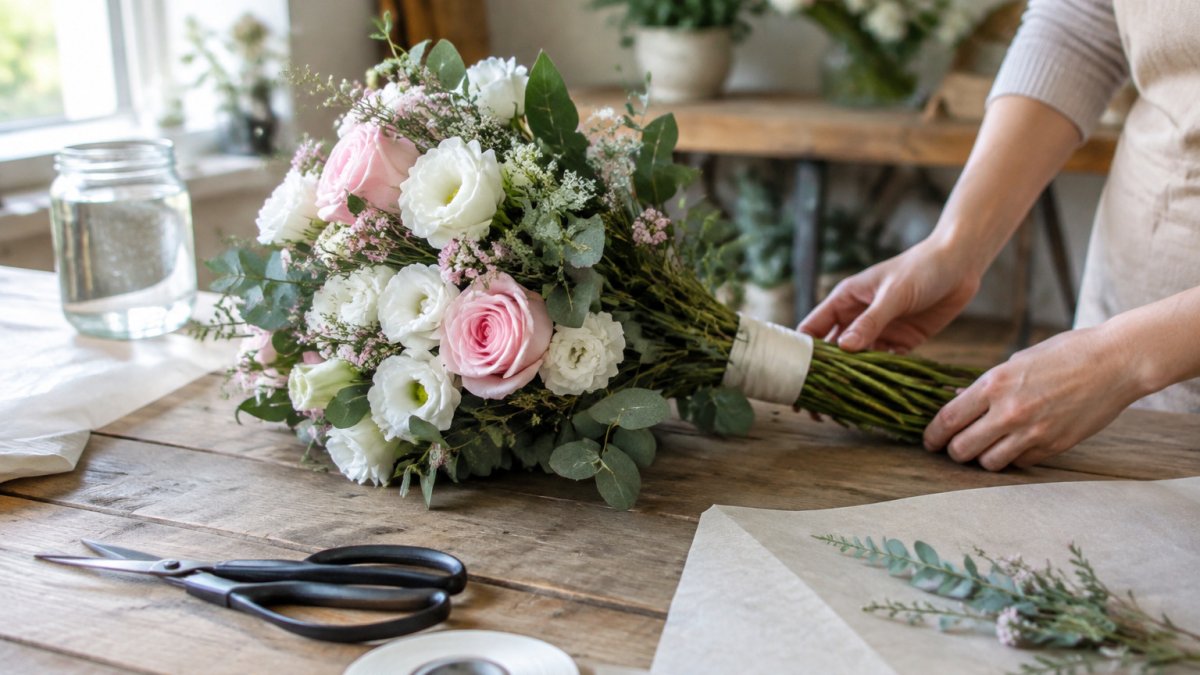
Quick Summary
The most reliable ways to preserve a wedding bouquet at home are silica gel drying, air drying, and pressing. Silica gel gives the most lifelike results, while air drying costs almost nothing. Start within 48 hours of the wedding for the best outcome.
- Start preserving within 48 hours of the wedding, before the flowers wilt.
- Silica gel drying takes five to seven days in a sealed container.
- Air drying usually takes two to three weeks, hung upside down in a dry, dark room.
- Keep preserved flowers out of direct sun, heat, and humid rooms like bathrooms.
- Dust with a soft brush and never wipe petals with a damp cloth.
Table of Contents
- Choosing the Right Flowers for Drying
- How to Preserve a Wedding Bouquet with Silica Gel
- Air Drying Wedding Flowers: The Low-Cost Option
- Wedding Bouquet Preservation Kit vs. DIY Supplies
- What Professional Wedding Flower Preservation Costs
- Displaying, Caring for, and Troubleshooting Your Preserved Bouquet
- Booking Your Bouquet Care and Design Consultation
- Frequently Asked Questions
Last Updated: November 5, 2026
How do you preserve a wedding bouquet at home? The most reliable methods are silica gel drying, air drying, and pressing, and each one suits different flowers and budgets. This guide walks through the options, the timing, and the mistakes that tend to ruin an otherwise beautiful bouquet. Understanding the natural decay process of your chosen blooms helps manage expectations for their final appearance, a topic explored further in our flower longevity guide.
Preserving a bouquet is worth considering because the flowers carried on your wedding day are often the only physical element of the ceremony you can keep. Fresh flowers last only days, but a properly dried bouquet can be displayed for years. Many couples choose to preserve it for an anniversary display, a shadow box, or a keepsake that sits alongside their wedding photos.
Choosing the Right Flowers for Drying
Not every bloom responds well to preservation. Flowers with thick, sturdy petals such as roses, statice, lavender, and strawflowers tend to hold their shape and color, while delicate, watery blooms are often better suited to pressing than to air drying.
Before the wedding, ask your florist which stems were chosen with preservation in mind.
How to Preserve a Wedding Bouquet with Silica Gel
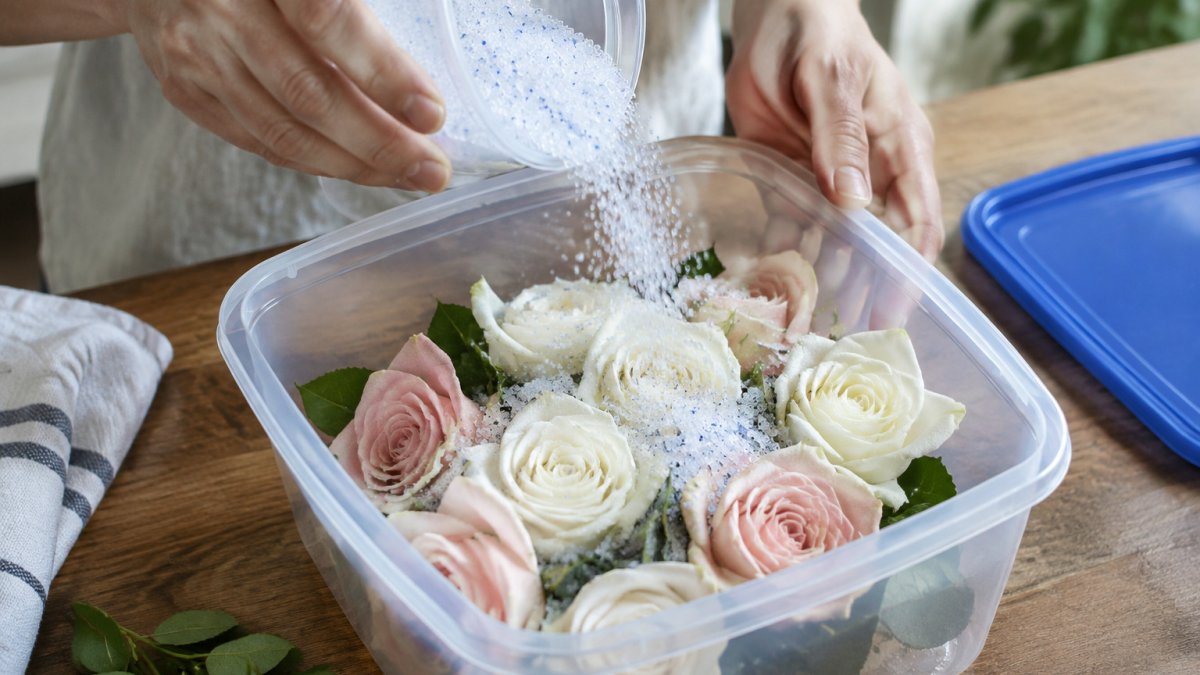
Silica gel, a desiccant that draws moisture out of plant tissue, is the method most often recommended for keeping a bouquet’s shape and color. It takes longer than air drying but produces the most lifelike results.
Preparing Flowers and the Right Timeline (48-Hour Rule)
Start within 48 hours of the wedding. Flowers that have been out of water for longer tend to wilt before the drying process can lock in their shape. Remove foliage, trim stems to about one inch, and keep the bouquet in a cool, dark space with good ventilation until you begin.
Step-by-Step Silica Gel Process
- Choose an airtight container large enough for the blooms to lie flat.
- Pour a layer of silica gel into the bottom, about half an inch deep.
- Place the flowers face up and gently cover them with more gel, working it between the petals with a soft brush.
- Seal the container and leave it undisturbed for five to seven days.
- Carefully lift the flowers out and brush off any remaining crystals.
Watch out: silica gel that has absorbed moisture stops working, so keep the container sealed between uses and replace the gel if it no longer looks crisp and dry.
Air Drying Wedding Flowers: The Low-Cost Option
Air drying costs almost nothing and works well for sturdy, low-moisture flowers. Hang the bouquet upside down in a dry, dark room with good airflow, such as a closet or attic. Drying usually takes two to three weeks. The result is softer and more muted than silica gel, which many couples find charming.
A common mistake is hanging the bouquet in a humid bathroom or a sunlit window, where it fades or develops mold.
Wedding Bouquet Preservation Kit vs. DIY Supplies
Preservation kits bundle a container, gel, and instructions, which suits first-time preservers. Buying supplies separately, such as a sealed container, a bag of silica gel, and a soft brush, lets you reuse materials for future projects.
| Option | Best For | Effort Level |
|---|---|---|
| Preservation kit | First-time preservers | Low |
| DIY silica gel supplies | Budget-conscious couples | Medium |
| Air drying | Sturdy, low-moisture blooms | Low |
| Pressing | Flat keepsakes and frames | Medium |
What Professional Wedding Flower Preservation Costs
Pricing for professional preservation depends on factors such as the size and complexity of the bouquet, the method chosen, the display finish, and the turnaround time. For current pricing and a quote, contact An English Garden directly or check the website.
A useful way to think about the decision is to compare any professional quote against the value you place on the bouquet and how long you want to display it.
Ask any preservation provider these questions before you commit:
- What is the total price, and what does it include (cleaning, drying, design, display vessel, shipping)?
- Is there a deposit, and is it refundable if a bloom fails during drying?
- What is the turnaround time in weeks, and is rush service available at an added cost?
- What happens if a flower in the bouquet cannot be preserved and must be substituted or omitted?
- Is there a warranty or rework policy if the finished piece arrives damaged?
Watch out: a low quote that excludes the display vessel, shipping, or design labor can end up costing more than a quote that bundles those items.
Timing affects results as much as method, so confirm any drop-off window with your provider in writing. Get the quote and the terms in writing before shipping or delivering your bouquet, and keep a photo record of the bouquet as it looked on the wedding day in case a substitution question arises later.
Displaying, Caring for, and Troubleshooting Your Preserved Bouquet
The longer game is keeping color, shape, and structure intact for years, and that comes down to controlling three enemies: ultraviolet light, humidity, and physical contact.
Display. Keep preserved flowers out of direct sun and away from heat sources such as radiators, fireplaces, and kitchen stoves. A glass shadow box or a sealed display case slows dust and humidity exposure, but even an open frame should sit in a room with stable temperature and moderate humidity. Rotate the piece occasionally so one side does not fade faster than the other. Avoid hanging preserved bouquets in bathrooms, basements, or attics, where humidity swings are largest.
Long-term care. Dust with a soft brush or a can of compressed air held at a distance; never wipe petals with a damp cloth, which can lift color and soften the dried tissue. Keep silica gel packets in the display case if it is sealed, and replace them when they lose their crisp feel. Handle the piece by the frame or base, not the blooms, since dried petals detach easily.
Flower-specific expectations. Roses and statice tend to hold color and shape well for years; lavender can shed florets over time; delicate blooms like hydrangea and peonies are the first to brown or crumble, so they are better suited to pressing or resin than to open-air display. If your bouquet mixes sturdy and delicate stems, expect the delicate ones to set the lifespan of the piece.
Troubleshooting. If petals crumble, the flowers were likely not fully dried before storage; the fix is longer drying time next attempt, not more handling. If color fades rapidly, light exposure is the usual cause, so move the piece to a darker spot. If you see fuzzy gray or white growth, moisture was trapped during drying or storage; isolate the piece, improve airflow, and discard any blooms with active mold rather than trying to salvage them. If petals drop on handling, the piece is likely too dry or was exposed to heat, and the best response is to stop touching it and stabilize the environment.
Eco-friendly alternatives. If chemical desiccants or resin are a concern, pressing into a frame and air drying sturdy stems are the lowest-impact options, and both avoid the non-biodegradable materials that resin and some kits use. Whichever method you choose, the display and care routine above is what determines whether the piece lasts one season or ten.
Booking Your Bouquet Care and Design Consultation
If you would rather have professionals handle the process, An English Garden offers wedding design consultations, and our team can help you choose stems that dry well from the start. You can book a bridal consultation to discuss your bouquet and preservation plans directly.
For guidance on selecting blooms that hold up well, see our wedding flower selection guide, and if you’re weighing at-home methods, our bouquet preservation comparison covers other options that avoid wilting.
Frequently Asked Questions
How can I preserve my wedding bouquet myself?
You can preserve a wedding bouquet at home using silica gel or air drying. Start within 48 hours of the wedding, remove excess foliage, and keep the stems trimmed. For silica gel, bury the blooms in a sealed container of desiccant for roughly one to two weeks, depending on flower thickness. For air drying, hang the bouquet upside down in a cool, dark, ventilated space for several weeks. Both methods work best for flowers with sturdy petals, such as roses, hydrangeas and statice.
Is preserving a wedding bouquet worth it?
Preserving a bouquet is worth it if the flowers held sentimental value and you want a lasting keepsake. Results vary by flower type, so delicate blooms may lose color or shape. A preserved bouquet displayed in a shadow box or glass dome can hold its look for years when kept out of direct sunlight and away from humidity. If you care most about the exact look of the day, a professional photo of the bouquet may be a better fit.
What does it cost to preserve a wedding bouquet?
Professional preservation pricing depends on bouquet size, flower types, and turnaround time. For current pricing, contact An English Garden directly for a quote or check the website for available options.
How soon after the wedding should I preserve my bouquet?
Preserve the bouquet within 48 hours of the wedding, while the flowers are still fresh and hydrated. Waiting longer makes it harder to retain color and petal structure. If you cannot dry it right away, store it in a cool place out of direct sun, but do not refrigerate it for long periods.
