
Table of Contents
- Start With Clean, Cool Water
- How to Trim Flower Stems the Right Way
- Strip Leaves Below the Waterline
- How Often to Change Flower Water
- Does Flower Food Work? What to Know Before You Buy
- How to Keep Flowers Fresh Without a Vase
- Flower-Specific Care and Troubleshooting Wilting
- Conclusion: A Simple Routine That Keeps Fresh Flowers Alive Longer
- Frequently Asked Questions
Last Updated: October 11, 2026
Start With Clean, Cool Water
The single fastest way to shorten a bouquet’s life is to skip the first step. Flowers start losing moisture the moment they’re cut, and clean, cool water is the first thing you need to keep fresh flowers alive.
At An English Garden, we’ve spent 32 years watching how long arrangements last after they leave our shop.
Here’s how to start strong:
- Scrub the vase with hot, soapy water before use. Skip this and bacteria get a head start.
- Fill it two-thirds full with cool tap water.
- Add flower food if you have it (more on that below).
- Get stems into the water within an hour of cutting.
Warm water can push flowers to open faster, which sounds nice but shortens vase life. Cool water slows that process down.
If you’re reusing a vase, rinse it with a splash of bleach and water, then rinse again. A vase that smells like old flowers will shorten the life of a new bouquet.
How to Trim Flower Stems the Right Way
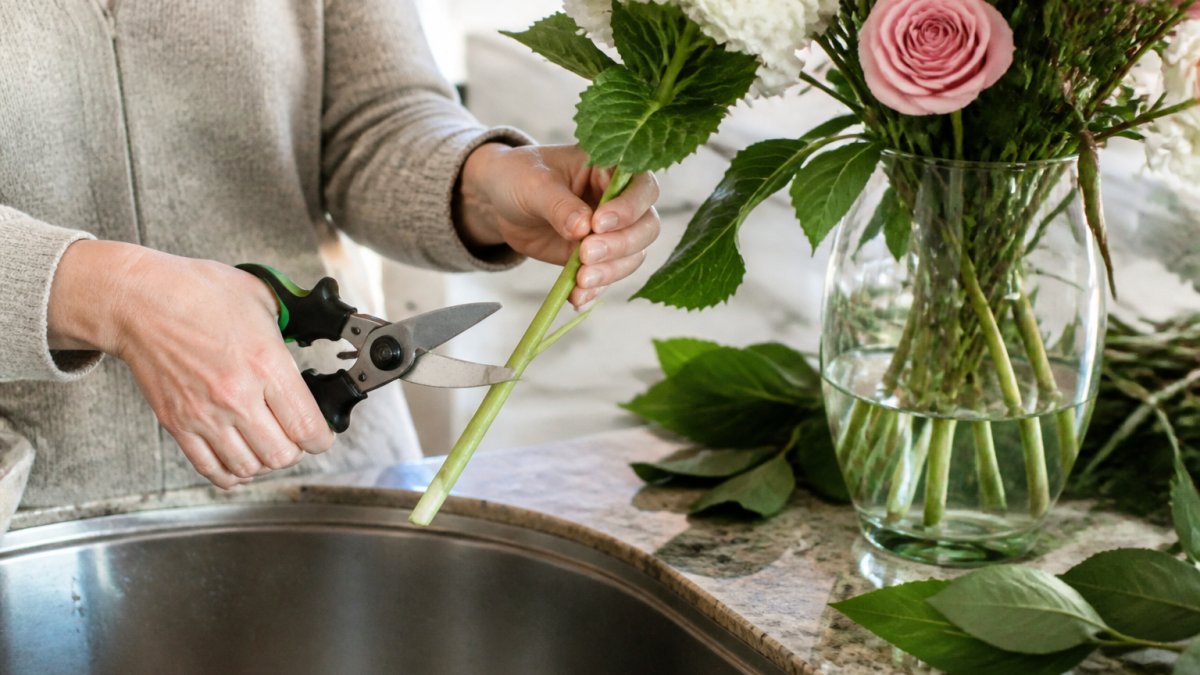
Stem trimming is the step most people rush, and it’s the one that decides how well your flowers drink. Cut stems at an angle with a sharp tool, and they’ll take up water properly.
Why a 45-Degree Angle Matters
A 45-degree angle creates more exposed surface at the stem end, so the flower can pull up more water. It also keeps the cut from sitting flat against the bottom of the vase, which blocks water uptake.
Use sharp floral shears or a clean knife. Dull scissors crush the stem instead of slicing it, and a crushed stem can’t drink.
How Much to Cut and When
Trim about 1 to 2 inches off each stem the moment you unpack the bouquet. Then recut every two to three days when you change the water.
Cut under running water if you can. It stops air from getting pulled into the stem, which can create a blockage. If that’s not practical, cut and get the stem into water fast.
Strip Leaves Below the Waterline
Any leaf sitting under the water will rot. Rot feeds bacteria, bacteria cloud the water, and cloudy water shortens vase life fast.
So pull off every leaf and bit of foliage below the water level. Be gentle near the stem, since tearing the outer layer opens a wound.
A quick check:
- Hold the stem next to the vase before you fill it.
- Mark where the water line will fall.
- Remove all foliage below that point.
This one habit does more for bouquet longevity than most store-bought tricks.
How Often to Change Flower Water
Change the water every two to three days, and recut the stems each time you do it.
Some flowers will want it daily. If the water looks cloudy, smells off, or feels slimy, change it right away, no matter what the calendar says.
Here’s the routine:
- Lift the flowers out and set them aside.
- Dump the old water and rinse the vase.
- Refill with cool, clean water.
- Recut each stem at an angle.
- Add fresh flower food if you have it.
Clean water and clean stems go together, and both are part of the routine to keep fresh flowers alive.
Does Flower Food Work? What to Know Before You Buy
Yes, flower food works, and it’s the single most reliable add-in you can use. A commercial floral preservative is formulated to do three jobs at once: feed the flowers, acidify the water so it moves up the stem more easily, and slow bacterial growth.
The reason the packet beats a homemade mix is dosing. The sugar-to-acid-to-biocide ratio is tuned so the flowers get food without feeding a bacterial bloom. Get that ratio wrong at home and you can do more harm than good.
What the Research Actually Supports
When you compare homemade recipes, the evidence is uneven:
| Additive | What it does | The catch |
|---|---|---|
| Commercial flower food | Feeds, acidifies, fights bacteria | Needs a fresh packet each water change |
| Sugar + bleach | Sugar feeds; bleach sanitizes | Easy to overdose the bleach and burn stems; sugar still feeds bacteria if the bleach is too weak |
| Sugar + vinegar or lemon juice | Sugar feeds; acid lowers pH | No biocide, so bacteria still win within a day or two |
| Lemon-lime soda | Adds sugar and acid | Sticky water and a sugar load that feeds bacteria; diet versions add acid but no food |
| Crushed aspirin | Mild acid | No meaningful sugar or biocide; effect is negligible in most trials |
| Copper penny | Nothing reliable | Modern pennies are zinc with a thin copper plating; no measurable benefit |
| Mouthwash or vodka | Some antibacterial action | Alcohol and additives can damage tissue; not a substitute for a proper biocide |
A common pattern in side-by-side home tests is that the commercial packet outperforms every DIY mix, and plain cool water outperforms several of the DIY mixes. That’s the honest takeaway: if you have a packet, use it. If you don’t, a small amount of sugar with a single drop of bleach in a quart of water is a reasonable stand-in, but treat it as a short-term fix, not an equal.
Never combine bleach with a commercial flower-food packet. The packet already contains a biocide, and doubling up can damage stems and petals.
How to Use Flower Food Correctly
- Mix the packet with the amount of water listed on the wrapper, usually one packet per quart or per pint, depending on brand.
- Add fresh food every time you change the water, not just on day one.
- Keep the water level at roughly two-thirds full so stems stay submerged without soaking leaves.
- If you’re topping off between changes, use plain water; adding more food without dumping the old water concentrates the mix.
If you’d rather not think about ratios, ask your florist for extra packets when you buy. Most shops will hand over a few at no charge, and having them on hand makes the every-two-to-three-days water change effortless.
How to Keep Flowers Fresh Without a Vase
No vase? You can still keep flowers fresh without a vase for a day or two.
Try these stand-ins:
- A clean mason jar or pitcher
- A tall glass or water bottle with the top cut off
- A bowl with a narrow mouth to hold stems upright
- A damp paper towel wrapped around the stem ends for short trips
If you’re transporting a bouquet or storing it overnight, keep the stems in water and park the whole thing somewhere cool and out of direct sunlight.
At An English Garden, we deliver to local funeral homes and hospitals daily, so we know how much a few hours out of water matters.
Flower-Specific Care and Troubleshooting Wilting
Different flowers have different stem structures, water needs, and sensitivities, and treating them all the same is one of the most common reasons a mixed bouquet fades unevenly. The notes below cover the varieties most people bring home, plus a symptom-based troubleshooting guide for when something goes wrong.
Flower-Specific Care Notes
- Tulips keep growing after they’re cut and will bend toward light. Keep them in cool water, trim a half inch every couple of days, and rotate the vase so they don’t lean. A few ice cubes in the water slows the opening.
- Roses want a deep water level and a clean angled cut. A bent neck usually means the stem can’t draw water, recut under water and give it a few hours. Remove the outer guard petals if they look bruised.
- Hydrangeas drink through their petals as well as their stems. If a head droops, submerge the entire bloom in cool water for 20 to 30 minutes, then return it to the vase. Misting helps in dry rooms.
- Lilies drop pollen that stains fabric and skin. Snip the stamens as soon as the buds open, before the pollen loosens.
Realistic Vase-Life Expectations
How long a bouquet lasts depends as much on how fresh it was at purchase as on anything you do at home. As a general guide, most cut flowers hold for roughly:
- 5 to 7 days: tulips, daffodils, iris
- 7 to 10 days: roses, carnations, alstroemeria, chrysanthemums
- 7 to 14 days: lilies, sunflowers, hydrangeas (with care)
- 10 to 14+ days: orchids, some tropicals
If a bouquet fades well short of that range, the problem usually started before it reached your kitchen. Look for tight buds, firm stems, and crisp green leaves at purchase; avoid bunches with brown edges or a strong smell.
Symptom-Based Troubleshooting
When something looks wrong, match the symptom to the fix:
- Cloudy water, bacteria have taken over. Dump it, scrub the vase with hot soapy water, recut the stems, and refill with fresh cool water and food.
- Slimy stems, the stem ends are decaying. Cut an inch or two above the slime line and start fresh.
- Drooping heads with firm stems, likely an air blockage. Recut at an angle under running water and give it a few hours.
- Drooping heads with soft, mushy stems, the flower is done. Remove it so it doesn’t foul the water for the rest.
When in doubt, start with the basics: fresh cool water, a clean vase, a fresh angled cut, and no leaves below the waterline. Most “failing” bouquets recover within a day when those four things are corrected.
If you’re sending flowers for a specific occasion and want the longest-lasting option, ask the florist which varieties are holding up best that week, freshness at the shop matters more than any home remedy.
Conclusion: A Simple Routine That Keeps Fresh Flowers Alive Longer
Most bouquets don’t fail because of bad flowers. They fail because of skipped water changes and dirty vases. Get the basics right and you’ll add days to almost any arrangement.
The routine that keeps fresh flowers alive longer is short: clean, cool water, an angled trim every few days, no leaves below the waterline, and a cool spot away from sun and drafts.
If you’d rather leave the details to us, An English Garden builds every arrangement with care and delivers across the area daily.
Frequently Asked Questions
How often should you change the water in a flower vase?
Change the water every two to three days, or sooner if it looks cloudy. Cloudy water means bacteria have multiplied, and those bacteria clog the stem ends so blooms cannot drink. When you change the water, rinse the vase with soap and warm water, then recut each stem about half an inch at a 45-degree angle. If you skip the recut, the stem ends seal over and the fresh water cannot get in. A quick water change takes two minutes and is the single easiest way to keep fresh flowers alive longer.
Does flower food work, or is it a waste of money?
Commercial flower food works because it contains three things: a sugar for energy, an acidifier that lowers water pH so stems take up water faster, and a small amount of biocide that slows bacteria growth. Used correctly, it extends vase life on most cut flowers. The catch is that flower food cannot fix dirty water or unclipped stems, so pair it with a clean vase and a fresh angled cut. If you run out, a homemade mix can be attempted, but it is less consistent than a commercial preservative.
Can you keep a bouquet fresh without a vase?
Yes. If you have no vase, use any clean container that holds water: a pitcher, a mason jar, a tall drinking glass, or even a clean bucket. The container matters less than the water. Fill it with cool water, strip any leaves that would sit below the waterline, and recut the stems at an angle. If you are transporting the bouquet, wrap the damp stem ends in a wet paper towel and a plastic bag, then keep the flowers out of direct sun and heat until they reach a container.
Where should you place fresh flowers to make them last longer?
Keep the arrangement in a cool spot away from direct sunlight, heating vents, radiators, and drafts from doors or windows. Heat and moving air pull moisture out of petals faster, which shortens vase life. A kitchen counter or entryway table away from a south-facing window works well. Also keep flowers away from ripening fruit. Fruit releases ethylene gas, which speeds up aging in cut flowers. Moving a bouquet just a few feet away from a fruit bowl can add days to how long it stays fresh.