Last Updated: November 18, 2026
Quick Summary
Affordable flowers for a small wedding ceremony come down to simple math: fewer guests means fewer centerpieces, smaller arrangements, and less waste. Carnations, mums, daisies, baby’s breath, and alstroemerias cost very little and still look expensive when grouped well. A 20-guest ceremony-only budget runs $150-$350 total using grocery-store or wholesale stems you arrange yourself.
- A 30-guest ceremony plus small reception runs $300-$600 total, roughly 120-180 stems.
- A bridal bouquet needs 15-25 stems for a rounded hand-tied look, 25-40 for garden style.
- Add 10 percent to every stem count for breakage and trimming loss.
- Trim stems at a 45-degree angle and let flowers drink 4-6 hours before arranging.
- Store flowers at 34-38°F and keep them away from ripening fruit, which releases ethylene gas.
Table of Contents
- Why a Small Wedding Ceremony Makes Affordable Flowers Easier
- Low-Cost Flower Varieties That Still Look Expensive
- Wedding Flowers on a Budget: A Realistic Cost Breakdown
- Cheap Wedding Flower Packages vs. Buying in Bulk
- DIY Wedding Flowers: A Step-by-Step Timeline and Prep Checklist
- Affordable Wedding Flowers Online: How to Source and Vet Sellers
- Reusing Ceremony Flowers at the Reception and Planning for Substitutions
- Planning Your Small Ceremony Flowers with a Local Florist
- Frequently Asked Questions
Why a Small Wedding Ceremony Makes Affordable Flowers Easier
Affordable flowers for a small wedding ceremony come down to simple math: fewer guests means fewer centerpieces, smaller arrangements, and less waste. At An English Garden, we have been Mokena’s local florist for over 32 years, and small weddings are often easier to keep on budget.
A guest list of 30 changes everything. You need one or two statement pieces instead of ten. You can move the same bouquet from the aisle to the head table. And you can spend real money on a few blooms that matter rather than stretching a tight budget across a huge room.
The trick is planning around quantity, not just price per stem. Below, we break down which flowers stretch furthest, what a realistic budget looks like, and how to source them without overpaying.
Low-Cost Flower Varieties That Still Look Expensive
Some flowers cost very little and still read as luxury when they are grouped well. Carnations, mums, daisies, baby’s breath, and alstroemerias are the workhorses here.
Here is how we think about value per stem:
- Carnations: cheap, long-lasting, and full. Great for bouquets and centerpieces.
- Baby’s breath: fills gaps for pennies and makes any arrangement look fuller.
- Alstroemerias: a few dollars a stem, last for days, and come in bright colors.
- Mums and daisies: sturdy, budget-friendly, and perfect for casual ceremonies.
- Roses: pricier, but one or two elevate a whole bouquet.
If you are still narrowing down varieties, our guide on how to choose wedding flowers with confidence walks through color, season, and style.
Wedding Flowers on a Budget: A Realistic Cost Breakdown
There is no single price for wedding flowers. Pricing depends on quantity, the varieties you pick, the date, and whether you want delivery and setup. Contact An English Garden on our website for current prices or a quote.
A common approach is to divide your flower money into three buckets:
| Bucket | What It Covers | Share of Budget |
|---|---|---|
| Personal flowers | Bouquet, boutonniere, corsages | Roughly one third |
| Ceremony decor | Arch, aisle, entry pieces | Roughly one third |
| Reception | Centerpieces, head table | The rest |
Ask your florist for a written quote that lists each item, so you can see where costs come from and decide where to adjust.
Sample Budgets by Guest Count
These ranges assume grocery-store or wholesale stems arranged by you or a helper, not a full-service florist. Full-service quotes typically run higher because they include labor, delivery, and setup.
20 guests, ceremony only: $150-$350 total. One bridal bouquet ($40-$90), one boutonniere ($10-$20), two corsages ($15-$25 each), and one altar or entry piece ($50-$150). Roughly 60-90 stems.
30 guests, ceremony plus small reception: $300-$600 total. The same personal flowers, plus two aisle markers ($25-$50 each) that move to the head table, and four to six small centerpieces ($15-$30 each). Roughly 120-180 stems.
50 guests, ceremony plus reception: $500-$900 total. Personal flowers, an arch or backdrop piece ($100-$250), four aisle markers, and eight to ten centerpieces. Roughly 200-300 stems.
Stem Counts That Actually Fill an Arrangement
A frequent mistake is ordering too few stems and ending up with skimpy bouquets. As a working rule:
- Bridal bouquet: 15-25 stems for a rounded hand-tied look; 25-40 for a loose, garden-style bouquet.
- Boutonniere: 1 focal bloom plus 2-3 filler sprigs.
- Corsage: 1 focal bloom plus 3-5 small accents.
- Centerpiece in a 6-inch vase: 12-18 stems.
- Altar or entry piece: 30-50 stems, or fewer if you use large blooms like hydrangea or roses.
Add 10 percent to every count for breakage and trimming loss.
Where the Money Actually Goes
Labor and delivery are costs to ask about up front. If your budget is tight, you may choose to pick up flowers yourself and set them up with a helper. If you want a florist on site, ask for the setup and delivery fees in writing before you compare quotes.
Watch out: a quote that lists only “ceremony flowers” as a lump sum hides where you can cut. Ask for each item priced separately, bouquet, boutonniere, each aisle piece, each centerpiece, so you can drop one line without renegotiating the whole order.
Sample wedding flower budgets by guest count
Cheap Wedding Flower Packages vs. Buying in Bulk
Some couples prefer a set bundle of bouquets and centerpieces at one price, while others prefer ordering loose stems and arranging them themselves. The right choice depends on your time and comfort level. Bulk stems often arrive as tight buds, so plan to condition them a day or two before the event.
If you are leaning toward a package, our guide to affordable wedding flower packages breaks down what to look for and what to avoid.
DIY Wedding Flowers: A Step-by-Step Timeline and Prep Checklist
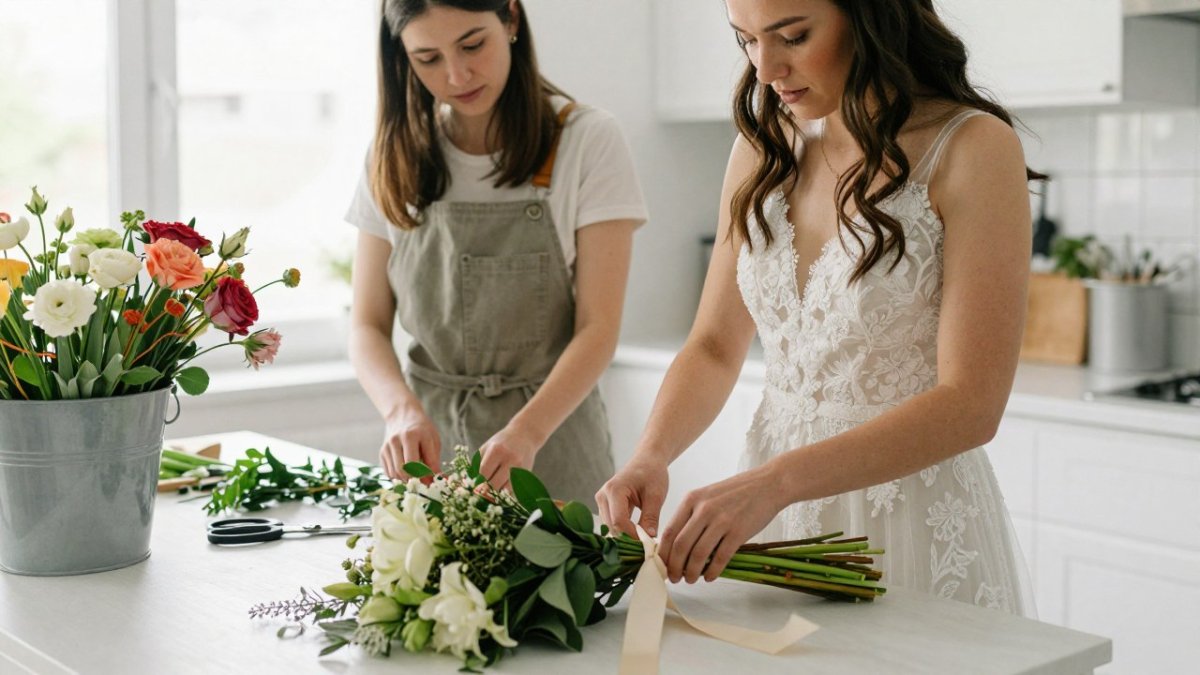
DIY wedding flowers save money but demand a plan. The couples who succeed start early and prep in stages. Here is the timeline we recommend, with the conditioning and storage details most checklists leave out.
Three to four weeks out:
- Confirm your flower list and quantities using the stem counts above
- Place the order with a farm-direct or wholesale seller and confirm the delivery date in writing
- Gather buckets, snips, ribbon, floral tape, and a cool storage space
Two to three days before (when flowers arrive):
- Unpack immediately and trim each stem at a 45-degree angle with sharp snips
- Strip leaves that would sit below the water line, leaves in water rot and shorten vase life
- Fill buckets with cool water and let flowers drink for at least 4-6 hours, ideally overnight
- Store in a cool, dark room, ideally 34-38°F if you have access to a refrigerator; otherwise the coolest room in the house away from sun and ripening fruit
The day before:
- Build bouquets and centerpieces
- Keep everything hydrated overnight in shallow water
- Assign one helper to each task and write the assignments down
Day of:
- Do a final trim and touch-up
- Transport arrangements in boxes or crates so they do not tip; keep them out of direct sun and heat
- Place arrangements early so they settle before guests arrive
Conditioning Mechanics That Extend Vase Life
Conditioning is the step that separates flowers that last three days from flowers that last a week. Cut stems under water or immediately plunge them into water after cutting so air does not enter the stem. Remove all foliage below the water line. Use a commercial floral preservative, the small packet that often ships with wholesale orders, and change the water every two days. Keep finished arrangements away from heat vents, direct sun, and bowls of fruit; ripening fruit releases ethylene gas that ages flowers faster.
Small-Ceremony Priorities
With a small guest count, you do not need to fill a large room. Spend your DIY effort on the three focal points guests actually look at: the bouquet, the altar or entry piece, and the aisle markers. Skip elaborate table decor and let the reused ceremony pieces do double duty at the reception.
Bulk orders often arrive as tight buds, so plan delivery with enough time to condition them before your event.
Affordable Wedding Flowers Online: How to Source and Vet Sellers
When buying wedding flowers online, it helps to vet the seller. Look for clear delivery windows, real customer photos, and a stated substitution policy. Ask how flowers ship and whether they arrive as buds or open blooms.
Check these before you buy:
- Do they deliver on your exact date?
- Are reviews recent and specific?
- Is there a refund policy for damaged stems?
- Do they name the varieties and stem counts?
Avoid any seller who cannot answer those questions in writing.
Reusing Ceremony Flowers at the Reception and Planning for Substitutions
Reusing ceremony flowers can be a practical way to save. Arch pieces and aisle arrangements can sometimes be moved to the reception. One bouquet can serve the ceremony and the photos afterward.
Substitutions matter just as much. No florist can promise an exact bloom months in advance. Ask what happens if a flower is unavailable and get it in writing. Our guide to the wedding flower substitution policy explains how to plan for swaps without stress.
Planning Your Small Ceremony Flowers with a Local Florist
A local florist can help take the guesswork out of a small ceremony, with a person who knows the season and can handle setup on site.
At An English Garden, we have been Mokena’s trusted local florist for over 32 years, offering secure 24-hour online ordering and on-site decorating for weddings. If you are ready to book, here is how to hire a local wedding florist, and you can see how our on-site decorating works for small ceremonies.
A small ceremony still deserves flowers that feel special. The difference is planning, not spending more. An English Garden brings over three decades of local experience, on-site wedding decorating, and a warm, courteous team that treats your day like their own. Get started with An English Garden and build a flower plan that fits your budget and your guest list.
Frequently Asked Questions
What are the most affordable flowers for a small wedding ceremony?
Carnations, baby’s breath, daisies, mums, alstroemerias, and larkspur are among the lowest-cost stems that still look full and festive. Roses and tulips are often pricier, and their cost depends on the variety and date. Ask your florist which varieties are in season for your date, because that single question often cuts the flower bill more than any other choice.
How much should I budget for flowers for a small wedding?
There is no single number, because pricing depends on quantity, flower varieties, date, and delivery. Start by listing what you actually need: bridal bouquet, one or two attendant bouquets, boutonnieres, corsages, and a few ceremony pieces. Then ask a florist for an itemized quote so you can see the cost of each piece and trim from there. A local florist can often suggest swaps that keep the look while lowering the total.
Is it cheaper to buy wedding flowers in bulk or from a florist?
Bulk flowers cost less per stem, but you handle conditioning, design, and setup yourself, and you need cool storage and time. A florist can charge for labor and design and deliver ready-to-use pieces. For a small ceremony, a hybrid approach works well: let a florist handle the bouquet and boutonnieres, and use bulk or grocery-store stems for simple centerpieces and ceremony accents.
How can I make wedding flowers look expensive on a budget?
Choose a tight color palette, use plenty of greenery and filler to add volume, and group flowers in clusters rather than spreading them thin. Reuse ceremony pieces at the reception, and add candles or rented vessels to lift the table without adding stems. Ask your florist about affordable flowers that read as premium, such as carnations in deep tones or hydrangeas used sparingly. A small number of well-placed arrangements often looks better than many small ones.
