
Last Updated: November 4, 2026
Quick Summary
Choosing appropriate flowers for a funeral service means matching the arrangement to the setting and your relationship to the family. Friends and colleagues usually send a standing spray or basket, while a casket spray is ordered by the immediate family or closest loved ones. If the family requests no flowers, send a plant or donation instead.
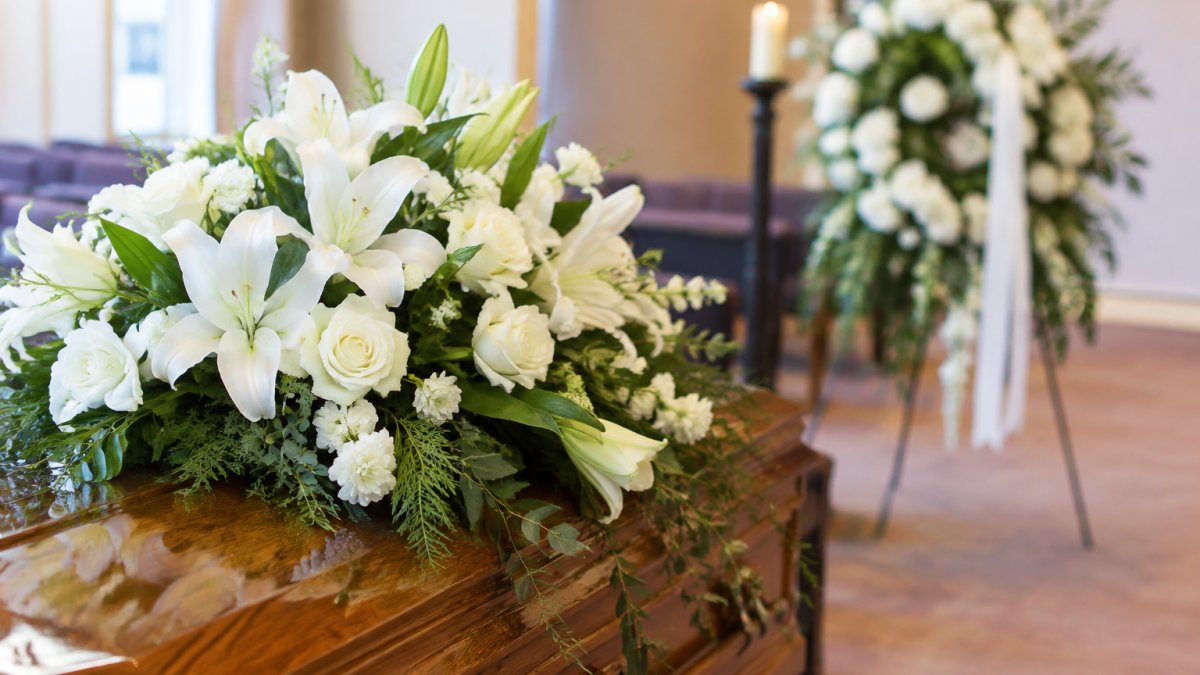
- Casket sprays are placed on top of the casket and ordered by immediate family.
- Standing sprays sit on a tripod stand and are the most common tribute from friends and coworkers.
- White is the safest color because it reads as peaceful and respectful across traditions.
- Send flowers ahead to the funeral home so they arrive before the viewing begins.
- Ask the funeral director whether the family has requested donations in lieu of flowers.
Table of Contents
- What Are Funeral Flowers Called and Which Types Fit Each Service
- Popular Funeral Flowers and What Each Bloom Means
- What Color Flowers for the Death of a Loved One
- Do You Bring Flowers to a Funeral Service or Send Them Ahead
- Funeral Flower Etiquette for the Immediate Family
- Faith, Culture, and Family Customs That Change the Choice
- Timing, Delivery, and Substitutions at the Funeral Home
- When Flowers Are Not the Right Gesture
- Frequently Asked Questions
What Are Funeral Flowers Called and Which Types Fit Each Service
Funeral flowers are called floral tributes, sympathy arrangements, or funeral arrangements, and the name often signals where the piece will sit during the service.
Here is the short answer. Send a standing spray or basket if you are a friend or colleague. Send a casket spray only if the family asks. Send a plant or donation if the family requests no flowers. The rest is detail, and the details matter more than most guides admit.
Casket Sprays, Standing Sprays, and Urn Arrangements
Each type carries a different weight of meaning:
- Casket spray: the family’s piece, large and formal
- Standing spray: the most common tribute from friends and coworkers
- Urn arrangement: sized for a cremation service or memorial table
- Floral basket or vase arrangement: flexible, easy to move, good for visitations
If you are considering a standing spray, a classic white design is a safe, respectful choice that suits nearly any service. You can view a white standing spray to see the style. Families exploring casket pieces often want a concrete example, and a lavender and blue casket spray shows how color can soften a formal arrangement.
Matching the arrangement to the setting starts with knowing what each type of tribute is called and where it sits.
| Arrangement | Placement | Typical sender |
|---|---|---|
| Casket spray | On top of the casket | Immediate family or closest loved ones |
| Standing spray | On a tripod stand beside casket or graveside | Friends and coworkers |
| Urn arrangement | Near or around an urn | Cremation or memorial service |
| Floral basket or vase | Viewing table or graveside gathering | Flexible, easy to move |
Popular Funeral Flowers and What Each Bloom Means
The most popular funeral flowers are lilies, roses, carnations, chrysanthemums, and orchids, and each carries a long-standing association with sympathy.
Daisies and hydrangeas round out the list. Daisies read as simple and sincere. Hydrangeas add fullness and a gentle, graceful tone.
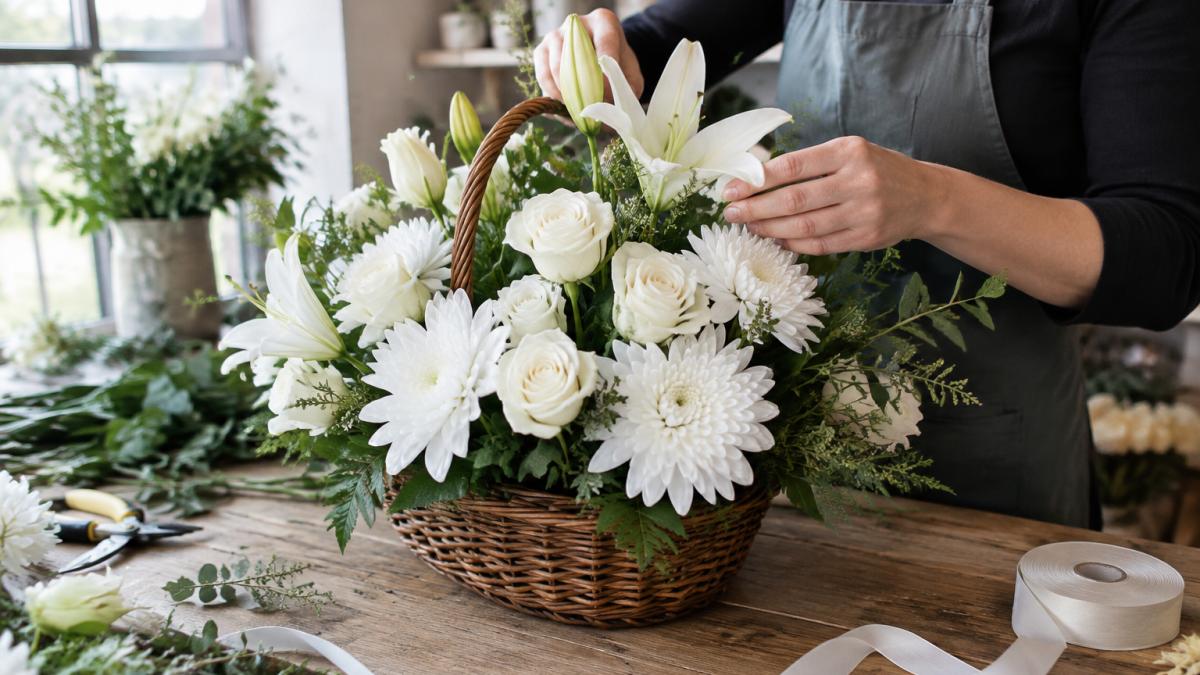
The flowers’ colors and meanings can express care when words are difficult, while thoughtful sympathy gifts offer another gentle way to show support.
For readers who want to go deeper on bloom-by-bloom meanings, our guide to the best flowers for sympathy arrangements breaks down each choice.
What Color Flowers for the Death of a Loved One
White is the safest color for the death of a loved one because it reads as peaceful, respectful, and appropriate across nearly every tradition. White flowers signal remembrance and sincerity without drawing attention to the sender. Beyond white, color carries meaning:
- White: peace, reverence, remembrance
- Blue and lavender: calm, comfort, quiet sympathy
- Yellow: friendship and warmth, best for close friends
- Pink and pastel: gentle affection, often chosen for women
- Red: deep love and grief, usually reserved for family
A mixed bouquet of soft colors works well when you know the person’s taste. When you do not, white is never wrong. The Society of American Florists notes that white and green arrangements remain the most requested sympathy palette, and that guidance has held steady for years.
Do You Bring Flowers to a Funeral Service or Send Them Ahead
Send flowers ahead to the funeral home rather than carrying them to the service. Funeral homes generally coordinate deliveries and place tributes before the viewing.
So when should you send? Aim for delivery before the viewing begins. Funeral homes typically accept deliveries during set hours. You can order flowers online for local delivery and we will coordinate directly with the funeral home.
Funeral Flower Etiquette for the Immediate Family
Etiquette around funeral flowers depends less on hard rules than on the sender’s relationship to the deceased and the family. The immediate family sits at the center of that map, and the choices radiate outward from there. Getting the relationship right prevents the two most common mistakes: ordering a piece the family has already claimed, and sending something that reads as more intimate than the relationship warrants.
What the Immediate Family Typically Orders
The immediate family usually orders the casket spray, and that piece anchors the floral display. Adult children and siblings often coordinate standing sprays so the tributes complement rather than duplicate one another.
A few practical rules hold up across most services:
- The family’s casket spray comes first; friends should not order one unless the family invites them to
- Siblings and adult children may each send a standing spray, but coordinating colors avoids a cluttered look
- Keep a list of who sent what so thank-you notes are accurate later
- Ask the funeral director before ordering anything unusually large, tall, or fragrant
Watch out: ordering a casket spray as a friend can put the family in an awkward spot if they have already selected one. Ask the funeral director or a close family friend first.
Who Sends What: Friends, Coworkers, and Organizations
Friends and colleagues usually send a standing spray, a basket, or a vase arrangement.
Coworkers often pool money for a single larger piece rather than sending several small ones, and a group card signed by the team is common.
Neighbors and acquaintances often choose a plant, a basket, or a donation. A living plant such as a peace lily or an orchid lasts beyond the service and gives the family something to keep.
Coordinating With the Family and the Funeral Director
Before ordering, ask the funeral director two questions: whether the family has requested a particular color or bloom, and whether any piece has already been claimed. A funeral director often sees the full floral plan and can tell you where a gap exists, for example, that the family has the casket spray covered but no standing spray from friends. That single conversation prevents duplication and ensures your tribute fills a real need.
If you are close to the family, a brief text or call to a family friend is appropriate. Keep the question simple: “Is there anything specific the family would like, or anything they’d rather not have?” Families generally appreciate the care behind the question, and it gives you a clear answer to act on.
Faith, Culture, and Family Customs That Change the Choice
Religious and cultural customs can change which flowers are appropriate, and this is where most guides stop short. The variation is real: some traditions favor white and green only, others welcome bright color as a celebration of life, and some families request no flowers at all for religious reasons and prefer donations or food instead. The safe path is not to guess but to check, and to know what to ask.
Common Customs Worth Knowing
A few patterns come up often enough to be worth naming, though practices vary by congregation and by family:
- Christian services commonly use white lilies, roses, and carnations, with white and green arrangements as the default palette. Easter services may lean on lilies specifically.
- Jewish services often favor simple, understated arrangements, and some families prefer no flowers at all, directing mourners to charitable donations instead. When flowers are sent, white and green are the safest choice.
- Muslim services typically do not include flowers at the funeral itself, and mourners often send food or donations to the family rather than floral tributes.
- Hindu and Buddhist services may welcome white or yellow flowers, and specific blooms can carry meaning within the tradition. Garland-style arrangements sometimes appear at Hindu services.
- Military and first-responder services may include specific tributes, and the family or funeral director can confirm what is appropriate.
These are starting points, not rules. A family’s own preferences override any general custom, and many families blend traditions or set their own tone.
How to Check Before You Order
Before you order, check three things with the funeral director or a close family friend:
- Does the family’s faith or culture have flower restrictions?
- Has the family requested donations in lieu of flowers?
- Is there a specific color or bloom the family has asked for?
The funeral director is the best single source because they coordinate with the family and see the full floral plan. If you are ordering online, note any restrictions in the delivery instructions so the florist can adjust the design. When in doubt, ask. A quick question saves an awkward misstep, and families generally appreciate the care behind it.
When the Family Asks for No Flowers
Some families request no flowers for religious reasons, for space reasons, or because they prefer donations. Honor that request. A donation to a cause the person cared about, a meal delivered to the family home, or a handwritten note with a specific memory are all appropriate alternatives.
Watch out: sending flowers after the family has explicitly requested donations can read as disregard for their wishes. When the request is clear, follow it.
Timing, Delivery, and Substitutions at the Funeral Home
Timing matters more than most people expect. Deliveries should arrive before the viewing begins, not during the service. Funeral homes usually have a receiving window, and a late delivery may sit in a back room instead of being displayed.
Substitutions are the other practical concern. Our guide on how to keep funeral flowers fresh covers what to do once the arrangement arrives home after the service.
When Flowers Are Not the Right Gesture
Sometimes flowers are not the right gesture, and sending them anyway can miss the mark. If the family has asked for donations to a charity, honor that request.
Non-floral options that work well:
- A donation to a cause the person cared about
- A meal delivered to the family home
- A living plant the family can keep
- A handwritten note with a specific memory
Flowers remain a meaningful tribute for most services. The key is to match the gesture to what the family actually needs.
Choosing appropriate flowers for a funeral service comes down to matching the arrangement to the setting, the sender’s relationship, and the family’s wishes. If you are unsure, ask.
Frequently Asked Questions
What is the most appropriate flower for a funeral?
White lilies remain the most widely accepted funeral flower in the United States. They carry a long association with restored innocence and peace, suit nearly every faith tradition, and work in casket sprays, standing sprays, and vase arrangements. Roses, carnations, chrysanthemums, and orchids are equally appropriate, so match the bloom to the family’s preferences and the arrangement type rather than searching for one perfect flower.
What flowers should you avoid bringing to a funeral?
Avoid bright, celebratory colors and novelty designs unless the family has asked for them. Skip strongly scented blooms like heavy stargazer lilies in hospital or small viewing rooms where fragrance can overwhelm. Some traditions also avoid certain flowers, so check with the family or funeral director first. When in doubt, a simple white or soft-pastel arrangement in a classic style is the safest choice.
Should immediate family send flowers to a funeral?
Immediate family typically provides the casket spray, urn wreath, or the main standing piece rather than sending separate sympathy flowers. Close relatives often coordinate one large tribute and let extended family and friends cover bouquets and baskets. If you are unsure what the family has already arranged, ask the funeral director, who usually tracks which pieces are coming and can prevent duplicates.
How far in advance should funeral flowers be ordered?
Order as soon as service details are confirmed, ideally 24 to 48 hours before the viewing or funeral. Same-day delivery is often possible for local florists, but standing sprays and casket pieces take longer to build and are best ordered a day ahead. Confirm the funeral home name, the service date, and the delivery window when you order so the arrangement arrives before the family viewing begins.
