Last Updated: November 3, 2026
Quick Summary
To choose wedding flowers with confidence, set a realistic budget first, then rank your floral priorities before you meet a florist. Build a checklist with your date, venue, colors, arrangement list, and style words, and choose seasonal blooms with a backup for each must-have flower.
- Set your floral budget before looking at a single bloom and rank each item by priority.
- Ask your venue for its vendor rules early and hand those rules to your florist.
- Pair each must-have flower with a backup because farm availability shifts from year to year.
- Keep two or three anchor colors and let texture do the rest of the work.
- Ask for the substitution standard and approval workflow to be attached to the contract.
Table of Contents
- Start with Your Wedding Flower Budget
- Build a Wedding Flower Checklist Before You Meet a Florist
- Choose Wedding Flowers by Season and Availability
- How to Choose Wedding Flowers That Match Your Colors and Style
- Wedding Florist Questions to Ask Before You Book
- How to Handle Flower Substitutions in Your Wedding Contract
- Book Your Wedding Flower Consultation
- Frequently Asked Questions
Start with Your Wedding Flower Budget
The first step in learning how to choose wedding flowers is setting a realistic budget before you look at a single bloom.
- Ceremony flowers (arch, aisle, altar pieces)
- Personal flowers (bouquets, boutonnieres, corsages)
- Reception centerpieces and head table arrangements
Rank these by priority. If the bouquet matters most, put more of the budget there and simplify the aisle decor.
Pricing depends on quantity, dates, and delivery, so ask for a written quote rather than a ballpark. For budget-friendly options, see our affordable wedding flower packages.
Build a Wedding Flower Checklist Before You Meet a Florist
A wedding flower checklist turns a vague idea into a real conversation. Walk in with notes, and your florist can price and plan far faster. Bring:
- Your date and venue, including whether the venue requires setup time
- Your color palette and any photos of looks you love
- A list of every arrangement you need, from bouquets to centerpieces
- Your budget range and your top priorities
- Your style words (romantic, modern, garden, minimal)
- Any must-have flowers and any allergies to note
- The names of people receiving personal flowers
One item couples often forget: how the venue handles deliveries. Some venues want florists in and out by a set time. Others have loading dock rules. A common mistake is leaving this until the week of the wedding.
Ask your venue for its vendor rules early. Then hand those rules to your florist. This one step prevents most day-of headaches.
Choose Wedding Flowers by Season and Availability
Wedding flowers by season is the single biggest factor in both cost and reliability.
- Growing conditions in the region where the flowers are farmed
- Weather during the growing window
- Supply chain and shipping, which can delay imported stems
Farm availability shifts from year to year, so pair each must-have flower with a backup. A good florist will list the requested flowers first, then note which similar flowers could stand in if a farm comes up short.
Freshness and flower quality matter more than matching a photo exactly. A slightly different bloom that opens beautifully beats a wilted exact match.
How to Choose Wedding Flowers That Match Your Colors and Style
To choose wedding flowers that fit your look, start with the overall design style, then work backward to specific stems. The flower variety is a tool; the look is the goal.
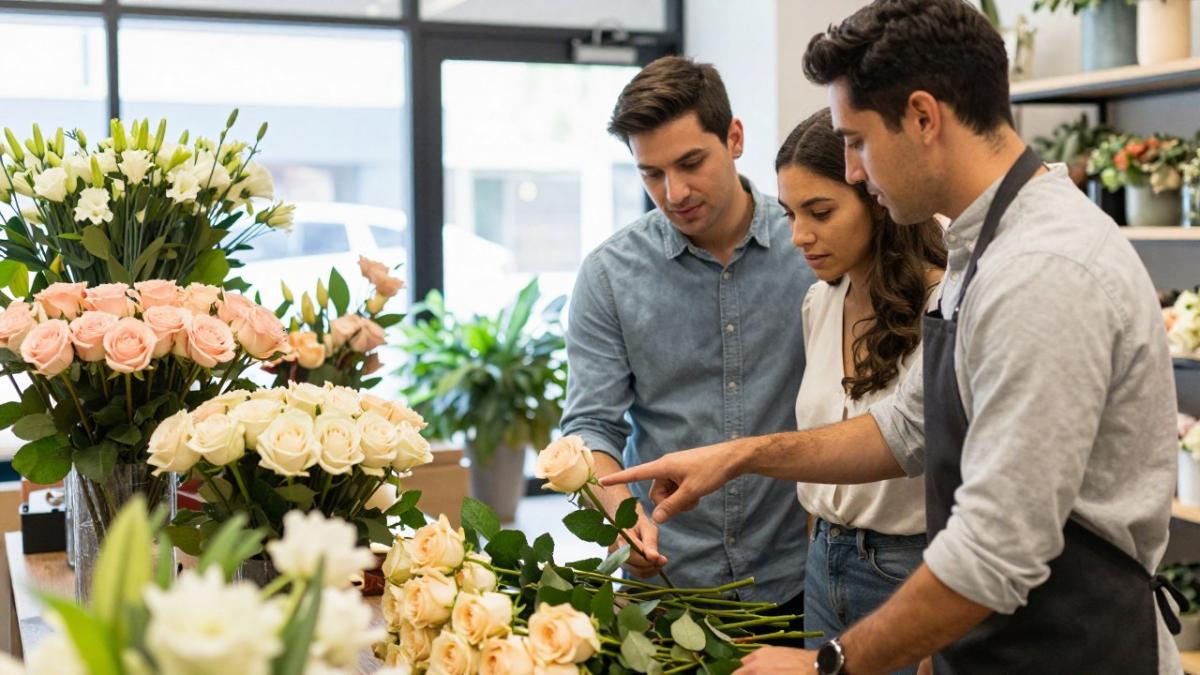
- Color palette: keep two or three anchor colors and let texture do the rest
- Shape and texture: mix round focal flowers with airy, trailing stems
- Bloom size: vary sizes so arrangements read as full, not flat
A wedding centerpiece and a ceremony arrangement can share the same flowers in different scales, keeping the look consistent from aisle to tables. Browse the best flowers for wedding centerpieces to find ideas that fit your style.
Wedding Florist Questions to Ask Before You Book
The best way to protect your vision is to ask direct questions up front. A confident florist welcomes them. These go beyond portfolio and pricing talk and focus on where weddings most often go sideways: substitutions, timing, and who has final say.
Experience and recent work
- How long have you been designing weddings, and can I see recent work from weddings similar in size and style to mine?
- Who is my main contact, and how do you reach me on the wedding day?
- Have you worked at my venue before, and do you know its delivery and setup rules?
A good answer is specific: named venues, recent dates, and a clear contact plan. If you are still deciding who to meet, read our guide on how to hire a local wedding florist. An evasive answer is vague about dates or refers only to styled photo shoots rather than real weddings.
Substitution policy and approval
- What is your substitution policy, in writing?
- How do you define an acceptable substitute, color, size, texture, stem count, arrangement shape, and value?
- When do you notify me about a swap, and how much notice do I get?
A good answer includes a written clause, a notice window, and a documented approval step. An evasive answer is “we’ll find something similar” with no standard and no notice requirement.
Delivery, setup, and breakdown
- How do you handle delivery, setup, and breakdown times, and are those fees quoted separately?
- What happens if the venue changes its load-in window?
- Who is responsible for moving ceremony flowers to the reception, and is that included?
A good answer names the crew, the window, and the fee structure. An evasive answer is a single lump sum with no timing detail.
Budget and priorities
- Can you work within my budget range without cutting the key pieces?
- Which line items give the most visual impact for the cost, and which are easiest to simplify?
- How do you handle changes after the contract is signed?
What to do with the answers
Write the answers down and compare them side by side. If a florist is vague about substitutions, notice, or timing, treat that as a warning. Ask for the substitution standard and approval workflow to be attached to the contract, and keep a copy of every written exchange.
How to Handle Flower Substitutions in Your Wedding Contract
A flower substitution happens when a florist swaps a requested flower for a similar one because the original is out of season, short on the farm, or delayed in shipping. A floral substitution policy is the contract clause spelling out when and how those swaps are allowed. It is one of the most important clauses to read closely, and one of the most commonly glossed over.
What common clause wording actually means
Most substitution clauses are built from a few recurring phrases. Read them as follows:
- “Subject to availability”, the florist is not promising a specific stem, only a category of look. It does not tell you what you will get instead, when you will be told, or who decides.
- “Similar in style and color”, this is the vaguest phrase in most contracts. “Similar” is not defined, so it can mean a different bloom of the same color or a different color of the same bloom. Ask for the standard to be written down.
- “Of equal or greater value”, value is rarely defined. It could mean stem cost, retail price, or visual impact. Without a definition, the phrase gives you little leverage.
A clause combining “subject to availability,” “similar in style and color,” and “florist’s discretion” with no notice requirement gives you almost no control over the final design. That is not automatically a bad contract, but you should know what you are agreeing to.
Define an acceptable substitute objectively
Vague promises such as “similar” or “within the palette” are hard to enforce. Turn them into criteria you and your florist both sign off on. For each must-have flower, agree on:
- Color, the specific palette anchors, and whether a shade shift (for example, blush to peach) is acceptable
- Size and bloom diameter, a substitute should read at the same scale in the bouquet or centerpiece
- Texture and form, ruffled versus smooth, round versus spiky, open versus tight
Document this with a short substitution schedule attached to the contract: one row per must-have flower, with the approved primary, one or two approved alternates, and the criteria above. That schedule protects your vision more than any single sentence in the main clause.
A wedding-specific approval and notification workflow
Some contracts mention contacting the couple, but few establish a consistent process. Ask your florist to commit to a workflow like this in writing:
- Flag, the florist notifies you as soon as a shortage is known, not the week of the wedding if it was known earlier.
- Document, the florist sends a photo or description of the proposed replacement, the reason for the swap, and the effect on the design.
- Approve, you approve, reject, or propose an alternate within a set window (for example, 48 hours for non-urgent changes).
- Confirm, the florist confirms the final plan in writing before the delivery date.
- Record, if you cannot be reached, the contract should say what happens next: a default alternate, a hold, or florist discretion.
Watch out: a contract that allows substitution “of equal or greater value” with no notice and no approval gives you little control over the final look. Push for written approval on any change that affects the overall design, and ask what happens if you are unreachable on the day.
Cost and value treatment
Ask directly whether a substitute should be equivalent in value, whether upgrades are charged to you, and how price differences are handled. A common pattern: substitutions at or below the original cost are absorbed by the florist, while upgrades require your approval and may be billed. Get the answer in writing, and note whether a downgrade produces a credit or added stems.
Remedies when a substitution materially changes the design
If a swap changes the agreed design in a way that matters, a focal flower replaced with a much smaller bloom, a color shift that breaks the palette, or a missing installation, the contract should describe a reasonable resolution path. Practical steps: document the difference with photos and the substitution schedule, review the contract language, raise the issue with the florist promptly, and discuss options such as added stems, a partial credit, or a refund for the affected piece.
Wedding-specific substitution checklist
Use this before you sign. It covers the pieces most likely to be affected and the questions most couples forget:
- Does the clause define an acceptable substitute objectively (color, size, texture, stem count, shape, value)?
- Is there a required advance notice period, and does it differ for planned versus day-of changes?
- Do I approve swaps in writing, and what happens if I am unreachable?
Here is how the article says to read the most common substitution clause phrases before you sign.
| Clause phrase | What it means | What to ask for |
|---|---|---|
| Subject to availability | Florist promises a category of look, not a specific stem | Written notice, approval step, and who decides |
| Similar in style and color | Vague because similar is not defined | The standard written down in the contract |
| Of equal or greater value | Value is rarely defined | Whether value means stem cost, retail price, or visual impact |
| Florist’s discretion | Gives the florist final say | Keep it for day-of emergencies, not planned changes |
| Market price adjustments | Couple may pay more if a substitute costs more | Whether upgrades are charged and downgrades credited |
Book Your Wedding Flower Consultation
A consultation is where your checklist, budget, and style notes turn into a real plan. You can preview our best wedding floral arrangements before you book.
When you book with An English Garden, you get an award-winning designer on staff, secure 24-hour online ordering, and delivery to over 30 cities each day. We also offer specialized event consultation and on-site decorating for weddings.
Frequently Asked Questions
When should I start choosing wedding flowers?
Start about 9 to 12 months before the wedding, once you have a date and venue. That gives you time to compare florists, confirm seasonal availability and lock in a contract. If you are planning on a shorter timeline, book as soon as possible: popular dates fill up, and last-minute orders limit which flower varieties a florist can source. Bring your color palette, venue details and a rough budget to the first meeting so the conversation stays productive.
How do I talk to a florist about flower substitutions?
Ask directly what the substitution policy is and get it in writing. Request that the contract name the specific flowers and colors you agreed on, plus a written approval process for any changes. Ask what notice you will get, whether photos of replacement options will be sent, and what happens if a substitute changes the overall look. A clear substitution clause protects both sides and prevents surprises on the delivery date.
How much should I budget for wedding flowers?
There is no single number, because pricing depends on stem count, flower variety, season, delivery distance and setup time. Instead of guessing, list your priorities first: ceremony flowers, wedding centerpieces, bouquets and repurposed arrangements. Tell your florist your total figure and let them build a plan around it. Ask for a line-item quote so you can see where the money goes and adjust before signing.
What flowers do I need for a wedding ceremony and reception?
Most couples plan for bouquets, boutonnieres, ceremony flowers such as an arch or aisle pieces, wedding centerpieces, and extras like corsages or cake flowers. Ask whether ceremony arrangements can be repurposed at the reception to stretch your budget. A wedding flower checklist built with your florist keeps you from over-ordering and makes sure nothing is missed on the delivery date.
Your flowers should feel like yours, not a compromise. If you want a florist who plans for substitutions before they happen and keeps you in the loop, An English Garden can help. We bring an award-winning designer, on-site wedding decorating, and decades of local experience to every event. Get started with An English Garden and book a consultation to lock in your wedding flowers with confidence.
