
Table of Contents
- Start With Your Wedding Flower Budget
- Build a Wedding Florist Booking Timeline
- Review Portfolios and Local Reviews Before You Call
- Wedding Florist Consultation Questions to Ask
- What a Good Wedding Flower Proposal Includes
- Match Flowers to Your Wedding Style and Venue
- Compare Mokena Wedding Florists With a Simple Checklist
- Frequently Asked Questions
Last Updated: October 18, 2026
Start With Your Wedding Flower Budget
The first step in how to choose wedding florist Mokena couples can trust is setting a realistic budget before you call anyone. Flowers are one of the most flexible wedding line items, and a clear number keeps every later decision grounded.
Most couples underestimate how many separate pieces they order. Your floral budget covers far more than a bridal bouquet:
- Personal flowers: bridal bouquet, bridesmaid bouquets, boutonnieres, corsages
- Ceremony flowers: altar pieces, aisle markers, arch or chuppah flowers
- Reception flowers: centerpieces, head table garland, bar and cake accents
- Extras: delivery, setup, breakdown, and any installation labor
At An English Garden, we have designed weddings in this area for more than three decades. Couples who arrive with a firm total and a short priority list get better proposals than couples who start with a Pinterest board and no ceiling.
What Drives the Cost of Wedding Flowers
Several factors move your total up or down:
- Flower varieties. In-season blooms cost less than flowers shipped in from far away.
- Quantity and scale. Tall centerpieces use more stems than low ones; a 20-table reception multiplies everything.
- Labor and design time. Complex installations and hanging pieces take hours of skilled work.
- Delivery and setup. Venues with tight load-in windows or long distances add logistics cost.
Pricing depends on quantity, dates, and delivery, so we quote each wedding individually. Ask any florist for a quote built around your actual date and guest count, not a package flyer.
Asking for an Itemized Quote
An itemized quote is a written breakdown listing each arrangement, its size, stem count or scale, and every fee separately, the best protection against surprise costs.
Ask for delivery, setup, labor, and breakdown fees as separate lines. Compare those lines across florists, not just the bottom total. A lower total often hides a design fee or a delivery charge that appears later.
Ask whether the quote includes breakdown and removal after the reception. Some florists charge for returning to strike the room, and that fee can arrive as an unwelcome surprise on your final invoice.
Build a Wedding Florist Booking Timeline
A wedding florist booking timeline keeps you from losing your first-choice designer to another couple. Popular dates fill early, so the calendar matters as much as the design, but only if it is tied to contract milestones and venue deadlines.
Here is the timeline we recommend:
- 9-12 months out: Set your budget, gather inspiration photos, and shortlist florists. Confirm each one serves your venue and date before investing time in a consultation.
- 8-10 months out: Book consultations and request written proposals with itemized lines, not verbal estimates.
- 6-8 months out: Sign the contract and pay the booking deposit. Read the deposit and cancellation terms first, because this step locks your date.
- 3-4 months out: Finalize the design plan and quantities, and confirm rental items (vases, arches, candelabras) and who returns them.
- 4-6 weeks out: Lock in the final count and any substitutions. Confirm the substitution policy in writing so you know what the florist may swap and when they will notify you.
- 1-2 weeks out: Confirm delivery times, setup windows, and venue access with the florist, venue coordinator, and anyone handling breakdown.
Contract Milestones That Drive the Timeline
The dates above only work if you understand the contract terms behind them. Ask every florist to spell out:
- Booking deposit: How much is due to hold the date, and is it refundable or applied to the final balance?
- Payment schedule: When is the balance due, and are there interim payments?
- Cancellation and postponement terms: What happens to the deposit if you cancel or move the date, and how close to the wedding can you change the date?
- Change orders: How are design changes after signing priced, and is there a deadline for final changes?
Couples often focus on the design proposal and skim the contract, but operational terms are where surprises live. Read them alongside the design.
Peak Season and Local Venue Timing
Peak wedding season compresses this schedule. If your date falls in a busy month, move every step earlier. Availability is the one thing a florist cannot manufacture, so book before you fall in love with a design you cannot secure.
Venue access windows add a second calendar. Some venues allow floral setup only in a narrow morning window or require load-in through a service entrance with limited parking.
Put the venue’s access window, load-in location, and setup deadline in writing and share them with your florist before signing. A timeline that ignores venue rules is a timeline that fails on the wedding morning.
Do not assume the deposit is refundable. Ask directly, in writing, before you pay it. The deposit is usually the point where the date becomes yours and other couples are turned away.
Review Portfolios and Local Reviews Before You Call
Portfolios and reviews tell you two different things, and you need both. A portfolio shows design range; reviews show how a florist operates when things get complicated.
Look for full weddings rather than single hero shots.
For reviews, read the three-star and four-star comments first. They usually describe communication and logistics honestly.
We keep our own wedding work and customer feedback visible so couples can judge the fit before they pick up the phone.
Do not book based on a social media feed alone. Curated grids hide the ordinary weddings, and the ordinary ones are the best predictor of what your event will actually look like.
Wedding Florist Consultation Questions to Ask
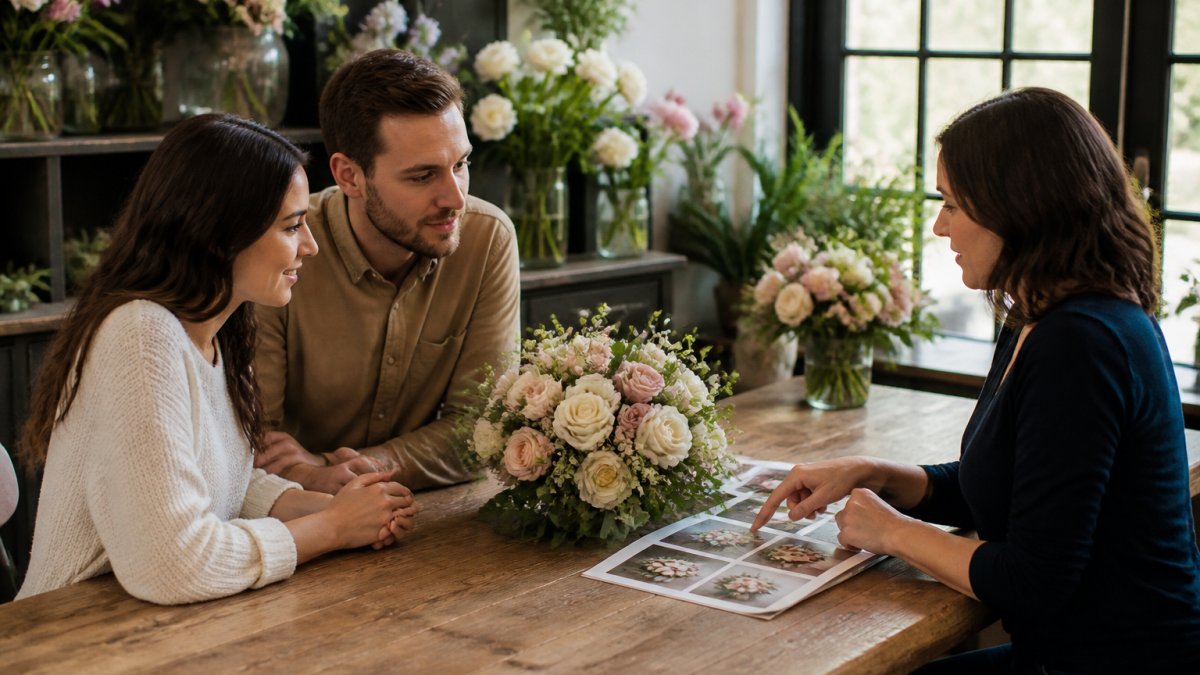
The best wedding florist consultation questions uncover how a designer thinks, not just what they charge. Bring a written list and take notes.
Questions About Design and Substitutions
Design questions reveal whether the florist listens or steers you toward their own preferences:
- How would you translate these inspiration photos into my color palette?
- Which flower varieties are in season on my wedding date?
- What happens if a specific flower is unavailable? How do substitutions work?
- Can I see a sample of the bridal bouquet before the wedding?
Substitutions deserve a direct answer. Every florist substitutes sometimes, and good ones explain the process up front: what they swap, when they notify you, and how they match color scheme and style.
Questions About Day-of Logistics
Logistics questions protect the wedding day itself:
- What time will you deliver and set up, and does that fit our venue’s access window?
- Do you handle installation for arches, hanging pieces, and large arrangements?
- Who is our point of contact on the wedding day?
- What is your plan if a delivery is delayed?
Venue logistics matter more than most couples expect. Ask whether the florist has worked at your venue and how they handle load-in, parking, and setup timing. A designer who knows the room plans around its quirks.
What a Good Wedding Flower Proposal Includes
A strong wedding flower proposal is a complete written plan, not a price list. It should let you picture the day and check every number.
Look for these elements:
- A design summary describing style, color palette, and arrangement scale
- An itemized list of every piece, with sizes and quantities
- Photos or references showing the proposed look
- A line-by-line breakdown of delivery, setup, labor, and design fees
Read the contract terms closely: the deposit amount, when the balance is due, and what happens if you reduce your guest count. Operational details cause more disputes than design disagreements.
The proposal should answer every question you would ask on the wedding day. If a line is vague, ask for it in writing before you sign.
Match Flowers to Your Wedding Style and Venue
Your wedding style and venue should shape the flowers, not the other way around. A design that ignores the room looks borrowed, and a palette that ignores the season costs more than it should.
Start with the venue’s physical constraints, then choose the style:
- Access and load-in: Ask where the florist can bring in materials, how far the carry is from parking, and whether freight elevators or service doors are required. Long carries and tight doors add labor time and cost.
- Installation restrictions: Some venues prohibit hanging pieces, open flames, or attaching anything to walls and ceilings. Confirm what is allowed before you fall in love with a suspended installation.
- Room flips: If the ceremony room becomes the reception room, the florist needs a plan and time to move arrangements. Ask who moves them and whether that labor is in the quote.
- Outdoor weather plans: For outdoor ceremonies, ask what happens to arrangements in wind, rain, or heat, and whether the florist provides a backup plan or holds the flowers until the last safe moment.
Then match the style to the room:
- Classic and formal: roses, hydrangeas, and structured shapes suit ballrooms with tall ceilings and rich color.
- Romantic and soft: garden roses, ranunculus, and trailing greenery suit garden settings and outdoor ceremonies.
- Modern and minimal: single-variety arrangements and clean lines suit contemporary spaces with strong architecture.
- Rustic and natural: wildflower-style mixes and in-season stems suit barns and outdoor venues with textured surroundings.
Build your palette around two or three anchor colors plus greenery. In-season blooms stretch the budget and arrive fresher. Bring inspiration photos, but stay open to the varieties your florist knows will perform best on your date.
Choose the venue constraints first, the style second, and the specific flowers third. A design that respects access, installation rules, and weather will look better on the day than one that only looks good in a photo.
Compare Mokena Wedding Florists With a Simple Checklist
A structured comparison turns a stressful choice into a short, clear decision.
| Criterion | What to Check | Why It Matters |
|---|---|---|
| Experience | Years serving the area, wedding portfolio depth | Signals reliability under pressure |
| Portfolio fit | Full weddings in your style and venue type | Predicts your actual result |
| Reviews | Recent local feedback, logistics mentions | Shows how they operate |
| Proposal detail | Itemized lines, fees, substitution policy | Prevents surprise costs |
| Venue knowledge | Familiarity with your venue’s logistics | Smoother setup and timing |
| Responsiveness | Reply time during planning | Confidence on the wedding day |
| Contract terms | Deposit, payment schedule, cancellation | Protects your investment |
Weight the criteria by what matters most. Planning from out of town? Responsiveness and venue knowledge carry more weight. Tight budget?
This is where local knowledge earns its place.
Choosing a wedding florist means balancing budget, design, logistics, and trust, and the couples who start early with a written checklist consistently get the smoothest results.
Frequently Asked Questions
How far in advance should you book a wedding florist?
Book six to nine months before the wedding date, and earlier if your date falls in peak wedding season or you are marrying at a popular venue. A wedding florist booking timeline that starts with a consultation around nine months out gives you time to review the wedding flower proposal, adjust the wedding flower budget, and lock in availability. If you are planning in under four months, call right away and ask what dates the shop can still take on.
What questions should you ask a wedding florist during a consultation?
Ask how they handle substitutions if specific blooms are unavailable, whether delivery, setup, and breakdown are included in the quote, and who installs ceremony and reception flowers on the day. Bring inspiration photos and your color palette. Also ask about their minimum spend for weddings and how far in advance they confirm final counts. These wedding florist consultation questions separate a clear proposal from a vague one.
How much should you budget for wedding flowers?
There is no single number, because a wedding flower budget depends on guest count, the number of personal flowers, arrangement scale, and how much installation your venue needs. Decide what percentage of your overall wedding spend you can commit, then ask for an itemized quote that separates flowers, labor, delivery, and setup. That breakdown lets you trim centerpieces or ceremony pieces without losing the bridal bouquet you care about.
What should a wedding flower proposal include?
A complete wedding flower proposal lists every item by name and quantity: bridal bouquet, bridesmaid bouquets, boutonnieres, centerpieces, ceremony flowers, and reception flowers. It should show per-item pricing, delivery and setup fees, the deposit amount, the balance due date, and a substitution policy. Ask for the proposal in writing and confirm which flowers are seasonal versus special order, so nothing changes quietly between signing and the wedding date.