Posted on — Leave a comment

Why Do Local Florists Provide Better Quality?

Last Updated: October 25, 2026

Quick Summary

Local florists quality stands out because blooms travel hours rather than weeks, arriving at their peak freshness from regional growers within 1-2 days. This short supply chain means flowers last 7-14 days with proper care, compared to 3-5 days for grocery store flowers that spend days in transit and storage.

  • Local florists receive fresh shipments multiple times per week, sometimes daily, keeping inventory fresh.
  • Flowers from quality local florists typically last 7-14 days versus 3-5 days from grocery stores.
  • Local florists can substitute flowers based on freshness and offer custom designs tailored to your needs.
  • Grocery store flowers spend 5-10+ days in the supply chain before reaching shelves.
  • Direct communication with local florists lets you ask about flower origin, arrival time, and preservatives used.

Table of Contents

The Freshness Advantage of Local Florists

When you buy flowers from a local florist, you’re getting blooms that traveled hours, not weeks, which is why local florists quality stands out. This matters more than most people realize. The difference between fresh flowers and stale ones isn’t subtle, it’s the difference between a bouquet that lasts two weeks and one that wilts in three days.

Local florists source their flowers from regional growers or wholesalers within a day or two of design. That short timeline means the flowers arrive at their peak. Grocery store flowers, by contrast, are often shipped across the country or even internationally. They spend time in cold storage, in transit, and sitting on shelves before you ever see them. By the time you bring them home, they’ve already lost days of vase life.

The supply chain matters because flowers are living plants. Every hour in transit, every temperature fluctuation, every delay in hydration chips away at how long they’ll last in your home. At An English Garden, we work with growers and wholesalers we know personally. We can track exactly where our flowers come from and how quickly they reach our design studio. That transparency isn’t a luxury, it’s the foundation of quality.

Local Florist vs Grocery Store Flowers: What’s the Real Difference

The choice between a local florist and a grocery store comes down to one core question: who controls the supply chain? Local florists control theirs. Grocery stores don’t.

When a grocery store orders flowers, they’re buying from the same wholesale distributors as thousands of other retailers. The flowers are packed, shipped, and warehoused for days before arriving at the store. They sit in a cooler under fluorescent lights, often without proper hydration systems. By the time you pick them up, they’ve been through multiple hands and multiple temperature changes. Nobody in that chain has a stake in whether the flowers actually last once you get them home.

A local florist has a stake in your experience. If your flowers die in two days, you’ll remember that. You might tell friends. You won’t come back. That accountability changes everything about how we source, handle, and design flowers.

Here’s the practical difference:

Factor Local Florist Grocery Store
Time from harvest to design 1-2 days 5-10+ days
Temperature control in transit Consistent Variable
Hydration during storage Active Minimal
Handling by specialists Yes Minimal
Customization available Full Limited
Accountability for quality Direct Indirect

Local florists also have the ability to substitute. If a specific flower isn’t available or isn’t fresh enough, we can recommend an alternative that’s equally beautiful and will last longer. Grocery stores follow a set order. If the roses aren’t perfect, they still go on the shelf.

Where Do Florists Get Their Flowers and Why It Matters

Understanding where your flowers come from explains why freshness varies so dramatically between sources.

Most local florists source from one or more of these channels: regional growers within a few hours’ drive, regional wholesalers who work with multiple growers, and sometimes direct relationships with specialty growers for premium blooms. The key is proximity and frequency.

Grocery stores and mass-market florists buy from large national or international distributors. These distributors consolidate flowers from many growers, sometimes from different countries, into massive shipments. The flowers are packed tightly, treated with preservatives, and shipped via refrigerated truck or air freight.

Regional growers understand their local climate and what blooms well seasonally. They can tell us what’s at peak freshness right now, not what’s available year-round through imports. That’s why local florists can offer seasonal arrangements that actually make sense, not just flowers that were flown in from halfway around the world.

The sourcing model also affects price and sustainability. Shorter supply chains mean lower transportation costs and a smaller carbon footprint. You’re also supporting growers and businesses in your region, not funding long-haul air freight for flowers that could have been grown locally.

At An English Garden, we’ve built relationships with growers and wholesalers we trust, and that commitment to local florists quality is evident in every arrangement. We know their practices, their handling standards, and their commitment to quality. That knowledge isn’t something you can get from a grocery store employee restocking the cooler.

How to Tell If Flowers Are Fresh Before You Buy

Freshness is visible if you know what to look for. Before you commit to an arrangement, inspect it carefully.

Start with the stems. Fresh stems are firm and have a bright, clean cut. The color should be vibrant, green or light green, not brown or gray. If the stem feels soft or hollow, the flower has been sitting for days. Bend a stem gently.

Next, check the petals and blooms. Fresh flowers have petals that feel slightly firm and waxy. They should be tightly clustered or just beginning to open, not already fully blown out. Look for any browning, bruising, or translucent spots on the edges.

The leaves matter too. Foliage should be crisp and green, not yellowed or wilted. If leaves are drooping or discolored, the entire arrangement is past its prime.
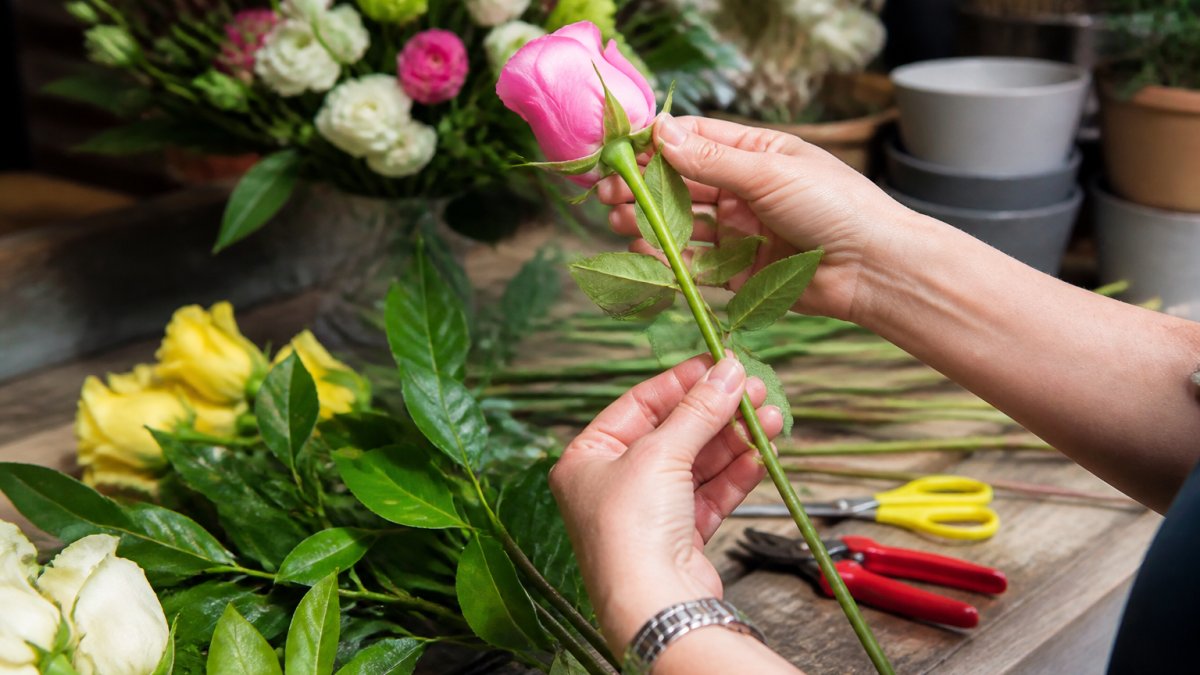
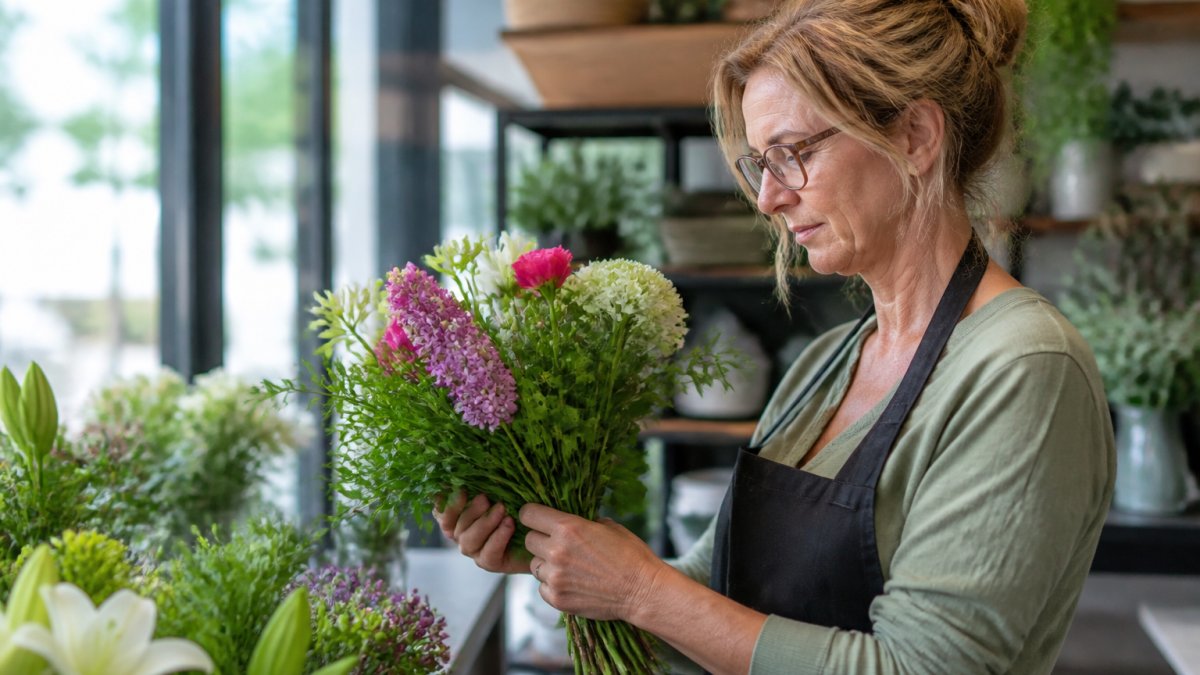
Close-up of hands examining fresh cut flowers, checking stem color and petal texture, with focus on green stems and vibrant petals in natural light

Ask the florist direct questions. How long have these flowers been in the shop? When did they arrive? What preservatives are included? A florist who can answer these questions confidently has nothing to hide. If they can’t or won’t answer, that’s a red flag.

When you order from a local florist like An English Garden, you can call or visit in person. You can see the flowers before they’re arranged. You can ask for specific varieties or colors.

How Long Do Fresh Flowers Last When You Choose Quality

The lifespan of fresh flowers depends almost entirely on how fresh they were when you got them and how well you care for them afterward.

Get Started Today →

Flowers from a quality local florist typically last 7-14 days with proper care. But the starting point matters enormously. A fresh rose lasts three times longer than an old one.

Grocery store flowers often last only 3-5 days because they’re already partially through their lifespan before you bring them home. You’re not getting a fresh product; you’re getting what’s left after days in transit and storage.

The difference compounds quickly. If you spend the same amount on flowers, you want them to last as long as possible. A local florist’s flowers give you better value because they’re actually fresh when you receive them. You’re paying for quality, not for flowers that are already declining.

To maximize vase life, change the water every two days, trim stems at a 45-degree angle, remove lower leaves, keep flowers away from direct sunlight and heat, and use the flower food included with your arrangement. These steps work best on flowers that started fresh. They can’t resurrect flowers that were already aging.

You can explore more detailed care strategies by reviewing how to keep fresh flowers alive longer, which covers the full range of techniques that extend the life of quality blooms.

Custom Design and Personalized Recommendations

This is where local florists genuinely shine, and where they create value that grocery stores simply can’t match.

When you work with a local florist, you’re not choosing from a pre-made selection. You’re describing what you want, and a designer creates it specifically for you. That process starts with questions: What’s the occasion? Who is this for? What colors do they love? What’s your budget?

A skilled florist listens to the answers and translates them into a design. They know which flowers are in season and will last longest. They know which combinations are visually striking. They know how to work within a budget without compromising on quality or beauty.

This personalization matters for every occasion. For a wedding, a florist consults on design direction, color palettes, and how arrangements will photograph. For a funeral, they understand that the arrangement should reflect the person’s personality and the family’s preferences.

An English Garden specializes in custom design for weddings and special events, including on-site decorating. Explore our Designer Choice Bouquet to see examples of personalized arrangements we create. We work with you to understand your vision, your timeline, and your needs.

The personalized approach also means you get honest feedback. If you love a flower that won’t last long or won’t work with your other choices, a good florist tells you. They suggest alternatives that will give you the result you actually want, not just what you asked for.

Planning Your Next Floral Order with a Local Florist

The process of ordering from a local florist is straightforward, but it’s worth understanding what makes it different from ordering online from a mass-market vendor.

Start by identifying what you need. Are you ordering for a specific date? Do you have preferences for color, style, or type of flowers? What’s your budget?

Contact the florist directly. Call, visit in person, or use their online ordering system if they have one. You can browse our Florist Choice Bouquet to see what’s available or request a custom design.

Discuss timing. When do you need the flowers? If it’s for a specific event, give the florist as much notice as possible. For same-day delivery, call early in the day.

Be specific about delivery. Where should the flowers go? Do they need to arrive at a specific time? For funeral arrangements, coordinate directly with the funeral home or hospital.

Discuss alternatives and substitutions upfront. If a specific flower isn’t available, what would you prefer? A good florist will offer suggestions, but it helps to have a conversation about it before design begins.

Once you’ve placed your order, the florist handles the rest. They source fresh flowers, create the arrangement with care, and ensure delivery happens on schedule.


Choosing where to buy flowers shapes the entire experience, from the moment you place your order to how long the flowers last in your home. A local florist like An English Garden brings expertise, freshness, and accountability to every arrangement.

Frequently Asked Questions

Why do flowers from a local florist often last longer?

Local florists control the entire supply chain from sourcing through delivery, minimizing time in transit and storage. Flowers arrive fresher because they skip the lengthy distribution networks used by grocery stores and shipped arrangements. Professional florists also use proper cold-chain handling, specialized conditioning techniques, and expert arrangement practices that protect stems and extend vase life significantly compared to mass-market alternatives.

What’s the key difference between local florist vs grocery store flowers?

Local florist flowers are typically fresher, sourced through wholesale growers or local suppliers, and arranged by trained professionals who inspect quality before delivery. Grocery store flowers often sit in distribution centers for days, receive minimal care, and are pre-arranged without customization. Local florists offer direct communication, substitution transparency, and expertise in seasonal availability and flower care, services grocery stores cannot match.

How can you tell if cut flowers are fresh?

Check for firm, green stems without browning or sliminess, vibrant petal color without bruising, and flowers that feel crisp rather than wilted. Fresh flowers have tight buds or fully open blooms depending on the variety, not drooping heads. Ask your florist about the harvest date and condition, reputable local florists provide this information and can explain why certain flowers are in season. Avoid arrangements with yellowing leaves or a sour smell.

Where do florists get their flowers, and does it affect quality?

Local florists source from wholesale flower growers, cooperative networks, and sometimes local growers depending on season and availability. This direct sourcing eliminates middlemen and reduces transit time compared to the multi-step distribution used by big retailers. Florists who prioritize local and seasonal sourcing often achieve better freshness and can guarantee availability. Ask your florist about their sourcing practices, transparency here is a sign of quality and commitment to their craft.


Posted on — Leave a comment

Corporate Flower Gifting Program Benefits for Business

Last Updated: October 23, 2026

Quick Summary

A corporate flower gifting program builds recurring floral deliveries into your calendar for employees, clients, and partners, so recognition happens on schedule instead of when someone remembers to order. The benefits include visible employee appreciation, warmer client relationships, and consistent delivery, with setup taking about two weeks.

  • Flowers sit on a desk for a week, giving recognition visibility that digital perks cannot match.
  • A bouquet arriving the day after a contract signs outperforms a larger one sent three weeks late.
  • Under IRS Publication 463, you can generally deduct up to $25 per recipient per year for business gifts.
  • Launching a program takes about two weeks of setup, mostly deciding who gets what.
  • Track cost per recipient and acknowledgment rate quarterly rather than total spend or order count.

Table of Contents

Why Corporate Flower Gifting Programs Work

A corporate flower gifting program is a structured, recurring approach to sending floral arrangements and plants to employees, clients, and partners on defined occasions. Unlike one-off orders, a program builds recognition into your calendar, so gratitude stops depending on someone remembering to place an order.

At An English Garden, we have watched corporate accounts discover the same thing: a thoughtful gift lands differently than a gift card. Flowers sit on a desk for a week. Everyone walking past sees them. That visibility is the benefit no digital perk can match.

Below, we break down what a program actually delivers, what it costs in administration, and how to launch one without creating a scheduling mess.

Key Takeaway
The benefit of corporate flower gifting is not the flowers. It is the repeated, visible signal that your company notices people, sent on a schedule rather than when someone remembers.

Employee Appreciation and Workplace Perks That Stick

Most workplace perks get used once and forgotten. A floral delivery gets seen by everyone in the room, which is why employee appreciation programs built around visible gifts tend to hold attention longer than a subscription nobody mentions.

Recognition works best when it is specific and timely. A bouquet that arrives the week someone ships a hard project says more than a plaque handed out at year-end.

The practical benefit is morale, and morale is hard to fake. A common mistake is ordering one large arrangement for a shared kitchen. Individual deliveries, even small ones, do more for recognition because the recipient keeps it at their own desk.

A smiling employee receiving a fresh flower bouquet at a bright office desk, with coworkers looking on warmly

Client Appreciation and Relationship Building

Client relationships cool quietly. Nobody complains; the emails just get shorter. A scheduled floral gesture, sent after a closed deal or on the anniversary of a partnership, gives your account team a reason to reach out that is not a request for anything.

The elegance of flowers as a business gift is that they carry no implied obligation. They are not a branded mug or a box of logoed swag. Recipients read them as gratitude, and gratitude is what keeps a customer relationship from drifting toward whoever called last.

Timing matters more than price. A bouquet that arrives the day after a contract signs outperforms a larger one that shows up three weeks late. Build the trigger into your CRM so the order goes out while the moment is still warm.

Bulk Corporate Gift Basket Ideas for Every Occasion

Gift baskets solve the problem flowers cannot: shelf life. A gourmet basket or snack assortment works for a whole team, a remote employee, or a client whose office has no vase. Pairing a floral delivery with a basket gives you options across budgets and dietary needs.

Here is how we would map baskets to occasions:

Occasion Recommended Gift Why It Works
New client welcome Gourmet basket Shareable, no vase required
Team milestone Snack basket for the group Feeds the whole room
Individual recognition Small bouquet plus candy bouquet Personal and visible
Holiday thank-you Plant or basket Lasts past the season
Sympathy or illness Plant with a card Appropriate and lasting

For a deeper list, our team keeps a running guide to bulk corporate gift basket ideas organized by occasion and budget. If you want something tailored rather than off-the-shelf, you can order a custom gourmet gift basket built around your recipient list.

Watch Out
Ordering perishable baskets without confirming delivery dates is the most common bulk-order failure. A basket that arrives after the event reads as an afterthought, not a thank-you.

Corporate Floral Subscription Services and Scheduled Delivery

A subscription turns gifting from a task into a system.

Get Started Today →

Scheduled delivery is the operational core of any program. You define the dates once, and the florist handles the rest.

Recipient data collection. For employee programs, you need a reliable way to capture home addresses, delivery preferences, and opt-outs.

Substitution and freshness policy. Flowers are agricultural. A specific stem may be unavailable in a given week, and a vendor that substitutes without telling you creates inconsistency across a program.

Recurring office flowers also change the workplace itself. Add a custom card to each delivery with your own message, and the gesture stays personal even on autopilot.

Pro Tip
Before signing a recurring contract, request one test delivery to a real recipient address and time it. A vendor that cannot hit a Tuesday morning office window on a trial run will not hit it across a full program.

Corporate Gifting Tax Deduction Rules You Need to Know

The IRS treats business gifts as deductible, but with a hard ceiling per recipient per year. Under IRS Publication 463, you can generally deduct up to $25 for business gifts given directly or indirectly to any one person during your tax year, and the deduction requires substantiation.

That cap is why floral gifts are usually treated as client entertainment or employee recognition rather than pure gifting. Employee awards and recognition items follow different rules than client gifts, so the classification matters. Keep receipts, record the recipient and business purpose, and confirm treatment with your accountant before you build a large program.

The compliance angle competitors skip: a program with documented recipients, dates, and purposes is far easier to defend than a pile of untracked receipts. Design the recordkeeping before the first order ships.

How to Launch Your Corporate Flower Gifting Program

Launching takes about two weeks of setup, and most of that is deciding who gets what and how you will know it worked. Here is the sequence we recommend, followed by the measurement framework most guides leave out.

  1. Define your occasions. List every moment worth marking: hires, anniversaries, promotions, client wins, holidays, and sympathy. Rank them by volume so you can budget realistically, work anniversaries alone can outnumber every other occasion combined at a mid-size company.
  2. Set a budget per recipient tier. Separate employee recognition from client gifting so the numbers stay clean. A common pattern is a modest per-person allowance for recurring recognition and a higher ceiling for client milestones, with a hard annual cap per recipient to stay inside gifting policy.
  3. Build the recipient list. Names, addresses, delivery windows, and any allergies or scent sensitivities. Assign one owner for list maintenance; programs fail when nobody owns the data.
  4. Choose your formats. Bouquets, plants, and baskets each suit different moments and workspaces. Plants travel better to hospital and sympathy settings; baskets work for shared team spaces and remote employees without a vase.
  5. Set the schedule. Lock recurring dates and one-off triggers into a shared calendar. If your CRM or HR platform supports it, tie client triggers to deal-close dates and employee triggers to start dates so orders fire automatically.
  6. Add personalization. Cards, printed ribbon, and consistent messaging. Our corporate flower delivery guide walks through ordering and logistics in more detail, and printed ribbon lets you put your company mark on every arrangement.
  7. Confirm delivery coordination. Verify receiving hours, front-desk contacts, and hospital or funeral home procedures where relevant.
  8. Set approval and spend controls. Decide who can authorize orders above a threshold and how exceptions are handled. Without a written approval path, well-meaning managers order outside the program and blow the budget by Q2.

Measuring Whether the Program Works

Most gifting guides stop at launch. The programs that survive budget season are the ones with numbers attached. You do not need a formal study; you need a handful of practical indicators tracked consistently.

  • Participation rate. What share of eligible employees or clients received a gift in the period? A low rate usually signals a stale recipient list, not a stingy budget.
  • Redemption or acknowledgment rate. If gifts require any action, claiming a delivery window, choosing a plant versus bouquet, track how many recipients respond. Silence is data.
  • Retention and tenure signals. Compare turnover or client renewal rates for gift recipients against comparable non-recipients. You cannot prove causation from this alone, but a persistent gap is worth investigating.
  • Cost per recipient. Divide total program spend, including delivery and administration time, by recipients served. This is the number finance will ask for.
  • Qualitative feedback. A one-question follow-up, “Did the gift arrive on time and feel appropriate?”, surfaces delivery failures and mismatched formats faster than any dashboard.
Watch Out
Do not measure the program by total spend or number of orders. Those numbers rise with volume regardless of whether anyone noticed. Track cost per recipient and acknowledgment rate instead, and review them quarterly.

Compliance and Recordkeeping

Gifting rules vary by jurisdiction and by company policy, so confirm the tax treatment and any spending limits with your accountant before scaling. The practical safeguard is documentation: a program with recorded recipients, dates, purposes, and amounts is far easier to defend than a pile of untracked receipts. Build the recordkeeping into the workflow from the first order, not after an audit request.

Pro Tip
Ask about scent-free and allergy-friendly options before your first bulk order. Some recipients cannot keep lilies or heavily scented stems in a shared office, and a substitution policy agreed up front prevents awkward calls later.

Conclusion

Building a gifting program that runs on schedule, stays within budget, and respects every recipient is harder than it looks. An English Garden handles corporate accounts with secure 24-hour online ordering, and a full range of arrangements, plants, and gourmet baskets for any budget. Get started with An English Garden and put your recognition calendar on autopilot.

Frequently Asked Questions

What are the primary benefits of a corporate flower gifting program?

A corporate flower gifting program delivers fresh arrangements to employees and clients on milestones, holidays, and thank-you moments. The main benefits include higher employee engagement, stronger client retention, improved team morale, and a more welcoming office atmosphere. Flowers also create a memorable, thoughtful gesture that stands out from standard branded merchandise. For businesses, the program simplifies ordering through scheduled delivery and bulk orders, while corporate discounts keep costs predictable. The result is a consistent recognition and rewards system that builds business relationships without adding administrative burden.

Are corporate flower gifts tax-deductible business expenses?

Under IRS rules, business gifts are generally deductible up to $25 per recipient per year, and that limit applies to flowers sent to clients or employees. However, certain employee awards and recognition gifts may qualify for different treatment, and flowers used for office decoration or events can be deducted as ordinary business expenses. Keep detailed records of recipients, dates, and business purpose. Because corporate gifting tax deduction rules can vary by situation, confirm your specific program with a qualified tax professional before filing.

How can a corporate floral subscription service simplify office gifting?

A corporate floral subscription service handles recurring deliveries on a set schedule, so you never scramble before a holiday or employee anniversary. You choose the frequency, budget, and recipient list, and the florist manages ordering, delivery coordination, and substitutions. This removes the manual work of placing individual orders and helps you maintain a consistent recognition program. Subscription services also make it easier to plan around peak occasions and keep spending within a predictable range. Ask your florist about customization options and delivery windows for multiple office locations.

What should I look for when choosing a corporate florist for bulk orders?

Look for a florist with proven capacity for bulk orders, reliable scheduled delivery, and clear communication about substitutions. Ask about corporate discounts, minimum order quantities, and how they coordinate deliveries to multiple addresses. Confirm whether they offer personalization such as co-branded gifts or custom notes, and check their policy on recipient preferences and allergies. A local florist can handle volume while keeping arrangements fresh and on-brand. Request references and review their ordering process before committing to a program.

Posted on — Leave a comment

Best Flowers for Wedding Centerpieces 2026

Last Updated: October 23, 2026

Quick Summary

The best flowers for wedding centerpieces in 2026 blend sculptural drama with romantic softness, pairing unexpected botanicals with timeless garden favorites like garden roses, ranunculus, dahlias, proteas, and orchids. Choose flowers that work with your wedding date’s seasonal availability to ensure fresher stems, more design flexibility, and lower costs.

  • Garden roses, ranunculus, and dahlias create full, rounded forms ideal for low centerpieces that let guests see across tables.
  • In-season, domestic flowers cost significantly less than out-of-season imports; May-June and September-October offer the most affordable premium options.
  • Standard low centerpieces typically cost $75-$150 each for 20-30 stems; premium designs run $150-$300 with 35-50 stems.
  • Greenery-forward arrangements using eucalyptus, ruscus, and salal with a few focal flowers reduce costs while remaining striking.
  • Garden roses last 7-10 days, while orchids and proteas often stay fresh two weeks or longer with proper care and water changes.

Table of Contents

Top Flowers for Wedding Centerpieces in 2026

At An English Garden, we find centerpiece flowers set the tone for your celebration.

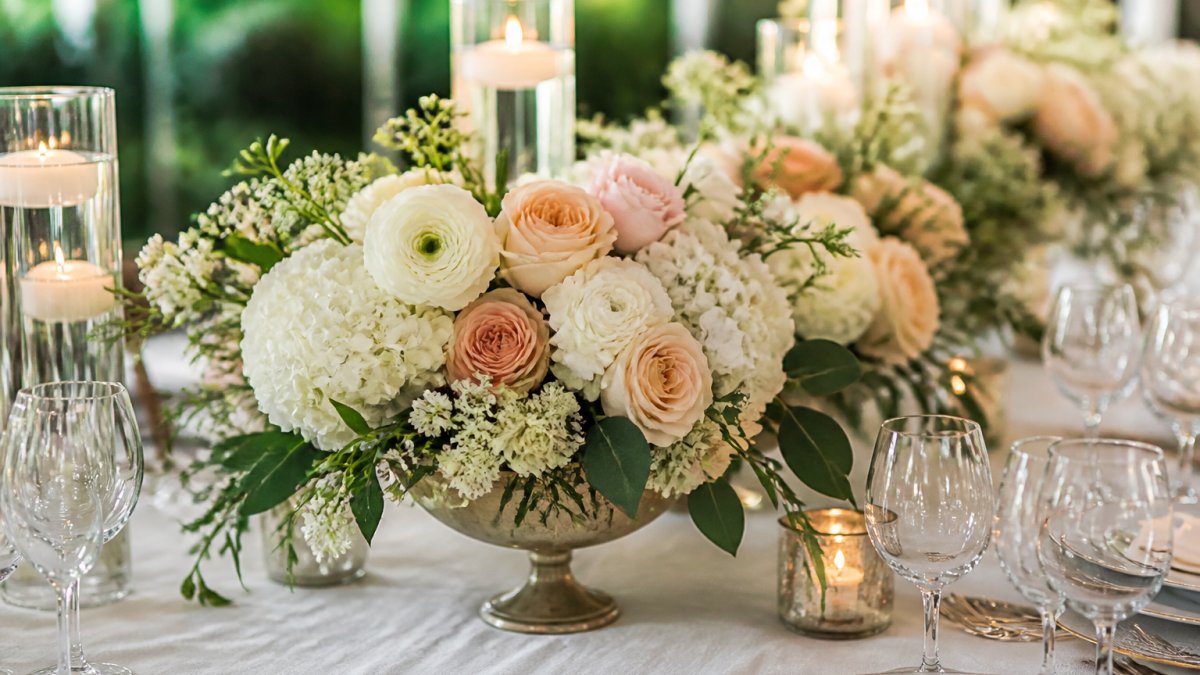
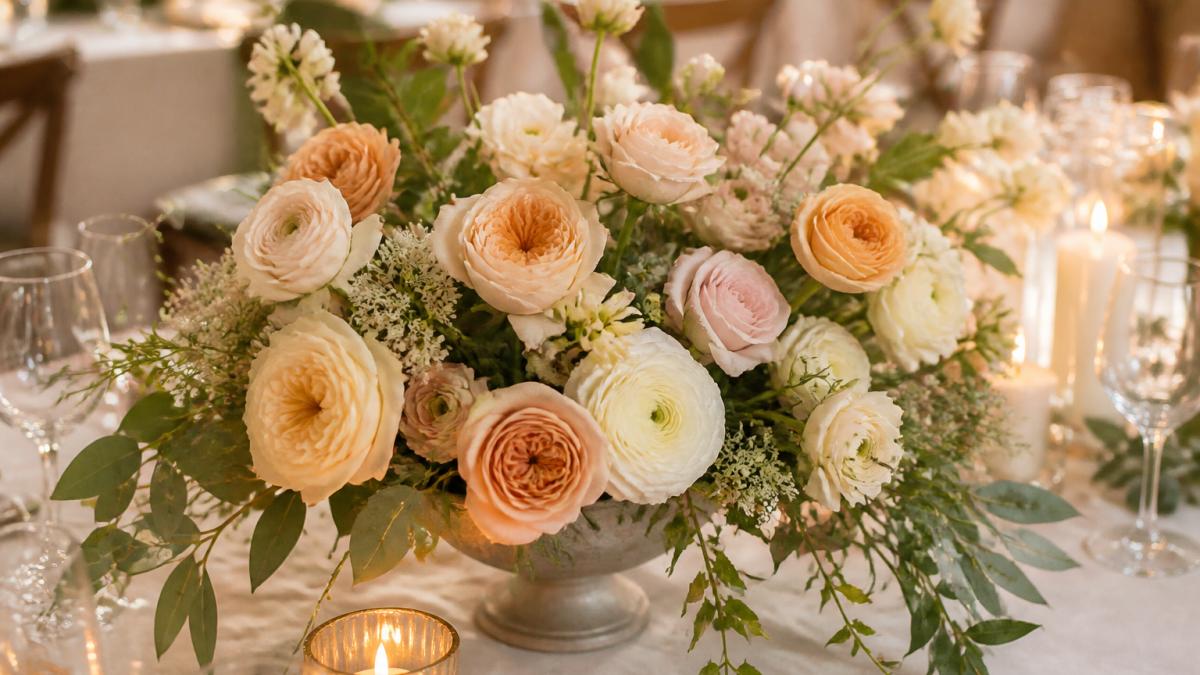
Close-up of an elegant wedding centerpiece featuring mixed garden roses, ranunculus, and soft greenery with varying heights and natural textures arranged in a low vase with candlelight

Your flowers should work across the entire venue, from ceremony arrangements to the bridal bouquet. Choosing centerpiece flowers early ensures consistency, simplifies ordering, and gives your florist time to source premium stems.

Sculptural and Statement Blooms

Sculptural flowers command attention without overwhelming a table, with architectural shapes that create interest even in minimalist arrangements. Proteas, anthuriums, and orchids lead this year because they hold their form and photograph beautifully.

Ranunculus remains a favorite for its layered petals, which create depth and movement. Poppies and cosmos add an unexpected edge for modern or garden-inspired aesthetics. Use these as focal flowers, paired with softer supporting blooms.

Romantic and Garden-Inspired Choices

Garden roses, sweet peas, and dahlias create the romantic, gathered-from-the-garden feeling many couples prefer. Garden roses offer rich color options and full, luxurious blooms that make even simple arrangements feel special.

Combine garden roses with clematis, astilbe, or soft greenery like eucalyptus for natural movement and texture. This works especially well for low centerpieces where guests need to see across the table.

Unexpected and Unconventional Botanicals

Couples are embracing unconventional choices that set their weddings apart. Amaranthus adds dramatic draping, stock provides architectural vertical lines, and chamomile, daisies, and ornamental grasses bring an earthy quality.

Balance is key: pair one or two unconventional elements with familiar flowers so arrangements feel intentional rather than random. A few stems of amaranthus with garden roses and ranunculus creates interest without chaos, and unusual botanicals often cost less than premium roses.

Seasonal Wedding Flowers and Regional Availability

Seasonality is the single biggest lever on what your centerpieces look like and what they cost. A peony in October is an imported, premium-priced stem; a dahlia in October is domestic, abundant, and a fraction of the cost.

How flower availability really works

Three supply streams feed the U.S. wedding market:

  • Domestic field-grown. Follows a natural season, peaks spring through early fall, and is the most affordable and freshest option when available.
  • Domestic greenhouse-grown. Extends the season for crops like roses, tulips, and lilies. More consistent year-round, priced between field-grown and imported.
  • Imported. Fills gaps, especially in winter and for out-of-season blooms. Adds freight, cold-chain, and sometimes tariff costs, and stems may be older by the time they reach your florist.

Month-by-month centerpiece guidance

Use this as a starting point, then confirm with your florist, since timing shifts with weather and region.

  • January-February: Tulips, anemones, ranunculus, and forced branches lead. Evergreens, berries, and dried botanicals carry texture. Orchids and anthuriums are reliable greenhouse/import options.
  • March-April: Tulips peak, ranunculus and anemones are strong, and early peonies and sweet peas begin. Daffodils and hyacinths add scent and value.
  • May-June: The peak wedding window. Peonies, garden roses, sweet peas, and early dahlias are at their best and most affordable, the easiest months to design around seasonality.
Key Takeaway
If your date falls in the May-June or September-October windows, you can build a premium-looking centerpiece almost entirely from in-season domestic stems. If your date falls in winter, budget more per stem and lean on evergreens, dried elements, and greenhouse blooms for value.

Regional availability: why your zip code matters

Availability is also regional. Growers in milder climates supply field-grown blooms earlier and later than colder regions, and local growers deliver fresher stems with less transit time. Couples in strong flower-farming regions can often source a wider in-season palette at lower cost.

Ask your florist two questions early:

  1. Which of my chosen flowers can be sourced domestically and in season on my date?
  2. Which will need to be imported, and what does that do to price and stem quality?

Substitution logic: what to swap when a bloom isn’t available

Every trend flower has a comparable stand-in. Knowing the swaps in advance keeps your design intact when a stem is unavailable, over budget, or unsuitable for the venue.

  • Peony → garden rose or ranunculus. Similar full, layered form; garden roses are more available year-round.
  • Garden rose → standard rose or spray rose. Less ruffled, but reliable and often cheaper.
  • Ranunculus → stock or lisianthus. Similar density and softness; lisianthus holds up well in heat.
Pro Tip
Build a substitution list into your floral contract. If a specific bloom is unavailable on your date, your florist should have pre-approved swaps that preserve the design and the budget, not a last-minute surprise.

The practical takeaway

Choose your date first, then your flowers. Couples who pick blooms before confirming the date pay a premium for out-of-season stems and accept older, imported product. Letting the season lead gets you fresher flowers, more design flexibility, and a lower per-centerpiece cost.

2026 centerpiece trends favor bold monochromatic palettes or carefully curated multi-color combinations.

For bolder statements, jewel tones like emerald, sapphire, and burgundy are trending, working especially well in evening receptions or venues with dramatic lighting.

The modern approach emphasizes movement and varying heights. Rather than uniform, symmetrical arrangements, 2026 centerpieces feature stems at different lengths for a natural, slightly asymmetrical look that feels like a curated garden moment.

Low Wedding Centerpieces: Design and Flower Selection

Low centerpieces, typically 12 inches or shorter, remain essential because they let guests see and converse across the table. The best flowers for low wedding centerpieces have full, rounded forms like garden roses, ranunculus, and dahlias, visual impact without height.

Focus on density and texture rather than vertical drama.

Pair low centerpieces with bud vases as accents: small arrangements between larger ones add detail without blocking sightlines and let you incorporate more varieties.

Wedding Centerpiece Flower Cost and Budget Planning

Most centerpiece budget advice stops at “it depends.” Here is the practical framework florists actually use to price centerpieces.

Get Started Today →

What actually drives the price of a centerpiece

Four variables account for nearly all centerpiece cost variation:

  1. Focal flower choice. A garden rose, peony, or orchid stem costs several times what a stem of stock, carnation, or chrysanthemum costs. Two or three focal blooms per arrangement is typical; more and the price climbs quickly.
  2. Stem count and arrangement size. A low centerpiece in a 6-inch vessel might use 15-25 stems; a lush 10-inch design can use 40-60. Stem count, not vase size, is the real cost driver.
  3. Design complexity. Hand-tied, foam-free, cascading, or asymmetrical designs take more labor than a simple rounded arrangement. Labor is often 40-60% of a centerpiece’s price.
  4. Season and sourcing. In-season, domestic stems are consistently cheaper than out-of-season imports. A peony in May and a peony in December are not the same purchase.

Realistic per-centerpiece tiers

Use these as planning ranges, not quotes, pricing varies by market, venue access, and delivery:

  • Bud vases and accents, roughly $15-$40 each. A few stems in a small vessel. Best used in clusters of three to five between larger designs.
  • Standard low centerpiece, roughly $75-$150 each. A rounded, garden-style arrangement in a 6-8 inch vessel, 20-30 stems, mixed focal and filler.
  • Premium low centerpiece, roughly $150-$300 each. Larger vessel, 35-50 stems, premium focals like garden roses or peonies, more texture and trailing elements.
Pro Tip
Ask your florist for a per-centerpiece price at three stem counts (for example, 20, 30, and 40 stems) for the same design. Seeing the marginal cost of each additional tier is the fastest way to right-size your order.

The table-count math most couples skip

Centerpiece budget is a multiplication problem. A 150-guest wedding with 15 round tables needs 15 centerpieces. At $125 each, that’s $1,875 before tax, delivery, and setup; at $250 each, it’s $3,750, same guest count, double the floral line item.

Three levers reduce that total without gutting the look:

  • Mix tiers across tables. Put premium designs on the head table and guest-of-honor tables, standard designs on the rest. Guests rarely compare tables side by side.
  • Alternate centerpieces with bud-vase clusters. Every other table gets a full arrangement; the rest get three to five bud vases. The room still reads as floral, and the per-table cost drops sharply.
  • Reduce table count, not quality. Longer tables or a mix of rounds and longs can cut the number of arrangements while keeping the same guest capacity.

Where the hidden costs live

Watch for line items outside the per-centerpiece price:

  • Delivery and setup. Venue distance, load-in time, and whether your florist must return for breakdown all affect this. It’s frequently a flat fee plus a percentage of the floral total.
  • Vessel rental. Many florists rent vases and stands rather than sell them; rental is usually cheaper but must be returned.
  • Strike and cleanup. Removing arrangements after the event is sometimes a separate charge.

A simple budgeting sequence

  1. Set your total floral budget and reserve 10-15% for delivery, setup, tax, and contingency.
  2. Decide your table count and layout.
  3. Choose a per-centerpiece tier that fits the remaining budget.
  4. Pick focal flowers that are in season for your date (see the seasonal section).
  5. Ask for a written quote broken out by arrangement type, quantity, and fees, not a single lump sum.

That last step matters. A quote you can read line by line is a quote you can adjust line by line.

Affordable Wedding Centerpiece Flowers and Alternatives

If your budget is tight, several flowers offer excellent value.

Greenery-forward arrangements cut costs while remaining striking. Use eucalyptus, ruscus, salal, and other foliage as the foundation, then add a few premium focal flowers for sophisticated centerpieces at a fraction of the cost.

Seasonal flowers are always more affordable than out-of-season alternatives: a spring wedding with abundant tulips and peonies costs less than requesting those same flowers in December.

Flower Longevity, Care, and Sustainable Sourcing

Knowing how long centerpiece flowers last helps you plan timing. Garden roses typically last 7-10 days with proper care, ranunculus and dahlias similar, and orchids and proteas often stay fresh two weeks or longer.

Proper care extends flower life significantly: keep arrangements cool, change water every two days, and remove lower leaves that sit in water to prevent bacterial growth. Florists condition flowers with preservative and should deliver centerpieces as late as possible, ideally just before guests arrive.

Sustainable sourcing matters to many couples: locally grown flowers reduce transportation emissions and support regional growers, while seasonal selections minimize hothouse production. Locally grown flowers reduce transportation emissions and support regional growers, while seasonal selections minimize hothouse production.

Creating Your Centerpiece Selection Framework

Start by defining your style: romantic and garden-inspired, modern and minimalist, bold and dramatic, or naturally gathered and eclectic. This clarity guides every decision about flower selection, color palette, and design.

Next, identify your constraints: wedding date, venue style, budget, and table count. These determine which flowers are available, what they’ll cost, and how many arrangements you need, so discuss them with your florist early.

Then select 2-3 focal flower types to anchor each arrangement, add supporting flowers that complement them in color, texture, and form, and finish with greenery and filler for movement and volume. This structured approach ensures cohesive centerpieces throughout your reception.

Frequently Asked Questions

What are the best flowers for wedding centerpieces in 2026?

The top choices for 2026 include garden roses, ranunculus, calla lilies, orchids, and sculptural blooms like protea and anthuriums. Trending styles favor mixed-variety designs that combine soft blooms with statement flowers, natural textures, and varying heights. Your choice depends on your color palette, season, budget, and the overall aesthetic you want, romantic, modern, garden-inspired, or bold and unexpected.

Which flowers are most affordable for wedding centerpieces?

Affordable options include sunflowers, daisies, stock, tulips, and chamomile. Greenery and filler flowers like amaranthus also stretch your budget while adding movement and texture. Mixing one or two statement blooms with budget-friendly fillers creates impact without overspending. Pricing depends on quantity, dates, and delivery, contact An English Garden for a quote tailored to your needs.

How much do wedding flower centerpieces typically cost?

Centerpiece costs vary based on flower type, arrangement size, quantity needed, season, and delivery. Premium blooms like garden roses and orchids cost more than sunflowers or daisies. Seasonal flowers are generally less expensive than out-of-season imports. For accurate pricing based on your specific vision, table count, and wedding date, reach out to An English Garden for a personalized quote.

What flowers work best for low wedding centerpieces?

Low centerpieces suit ranunculus, garden roses, dahlias, calla lilies, and mixed blooms with draping or cascading stems. Keep arrangements under 12 inches tall to maintain sightlines across tables. Combine varying heights of flowers with moss, bud vases, and natural textures to create visual interest without height. This style works well for intimate gatherings and modern, minimalist aesthetics.

Can you mix fresh and dried flowers in wedding centerpieces?

Yes. Combining fresh and dried flowers adds texture, movement, and longevity to centerpieces. Dried amaranthus, pampas grass, and preserved greenery pair beautifully with fresh roses, ranunculus, and orchids. This mix works especially well for garden-inspired and modern designs. Dried elements also reduce overall floral costs and allow arrangements to last longer, which is practical for multi-day events or if you want to preserve centerpieces after the wedding.

How far in advance should I choose my wedding centerpiece flowers?

Choose flowers 2-3 months before your wedding to allow time for seasonal planning, cost estimation, and design consultations. For peak seasons (spring and summer), book earlier, 4-6 months ahead, to secure preferred blooms. Confirm final quantities and color details 2-3 weeks before the wedding. An English Garden’s experienced team can guide you through the timeline and help you make substitutions if needed.

What are the best seasonal flowers for wedding centerpieces?

Spring (March-May) offers tulips, ranunculus, peonies, and sweet peas. Summer (June-August) features garden roses, orchids, sunflowers, and cosmos. Fall (September-November) brings dahlias, protea, and amaranthus. Winter (December-February) offers roses, calla lilies, and imported blooms. Seasonal flowers are fresher, more affordable, and more sustainable. Discuss your wedding date with your florist to select the best in-season options for your centerpieces.

Should I choose local and sustainable flowers for my wedding centerpieces?

Locally sourced and sustainable flowers reduce environmental impact, support regional growers, and often cost less than imported blooms. They’re typically fresher and last longer. Many beautiful 2026 trends, garden-inspired, natural textures, and mixed botanicals, align perfectly with local sourcing. Ask your florist about regional availability for your wedding date. An English Garden can recommend sustainable options that fit your vision and budget.


When you’re ready to transform your centerpiece vision into reality, An English Garden offers expert design consultation and custom floral arrangements for your wedding. We handle delivery and on-site setup, ensuring your centerpieces are perfectly positioned and fresh when your guests arrive. Contact us to discuss your wedding flower needs and discover how we can create beautiful, memorable centerpieces for your celebration.

Posted on — Leave a comment

How to Keep Funeral Flowers Fresh: A Complete Guide

Table of Contents

Last Updated: October 21, 2026

Why Funeral Flowers Need Special Care

Funeral flowers are stressed from the moment they’re cut, having traveled through packaging, temperature changes, and handling before arriving at the service or your home. Understanding why they wilt helps you keep funeral flowers fresh longer.

Cut flowers lose water through stems and petals, dehydrating within days without proper care. Bacterial growth in cloudy vase water, temperature swings, direct sunlight, and dry air all accelerate wilting.

Basic flower care preserves those meaningful blooms for days or even weeks.

Immediate Steps to Keep Flowers Fresh in a Vase

The first day after receiving funeral flowers determines how long the blooms stay vibrant.

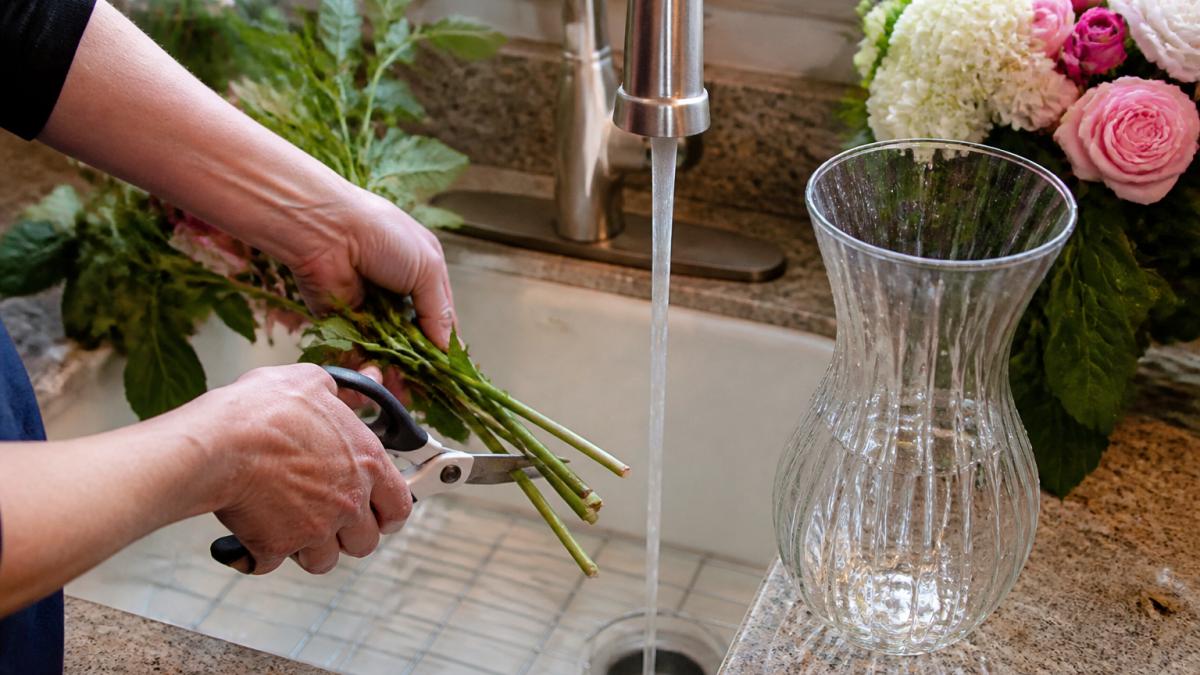
Hands trimming flower stems at a 45-degree angle to keep funeral flowers fresh in a vase

Preparing stems and blooms before placement

Remove any leaves that would sit below the waterline. Submerged leaves rot, creating bacteria that clogs stems and causes wilting.

Cut 1-2 inches off each stem at a 45-degree angle with a sharp knife, never scissors, which crush the stem and prevent water uptake. The angled cut creates more surface area for absorption.

Gently remove damaged petals or bruised blooms, they deteriorate faster and spread bacteria to healthy blooms nearby.

Optimal vase conditions and water care

Fill the vase with room-temperature water mixed with flower food if a packet is included; its nutrients and antibacterial agents extend bloom life.

Change the water completely every two to three days, recutting stems at an angle and cleaning the vase thoroughly, bacterial buildup is a main reason flowers wilt prematurely.

Keep the vase filled to the proper level: most arrangements need water at least halfway up the stems, though roses and carnations prefer deeper water and tulips shallower.

Tap water is fine unless your area has extremely hard water; otherwise use filtered or distilled water.

How to Keep Flowers Fresh for 3 Days

Three days is the realistic target for most sympathy arrangements, enough to cover the service, reception, and a day or two at home. Hitting it depends on a consistent routine matched to the flower types in the arrangement.

A day-by-day timeline

Day 1 (day of the service): Unwrap, recut stems at a 45-degree angle, strip leaves below the waterline, and place in cool water with flower food. Keep it out of direct sun and away from heat vents.

Day 2: Top up with cool water in the morning and remove fallen petals or browning leaves. If water looks cloudy, change it completely, clean the vase, and recut stems.

Day 3: Change the water completely, recut stems, and clean the vase, the single most effective maintenance step. Remove any mushy or moldy blooms so they don’t spread decay.

Temperature, light, and ethylene

The ideal room temperature for cut flowers is roughly 65-72 degrees Fahrenheit; cooler nights slow aging, so a room dropping to the low 60s overnight beats one that stays at 75. Avoid direct sunlight, and keep arrangements a few feet from heating and air-conditioning vents, never on top of a refrigerator or near a stove.

Ethylene gas is the most overlooked threat: ripening fruit, dying flowers, and cigarette smoke release it, causing petals to drop and buds to stay closed. Keep arrangements away from the kitchen fruit bowl and trash cans holding old blooms.

Watch Out
Do not put funeral flowers in a closed refrigerator with produce. The ethylene from fruit and vegetables will shorten bloom life, and some flowers absorb food odors. If you need cold storage, use a cooler with a sealed ice pack wrapped in a towel.

Flower-specific care

Different sympathy flowers need different treatment, one routine won’t suit a mixed arrangement.

  • Roses: Recut stems under water if possible and use a deep vase. Roses drink heavily and benefit from flower food. Remove guard petals that look bruised. Keep them away from drafts; roses are prone to bent necks when thirsty.
  • Lilies: Remove the anthers (the pollen-covered tips) as soon as blooms open. Pollen stains fabric and petals, and it is toxic to cats. Lilies prefer cool water and moderate light; do not mist, as petals spot easily.
  • Carnations: Carnations are among the longest-lasting cut flowers and tolerate slightly shallower water than roses. Recut stems every few days and keep them away from ethylene sources; carnations are especially sensitive to it.
  • Chrysanthemums: Mums are sturdy and last well in cool rooms. Remove lower leaves and change water every two days. They are a good candidate for home drying later.
  • Tulips: Tulips continue to grow in the vase and prefer shallower water, about 2-3 inches. Keep them cool and away from direct sun; warm rooms cause them to open and drop petals quickly.
  • Hydrangeas: Hydrangeas wilt dramatically and recover well from a deep, cool water soak. If blooms droop, submerge the heads in cool water for 20-30 minutes, then return to the vase.

Daily maintenance routine

A 60-second morning check suffices: top up water, remove fallen petals, and rotate the vase. Change water completely every two days and recut stems every two to three days. Skip misting unless the room is very dry; if you do, mist in the morning so petals dry before night, and stop at the first sign of spots.

Safe Transport and Storage for Attendees

Taking a funeral arrangement home is one of the most common ways families keep flowers fresh, yet it’s also where arrangements are most often damaged. A few rules prevent crushed blooms, spilled water, and heat stress during the trip.

Before you leave the service

Ask the funeral home or florist whether the arrangement can be disassembled.

If the arrangement is in a vase, drain about half the water before moving it, a full vase sloshes and tips, while a half-full one stays stable and keeps stems wet.

In the car

Never set flowers on a sunny back seat or in a trunk on a warm day, a closed car in direct sun can exceed 100 degrees Fahrenheit within minutes, wilting blooms faster than any other single factor.

For trips longer than about 30 minutes, place the arrangement in a cooler with a sealed ice pack wrapped in a towel so it doesn’t touch petals, direct ice contact causes cold damage and blackened edges. Use one small cooler for the vase and a second, dry box for loose blooms you plan to dry later.

Pro Tip
If you are flying home with flowers, check the airline’s carry-on rules first. Most carriers allow cut flowers in carry-on luggage, but arrangements with water, soil, or floral foam are often restricted. Ship dried or pressed flowers instead of fresh ones for air travel.

Temporary storage at your destination

If you can’t arrange the flowers immediately, keep them in a cool, dark room, a basement, shaded garage, or air-conditioned bedroom. Don’t store them in a refrigerator holding fruit: ripening fruit releases ethylene gas, causing petals to drop and buds to fail to open.

Stand stems upright in a bucket with 2-3 inches of cool water. Laying flowers flat for more than a few hours bends stems and bruises blooms; if you must, place them on a damp towel and cover gently with another damp towel, not plastic, which traps condensation and encourages mold.

Reviving on arrival

Unwrap and recut stems at a 45-degree angle as soon as you arrive, then place them in cool water for at least an hour before arranging. If blooms look limp, wrap the bunch loosely in paper and stand it in deep cool water in a dark room for 2-4 hours, the standard florist conditioning step that often restores turgor.

Get Started Today →

How to Preserve Funeral Flowers Long-Term

Many families want to keep their funeral flowers beyond a few days, preserving them honors the memory long after the service ends.

Drying flowers at home with silica gel

Silica gel is the most effective method for preserving the color and shape of funeral blooms, absorbing moisture while maintaining form.

Buy silica gel from craft stores or online retailers and pour a 2-inch layer into an airtight container.

Seal the container and store it in a cool, dry place.

Store dried flowers in an airtight container away from moisture and direct sunlight; properly dried flowers can last months or even years.

Professional preservation options

Professional preservation services use freeze-drying or resin encasement, preserving color and texture better than home drying at a higher cost.

Freeze-drying removes moisture while preserving the flower’s original appearance, and resin encasement seals flowers in clear resin. Both create lasting keepsakes that look fresh long after the service. Mastering the delicate process of preserving flowers in resin offers a rewarding way to transform ephemeral funeral arrangements into permanent mementos that honor a loved one’s memory.

What to Do With Funeral Flowers After the Service

After the funeral, you have several meaningful options: some families keep flowers fresh as long as possible, while others move directly to preservation or memorial uses.

If you decide not to preserve the flowers, consider donating them to a local nursing home, hospital, or hospice, these facilities welcome fresh flowers to brighten residents’ rooms. Call ahead about donation policies and delivery options.

Some families compost their flowers or scatter petals in a meaningful location, honoring the flowers while returning them to nature. Remove any florist foam, floral tape, or non-biodegradable materials first.

Funeral Flower Keepsake Ideas

Preserved funeral flowers become lasting tributes. Here are meaningful ways to transform your blooms into keepsakes.

Turning dried blooms into resin keepsakes

Resin keepsakes embed dried flowers in clear resin and let it cure, creating durable pieces like coasters, bookmarks, pendants, or decorative plaques.

Many craft stores sell resin keepsake kits with instructions; the process takes a few hours but creates a lasting memorial that protects flowers from dust and moisture.

Other creative memorial options

Frame pressed flowers under glass or in a shadow box, wall art that honors the person and preserves the blooms. Pressing works especially well for delicate blooms like roses and carnations.

Create a dried flower arrangement in a shadow box or glass dome as a permanent memorial that keeps the original arrangement’s design.

Some families incorporate dried flowers into scrapbooks, memory books, or photo albums. A single pressed flower next to a photograph creates a touching memorial keepsake.

Troubleshooting Common Wilting and Damage Issues

Even with proper care, flowers sometimes struggle. Here’s how to address the most common problems.

Drooping stems: Usually the stems aren’t absorbing water properly.

Cloudy vase water: This indicates bacterial buildup.

Brown or blackened stem ends: Bacterial decay.

Wilting despite fresh water: Some flowers wilt because they’re too mature or were damaged in transport.

Spots on petals: Fungal spots develop in humid conditions or from misting wet flowers.


Funeral flowers carry deep meaning during one of life’s hardest moments.

Frequently Asked Questions

How often should I change the water for funeral flowers?

Change the water every two to three days, or sooner if it becomes cloudy. When you change the water, re-cut the stems at a 45-degree angle and remove any leaves below the waterline. Cloudy water indicates bacterial growth, which shortens the life of your blooms. Fresh, cool water keeps flowers hydrated and reduces the risk of stem decay.

Can you preserve funeral flowers as a keepsake?

Yes. The most accessible method is air-drying: hang stems upside down in a cool, dark place for two to three weeks. For faster results, use silica gel crystals, which draw moisture from petals in three to seven days. Professional preservation services can also embed dried flowers in resin for coasters or plaques. Each method preserves the blooms for years as a lasting memorial.

Where should I place funeral flowers to help them last longer?

Keep flowers in a cool room away from direct sunlight, heating vents, and ripening fruit. Ideal temperature ranges from 65 to 72 degrees Fahrenheit. Avoid placing them near appliances that generate heat. High humidity helps prevent moisture loss from petals. A cool bedroom or shaded corner of a living room works well. Keep fresh blooms away from drafts and temperature fluctuations.

How can I keep funeral flowers fresh during transport?

Wrap stems in a damp paper towel and secure with foil or plastic wrap to retain moisture. Place the bouquet in a cooler with ice packs if traveling more than an hour. Keep the arrangement upright and away from direct heat or air conditioning vents in the vehicle. If attending the service, bring the flowers in their original container or a similar vase to minimize stress on the blooms before display.

Posted on — Leave a comment

Fresh Flower Delivery for Birthdays: A Complete Guide

Table of Contents

Last Updated: October 21, 2026

Why Fresh Flowers Make the Perfect Birthday Gift

A birthday bouquet delivers something no other gift can: immediate beauty, fragrance, and a personal touch that shows you’ve put genuine thought into the celebration. Fresh flowers for birthdays have been a tradition for generations because they work. They brighten a room, they make people smile the moment they arrive, and they carry a message that feels both timeless and sincere.

At An English Garden, we’ve been creating birthday arrangements for over 32 years, and we’ve learned what makes a floral gift truly memorable. It’s not just about picking pretty flowers and wrapping them up. It’s about understanding the person receiving them, choosing colors and varieties that match their personality, and ensuring the arrangement arrives fresh enough to last through their celebration and beyond.

Birthday flowers work because they’re celebratory by nature. Unlike sympathy arrangements, which convey respect and comfort, or romantic bouquets, which speak to devotion, birthday flowers say “Your day matters, and I’m thinking of you.” They’re appropriate for anyone on your list, a parent, friend, coworker, or partner, and they fit any budget.

The challenge most people face isn’t whether to send flowers, it’s how to choose the right ones and ensure they arrive in perfect condition. That’s what this guide covers.

Best Flowers for Birthdays: Choosing the Right Bouquet

The ideal birthday bouquet combines colors and varieties that feel celebratory without being overly formal or somber. Roses, lilies, gerbera daisies, tulips, and sunflowers are traditional birthday choices because they’re vibrant, long-lasting, and universally appealing. The specific flowers you choose should reflect something about the person celebrating.

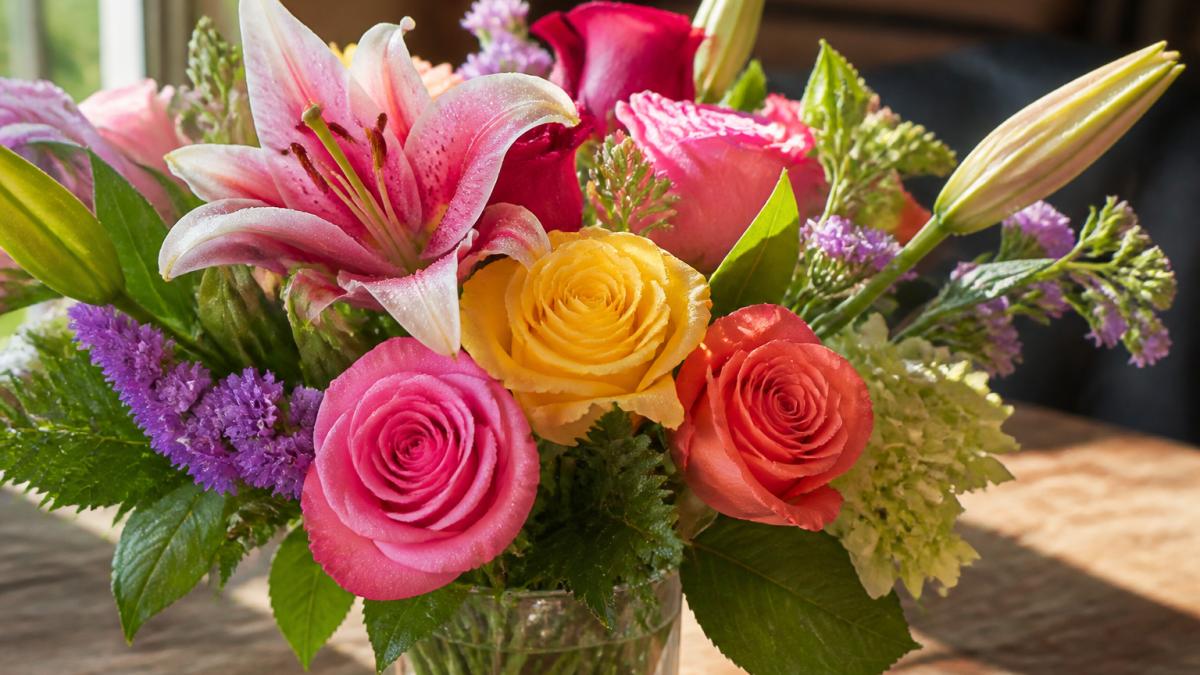
Close-up of a vibrant mixed birthday bouquet with roses, lilies, and seasonal flowers in a clear glass vase, showing fresh blooms with water droplets and morning light streaming across petals

Consider the recipient’s personality and preferences. Bright, bold colors like deep reds, oranges, and purples suit people who love attention and energy. Soft pastels, blush pink, pale yellow, lavender, work better for someone who prefers understated elegance. If you’re unsure, a mixed arrangement combining multiple colors and flower types is always safe.

Sunflowers convey cheerfulness and optimism, making them perfect for someone who radiates positivity. Gerbera daisies come in nearly every color imaginable and feel youthful and fun. Roses remain the most recognizable choice and work for any age or relationship. Lilies add drama and sophistication to any arrangement.

The seasonal availability of flowers affects both quality and cost. Spring and summer offer the widest selection of fresh flowers for birthdays. Winter arrangements may rely more on imported varieties or greenhouse blooms, which are still beautiful but sometimes less abundant.

Pro Tip
Ask your florist what’s at peak freshness when you order. A bouquet made with flowers at their prime will last longer and look more vibrant than one made with flowers that are past their peak, even if the second option includes your preferred variety.

Same-Day Birthday Flower Delivery: What You Need to Know

Same-day delivery for birthday flowers is possible, but it requires understanding the logistics and planning accordingly. Most florists, including An English Garden, offer same-day delivery when you order early enough in the day. The exact cutoff time varies, but ordering before noon gives you the best chance of same-day service.

Same-day delivery works because local florists design arrangements on-demand rather than pre-making them. When you place an order in the morning, your florist has time to source the freshest flowers available that day, arrange them with care, and deliver them before evening.

Delivery areas matter significantly. Florists typically serve their immediate region and surrounding communities. An English Garden delivers to over 30 cities each day, which means same-day service is reliable within that service area. If the birthday person lives outside the service zone, same-day delivery may not be possible, though next-day delivery usually is.

The delivery window for same-day orders is typically broader than scheduled deliveries. You might request “sometime this afternoon” rather than a specific hour. If you need flowers to arrive at a particular time, say, before a birthday dinner, order a day in advance and request a specific delivery window. Same-day orders are handled on a first-come, first-served basis, so timing is less guaranteed.

Watch Out
Ordering same-day flowers close to closing time risks your arrangement being made hastily or not being delivered until the next day. If the birthday person is celebrating in the evening, order before mid-morning to ensure arrival during daylight hours.

How Long Do Fresh Flowers Last After Delivery

Most fresh flowers last between 7 and 14 days after delivery, depending on the varieties included, how they’re handled after arrival, and the conditions where they’re displayed.

Freshness at delivery is the single biggest factor in longevity. Local delivery, like what An English Garden provides within its service area, means flowers spend minimal time in transit and arrive in peak condition.

Temperature and humidity during shipping affect freshness dramatically. Flowers are sensitive to heat, cold, and dehydration. When you order from a local florist, this journey is hours, not days, which preserves the flowers’ lifespan significantly.

The condition of the flowers when they arrive matters too. Look for petals that are fully opened but not browning at the edges, stems that are firm and green (not mushy or discolored), and leaves that are vibrant and turgid. If flowers arrive damaged or with wilted petals, contact your florist immediately. Most reputable florists offer replacement guarantees for flowers that don’t arrive in excellent condition.

How to Make Cut Flowers Last Longer: Care Tips That Work

Proper care after delivery extends the vase life of fresh flowers significantly. The most important steps are simple: trim the stems, change the water frequently, and keep the arrangement away from heat and ripening fruit.

Trim about an inch off the bottom of each stem at a 45-degree angle using a sharp knife or floral scissors. This increases the surface area for water absorption and removes any stem tissue that may be blocked or damaged. Trim the stems every few days as you refresh the water.

Get Started Today →

Change the water completely every two to three days. Don’t just top it off, empty the vase, rinse it thoroughly, and refill it with fresh, cool water. As flowers drink and decay, bacteria and debris accumulate in the water. Stale water is one of the main reasons cut flowers wilt prematurely.

Remove any leaves that would sit below the waterline. Submerged foliage decays and introduces bacteria into the water, shortening the life of the entire arrangement. Strip leaves from the lower portion of each stem before placing it in the vase.

Keep the arrangement in a cool location, away from direct sunlight, heating vents, and ripening fruit. Sunlight accelerates the aging process in flowers, as does warmth. A spot on a side table in a cool room is ideal. Ripening fruit emits ethylene gas, which causes flowers to age rapidly.

Pro Tip
If your vase came with a packet of flower food, use it. Flower food contains nutrients and biocides that extend vase life.

Ordering Flowers Online: Pricing, Delivery Areas, and What to Expect

Ordering fresh flowers for birthdays online offers convenience and the ability to browse arrangements before committing. Most florists, including An English Garden, maintain secure 24-hour online ordering so you can place your order whenever it’s convenient for you.

When you order online, you’ll typically select a bouquet style, choose any add-ons like chocolates or a greeting card, provide delivery details, and pay. The process takes just a few minutes. Pricing depends on the arrangement size, the specific flowers included, the season, and your delivery location. Delivery fees vary based on distance and local service area. For current pricing and to confirm delivery availability to your recipient’s location, visit An English Garden’s website or contact them directly.

Delivery areas are defined by the florist’s operational range. An English Garden delivers to over 30 cities each day, covering a substantial service area. Before ordering, confirm that the recipient’s address falls within the delivery zone. If they live outside the service area, ask about next-day delivery options or whether a partner florist in their region can fulfill the order.

When you order online, you’ll receive a confirmation email with your order details. Many florists provide tracking information or a delivery confirmation once the arrangement has been delivered. Some offer optional delivery notifications so you know exactly when the flowers arrive.

Best For
Online ordering works best for birthdays you plan in advance or remember the day before. For same-day orders, a quick phone call to confirm availability and delivery time is often faster than navigating the website, especially during busy seasons.

Pairing Flowers with Birthday Gifts and Personal Messages

Fresh flowers are beautiful on their own, but they’re even more meaningful when paired with a personal message or a complementary gift. A handwritten birthday card tucked into the arrangement adds warmth that a generic message can’t match.

Pairing flowers with a small gift creates a more complete present. Chocolates are a traditional pairing, the sweetness complements the beauty of the flowers. An English Garden offers a wide selection of unique gifts including plants, gourmet baskets, and home decor, so you can build a complete gift package that feels thoughtful and complete.

For someone who loves coffee or tea, pair flowers with a specialty blend or a beautiful mug. For someone who enjoys reading, add a book or a literary candle. For someone who gardens, include a small plant or gardening tool. The pairing should reflect something you know about them.

A personal message elevates the entire gift. Instead of a generic “Happy Birthday,” try something like: “Your kindness means everything to me. I hope your day is as bright as these flowers.” Or: “Thirty looks good on you.

The presentation matters too. Ensure the arrangement is displayed prominently where the birthday person will see it immediately. A bouquet hidden in a corner loses its impact. Ask the recipient to place it somewhere visible, on a dining table, entryway, or bedroom dresser, where they’ll enjoy it throughout the day and beyond.

Conclusion


Sending fresh flower delivery for birthdays is one of the most reliable ways to make someone’s day brighter. Whether you’re celebrating someone nearby or across the country, a thoughtfully chosen bouquet with proper care instructions will arrive fresh and last long enough to become part of their birthday memory.

At An English Garden, we’ve spent over 32 years perfecting the art of creating birthday arrangements that capture the joy of the occasion. Our 24-hour secure online ordering makes it easy to send flowers whenever you remember, and our delivery to over 30 cities each day means we can reach the people you care about. When you choose An English Garden, you’re choosing a local florist with the expertise to guide you toward the perfect arrangement and the commitment to deliver it fresh. Start browsing our birthday bouquets today, or call to discuss a custom arrangement tailored to the birthday person’s personality and preferences.

Frequently Asked Questions

Can you get fresh flower delivery for birthdays the same day?

Yes, same-day birthday flower delivery is available when you order before the cutoff time. Local florists offering same-day delivery typically require orders placed by mid-morning or early afternoon. Delivery windows vary by service area and day of the week. Contact your local florist directly to confirm same-day availability for your recipient’s location and confirm the exact delivery date and window.

How long do fresh flowers last after birthday delivery?

Fresh flowers typically last 7 to 14 days after delivery, depending on the flower variety and care. Proper care, including fresh water daily, removing lower leaves, and keeping flowers away from heat and direct sunlight, extends vase life significantly and keeps your birthday bouquet vibrant longer.

What are the best flowers to choose for a birthday bouquet?

Roses, lilies, sunflowers, and gerbera daisies are popular birthday choices because they’re colorful, long-lasting, and convey celebration. Roses symbolize love and appreciation, lilies add elegance and fragrance, sunflowers bring cheerful energy, and gerberas offer bold, playful colors. Mixed arrangements combining several varieties create visual interest and extend the overall bouquet lifespan. Consider the recipient’s favorite colors and whether they prefer fragrant or non-fragrant flowers.

How can I keep a birthday bouquet fresh longer?

Change the water every two days and re-cut the stems at a 45-degree angle before placing flowers back in the vase. Remove any leaves that sit below the waterline to prevent bacterial growth. Keep the bouquet away from ripening fruit, direct sunlight, heating vents, and drafts. Use flower food if provided. These steps significantly extend freshness and keep your birthday flowers vibrant throughout their vase life.

Posted on — Leave a comment

Corporate Flower Delivery for Offices: A Strategic Guide

Table of Contents

Last Updated: October 19, 2026

Why Corporate Flower Delivery Matters for Your Business

Corporate flower delivery transforms how businesses communicate appreciation, celebrate milestones, and shape their professional environment. Fresh flowers in an office create immediate visual impact, they signal that your company cares about aesthetics, employee morale, and client relationships. This isn’t decoration for decoration’s sake. The presence of living plants and flowers in workspace environments influences how people perceive your business and how they feel while working there.

Corporate flower arrangements serve a strategic purpose. They’re a tangible expression of company values. When a client walks into your reception area and sees fresh, professionally designed flowers, they form an impression before a single word is spoken. That matters.

The real advantage of corporate flower delivery lies in consistency and reliability. Rather than scrambling to find flowers for client appreciation moments or company events, a dedicated floral partner handles the details. Same-day delivery options mean you’re never caught unprepared. Subscription services ensure your office maintains that professional, welcoming appearance throughout the year, no gaps, no wilting arrangements sitting in a corner.

Office Flower Delivery: Creating a Professional First Impression

Your reception desk is the first thing visitors see. An arrangement placed there communicates professionalism, attention to detail, and warmth. Office flower delivery services ensure that space always reflects your brand’s best self.

Fresh flowers in high-traffic areas, reception desks, conference rooms, break rooms, create psychological shifts in how people experience your space. They soften the corporate environment. They give employees something pleasant to look at during stressful moments. They signal that leadership thinks about the human experience, not just the bottom line.

When you partner with a local florist for office flower delivery, you get design consultation. Professionals understand color psychology, seasonal availability, and what arrangements work in different lighting conditions. A florist who knows your office space can recommend arrangements that complement your décor and fit your layout. They’ll suggest sizes that work in narrow hallways versus open floor plans. They’ll account for whether your reception area gets natural light or relies on artificial lighting.

Same-day delivery becomes a practical advantage when you need flowers for an unexpected client visit or last-minute event. Working with a local provider means you can call in the morning and have arrangements ready by afternoon. That reliability builds trust with your team.

Corporate Flower Arrangements for Client Appreciation

Client appreciation moments require thoughtful execution. A generic bouquet feels impersonal. A professionally designed arrangement shows you’ve invested thought and care into recognizing the relationship.

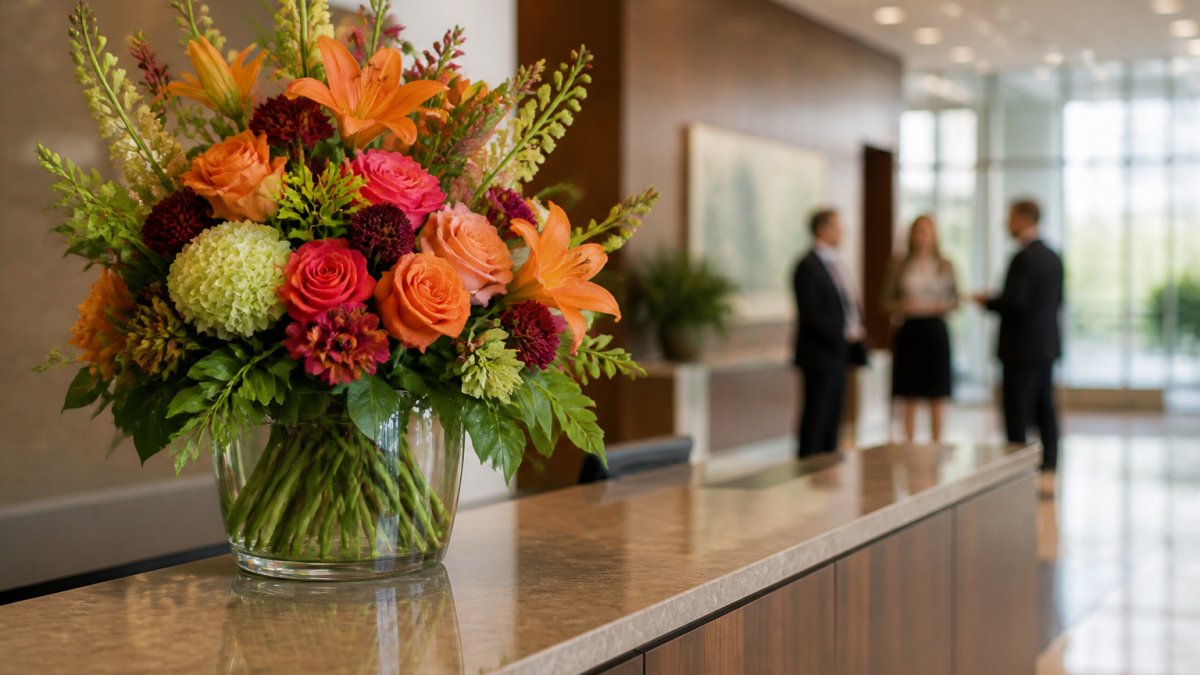
Professional office reception desk adorned with vibrant floral arrangement featuring mixed seasonal blooms in warm tones, with blurred business professionals meeting in background

Corporate flower arrangements for client appreciation work best when they’re customized to reflect your client’s preferences or your company’s brand colors. A florist can create arrangements that incorporate your company’s palette or use flowers that align with your industry. Tech companies might prefer modern, minimalist designs. Creative agencies might choose bold, artistic arrangements. The arrangement itself becomes a conversation starter and a physical reminder of your relationship.

Timing matters with client appreciation flowers. Sending an arrangement when a client closes a major deal, hits a milestone, or celebrates a business anniversary shows attentiveness. It’s more memorable than a generic email. An English Garden can coordinate delivery to your client’s office or directly to their home, depending on what feels appropriate for your relationship. That flexibility means you’re not limited to standard delivery windows.

Bulk orders for multiple clients become manageable when you have a dedicated partner. Rather than sourcing individual arrangements from different vendors, you can place one order with consistent quality across all recipients. Your clients receive matching professional presentations. Your team saves time coordinating multiple vendors.

Corporate Flower Subscriptions: Consistent Beauty Year-Round

A corporate flower subscription service solves the problem of maintaining fresh arrangements without constant effort. Instead of remembering to order flowers or letting your office environment deteriorate between orders, a subscription ensures regular delivery on a schedule that works for your business.

Weekly or bi-weekly deliveries keep your reception area, conference rooms, and executive offices continuously refreshed. Seasonal flowers rotate automatically, spring tulips give way to summer roses, then fall chrysanthemums and winter evergreens. Your space always reflects the current season without you having to think about it.

Subscription services also provide budget predictability. Instead of sporadic, unplanned expenses, you know exactly what you’re spending each month. That makes it easier to justify the investment to finance teams and to plan annual budgets.

Customization within a subscription model means you’re not locked into one arrangement style. You can request different designs for different spaces, perhaps a bold statement arrangement for your main reception area and smaller, understated designs for individual offices. You can adjust frequency based on the season or upcoming events. If you’re hosting a major client event, you can increase delivery frequency that month. During slower periods, you can scale back.

Corporate Flower Gifts for Clients and Employee Recognition

Flowers work as corporate gifts because they’re meaningful without being presumptuous. They acknowledge achievement or celebrate relationships without crossing professional boundaries. A beautifully designed arrangement says “we notice your contribution” or “we value this partnership.”

Employee recognition moments, promotions, work anniversaries, project completions, deserve acknowledgment beyond a verbal thank you. An arrangement delivered to an employee’s desk shows leadership recognizes individual effort. It’s visible to their colleagues. It creates a positive moment in their workday. That public recognition matters for team morale and retention.

For client recognition, corporate flower gifts work particularly well around relationship milestones. When you’ve worked with a client for five years, an arrangement delivered with a handwritten note creates a memorable moment. When closing a significant deal, flowers celebrate the partnership in a way that feels genuine rather than transactional.

Customized arrangements for corporate gifting can include branded elements, a card with your company logo, flowers in your brand colors, or a design that reflects your industry. An English Garden can coordinate these details so the gift feels intentional and professional. Delivery to your client’s office, their home, or a neutral location can be arranged based on what feels appropriate.

Bulk gifting programs work well for seasonal appreciation, holiday arrangements for your top clients, spring flowers for team members after a successful quarter. When you’re managing multiple gifts at once, having one trusted partner handle design, production, and delivery eliminates coordination headaches.

Maintaining Fresh Flowers in Your Office: Best Practices

Fresh flowers require basic care to maintain their appearance and longevity. Understanding these practices ensures your investment looks good throughout its lifespan.

Get Started Today →

Change the water every two to three days. Remove the arrangement from its vase, rinse the vase thoroughly, and refill with fresh, room-temperature water. This prevents bacterial growth that shortens flower lifespan. When you change the water, trim the stems at a 45-degree angle using sharp scissors or a floral knife.

Remove any leaves that fall below the water line. Submerged leaves decay and promote bacterial growth. Keep flowers away from direct sunlight, heating vents, and ripening fruit. Sunlight fades petals. Heat dries them out. Ethylene gas from ripening fruit accelerates wilting. A cool location with indirect light extends bloom time significantly.

Most fresh arrangements last seven to ten days with proper care. Some flowers, like roses and carnations, last longer. Others, like tulips and daisies, fade faster. Your florist can advise on expected lifespan when delivering your arrangement. If your office maintains consistent temperature and humidity, flowers last toward the longer end of that range.

For corporate flower subscriptions, your delivery partner typically handles removal of previous arrangements and setup of new ones. That removes the maintenance burden from your team. You get fresh flowers without the work. If you’re maintaining arrangements yourself, spending five minutes every few days on water changes and stem trimming pays dividends in appearance and longevity.

Planning Corporate Events with Professional Floral Design

Event florals require strategic planning beyond standard office arrangements. The scale changes. The design must work within the event space. Flowers become part of the overall aesthetic rather than accent pieces.

Professional floral design for corporate events starts with understanding your vision and your venue. A florist assesses lighting, identifies focal points, and understands traffic flow. They recommend arrangement sizes, placement, and design styles that work within those constraints. A conference room with eight-foot ceilings needs different proportions than a ballroom with twenty-foot ceilings.

Color coordination matters at events. Florals should complement your décor, not compete with it. If your event features a specific color palette, your florist sources flowers that fit that scheme. If you’re hosting a client appreciation dinner with a particular theme, flowers reinforce that theme. They become part of the storytelling rather than random decoration.

Quantity planning prevents both shortages and waste. A florist calculates how many arrangements you need based on venue size, guest count, and focal points. They recommend distribution, perhaps a statement arrangement on the registration table, smaller arrangements on dining tables, and accent pieces in lounge areas.

Timing coordination ensures flowers arrive fresh and ready. An English Garden can coordinate delivery and setup on your event day. Rather than your team managing logistics, professionals handle placement and any last-minute adjustments. That frees your team to focus on other event details.

Budgeting and Sourcing Sustainable Corporate Flowers

Corporate flower budgets require thoughtful allocation. Understanding costs helps you maximize impact within your constraints.

Corporate flower delivery costs vary based on arrangement size, complexity, flower types, delivery distance, and frequency. Seasonal flowers cost less than out-of-season imports. Roses and carnations are typically more affordable than specialty flowers like peonies or orchids.

When budgeting for corporate flowers, consider both direct costs and value. A modest arrangement delivered consistently throughout the year influences office morale and client perception. That’s worth the investment. Occasional large arrangements for major events create memorable moments. Monthly subscriptions for reception areas establish professional environment standards.

Sustainability in floral sourcing matters increasingly to businesses and clients. Sourcing flowers grown locally or regionally reduces transportation emissions. Seasonal blooms require less energy than forcing out-of-season flowers.

Asking your florist about sourcing practices shows clients and employees that your company cares about environmental impact. Flowers grown sustainably, delivered locally, and arranged to last longer represent a more responsible choice. That alignment between values and action strengthens your brand reputation.

Tax deductibility of corporate flowers depends on how they’re classified. Flowers used for client entertainment or employee appreciation may qualify as business expenses. Flowers for your office environment may be deductible as office supplies or décor. Consult with your accounting team about proper classification for your specific situation.


Corporate flowers aren’t a luxury, they’re a strategic investment in how your business communicates. Whether you need same-day delivery for an unexpected client visit, consistent subscriptions for your office environment, or comprehensive event florals for a major gathering, we have the expertise and capacity to handle your corporate account.

Frequently Asked Questions

What flowers are best for an office environment?

Choose flowers and plants that thrive indoors with moderate light and minimal maintenance. Orchids, lilies, roses, and sunflowers are popular for corporate flower arrangements because they last longer and create a polished appearance. Foliage plants like ferns and philodendrons add greenery without requiring frequent water changes. Ask your corporate flower delivery provider about low-maintenance options suited to your office’s lighting conditions. Avoid heavily scented flowers if your office has people with sensitivities.

How often should we schedule office flower delivery?

Most businesses benefit from weekly or bi-weekly office flower delivery to maintain a fresh, professional appearance. The frequency depends on your office environment, foot traffic, and budget. High-traffic reception areas may need weekly refreshes, while conference rooms might look fresh with bi-weekly deliveries. Corporate flower subscriptions allow you to set a consistent schedule that keeps your space vibrant without requiring manual ordering each time. Discuss your specific needs with your florist to determine the optimal frequency.

Can corporate flower delivery handle bulk orders for events?

Yes, professional florists specializing in corporate flower delivery can manage bulk orders for events, conferences, and large-scale client appreciation initiatives. They work with you to design custom bouquets, centerpieces, and event floral arrangements that align with your brand and budget. Ordering in advance (typically 2-3 weeks) ensures availability and allows time for consultation on design preferences. Experienced florists can coordinate delivery timing and placement for seamless event execution.

Are corporate flower arrangements tax deductible?

Floral arrangements purchased for business purposes, such as client appreciation gifts, office decor, or event florals, may be deductible as business expenses under IRS guidelines. They typically fall under advertising, client relations, or employee recognition categories. However, tax deductibility depends on your business structure and the specific use of the flowers. Consult your accountant or tax professional to confirm eligibility and proper documentation for your corporate flower delivery purchases.

Posted on — Leave a comment

Flower Delivery to Tinley Park IL: How to Order

Table of Contents

Last Updated: October 19, 2026

How Flower Delivery to Tinley Park IL Works

Flower delivery to Tinley Park IL is a same-day or scheduled service where a local florist designs an arrangement, then hand-delivers it to a home, hospital, funeral home, or business inside the delivery area.

Here’s the part most guides skip. The arrangement is only half the order.

A florist in a bright local flower shop wrapping a fresh bouquet in kraft paper, with buckets of seasonal stems and a delivery van visible through the front window

What You’ll Need Before You Order

Have four things ready and your order takes minutes instead of a phone call:

  • Recipient’s full name as it appears on the hospital or funeral home record
  • Complete delivery address, including apartment, suite, or room number
  • A phone number for the recipient or the facility’s front desk

The phone number matters more than people think. If the recipient isn’t home, that number is how we resolve the delivery instead of leaving flowers on a porch.

Step-by-Step: Ordering Online or by Phone

Ordering online takes about five minutes; ordering by phone takes about ten and gets you design advice. Both work. Choose based on how much help you want.

Ordering online:

  1. Browse the bouquet and arrangement selection by occasion or budget.
  2. Choose your size and any add-ons, like a vase or a plant.
  3. Enter the delivery address, date, and a card message.
  4. Add special instructions: gate codes, “leave with the neighbor,” hospital floor.
  5. Pay and save your confirmation number.

Ordering by phone:

  1. Call during store hours and describe the occasion and budget.
  2. Ask what’s freshest that day. A good florist will tell you honestly.
  3. Confirm the delivery address and date out loud.
  4. Get your order total read back to you, fees included.

A common mistake is ordering a sympathy arrangement without confirming the service time. Funeral homes schedule viewings in blocks, and flowers that arrive after the family has left sit in a back room.

Same-Day Flower Delivery Tinley Park IL: Cutoffs and ZIP Eligibility

Same-day flower delivery Tinley Park IL orders depend on two things: the time you order and whether the address sits inside the daily delivery area. Every florist has a cutoff, and once it passes, your order rolls to the next day. The exact cutoff varies by shop and by day, so the safest move is to call and confirm before you assume.

How the Same-Day Cutoff Actually Works

Orders that miss the cutoff roll to the next day’s route. Weekends and holidays often carry earlier cutoffs because order volume spikes and the route fills up. Rather than assume a cutoff, confirm the current one when you order, and treat these windows as a planning guide:

Order Timing What to Expect Best Move
Morning order Strongest same-day chance Order before late morning
Early afternoon Often still same-day Call to confirm, don’t assume
Late afternoon Usually next-day Ask about a morning delivery
Weekend or holiday Earlier cutoffs Order a day ahead

A practical rule: if the occasion has a hard deadline, order before the cutoff and ask the shop to confirm the order is on today’s route. A confirmation number plus a route confirmation is stronger than a confirmation number alone.

ZIP Eligibility and Address-Level Coverage

ZIP eligibility matters because delivery areas are drawn by route, not by municipal boundary. A shop may deliver to most of the local ZIP codes but skip addresses on the edge of the map where the drive time doesn’t fit the route.

When you call, have these ready so the answer is immediate:

  • The full street address, including apartment, suite, or room number
  • The ZIP code
  • The delivery date and whether it’s time-sensitive

If the address falls outside the daily route, ask two questions: whether a next-day delivery is available, and whether a small trip charge applies for the out-of-route address. Getting both answers up front avoids a surprise at checkout.

Pro Tip
If you’re sending to an address near the edge of the delivery area, call rather than order online. A phone confirmation on ZIP eligibility is faster than discovering the address doesn’t qualify after you’ve paid.

What Changes Same-Day Eligibility

Three things move an order out of the same-day window even when you beat the cutoff: an address that needs a gate code or building approval, a hospital or funeral home that requires the patient’s room number or the family’s name on the card, and a holiday route that’s already full. In each case the fix is the same: give the shop the details at order time so the driver isn’t solving a puzzle at the door.

Next-Day Flower Delivery Tinley Park IL: When to Schedule

Next-day flower delivery Tinley Park IL is the safer choice for anything with a hard deadline: birthdays you can’t miss, anniversaries, or a hospital delivery that needs to arrive before discharge.

Schedule next-day when:

  • You’re ordering after the same-day cutoff
  • The recipient lives in an apartment or gated community
  • The delivery goes to a business and needs to arrive during office hours

One insider note: next-day orders placed with a real time window beat same-day orders placed in a rush. If the date is flexible by 24 hours, you get a better arrangement and a calmer delivery.

Sympathy Flowers Tinley Park IL: Hospitals and Funeral Homes

Sympathy flowers Tinley Park IL deliveries follow stricter rules than home deliveries, and that’s for good reason.

Get Started Today →

For hospitals, confirm three details before ordering: whether the facility accepts flower deliveries at all, the patient’s room number, and whether the patient is still admitted.

For funeral homes, call the funeral home directly and ask for the service times and the family’s name as it should appear on the card.

Pro Tip
Ask the funeral home whether the family requested “in lieu of flowers” donations. If they did, a plant or a gourmet basket sent to the family’s home is often the more thoughtful choice.

Choosing Bouquets and Occasion Flowers by Budget

Bouquet selection comes down to three variables: occasion, color, and budget. Get those right and the specific stems matter less than you’d think.

  • Birthday flowers: bright, mixed, and cheerful. Modern arrangements with seasonal color work for almost anyone.
  • Anniversary flowers: roses, or a stylish bouquet in the recipient’s favorite palette.
  • Sympathy flowers: soft, muted, and understated. White and green arrangements read as respectful.

On budget, most florists offer a price range from budget options to larger statement pieces, and pricing depends on stem count, vase, and season. Ask what fits your number rather than picking a design and hoping. A well-designed smaller bouquet beats a stretched large one every time.

Watch Out
Don’t judge an arrangement by the photo alone. Ask what’s in season locally that week. Out-of-season stems cost more and arrive less fresh, so a seasonal substitution often looks better than the original design.

Delivery Fees, Taxes, and Total Checkout Cost

Total checkout cost is the arrangement price plus a delivery fee plus applicable sales tax, and the delivery fee is the line most people forget to check. The gap most florist pages leave open is how that fee is actually set, so here’s the mechanism behind the number.

How the Delivery Fee Is Set

A local shop’s delivery fee is usually built from three inputs: distance from the shop to the address, the type of delivery (home, hospital, funeral home, or business), and the date. Holiday routes cost more because the route is longer and the window is tighter. Out-of-route addresses on the edge of the delivery area may carry a small trip charge.

What Moves the Total Up or Down

  • Arrangement size and stem count: the single biggest driver of the arrangement price
  • Vase or container: a vase add-on is a separate line, not included by default
  • Seasonal stems: out-of-season flowers cost more and arrive less fresh

How to Compare Quotes Fairly

Headline prices between shops aren’t comparable because they bundle different things. Compare the delivered total for the same arrangement size, the same address, and the same date. Ask each shop to itemize four lines before you pay:

  • Arrangement price and size
  • Delivery fee, itemized
  • Applicable sales tax

If a total looks higher than expected, ask for a breakdown. A reputable florist will itemize without hesitation. Pricing depends on the arrangement, the delivery distance, and the date, so get a quote for your specific order rather than comparing headline prices between shops.

Watch Out
A low headline arrangement price can hide a higher delivery fee or a vase charge added at checkout. The number that matters is the delivered total, not the arrangement price on the product page.

Reducing the Total Without Cutting Quality

Three levers lower the delivered cost without shrinking the flowers: order a day ahead so you’re not paying for a rush window, choose seasonal stems over out-of-season imports, and send to an address on the standard route rather than the edge of the delivery area. A well-designed seasonal bouquet at a mid-range price usually reads as more generous than a stretched large arrangement built from expensive imports.

Key Takeaway
Ask for the delivered total, itemized, before you pay. The arrangement price is only one line, and the delivery fee plus tax is where surprise costs hide.

Troubleshooting: Recipient Not Home and Wrong Address

A recipient who isn’t home is the most common delivery problem, and it’s usually solvable. The florist calls the number on the order, tries a neighbor or building office, or leaves the arrangement in a safe spot if instructed.

Wrong addresses are harder. Once a driver is en route, a correction may not be possible the same day. The fix is prevention: read the address back, confirm the ZIP code, and include the apartment or room number.

Key Takeaway
The single best thing you can do for a smooth delivery is give a working phone number for the recipient. It resolves more problems than any other detail on the order.

What to Expect From a Local Florist

A local florist designs, packs, and hand-delivers the arrangement, which means one team owns the whole order. We also handle wedding and event design with on-site decorating, plus plants, gourmet baskets, and corporate accounts.

If the date is tight or the address is unusual, call us and we’ll tell you honestly what’s possible. Order online or by phone, and we’ll confirm the details before anything leaves the shop.

Frequently Asked Questions

Can I get same-day flower delivery in Tinley Park?

Same-day flower delivery is usually available if you order early enough in the day, but the cutoff depends on the florist’s schedule and the delivery ZIP code. Order by phone or online in the morning to give the shop time to design and hand-deliver the arrangement. If you’re ordering later, ask whether next-day delivery is the safer option so the flowers arrive fresh rather than rushed. Confirm the cutoff time when you place your order.

What information do I need to provide for a flower delivery?

Have the recipient’s full name, street address, ZIP code, and a phone number ready. Include the delivery date you want, the occasion, and any card message you’d like written. For hospitals or funeral homes, add the recipient’s room number or the name of the service and the time it starts, since staff need that to route the arrangement correctly. Special instructions, like gate codes or a preferred drop-off spot, help the driver complete the delivery without delays.

What should I do if the recipient is not home?

Most florists will attempt the delivery and leave the arrangement in a safe spot or with a neighbor if the recipient isn’t home, depending on weather and building rules. Some shops call ahead to confirm someone will be there. If you know the recipient will be out, tell the florist when you order and give an alternate contact or a preferred delivery window. For apartment buildings, a front-desk or leasing office drop-off is often the most reliable option.

How far in advance should I order flowers for delivery?

For everyday occasions, ordering one to two days ahead gives the shop time to source the stems and design the arrangement. For holidays like Valentine’s Day or Mother’s Day, order at least a week ahead because delivery slots fill quickly. Weddings and large events need weeks or months of planning. If you need same-day delivery, call early in the morning and confirm the cutoff for your recipient’s ZIP code before you check out.


Flowers on a deadline only work when the logistics are handled by someone who knows the route. If you’re sending to a hospital, a funeral home, or a home in the area and you need it to arrive on the right day, let An English Garden take the order. Our team offers same-day and scheduled delivery, personalized help with sympathy arrangements, and secure online ordering you can complete in minutes. Get started with An English Garden and send flowers that arrive when they matter.

Posted on — Leave a comment

How to Choose a Wedding Florist in Mokena: 7 Steps

Table of Contents

Last Updated: October 18, 2026

Start With Your Wedding Flower Budget

The first step in how to choose wedding florist Mokena couples can trust is setting a realistic budget before you call anyone. Flowers are one of the most flexible wedding line items, and a clear number keeps every later decision grounded.

Most couples underestimate how many separate pieces they order. Your floral budget covers far more than a bridal bouquet:

  • Personal flowers: bridal bouquet, bridesmaid bouquets, boutonnieres, corsages
  • Ceremony flowers: altar pieces, aisle markers, arch or chuppah flowers
  • Reception flowers: centerpieces, head table garland, bar and cake accents
  • Extras: delivery, setup, breakdown, and any installation labor

At An English Garden, we have designed weddings in this area for more than three decades. Couples who arrive with a firm total and a short priority list get better proposals than couples who start with a Pinterest board and no ceiling.

What Drives the Cost of Wedding Flowers

Several factors move your total up or down:

  • Flower varieties. In-season blooms cost less than flowers shipped in from far away.
  • Quantity and scale. Tall centerpieces use more stems than low ones; a 20-table reception multiplies everything.
  • Labor and design time. Complex installations and hanging pieces take hours of skilled work.
  • Delivery and setup. Venues with tight load-in windows or long distances add logistics cost.

Pricing depends on quantity, dates, and delivery, so we quote each wedding individually. Ask any florist for a quote built around your actual date and guest count, not a package flyer.

Asking for an Itemized Quote

An itemized quote is a written breakdown listing each arrangement, its size, stem count or scale, and every fee separately, the best protection against surprise costs.

Ask for delivery, setup, labor, and breakdown fees as separate lines. Compare those lines across florists, not just the bottom total. A lower total often hides a design fee or a delivery charge that appears later.

Pro Tip
Ask whether the quote includes breakdown and removal after the reception. Some florists charge for returning to strike the room, and that fee can arrive as an unwelcome surprise on your final invoice.

Build a Wedding Florist Booking Timeline

A wedding florist booking timeline keeps you from losing your first-choice designer to another couple. Popular dates fill early, so the calendar matters as much as the design, but only if it is tied to contract milestones and venue deadlines.

Here is the timeline we recommend:

  1. 9-12 months out: Set your budget, gather inspiration photos, and shortlist florists. Confirm each one serves your venue and date before investing time in a consultation.
  2. 8-10 months out: Book consultations and request written proposals with itemized lines, not verbal estimates.
  3. 6-8 months out: Sign the contract and pay the booking deposit. Read the deposit and cancellation terms first, because this step locks your date.
  4. 3-4 months out: Finalize the design plan and quantities, and confirm rental items (vases, arches, candelabras) and who returns them.
  5. 4-6 weeks out: Lock in the final count and any substitutions. Confirm the substitution policy in writing so you know what the florist may swap and when they will notify you.
  6. 1-2 weeks out: Confirm delivery times, setup windows, and venue access with the florist, venue coordinator, and anyone handling breakdown.

Contract Milestones That Drive the Timeline

The dates above only work if you understand the contract terms behind them. Ask every florist to spell out:

  • Booking deposit: How much is due to hold the date, and is it refundable or applied to the final balance?
  • Payment schedule: When is the balance due, and are there interim payments?
  • Cancellation and postponement terms: What happens to the deposit if you cancel or move the date, and how close to the wedding can you change the date?
  • Change orders: How are design changes after signing priced, and is there a deadline for final changes?

Couples often focus on the design proposal and skim the contract, but operational terms are where surprises live. Read them alongside the design.

Peak Season and Local Venue Timing

Peak wedding season compresses this schedule. If your date falls in a busy month, move every step earlier. Availability is the one thing a florist cannot manufacture, so book before you fall in love with a design you cannot secure.

Venue access windows add a second calendar. Some venues allow floral setup only in a narrow morning window or require load-in through a service entrance with limited parking.

Pro Tip
Put the venue’s access window, load-in location, and setup deadline in writing and share them with your florist before signing. A timeline that ignores venue rules is a timeline that fails on the wedding morning.
Watch Out
Do not assume the deposit is refundable. Ask directly, in writing, before you pay it. The deposit is usually the point where the date becomes yours and other couples are turned away.

Review Portfolios and Local Reviews Before You Call

Portfolios and reviews tell you two different things, and you need both. A portfolio shows design range; reviews show how a florist operates when things get complicated.

Look for full weddings rather than single hero shots.

For reviews, read the three-star and four-star comments first. They usually describe communication and logistics honestly.

We keep our own wedding work and customer feedback visible so couples can judge the fit before they pick up the phone.

Watch Out
Do not book based on a social media feed alone. Curated grids hide the ordinary weddings, and the ordinary ones are the best predictor of what your event will actually look like.

Wedding Florist Consultation Questions to Ask

The best wedding florist consultation questions uncover how a designer thinks, not just what they charge. Bring a written list and take notes.

Get Started Today →

A couple sitting across a table from a florist in a bright flower shop, pointing at inspiration photos on a tablet while a bridal bouquet sample sits between them

Questions About Design and Substitutions

Design questions reveal whether the florist listens or steers you toward their own preferences:

  • How would you translate these inspiration photos into my color palette?
  • Which flower varieties are in season on my wedding date?
  • What happens if a specific flower is unavailable? How do substitutions work?
  • Can I see a sample of the bridal bouquet before the wedding?

Substitutions deserve a direct answer. Every florist substitutes sometimes, and good ones explain the process up front: what they swap, when they notify you, and how they match color scheme and style.

Questions About Day-of Logistics

Logistics questions protect the wedding day itself:

  • What time will you deliver and set up, and does that fit our venue’s access window?
  • Do you handle installation for arches, hanging pieces, and large arrangements?
  • Who is our point of contact on the wedding day?
  • What is your plan if a delivery is delayed?

Venue logistics matter more than most couples expect. Ask whether the florist has worked at your venue and how they handle load-in, parking, and setup timing. A designer who knows the room plans around its quirks.

What a Good Wedding Flower Proposal Includes

A strong wedding flower proposal is a complete written plan, not a price list. It should let you picture the day and check every number.

Look for these elements:

  • A design summary describing style, color palette, and arrangement scale
  • An itemized list of every piece, with sizes and quantities
  • Photos or references showing the proposed look
  • A line-by-line breakdown of delivery, setup, labor, and design fees

Read the contract terms closely: the deposit amount, when the balance is due, and what happens if you reduce your guest count. Operational details cause more disputes than design disagreements.

Key Takeaway
The proposal should answer every question you would ask on the wedding day. If a line is vague, ask for it in writing before you sign.

Match Flowers to Your Wedding Style and Venue

Your wedding style and venue should shape the flowers, not the other way around. A design that ignores the room looks borrowed, and a palette that ignores the season costs more than it should.

Start with the venue’s physical constraints, then choose the style:

  • Access and load-in: Ask where the florist can bring in materials, how far the carry is from parking, and whether freight elevators or service doors are required. Long carries and tight doors add labor time and cost.
  • Installation restrictions: Some venues prohibit hanging pieces, open flames, or attaching anything to walls and ceilings. Confirm what is allowed before you fall in love with a suspended installation.
  • Room flips: If the ceremony room becomes the reception room, the florist needs a plan and time to move arrangements. Ask who moves them and whether that labor is in the quote.
  • Outdoor weather plans: For outdoor ceremonies, ask what happens to arrangements in wind, rain, or heat, and whether the florist provides a backup plan or holds the flowers until the last safe moment.

Then match the style to the room:

  • Classic and formal: roses, hydrangeas, and structured shapes suit ballrooms with tall ceilings and rich color.
  • Romantic and soft: garden roses, ranunculus, and trailing greenery suit garden settings and outdoor ceremonies.
  • Modern and minimal: single-variety arrangements and clean lines suit contemporary spaces with strong architecture.
  • Rustic and natural: wildflower-style mixes and in-season stems suit barns and outdoor venues with textured surroundings.

Build your palette around two or three anchor colors plus greenery. In-season blooms stretch the budget and arrive fresher. Bring inspiration photos, but stay open to the varieties your florist knows will perform best on your date.

Key Takeaway
Choose the venue constraints first, the style second, and the specific flowers third. A design that respects access, installation rules, and weather will look better on the day than one that only looks good in a photo.

Compare Mokena Wedding Florists With a Simple Checklist

A structured comparison turns a stressful choice into a short, clear decision.

Criterion What to Check Why It Matters
Experience Years serving the area, wedding portfolio depth Signals reliability under pressure
Portfolio fit Full weddings in your style and venue type Predicts your actual result
Reviews Recent local feedback, logistics mentions Shows how they operate
Proposal detail Itemized lines, fees, substitution policy Prevents surprise costs
Venue knowledge Familiarity with your venue’s logistics Smoother setup and timing
Responsiveness Reply time during planning Confidence on the wedding day
Contract terms Deposit, payment schedule, cancellation Protects your investment

Weight the criteria by what matters most. Planning from out of town? Responsiveness and venue knowledge carry more weight. Tight budget?

This is where local knowledge earns its place.


Choosing a wedding florist means balancing budget, design, logistics, and trust, and the couples who start early with a written checklist consistently get the smoothest results.

Frequently Asked Questions

How far in advance should you book a wedding florist?

Book six to nine months before the wedding date, and earlier if your date falls in peak wedding season or you are marrying at a popular venue. A wedding florist booking timeline that starts with a consultation around nine months out gives you time to review the wedding flower proposal, adjust the wedding flower budget, and lock in availability. If you are planning in under four months, call right away and ask what dates the shop can still take on.

What questions should you ask a wedding florist during a consultation?

Ask how they handle substitutions if specific blooms are unavailable, whether delivery, setup, and breakdown are included in the quote, and who installs ceremony and reception flowers on the day. Bring inspiration photos and your color palette. Also ask about their minimum spend for weddings and how far in advance they confirm final counts. These wedding florist consultation questions separate a clear proposal from a vague one.

How much should you budget for wedding flowers?

There is no single number, because a wedding flower budget depends on guest count, the number of personal flowers, arrangement scale, and how much installation your venue needs. Decide what percentage of your overall wedding spend you can commit, then ask for an itemized quote that separates flowers, labor, delivery, and setup. That breakdown lets you trim centerpieces or ceremony pieces without losing the bridal bouquet you care about.

What should a wedding flower proposal include?

A complete wedding flower proposal lists every item by name and quantity: bridal bouquet, bridesmaid bouquets, boutonnieres, centerpieces, ceremony flowers, and reception flowers. It should show per-item pricing, delivery and setup fees, the deposit amount, the balance due date, and a substitution policy. Ask for the proposal in writing and confirm which flowers are seasonal versus special order, so nothing changes quietly between signing and the wedding date.

Posted on — Leave a comment

Tips for Choosing Sympathy Flowers Online

Table of Contents

Last Updated: October 17, 2026

Understand Sympathy Flowers Etiquette Before You Order

Ordering sympathy flowers online requires thoughtfulness and care. You’re expressing condolences during someone’s most difficult time, so getting it right matters. Understanding basic etiquette helps you choose flowers that honor the deceased and comfort the bereaved family.

Sympathy flowers serve a specific purpose. They convey respect, support, and compassion when words feel insufficient. Different arrangements, colors, and flower types carry different meanings, and getting these details right shows genuine consideration.

Start by learning what the bereaved family expects. Some families welcome flowers freely. Others request donations to charity instead, or specify “no flowers” in obituary notices. Always check the funeral home’s website or call ahead to confirm their policies.

At An English Garden, we help families navigate these decisions with personalized guidance. Our team understands that choosing sympathy flowers isn’t just about picking something beautiful, it’s about selecting something meaningful for this specific loss.

Key etiquette points to remember:

  • Send flowers promptly (ideally within 2-3 days of learning about the death)
  • Choose fresh, quality arrangements over artificial flowers
  • Include a sympathy card with a personal message
  • Verify delivery address and timing before ordering
  • Consider the deceased’s personality and preferences when possible

Choose the Right Flowers to Send to a Funeral Home

The best sympathy flowers depend on your relationship to the deceased and the family’s preferences. White and soft-colored blooms are traditional choices for funerals because they symbolize peace, purity, and respect. However, the deceased’s favorite colors or flowers can make an arrangement more personal and meaningful.

Close-up of a sympathy flower arrangement with white lilies, roses, and soft-colored blooms in a clear vase on a polished wooden table with natural window lighting

Consider these factors when selecting an arrangement:

  • Your relationship: Close family members often send larger, more elaborate arrangements. Coworkers typically choose smaller, simpler bouquets.
  • The service type: Funeral services call for formal arrangements. Memorial services or celebrations of life may allow more colorful, personalized choices.
  • Family preferences: If you knew the deceased, choose flowers they loved. If not, soft colors are always appropriate.
  • Arrangement style: Standing sprays and wreaths work well for the funeral home. Bouquets and baskets suit family homes or hospital rooms.

Lilies are the most popular sympathy flower choice. White lilies symbolize rebirth and peace. They have a strong, recognizable presence in any arrangement and last several days in a vase.

Roses convey deep respect and admiration. White and cream roses are traditional for funerals, though soft pink roses also work well. Red roses are typically avoided for sympathy arrangements because they suggest romantic love.

Chrysanthemums represent truth, loyalty, and devotion. They’re affordable, long-lasting, and available year-round. Many funeral homes feature them in sympathy arrangements.

Carnations symbolize admiration and gratitude. They’re durable, come in many soft colors, and work well in mixed arrangements. White carnations are especially appropriate for funeral services.

Orchids convey sympathy and strength. They’re elegant and last longer than many other cut flowers. Choose white or soft purple varieties for funeral arrangements.

Hydrangeas represent heartfelt emotion and gratitude. Their full, rounded blooms create impressive arrangements. Soft blue, white, and pink hydrangeas suit sympathy settings.

Avoid these flowers for sympathy:

  • Red flowers (suggest romance or celebration)
  • Yellow flowers (often symbolize friendship, not mourning)
  • Sunflowers (too cheerful for funeral settings)
  • Exotic tropical flowers (too festive)

Select Colors and Arrangement Styles for Sympathy

Color choice matters significantly in sympathy flowers. White is the most appropriate color for funerals and formal memorial services. It conveys respect, purity, and peace.

Avoid bright colors like hot pink, orange, or yellow. These feel celebratory rather than solemn.

Arrangement styles serve different purposes at different service locations:

Standing sprays are tall arrangements on a stand. They’re placed beside the casket or urn during the service. They’re formal, impressive, and visible from across the room. Standing sprays work best for close family members or significant relationships.

Wreaths are circular arrangements, often placed on an easel. They symbolize eternal life and are appropriate for all relationships to the deceased. Wreaths work well for funerals, memorials, and celebrations of life.

Casket sprays lay flat across the top of the casket. Only immediate family typically sends these. Coordinate with the funeral director before ordering.

Bouquets are traditional arrangements in a vase. They work well for sending to family homes after the service or to hospital rooms. They’re less formal than standing sprays but still respectful.

Basket arrangements combine flowers with greenery in a decorative basket. They’re versatile and work for funerals, memorials, or family homes. They’re often more affordable than standing sprays.

What to Write on a Sympathy Flower Card

Your card message matters as much as the flowers themselves. Keep it brief, genuine, and sincere. The family will read it during their most difficult days, so make it count.

Start with a simple expression of sympathy:

  • “My deepest condolences to you and your family”
  • “Thinking of you during this difficult time”
  • “Our hearts are with you”

Add a personal touch if you knew the deceased:

  • “I have wonderful memories of [name]. They will be missed.”
  • “[Name] was a kind and generous person. I’m honored to have known them.”
  • “I’ll always remember [name]’s [specific quality or memory].”

For coworkers or acquaintances:

  • “Please accept my sympathy during this time of loss”
  • “Sending love and support to you and your family”
  • “My thoughts are with you”

Keep your message to 2-4 sentences. Avoid:

  • Religious references unless you know the family’s faith
  • Clichés like “they’re in a better place”
  • Lengthy personal stories
  • Anything that might seem insensitive

Sign your name clearly. If ordering from An English Garden, your card message is included with your arrangement.

Plan Your Sympathy Flower Delivery Timeline

Timing matters when sending sympathy flowers. Order as soon as you learn about the death, ideally within 24 hours.

Most funeral services happen 3-7 days after death. Flowers should arrive:

  • 1-2 days before the service (best option)
  • On the day of the service morning (acceptable)
  • Within 2-3 days after the service (for family homes)

If you’re unsure of the service date and time, call the funeral home directly. They can provide exact details. Once you have this information, tell your florist your preferred delivery time.

Consider these timing factors:

Same-day delivery works if you order early in the morning and the service is in the afternoon. This requires ordering with a local florist who can guarantee quick turnaround.

Next-day delivery is the safest option for most situations. It gives the florist time to create a quality arrangement and ensures timely arrival.

Get Started Today →

Weekend and holiday delays happen frequently. If the service falls on a weekend or holiday, order earlier in the week. Florists handle higher volume during these times.

Weather disruptions can delay delivery. Winter storms or extreme heat may slow down florists. Order a day earlier during severe weather forecasts.

Out-of-town delivery takes longer. If sending flowers to another city, order 2-3 days in advance. Coordinate with a local florist in that area to ensure reliable delivery to the funeral home.

Step-by-Step: Ordering Sympathy Flowers Online

Ordering sympathy flowers online is straightforward when you know what to do. Follow these five steps to ensure your arrangement arrives on time and meets the family’s needs.

Step 1: Gather Service Details

Before you start shopping, collect key information:

  • Deceased’s full name
  • Funeral home name and address
  • Service date and time
  • Deceased’s favorite colors (if known)
  • Your relationship to the deceased
  • Any special requests from the family

Call the funeral home if details aren’t in the obituary. Staff can confirm whether flowers are appropriate, where they should be delivered, and any size restrictions. Some funeral homes limit arrangement size or placement location.

If you don’t know all these details, that’s okay. You can still order with general information. An English Garden’s team can help you choose an appropriate arrangement even when service details are incomplete.

Step 2: Choose Your Arrangement Type and Size

Decide which arrangement style fits your relationship and budget:

  • Close family: Standing spray or large casket spray
  • Extended family: Wreath or large bouquet
  • Friends: Medium bouquet or basket arrangement
  • Coworkers: Small bouquet or flowering plant
  • Unsure: Medium wreath (works for all relationships)

Size matters. Larger arrangements (standing sprays, wreaths) cost more but make a stronger visual statement. Smaller arrangements (bouquets, baskets) are more affordable and work well for casual relationships.

Consider what the funeral home can accommodate. Some homes have limited space. Call ahead if you’re unsure whether your chosen arrangement will fit.

Step 3: Verify Delivery Address and Timing

Confirm the exact delivery location before finalizing your order. Flowers go to:

  • Funeral home (most common for services)
  • Family home (after the service)
  • Hospital (if the person is still hospitalized)
  • Cemetery (for graveside services)

Each location has different requirements. Funeral homes need arrangements by service time. Family homes can receive flowers anytime after the service. Hospitals may have restrictions on flower types (some ban lilies due to allergies).

Specify your preferred delivery time. Morning delivery ensures flowers are fresh and visible during the service. Afternoon or next-day delivery works for family homes.

Step 4: Personalize Your Card Message

Write a brief, heartfelt message. Keep it sincere and appropriate:

  • Share a memory if you knew the deceased
  • Express your support for the family
  • Keep it to 2-4 sentences

Avoid religious references unless you know the family’s faith. Don’t use clichés or overly casual language. Sign your name clearly.

Step 5: Confirm Delivery and Payment

Review your order before submitting:

  • Arrangement type and size
  • Delivery address and date
  • Card message and signature
  • Recipient name (how the flowers should be addressed)

Double-check the delivery address, especially if sending to a funeral home. Misspelled names or wrong addresses delay delivery.

When ordering from An English Garden, our secure online ordering system ensures your information is protected and your arrangement arrives on time.

Common Mistakes to Avoid When Ordering Sympathy Flowers

Ordering sympathy flowers is emotional, and mistakes happen easily.

Ordering too late: Waiting until the day of the service risks delays.

Choosing the wrong colors: Bright, cheerful colors feel inappropriate for funerals.

Sending to the wrong address: Always confirm the funeral home address before ordering.

Forgetting the card message: A card makes your flowers personal and meaningful.

Not checking delivery policies: Some funeral homes restrict flower types, sizes, or placement.

Ordering artificial flowers: Fresh flowers show respect and care. Artificial flowers feel impersonal and outdated.

Choosing overly exotic flowers: Unusual or trendy flowers may look impressive but feel out of place at a funeral.

Assuming one arrangement size fits all: Your relationship to the deceased determines appropriate arrangement size. Close family sends larger arrangements.


Sending sympathy flowers is a meaningful way to express condolences.

At An English Garden, we specialize in personalized sympathy and funeral arrangements delivered to local funeral homes and hospitals.

Frequently Asked Questions

What color flowers should you send for sympathy?

White and soft-colored blooms are traditional choices for sympathy flowers, symbolizing peace and respect. Pastels like pale pink, lavender, and cream are also appropriate. Avoid bright reds, oranges, or bold colors, which can feel celebratory rather than respectful. Your florist can help you select soft-colored arrangements that convey comfort and support to the bereaved family.

Should sympathy flowers be sent to the funeral home or the family’s home?

Sending sympathy flowers to the funeral home is the most common choice, as arrangements are displayed during the service where the bereaved family and guests will see them. However, sending flowers to the family’s home after the service is also appropriate and provides lasting comfort. Check the service announcement for the preferred address, or contact the funeral home directly to confirm the best delivery location.

What should you write on a sympathy flower card?

Keep your message brief, sincere, and compassionate. Express your condolences with phrases like ‘With deepest sympathy’ or ‘Thinking of you during this difficult time.’ Include a personal memory if you knew the deceased, or simply offer support to the family. Avoid clichés or overly cheerful language. Sign your name clearly so the family knows who sent the flowers.

How far in advance should you order sympathy flowers?

Order sympathy flowers as soon as you learn of the death, ideally within 24-48 hours before the service. If you’re notified closer to the service date, many florists offer same-day or next-day delivery. Contact your florist immediately with the service date and delivery address to ensure your arrangement arrives on time. If the service date is unknown, order flowers to arrive within a few days of the announcement.

Posted on — Leave a comment

Why Local Flowers Last Longer: A Grower’s Guide

Table of Contents

Last Updated: October 16, 2026

Why Local Flowers Last Longer: The Harvest-to-Vase Timeline

The difference between local flowers and those shipped across the country comes down to time.

Florist examining freshly cut stems to ensure local flowers last longer in a sunlit shop

Cut flowers are living tissue: the moment a stem is cut, it begins to decline. Every hour in transit is an hour without water, and every delay shortens vase life.

Local flowers last longer because they spend less time stressed. At An English Garden, we work directly with local growers.

The harvest-to-vase timeline is the foundation of flower longevity.

How Long Do Fresh Flowers Last When Sourced Locally

Fresh flowers sourced locally typically last 7 to 14 days in a home vase, depending on the variety and care.

The timeline is longer with local flowers because they start fresher. Imported flowers often arrive already stressed and dehydrated after a week or more in transit.

Local sourcing doesn’t guarantee longevity on its own, a locally grown stem still needs proper care, but it gives you a head start instead of fighting days of transport.

Seasonal availability also plays a role: flowers grown locally in season tend to last longer than those forced into bloom off-season.

How to Make Cut Flowers Last Longer at Home

Making cut flowers last longer starts with what you do the moment they arrive. The first 24 hours are critical. Strip any leaves that would sit below the waterline in your vase. Leaves underwater trap bacteria and accelerate stem decay. Use a sharp knife to cut the stems at a 45-degree angle, which increases the surface area for water absorption.

Conditioning Your Stems

Conditioning prepares stems to absorb water efficiently. Cut your flowers and immediately place them in room-temperature water mixed with flower food. Let them sit in a cool, dark place for two to four hours before arranging them.

Conditioning gives the stem time to recover: the cool environment slows metabolism, water and nutrients move up the vascular system, and the flowers are stronger by the time you arrange them.

Many people skip conditioning and arrange straight from the box. Conditioned stems last noticeably longer, it’s one of the simplest and most effective steps.

Water Quality and Flower Food

Change your vase water every two to three days. Fresh water prevents bacterial buildup that clogs the stem’s water-absorbing channels. Use flower food if it came with your arrangement, it contains nutrients and biocides that extend vase life. If you don’t have flower food, a small amount of sugar and a few drops of bleach in fresh water works as a substitute.

When you change the water, trim about half an inch off the bottom at an angle to remove deteriorating tissue and open a fresh surface for absorption, a small step that extends vase life by days.

Environment Matters

Keep flowers away from direct sunlight, heat sources, and drafts. Sunlight speeds wilting, heat accelerates water loss, and drafts dry out petals. A cool room with indirect light is ideal.

Avoid ripening fruit, whose ethylene gas triggers early aging, and keep flowers away from heating vents and air conditioning. Stable, cool temperatures preserve freshness far longer than fluctuating conditions.

Longest-Lasting Cut Flowers by Season and Type

Vase life is a range, not one number, it shifts with species, harvest maturity, growing conditions, and post-cut handling. A locally grown and an imported stem of the same species can land in very different places on that range. Prioritizing the freshness inherent in locally grown botanicals ensures that your arrangements maintain their vitality and structural integrity far longer than those subjected to the rigors of international transit.

Here is a practical working range most growers and florists use, based on typical home-vase conditions with proper conditioning, cool placement, and water changes every two to three days:

Get Started Today →

Flower Typical vase life Notes on variability
Carnation 10-14 days One of the most durable cut flowers; tolerates warmer rooms better than most
Chrysanthemum 10-14 days Long-lived; benefits from frequent stem re-cuts
Rose 7-12 days Depends heavily on harvest stage; tight buds harvested too early may never open fully
Alstroemeria 7-14 days Long-lasting; sensitive to ethylene
Tulip 5-10 days Continues to grow in the vase; cool water and cool rooms extend life
Daffodil 5-8 days Sap is toxic to other flowers; condition separately
Sunflower 5-8 days Heavy drinker; wilts fast in warm rooms
Dahlia 4-7 days Short vase life even when local and fresh; re-cut stems every other day
Ranunculus 5-7 days Hollow stems; shallow water and cool placement help
Zinnia 5-7 days Sensitive to bacteria; clean water is critical

These ranges are not guarantees, just the middle of what most people see with decent care. A properly conditioned dahlia can outperform a poorly handled carnation.

Why the Same Flower Lasts Different Lengths

Three variables move vase life more than anything else:

  • Harvest maturity. Stems cut at the correct stage, buds showing color but not yet fully open for most species, last longer than stems cut too tight or too open. A grower who cuts to order can time this precisely. A grower cutting for a long supply chain often has to cut earlier to survive transit, which can shorten vase life even when the flower arrives looking fine.
  • Postharvest handling. The first few hours after cutting matter most. Stems that go straight into clean, cool water with flower food retain more of their potential vase life than stems that sit dry in a bucket or a box.
  • Transport temperature. Cool chain matters. Flowers held consistently near 34-38°F travel better than flowers that warm up and cool down repeatedly. A short local drive with minimal temperature swing is easier on stems than a multi-day trip through distribution centers.

Season Changes the Math

Seasonal growing conditions affect stem strength and stored energy. A peony harvested in its natural late-spring window opens more fully and holds longer than one forced under lights, and outdoor summer sunflowers and zinnias have sturdier stems than greenhouse versions sold off-season.

This is where local sourcing helps, not because local is magic, but because local growers sell what is actually in season.

Key Takeaway
Vase life is a range, not a fixed number. Local sourcing tends to push a stem toward the top of its range because it shortens the time between cutting and conditioning, but species, harvest stage, and home care still set the ceiling.

A Fair Comparison

It would be misleading to say every local bouquet outlasts every imported one, a well-handled imported rose can outlast a poorly handled local dahlia. What local sourcing reliably does is reduce the variables working against the stem: less transit time, fewer temperature swings, and a shorter window between harvest and water. That head start is real, but it is a head start, not a guarantee.

How to Tell If Flowers Are Fresh Before You Buy

At a farm stand, farmers market, or florist counter, you usually have a minute or two to judge a bouquet. These checks predict vase life, in the order they matter most.

1. Stem Condition

  • Firm, not soft. Gently pinch the stem just below the flower head. It should feel turgid and slightly cool. A stem that feels mushy, slimy, or hollow-sounding has already begun to break down.
  • Green, not brown. Look at the stem where it meets the water line in the bucket. Brown or black discoloration there means the stem has been sitting in old water and bacteria have started to block the vascular channels.
  • Clean cut, not crushed. A fresh angled cut absorbs water; a crushed or split stem end does not.
  • No visible slime. Any slick film on the submerged portion is a sign of bacterial growth.

2. Bloom Stage

  • Buds showing color, not fully open. For most species, roses, lilies, tulips, peonies, you want buds that are just cracking open or showing color. Fully open blooms have already spent part of their vase life on the plant or in the shop.
  • Some exceptions. Dahlias, zinnias, and sunflowers are usually sold open because they do not open well after cutting. For those, look for blooms that are fully open but still firm, with no brown edges on the petals.
  • No dropped pollen. Yellow pollen dust on the petals or the surface below means the bloom is past its peak.

3. Foliage

  • Crisp, not limp. Leaves should hold their shape. Limp or curling leaves suggest the stem has been out of water too long.
  • Uniform color. Yellowing lower leaves are a normal sign of age. Yellowing upper leaves usually mean the stem is stressed.
  • No spots or mildew. Dark spots, powdery patches, or fuzzy gray areas indicate disease that will spread in the vase.
  • Leaves below the waterline? If the bouquet is already sitting with submerged foliage, that is a red flag, those leaves will rot and feed bacteria.

4. Water Quality in the Display Bucket

  • Clear, not cloudy. Cloudy or discolored water means bacteria are already active in the bucket, and the stems have been drinking it.
  • No debris. Fallen petals, leaves, and stem fragments mean the bucket has not been refreshed.
  • Bucket level. Stems should be sitting in a few inches of water, not submerged halfway up. Deep water on woody stems can cause rot.

5. The Questions Worth Asking

A short conversation tells you more than any visual check:

  • “When were these cut?” A local grower will usually know the day, often the morning.
  • “Were they conditioned?” Conditioning, a few hours in clean water with flower food before arranging, is the single biggest postharvest step most buyers never ask about.
  • “How have they been stored?” Cool, out of direct sun, away from ripening fruit is the right answer.
Pro Tip
If you are buying at a farmers market, go early. The best-conditioned stems are usually gone within the first hour, and the grower is on hand to answer questions about harvest timing and variety.

What Freshness Does Not Tell You

A bouquet can look fresh and still have a short vase life ahead. Flowers cut too tight may never open, flowers held warm may have already lost days, and hidden stem damage below the waterline can cause collapse in 48 hours. That is why the checklist focuses on stem and water, the bloom is the last part to show stress.

A short supply chain makes these checks easier to pass. When flowers were cut yesterday and conditioned properly, the stem is firm, the water is clean, and the grower can tell you exactly when the stems left the field.

What Local Sourcing Does and Doesn’t Guarantee

Local sourcing guarantees shorter time from harvest to vase.

Local flowers arrive fresher, giving them a longer potential lifespan, but potential isn’t guaranteed.

Local sourcing also doesn’t guarantee year-round availability of every variety.

At An English Garden, we’ve built relationships with local growers over our 32 years in business.


Local flowers last longer because time is the enemy of cut blooms. Every hour in transit is an hour of lost freshness and reduced vase life.

Frequently Asked Questions

Why do local flowers last longer than imported ones?

Local flowers spend less time in transit and storage before reaching your vase. Imported cut flowers travel 24-72 hours or longer, during which they lose hydration and accumulate bacteria in the water uptake system. Locally grown stems move from harvest directly to the florist, reducing stress on the flower and preserving vase life significantly. The shorter timeline means fresher flowers with better conditioning and longer longevity.

How long do fresh local flowers typically last in a vase?

Fresh local flowers often last 10-14 days or longer with proper care, compared to 5-7 days for imported varieties. Vase life depends on flower type, season, and water maintenance. Hardy varieties like roses and carnations last longer than delicate blooms. Consistent water changes, cool room temperature, and regular stem trimming extend longevity. Local florists can advise on expected vase life for your specific arrangement.

What should I look for when buying fresh local flowers?

Check for firm, turgid stems that don’t bend or feel soft. Petals should feel crisp and full, not papery or bruised. Foliage should be vibrant green without yellowing or wilting. Ask the florist when the flowers were harvested, locally grown stems harvested within 24 hours are fresher. Avoid blooms with brown edges, drooping heads, or visible bacteria buildup in the water.

How do I make cut flowers last longer at home?

Trim stems at a 45-degree angle under running water before arranging. Use a clean vase with fresh, cool water and flower food to feed the stems and prevent bacteria. Change water every 2-3 days and re-trim stems each time. Place flowers in a cool location away from direct sunlight, heat, drafts, and ripening fruit. Remove lower leaves to prevent bacterial growth. These practices maintain water uptake through the xylem and capillary system, extending vase life significantly.