
Posted on — Leave a comment

Can I Order Flowers Online for Delivery in Mokena?

Last Updated: November 4, 2026

Quick Summary

Yes, can I order flowers online for delivery in Mokena? You can, and the process takes about five minutes from a phone or laptop. An English Garden has been a Mokena, Illinois florist for over 32 years, with secure 24-hour online ordering and delivery to over 30 cities each day.

  • Order before the shop’s daily cutoff and give the recipient’s full address and phone number.
  • Same day delivery depends on ordering before the cutoff and confirming the recipient will be available.
  • For occasions with a fixed calendar date, order at least two days out.
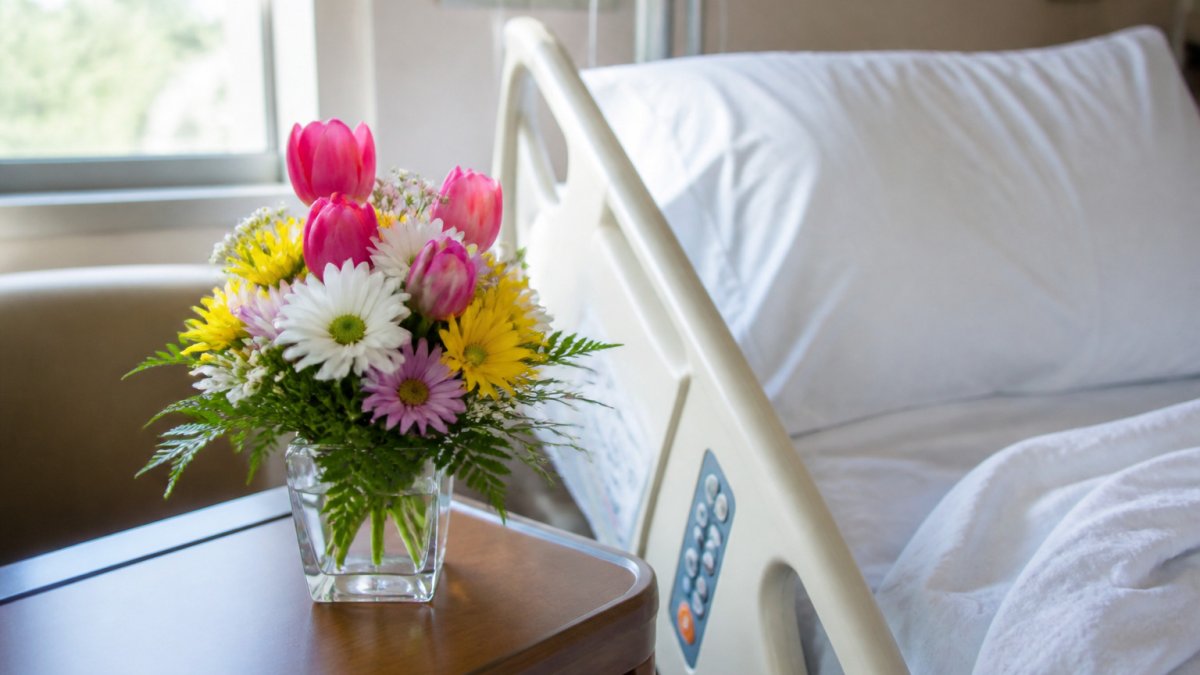
  • Choose a compact, low-scent arrangement for a hospital room and confirm the facility’s floral policy first.
  • Name a backup bloom or color palette in the order notes in case a stem is unavailable.

Table of Contents

Yes, You Can Order Flowers Online for Delivery in Mokena

So can I order flowers online for delivery in Mokena? Yes, and the process takes about five minutes from a phone or laptop. An English Garden has been a Mokena, Illinois florist for over 32 years, with secure 24-hour online ordering and delivery to over 30 cities each day.

Here is the short version: order before the shop’s daily cutoff, give us the recipient’s full address and a phone number, and choose an arrangement that is in season. Below, we walk through how online ordering actually works here, what same day and next day really mean, and how to pick flowers that fit the room, the occasion, and the person receiving them.

How Online Flower Delivery Mokena Works

Online flower delivery in Mokena works through a simple flow: you pick an arrangement and enter the delivery details through our secure 24-hour online ordering.

The order form asks for the details that decide whether a delivery succeeds:

What Details You Need to Place Your Order

  • Recipient’s full name as it appears on the mailbox or hospital record
  • Complete delivery address, including apartment or suite number
  • Recipient phone number, so the driver can reach them if needed
  • Delivery date and time window you are aiming for
  • Card message, written in your own words
  • A backup option if the exact stems you chose are unavailable

That last point matters more than people expect. A common mistake is choosing a photo-perfect arrangement and assuming it will be reproduced stem for stem. Flowers are a living product, and what arrives at the shop on a given morning varies.

For a closer look at how local delivery works day to day, read our guide on same day flower delivery in Mokena.

The order form asks for a handful of details that decide whether a delivery succeeds.

Detail Why it matters
Recipient’s full name As it appears on the mailbox or hospital record
Complete delivery address Include apartment or suite number
Recipient phone number So the driver can reach them if needed
Delivery date and time window The timing you are aiming for
Card message Written in your own words
Backup option Used if the exact stems are unavailable

Same Day Flower Delivery Mokena IL: Cutoff Times and What to Expect

Same day flower delivery in Mokena depends on one thing: getting your order in before the daily cutoff and confirming the recipient will actually be available. Orders placed early in the day have the widest selection and the best chance of an on-time delivery.

Cutoff times shift with holidays, weather, and order volume, so check the current cutoff on the order page before you commit. Valentine’s Day and Mother’s Day run on tighter schedules than a Tuesday in March. If you need certainty, call and confirm rather than assume.

Three habits protect a same-day order:

  1. Order in the morning, not at lunch.
  2. Confirm someone will be home, or name a workplace or front desk that will accept the delivery.
  3. Keep your phone on. If the driver cannot reach the recipient, you are the fallback.

If you want a step-by-step walkthrough, our guide on how to guarantee same-day delivery covers the exact sequence. You can also read the full delivery policy for cutoff, redirect, and redelivery details.

Next Day Flower Delivery Mokena IL for Planned Occasions

Next day flower delivery in Mokena is the safer choice for anything you can plan ahead. Anniversaries, administrative professionals’ day, a colleague’s last day, a thank-you for a referral: these are dates you know in advance, so give the shop a full day of runway.

Planning ahead buys you three advantages. You get first pick of seasonal blooms. You can request a specific color palette or vessel. And you avoid the premium that comes with last-minute holiday volume.

A practical rule we share with customers: if the occasion has a fixed date on a calendar, order at least two days out. If it is a surprise for a person having a hard week, order in the morning and let us handle the timing.

Birthday Flower Delivery Mokena IL: Gifts Beyond the Bouquet

Birthday flower delivery in Mokena does not have to mean a vase of roses and nothing else. Flowers are often the opening gesture, and the gift that sits on the counter for a week afterward is what people remember.
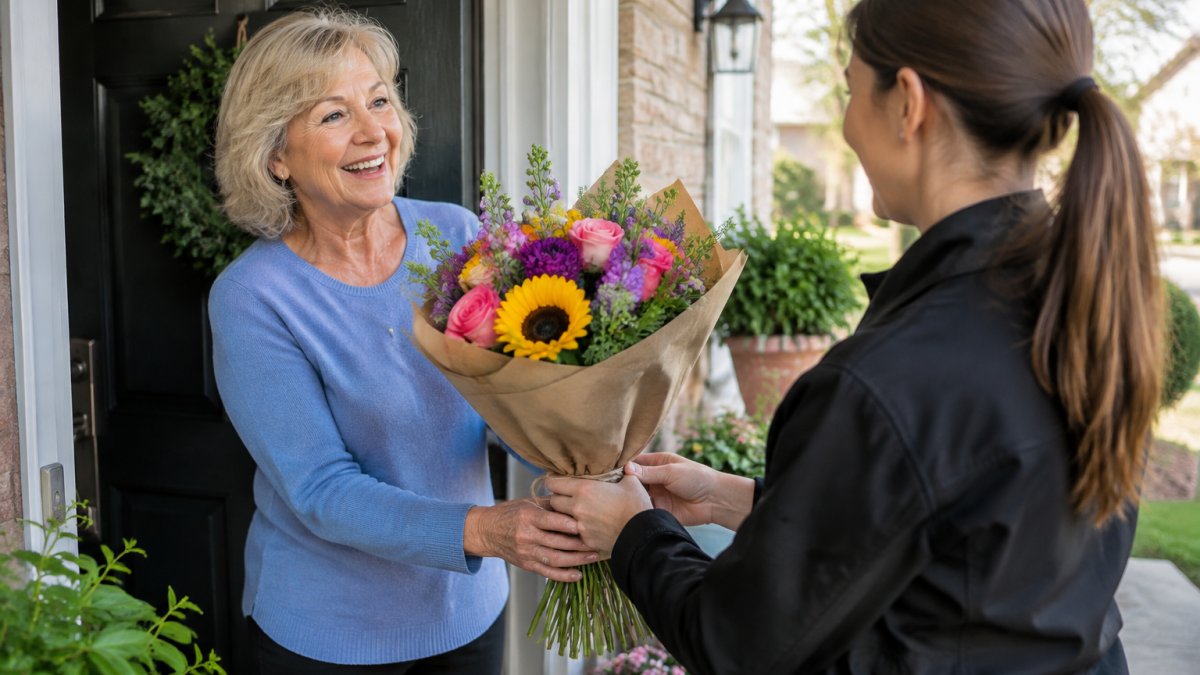
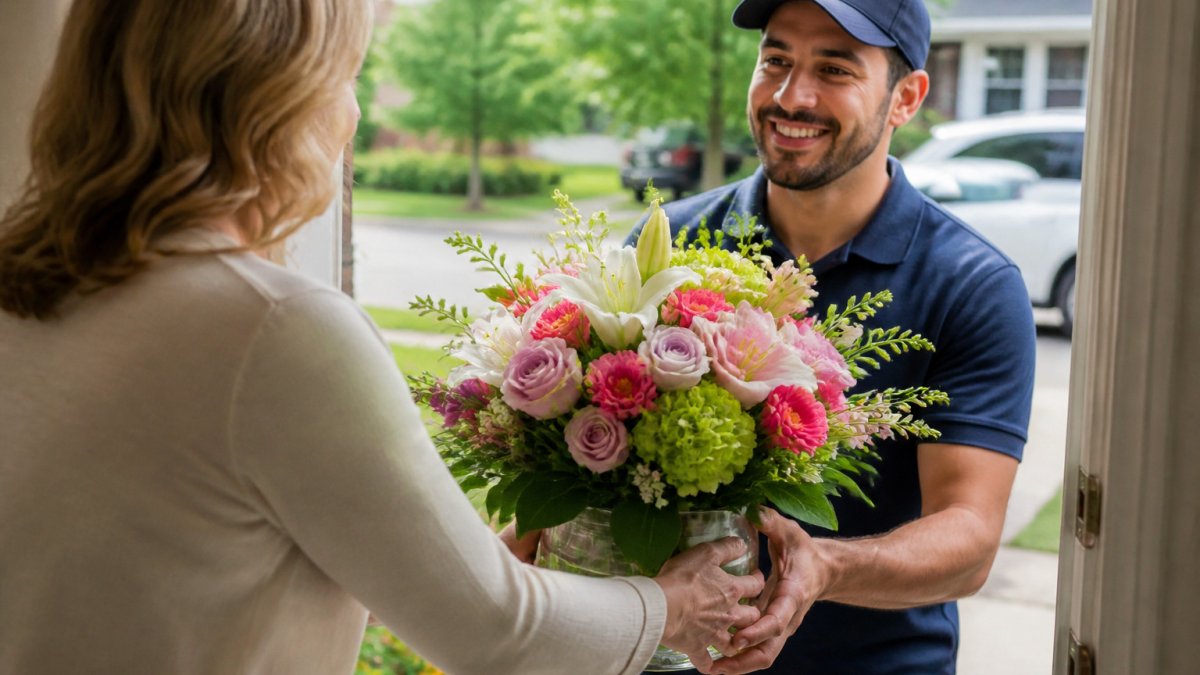
Smiling woman receiving fresh birthday flowers at her Mokena home, showing how you can order flowers online for delivery.

Our gift range includes a wide selection of plants, gourmet baskets, snack baskets, candy bouquets, and home decor.

If you already know the recipient loves flowers, a specific birthday bouquet takes the guesswork out. Browse the It’s Your Day Bouquet® Happy Birthday to see the style and color story before you decide.

Get Started Today →

Choosing the Right Arrangement for the Venue and Occasion

The right arrangement depends on where it will sit and who will see it. Use the venue as your first filter, then narrow by occasion and color.

Start with a simple three-question sequence before you browse:

  1. Where will the arrangement live for the next week? A hospital nightstand, a reception desk, a dining table, and a church altar each impose different height, width, and scent limits.
  2. Who is the primary viewer? A coworker walking past a desk sees the piece from the side; a dinner guest sees it from across the table; a patient sees it from a bed at eye level.
  3. What is the occasion signaling? Celebration, condolence, apology, and congratulations each carry different color and form conventions.

Match the piece to the setting with these concrete rules:

  • Hospital room: choose a compact, low-scent arrangement in a small vase. Confirm the hospital’s floral policy first, as facilities may restrict certain flowers or delivery hours.
  • Office desk: pick something under knee height with a clean silhouette, no trailing vines into a keyboard, and a stable base that will not tip when someone bumps the desk.
  • Dining table: a low centerpiece that lets people see across the table.
  • Entryway or mantel: a taller statement piece works here, where nothing needs to be seen over it. Measure the mantel depth before you order; a wide arrangement on a narrow shelf is a return waiting to happen.
  • Funeral home or church: confirm placement and delivery arrangements with the funeral home or church directly before ordering.

Color carries meaning too. Sympathy arrangements traditionally lean white and green. Anniversaries often call for roses in a color the couple associates with themselves, not the default red. Birthdays give you the widest latitude; a bright mixed bouquet in the recipient’s favorite hue usually reads as more personal than a standard dozen roses.

Occasion adds a second filter. For a get-well gift, skip heavily scented stems and choose a plant that will outlast the hospital stay. For a new baby, a low-allergen arrangement or a blooming plant is safer than a heavily perfumed bouquet. For a corporate thank-you, a green plant or a neutral-toned arrangement fits an open-plan office better than a tall, bright centerpiece.

For weddings and events, we offer consultation and on-site decorating.

Flower Care by Climate and Sustainable Sourcing

Care by climate. Most care cards assume a mild room. Real homes are drier, hotter, or more humid than that, and the adjustments matter:

  • Dry, heated homes (winter): indoor humidity can drop low enough that flowers lose moisture faster than the vase can replace it. Keep arrangements away from radiators, heating vents, and fireplaces, and consider moving them to a cooler room overnight. A pebble tray or a small humidifier near the arrangement helps in very dry rooms.
  • Humid summer weather: bacteria bloom in standing water quickly, so switch to daily water changes rather than every other day. Trim stems every time you change the water, and keep the arrangement out of direct sun.
  • Air-conditioned offices: cold air is also dry air. A desk arrangement near a vent will dehydrate faster than one in a corner; rotate it or move it a few feet away.
  • Bright, sunny rooms: a cool, dim room always beats a bright windowsill. If the only spot is sunny, choose a plant rather than cut stems.

A practical rule: the first 24 hours set the trajectory. Get the stems into fresh water and a cool spot as soon as they arrive, and the rest of the week takes care of itself.

When you order, ask three questions:

  1. What is in season this week? A shop that can name specific stems is working with current supply, not a static catalog.
  2. Where were the stems grown? Local and regional growers cut the transit time, which usually shows up as longer vase life.
  3. What happens to the vessel? Reusable vases and recycled packaging reduce waste and give the recipient something to keep.

Name a backup bloom or color palette in the order notes so we can substitute if a stem is unavailable.

Placing Your Mokena Flower Order with An English Garden

If you are wondering can I order flowers online for delivery in Mokena, ordering is the easy part once you know the details. Have the recipient’s address, phone number, delivery date, and card message ready, then place the order online at any hour.

A few tips before you check out: order early for same-day requests, and double-check the apartment number.

For more guidance before you order, read our flower delivery tips for special occasions.

Frequently Asked Questions

Can I order flowers online for delivery in Mokena?

Yes. A local Mokena florist with secure online ordering lets you place an order any time of day and choose a delivery date. You pick the arrangement, add a card message, enter the recipient’s address, and pay online. The shop then designs the flowers fresh and hand-delivers them. Confirm the delivery details and cutoff time at checkout.

Is same day flower delivery available in Mokena?

Same day flower delivery Mokena IL is available on orders placed before the shop’s daily cutoff, which is listed on the order page. Order earlier in the day when possible. Call the shop directly if you need a specific delivery window.

What details do I need to place a flower delivery order?

Have the recipient’s full name, street address, zip code, and a phone number ready. Add a card message and note any delivery window you need.

How do I choose a local florist for flower delivery?

Look for a shop with secure online ordering and a clear track record in the area. Ask about substitutions up front so you know what happens if a specific flower is unavailable.


Ready to send something that arrives fresh and on time? An English Garden offers secure 24-hour online ordering, daily hand-delivery to local homes, hospitals, and funeral homes, and a gift selection that runs from hand-tied bouquets to gourmet baskets and blooming plants. Get started with An English Garden and send flowers that fit the occasion, the room, and the person receiving them.

Posted on — Leave a comment

How to Choose Wedding Flowers with Confidence

Last Updated: November 3, 2026

Quick Summary

To choose wedding flowers with confidence, set a realistic budget first, then rank your floral priorities before you meet a florist. Build a checklist with your date, venue, colors, arrangement list, and style words, and choose seasonal blooms with a backup for each must-have flower.

  • Set your floral budget before looking at a single bloom and rank each item by priority.
  • Ask your venue for its vendor rules early and hand those rules to your florist.
  • Pair each must-have flower with a backup because farm availability shifts from year to year.
  • Keep two or three anchor colors and let texture do the rest of the work.
  • Ask for the substitution standard and approval workflow to be attached to the contract.

Table of Contents

Start with Your Wedding Flower Budget

The first step in learning how to choose wedding flowers is setting a realistic budget before you look at a single bloom.

  • Ceremony flowers (arch, aisle, altar pieces)
  • Personal flowers (bouquets, boutonnieres, corsages)
  • Reception centerpieces and head table arrangements

Rank these by priority. If the bouquet matters most, put more of the budget there and simplify the aisle decor.

Pricing depends on quantity, dates, and delivery, so ask for a written quote rather than a ballpark. For budget-friendly options, see our affordable wedding flower packages.

Build a Wedding Flower Checklist Before You Meet a Florist

A wedding flower checklist turns a vague idea into a real conversation. Walk in with notes, and your florist can price and plan far faster. Bring:

  1. Your date and venue, including whether the venue requires setup time
  2. Your color palette and any photos of looks you love
  3. A list of every arrangement you need, from bouquets to centerpieces
  4. Your budget range and your top priorities
  5. Your style words (romantic, modern, garden, minimal)
  6. Any must-have flowers and any allergies to note
  7. The names of people receiving personal flowers

One item couples often forget: how the venue handles deliveries. Some venues want florists in and out by a set time. Others have loading dock rules. A common mistake is leaving this until the week of the wedding.

Ask your venue for its vendor rules early. Then hand those rules to your florist. This one step prevents most day-of headaches.

Choose Wedding Flowers by Season and Availability

Wedding flowers by season is the single biggest factor in both cost and reliability.

  • Growing conditions in the region where the flowers are farmed
  • Weather during the growing window
  • Supply chain and shipping, which can delay imported stems

Farm availability shifts from year to year, so pair each must-have flower with a backup. A good florist will list the requested flowers first, then note which similar flowers could stand in if a farm comes up short.

Freshness and flower quality matter more than matching a photo exactly. A slightly different bloom that opens beautifully beats a wilted exact match.

How to Choose Wedding Flowers That Match Your Colors and Style

To choose wedding flowers that fit your look, start with the overall design style, then work backward to specific stems. The flower variety is a tool; the look is the goal.

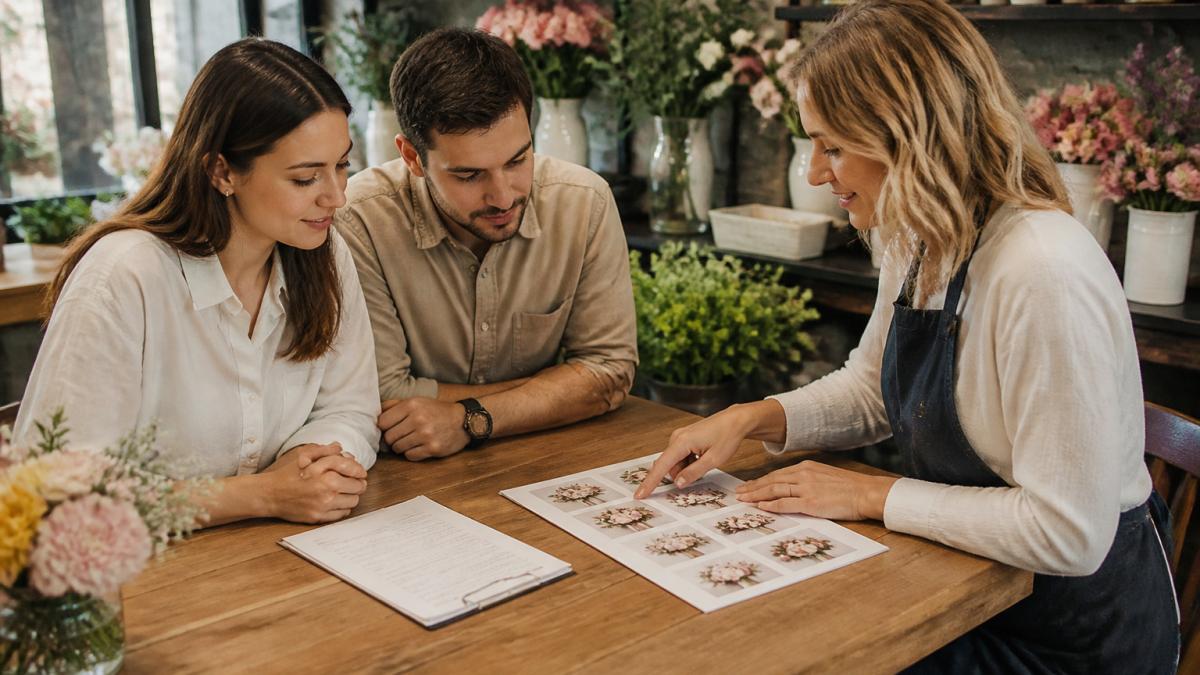
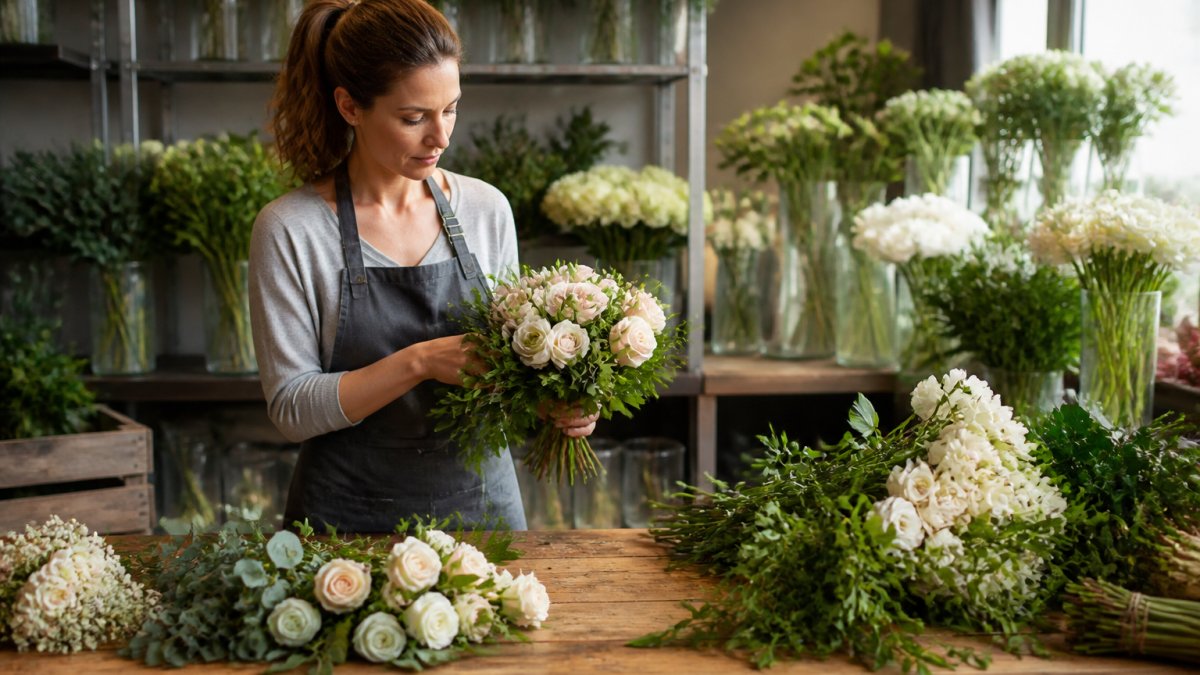
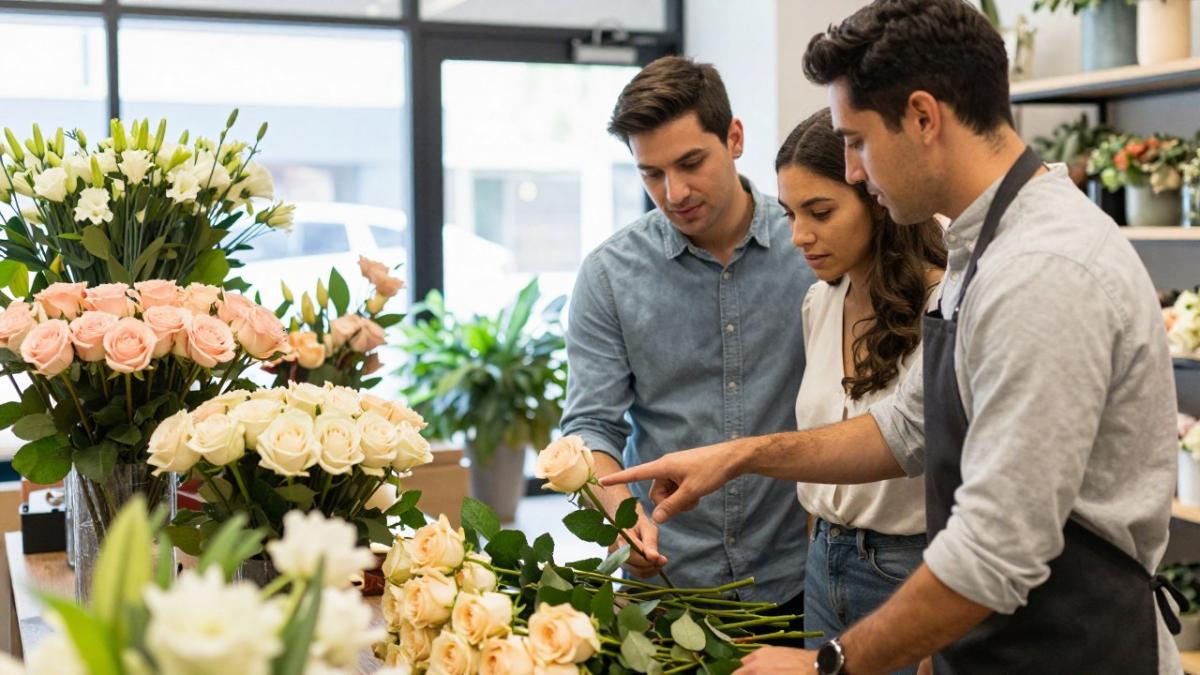
Florist guiding a couple through a process to choose wedding flowers using fresh samples in a floral shop
  • Color palette: keep two or three anchor colors and let texture do the rest
  • Shape and texture: mix round focal flowers with airy, trailing stems
  • Bloom size: vary sizes so arrangements read as full, not flat

A wedding centerpiece and a ceremony arrangement can share the same flowers in different scales, keeping the look consistent from aisle to tables. Browse the best flowers for wedding centerpieces to find ideas that fit your style.

Wedding Florist Questions to Ask Before You Book

The best way to protect your vision is to ask direct questions up front. A confident florist welcomes them. These go beyond portfolio and pricing talk and focus on where weddings most often go sideways: substitutions, timing, and who has final say.

Experience and recent work

  • How long have you been designing weddings, and can I see recent work from weddings similar in size and style to mine?
  • Who is my main contact, and how do you reach me on the wedding day?
  • Have you worked at my venue before, and do you know its delivery and setup rules?

A good answer is specific: named venues, recent dates, and a clear contact plan. If you are still deciding who to meet, read our guide on how to hire a local wedding florist. An evasive answer is vague about dates or refers only to styled photo shoots rather than real weddings.

Substitution policy and approval

  • What is your substitution policy, in writing?
  • How do you define an acceptable substitute, color, size, texture, stem count, arrangement shape, and value?
  • When do you notify me about a swap, and how much notice do I get?

A good answer includes a written clause, a notice window, and a documented approval step. An evasive answer is “we’ll find something similar” with no standard and no notice requirement.

Delivery, setup, and breakdown

  • How do you handle delivery, setup, and breakdown times, and are those fees quoted separately?
  • What happens if the venue changes its load-in window?
  • Who is responsible for moving ceremony flowers to the reception, and is that included?

A good answer names the crew, the window, and the fee structure. An evasive answer is a single lump sum with no timing detail.

Budget and priorities

  • Can you work within my budget range without cutting the key pieces?
  • Which line items give the most visual impact for the cost, and which are easiest to simplify?
  • How do you handle changes after the contract is signed?

What to do with the answers

Write the answers down and compare them side by side. If a florist is vague about substitutions, notice, or timing, treat that as a warning. Ask for the substitution standard and approval workflow to be attached to the contract, and keep a copy of every written exchange.

Get Started Today →

How to Handle Flower Substitutions in Your Wedding Contract

A flower substitution happens when a florist swaps a requested flower for a similar one because the original is out of season, short on the farm, or delayed in shipping. A floral substitution policy is the contract clause spelling out when and how those swaps are allowed. It is one of the most important clauses to read closely, and one of the most commonly glossed over.

What common clause wording actually means

Most substitution clauses are built from a few recurring phrases. Read them as follows:

  • “Subject to availability”, the florist is not promising a specific stem, only a category of look. It does not tell you what you will get instead, when you will be told, or who decides.
  • “Similar in style and color”, this is the vaguest phrase in most contracts. “Similar” is not defined, so it can mean a different bloom of the same color or a different color of the same bloom. Ask for the standard to be written down.
  • “Of equal or greater value”, value is rarely defined. It could mean stem cost, retail price, or visual impact. Without a definition, the phrase gives you little leverage.

A clause combining “subject to availability,” “similar in style and color,” and “florist’s discretion” with no notice requirement gives you almost no control over the final design. That is not automatically a bad contract, but you should know what you are agreeing to.

Define an acceptable substitute objectively

Vague promises such as “similar” or “within the palette” are hard to enforce. Turn them into criteria you and your florist both sign off on. For each must-have flower, agree on:

  • Color, the specific palette anchors, and whether a shade shift (for example, blush to peach) is acceptable
  • Size and bloom diameter, a substitute should read at the same scale in the bouquet or centerpiece
  • Texture and form, ruffled versus smooth, round versus spiky, open versus tight

Document this with a short substitution schedule attached to the contract: one row per must-have flower, with the approved primary, one or two approved alternates, and the criteria above. That schedule protects your vision more than any single sentence in the main clause.

A wedding-specific approval and notification workflow

Some contracts mention contacting the couple, but few establish a consistent process. Ask your florist to commit to a workflow like this in writing:

  1. Flag, the florist notifies you as soon as a shortage is known, not the week of the wedding if it was known earlier.
  2. Document, the florist sends a photo or description of the proposed replacement, the reason for the swap, and the effect on the design.
  3. Approve, you approve, reject, or propose an alternate within a set window (for example, 48 hours for non-urgent changes).
  4. Confirm, the florist confirms the final plan in writing before the delivery date.
  5. Record, if you cannot be reached, the contract should say what happens next: a default alternate, a hold, or florist discretion.

Watch out: a contract that allows substitution “of equal or greater value” with no notice and no approval gives you little control over the final look. Push for written approval on any change that affects the overall design, and ask what happens if you are unreachable on the day.

Cost and value treatment

Ask directly whether a substitute should be equivalent in value, whether upgrades are charged to you, and how price differences are handled. A common pattern: substitutions at or below the original cost are absorbed by the florist, while upgrades require your approval and may be billed. Get the answer in writing, and note whether a downgrade produces a credit or added stems.

Remedies when a substitution materially changes the design

If a swap changes the agreed design in a way that matters, a focal flower replaced with a much smaller bloom, a color shift that breaks the palette, or a missing installation, the contract should describe a reasonable resolution path. Practical steps: document the difference with photos and the substitution schedule, review the contract language, raise the issue with the florist promptly, and discuss options such as added stems, a partial credit, or a refund for the affected piece.

Wedding-specific substitution checklist

Use this before you sign. It covers the pieces most likely to be affected and the questions most couples forget:

  • Does the clause define an acceptable substitute objectively (color, size, texture, stem count, shape, value)?
  • Is there a required advance notice period, and does it differ for planned versus day-of changes?
  • Do I approve swaps in writing, and what happens if I am unreachable?

Here is how the article says to read the most common substitution clause phrases before you sign.

Clause phrase What it means What to ask for
Subject to availability Florist promises a category of look, not a specific stem Written notice, approval step, and who decides
Similar in style and color Vague because similar is not defined The standard written down in the contract
Of equal or greater value Value is rarely defined Whether value means stem cost, retail price, or visual impact
Florist’s discretion Gives the florist final say Keep it for day-of emergencies, not planned changes
Market price adjustments Couple may pay more if a substitute costs more Whether upgrades are charged and downgrades credited

Book Your Wedding Flower Consultation

A consultation is where your checklist, budget, and style notes turn into a real plan. You can preview our best wedding floral arrangements before you book.

When you book with An English Garden, you get an award-winning designer on staff, secure 24-hour online ordering, and delivery to over 30 cities each day. We also offer specialized event consultation and on-site decorating for weddings.

Frequently Asked Questions

When should I start choosing wedding flowers?

Start about 9 to 12 months before the wedding, once you have a date and venue. That gives you time to compare florists, confirm seasonal availability and lock in a contract. If you are planning on a shorter timeline, book as soon as possible: popular dates fill up, and last-minute orders limit which flower varieties a florist can source. Bring your color palette, venue details and a rough budget to the first meeting so the conversation stays productive.

How do I talk to a florist about flower substitutions?

Ask directly what the substitution policy is and get it in writing. Request that the contract name the specific flowers and colors you agreed on, plus a written approval process for any changes. Ask what notice you will get, whether photos of replacement options will be sent, and what happens if a substitute changes the overall look. A clear substitution clause protects both sides and prevents surprises on the delivery date.

How much should I budget for wedding flowers?

There is no single number, because pricing depends on stem count, flower variety, season, delivery distance and setup time. Instead of guessing, list your priorities first: ceremony flowers, wedding centerpieces, bouquets and repurposed arrangements. Tell your florist your total figure and let them build a plan around it. Ask for a line-item quote so you can see where the money goes and adjust before signing.

What flowers do I need for a wedding ceremony and reception?

Most couples plan for bouquets, boutonnieres, ceremony flowers such as an arch or aisle pieces, wedding centerpieces, and extras like corsages or cake flowers. Ask whether ceremony arrangements can be repurposed at the reception to stretch your budget. A wedding flower checklist built with your florist keeps you from over-ordering and makes sure nothing is missed on the delivery date.


Your flowers should feel like yours, not a compromise. If you want a florist who plans for substitutions before they happen and keeps you in the loop, An English Garden can help. We bring an award-winning designer, on-site wedding decorating, and decades of local experience to every event. Get started with An English Garden and book a consultation to lock in your wedding flowers with confidence.

Posted on — Leave a comment

Wedding Flower Substitution Policy: What to Know

Quick Summary

A flower substitution policy is the clause in your floral contract that lets the florist swap your chosen blooms when they are unavailable because of season, weather or supply. Read it before signing, since broad wording can leave you with little control over your design.

  • Substitutions usually happen due to seasonal availability, weather, shipping delays or freshness concerns.
  • Ask whether the clause requires the florist to notify you before any substitution happens.
  • Clarify whether a cheaper substitute triggers a credit or refund of the price difference.
  • Define “similar” in writing using color, bloom size, texture, stem count and value.
  • Name two or three backup flowers per item and set a 48-hour window to approve a swap.

Table of Contents

Why Florists Substitute Wedding Flowers

Wedding flower substitution policy explained comes down to one question: what happens when the bouquet you chose isn’t available on your date? Many couples never read the fine print of their flower substitution policy until a florist calls with a swap. Knowing the reasons behind substitutions helps you judge whether a policy is fair.

Seasonal availability and farm supply

Flowers grow on seasonal cycles, and many varieties bloom for only a few weeks each year. A florist planning your arrangement months ahead depends on what growers can deliver close to your date. When a favorite bloom falls out of season, the florist has to find a replacement.

Plan around this early. Ask your florist which of your choices are seasonal and which are grown year-round.

Weather, shipping delays and freshness

Weather can damage a crop days before harvest, and a late freeze or heavy rain can wipe out stems. Shipping adds another risk, since a delayed truck can leave blooms past their prime. Freshness matters, so florists often swap in a sturdier flower rather than deliver one that has wilted.

How a Wedding Flower Substitution Clause Reads in Plain Language

A substitution clause is the part of your floral contract that gives the florist permission to change your flowers under certain conditions. Most clauses are short, and couples often skim right past them. Reading the clause line by line before you sign is the single most useful thing you can do to avoid a surprise on your wedding day.

What a typical clause actually says

Most substitution language follows a recognizable pattern. A common version reads something like: “In the event that specific flowers are unavailable due to seasonal availability, weather, or supply conditions, the florist reserves the right to substitute blooms of similar color, style, and value.” Another common version is looser: “Florist may substitute flowers as needed to complete the design.”

Those two sentences are not equivalent. The first names triggers and sets a standard (similar color, style, and value). The second gives the florist broad discretion with no stated limits. When you compare florists, the wording of this clause tells you a lot about how much control you are keeping.

What the clause guarantees, and what it does not

A substitution clause is a permission slip, not a promise. It typically does not guarantee:

  • That you will be notified before a swap happens.
  • That the substitute will cost the same as the original flower.
  • That the overall look of the arrangement will be unchanged.

What it usually does guarantee is that the florist can complete your order without breaching the contract when a flower is unavailable. That is the trade-off: the clause protects the florist’s ability to deliver something, and it protects you from a last-minute cancellation. Whether it protects your design intent depends entirely on how specific the wording is.

The four terms to clarify before signing

When you review the clause, ask the florist to address these four points in writing:

  1. Trigger language. Which events allow a substitution, only true unavailability, or also “quality concerns” or “design discretion”? Broader triggers give the florist more room to change your flowers.
  2. Standard of similarity. Does the clause say “similar” without defining it, or does it name color family, bloom size, and value? Undefined “similar” is a common source of disputes.
  3. Notice requirement. Does the clause require the florist to contact you before substituting, or only to inform you afterward? A notice requirement is the difference between approving a swap and learning about it on your wedding morning.
  4. Value treatment. If the substitute costs less than the original flower, does the contract require a credit or refund of the difference? If it costs more, who pays? Many standard clauses are silent on both.
Pro Tip
Ask your florist to add one sentence to the clause: “Florist will notify Client in writing of any substitution and obtain approval when practicable.” Florists may agree to this, and it can turn a one-sided permission into a shared decision.

Red flags in substitution wording

Watch for clauses that use phrases like “at florist’s sole discretion,” “no substitutions will be refunded,” or “client waives right to approve substitutions.” These are not automatically unfair, a florist needs flexibility to run a business, but they shift all the risk to you. Establishing clear communication regarding these contingencies remains a fundamental step when choosing a bespoke florist to ensure your floral vision remains protected throughout the planning process.

If the clause is vague, ask the florist to define it in writing before you sign. A short email confirming the standard, the notice period, and the value treatment is enough to turn a generic clause into a usable one.

Defining an Acceptable Substitute Objectively

“Similar” is the word that causes most substitution disagreements. One person’s similar is another person’s completely different bouquet. The fix is to replace the adjective with criteria you and your florist both write down, and then to decide, in advance, which criteria matter most for each element of your design.

The six criteria that define a substitute

An acceptable substitute should be evaluated on six measurable points. For each one, decide whether it is a must-match, a should-match, or a nice-to-match:

  • Color. Match the color family, not just the general hue. A blush peony and a hot-pink rose are both “pink,” but they read differently in photos. Specify the palette in words your florist uses, for example, “dusty rose, sage, and cream” rather than “romantic pastels.”
  • Bloom size and shape. A round, dense bloom (peony, garden rose, ranunculus) reads very differently from an open, airy one (cosmos, daisy, spray rose). Note whether the substitute should be round, open, spiky, or clustered.
  • Texture. Smooth petals, ruffled petals, and fuzzy or waxy textures change how an arrangement feels. Texture is often the first thing guests notice and the last thing couples specify.

Turning the criteria into a written standard

A usable standard looks like a short table or list in your contract or in a follow-up email. For example:

Focal flower: Peony (blush). Must-match: color family (blush/soft pink), bloom size (large, round), value (equivalent). Should-match: texture (ruffled). Acceptable substitutes: garden rose, ranunculus (in larger quantity), double tulip.

Get Started Today →

That level of specificity does two things. It tells the florist what you actually care about, and it gives you a fair basis for approving or rejecting a swap later. A substitute that meets every must-match and most should-match criteria is reasonable to accept. One that misses a must-match is a conversation, not an automatic yes.

Weighting the criteria by element

Not every element of your wedding needs the same standard. A common approach is to tier your flowers:

  • High-impact focal flowers (bridal bouquet, ceremony arch focal blooms): strictest standard, must-match on color, size, and value; notice required before substitution.
  • Secondary flowers (centerpiece accents, boutonnieres): moderate standard, must-match on color and value; should-match on size and texture.
  • Filler and greenery (baby’s breath, eucalyptus, ruscus): flexible standard, color family and overall look; florist discretion with after-the-fact notice.

This tiering is the practical answer to “how similar is similar enough.” It lets your florist move quickly on low-stakes elements while keeping you in the loop on the flowers that appear in every photo.

Handling cost and value differences

Value is the criterion couples most often forget to define. Ask your florist two questions before signing: If the substitute costs less than the original flower, will I receive a credit or refund of the difference? and If the substitute costs more, will I be charged, and will I be asked first? A fair contract answers both. Some florists will absorb small differences in either direction and flag larger ones for approval; the key is to get that practice in writing so it is not left to memory.

Key Takeaway
A substitute is acceptable when it meets your must-match criteria for that element, falls within a reasonable value range, and was communicated according to the notice terms in your contract. Write those three things down, and you have an objective standard instead of a vague promise.

Write these criteria into your contract or a confirming email. A clear standard gives you a basis for approving or rejecting a swap, and gives your florist a clear target to design toward.

Wedding Flower Substitution Examples and What They Mean for Your Design

Common swaps include a ranunculus replacing a peony, or a garden rose standing in for a spray rose. Each swap shifts the look of the arrangement a little. Compare the most popular centerpiece flowers to see how these options differ.

Ask your florist to show you photos of likely substitutes. Seeing them now prevents surprises later.

The Florist Substitution Approval Process, Step by Step

Follow a simple workflow so swaps never catch you off guard:

Florist and couple reviewing a contract and swatch board for a flower substitution policy process
  1. Ask your florist to name the top two or three backup flowers for each item.
  2. Confirm how and when they will contact you about a change. Before you sign anything, read a guide to choosing a wedding florist in Mokena to see what to check in a contract.
  3. Set a response window, such as 48 hours, for approving or declining a swap.
  4. Get any approval in writing, by email or text.
  5. Keep a copy of the final agreed design for your records.

Watch out: Verbal agreements are hard to prove. Always confirm changes in writing.

The steps below show how a swap should be proposed, reviewed and recorded, with the timing to expect at each stage.

Step What to do Time or frequency
Name backups Ask for two or three backup flowers per item Before signing
Confirm contact Agree how and when you will be told of a change Before signing
Set response window Approve or decline the swap 48 hours
Get approval in writing Confirm by email or text Before the swap is final
Keep final design Save the agreed design for your records Once agreed

Remedies When a Substitution Changes the Agreed Design

If a swap materially changes the design you approved, you have options. Discuss a partial refund, a discount on a future order, or a corrected arrangement if time allows. Put any agreed remedy in writing. If the florist will not discuss fair options, consider a chargeback review through your payment provider or a complaint to your state consumer protection office.

Questions to Ask a Wedding Florist Before You Sign

Use these questions to vet any florist:

  • Which of my chosen flowers are seasonal, and what are your backups?
  • What is your notice period before a substitution?
  • Can you show photos of your substitute options?

Pricing depends on flower type, quantity, date and delivery, so ask for a written quote. Our team at An English Garden can walk you through our substitution process and help you choose flowers that hold up to seasonal change. You can explore our wedding florist services and review budget options for wedding flowers to plan with confidence. For a broader look at choosing a florist, see our guide on hiring a local wedding florist.

Frequently Asked Questions

What is a wedding flower substitution policy?

A wedding flower substitution policy is the section of a florist’s contract that explains when the florist may replace the flowers you chose with other blooms, and how you will be told. A useful policy names the situations that trigger a swap, such as seasonal shortages, weather damage or shipping delays. It also describes how the florist will keep the color palette, style and stem count close to the original design, and whether you must approve the change before it happens. Read this clause before you sign, because it decides what you can expect if your first choice is unavailable on the day.

Can a florist change wedding flowers without asking?

Sometimes, if the contract allows it. Many florists reserve the right to substitute flowers when the requested variety is unavailable, but a well-written clause should require notice and set limits on how far the replacement can differ. Ask whether the florist will contact you before the order is finalized, how much notice you will receive, and whether you can reject a substitute. If the contract is silent on approval, request written language that requires your sign-off for any change that affects color, style or budget.

What should you do if your wedding flowers are substituted unexpectedly?

Start by reviewing your contract to see whether the substitution falls within the agreed policy. If it does, ask the florist to show photos or samples of the replacement and compare them against your design board. If the change materially alters the look you approved, request an adjusted arrangement, a partial refund or a discount, as your agreement permits. Put every request in writing and keep copies of messages, so the outcome is clear and documented.

How can you make sure substituted flowers fit your wedding design and budget?

Define the look you care about most, such as color palette, flower shape, bloom size and overall style, and share those priorities with your florist early. Ask for a list of acceptable alternates for each key flower, along with any price difference. Confirm that the replacement will be of similar or higher quality and that any cost change will be disclosed before the order is finalized. Pricing varies with quantity, dates and delivery, so request a written quote for each option.

Posted on — Leave a comment

7 Flower Delivery Tips for Special Occasions in Mokena

Quick Summary

Flower delivery Mokena services work best when you match the arrangement to the occasion, the recipient, and your timing. Birthdays suit bright mixed bouquets, anniversaries suit roses or romantic mixes, and sympathy calls for lilies, white roses, or classic sprays. Order a few days ahead, and check your cutoff time to plan same-day or next-day delivery.

  • Answer three questions first: who receives the flowers, where they will be displayed, and how much time you have.
  • Order birthday flowers a few days ahead, since popular dates fill up quickly.
  • Order anniversary flowers early when they fall on weekends or holidays, when demand is highest.
  • Include the full service location, room or chapel, and a family contact number for funeral deliveries.
  • Orders placed before the daily cutoff are processed for same-day delivery; later orders move to the next delivery date.

Table of Contents

Choosing the Right Flowers for Each Occasion

Picking flowers for a special occasion with flower delivery Mokena starts with three questions: who receives them, where they will be displayed, and how much time you have. Those answers narrow the options faster than any catalog. A birthday bouquet for a coworker needs something bright and portable. Anniversary flowers for a partner usually call for a more intimate, romantic arrangement. A sympathy arrangement needs to feel dignified and suit a funeral home or hospital room.

Matching the flower to the occasion is often more important than matching the price. A modest arrangement of seasonal blooms often says more than an oversized display that doesn’t fit the setting.

Occasion Best Flower Style Good Fit For
Birthday Bright mixed bouquet Home, office, celebrations
Anniversary Roses or romantic mixes Partners, intimate gifts
Sympathy Lilies, white roses, classic sprays Funeral homes, hospitals
Everyday Seasonal bouquets Thank-yous, get-well, just because

We recommend thinking about the recipient’s taste before the occasion. Someone who prefers modern design may not want traditional roses, while a grandparent may appreciate a classic arrangement.

Birthday Flower Delivery in Mokena for Everyday Celebrations

Birthdays are the most common reason people order flowers, and they are often the easiest to plan. Most recipients appreciate a fresh, cheerful arrangement delivered to their home or workplace. Bright colors, seasonal blooms, and a handwritten card tend to make the strongest impression. You can browse a ready-made Birthday Palooza arrangement and order it right away.

For a local birthday delivery in Mokena, order a few days ahead when you can. Last-minute needs may be possible depending on availability, but popular dates fill up quickly. Pricing depends on arrangement size, flower selection, and delivery timing, so contact An English Garden directly or visit the website for a current quote.

Watch out: if you send flowers to a workplace, confirm that the front desk accepts deliveries before the arrival window.

Anniversary Flowers in Mokena: Romantic Arrangements and Timing

Anniversary flowers carry more meaning than most gifts, so timing and presentation matter. Roses remain a traditional choice, but mixed arrangements with lilies, peonies, or garden flowers can feel more personal. Consider the length of the relationship and the couple’s style when choosing.

Order early for anniversaries that fall on weekends or holidays, when demand is highest.

Sympathy Flowers Mokena IL: Funeral Homes, Hospitals and Family Support

Sympathy flowers should be simple, dignified, and easy to display. Our complete guide to keeping funeral flowers fresh covers how to care for the arrangement through the service and afterward. Lilies, white roses, and classic sprays are common choices for funerals, while smaller arrangements suit hospital rooms or family homes.

Delivery to a funeral home or hospital requires clear details. Our guide on sending flowers to a hospital patient explains how to get the delivery accepted and received. Include the full name of the service location, the room or chapel if known, and a contact number for the recipient’s family. Coordinating with the funeral director in advance can help the delivery arrive as planned.

Get Started Today →

National Funeral Directors Association guidance on memorial floral arrangements

Next Day Flower Delivery in Mokena: Cutoff Times and Service Areas

Knowing your cutoff time is the most useful step for planning flower delivery Mokena orders. Our local florist guide for same-day delivery in Mokena covers the same-day options and coverage available in your town. Orders placed before the daily cutoff are processed for delivery that day, and later orders are scheduled for a later delivery date. Steps to guarantee same-day arrival can help you get your order there before the cutoff passes. Delivery is available to over 30 cities each day, so confirm that your recipient’s address is covered before you order.

For customers outside Mokena, a local florist can still deliver to family in the area. Share the recipient’s full address and any delivery instructions when you place the order.

Placing and Personalizing Your Order

Online ordering is the simplest route. Choose the arrangement, add a personalized card message, and enter the recipient’s details carefully. Double-check the delivery date, address, and phone number, since errors cause most delivery problems.

For larger orders, such as corporate gifts or event flowers, contact the shop directly. Corporate accounts are welcome.

Caring for Your Arrangement and Planning Your Next Order with An English Garden

Fresh flowers last longer with simple care. Trim stems at an angle, change the water every two days, and keep arrangements away from direct sunlight, heating vents, and ripening fruit (Bright blooms: How to care for flower bouquets | Good Growing | Illinois Extension). Following these steps helps the arrangement stay fresh through the celebration.

At An English Garden, we want every arrangement to feel special from the first delivery to the last petal. Visit our website to browse current designs, check delivery options, or request a quote for your next occasion.

Frequently Asked Questions

What flowers are best for a birthday?

Bright, seasonal blooms such as roses, lilies, sunflowers and mixed garden arrangements work well for most birthdays. Match the style to the recipient: a bold, colorful bouquet suits someone outgoing, while a soft pastel arrangement suits a quieter personality. If the recipient prefers something longer lasting, consider a plant or a potted arrangement. Pricing depends on size, flower selection and delivery details, so check An English Garden’s website or call for a current quote before you order.

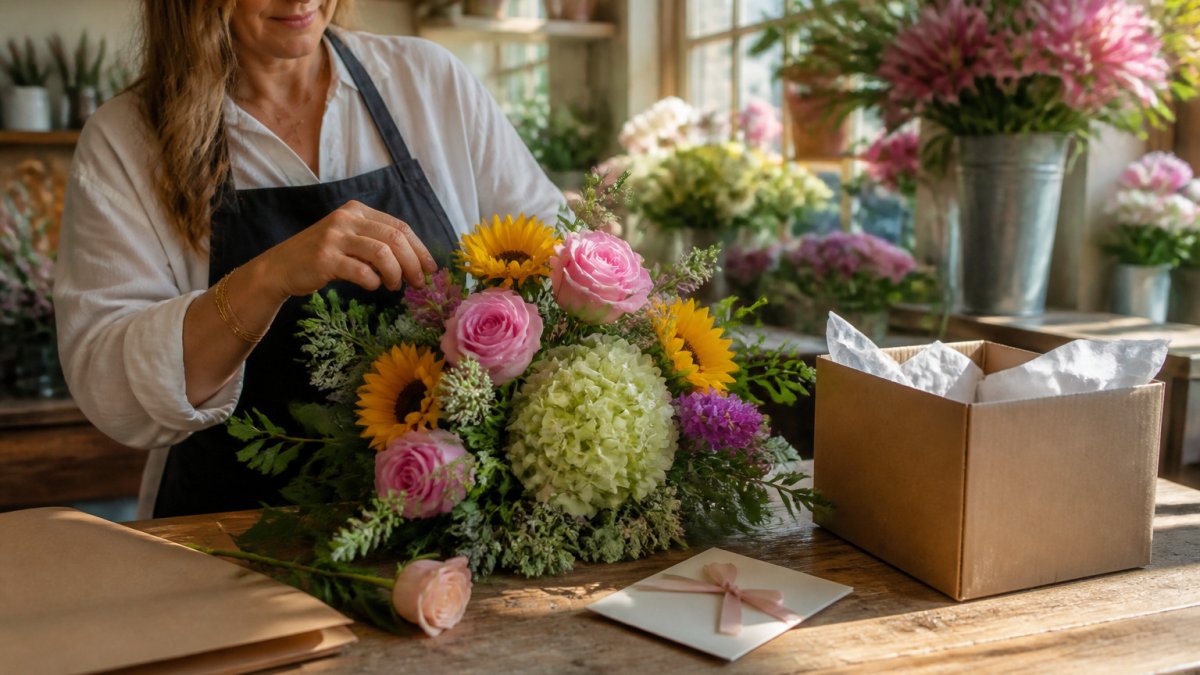
Florist arranging a seasonal bouquet at a sunlit shop for flower delivery Mokena orders

How far in advance should I order flowers for a special occasion?

For popular dates such as Valentine’s Day, Mother’s Day and wedding weekends, order as early as possible because florists book up. For a typical birthday or anniversary, ordering a few days ahead gives you the most choice of arrangements and delivery dates. Delivery availability depends on the delivery date and time, so confirm your delivery window when you place the order.

Can I order flowers online for delivery to a local funeral home or hospital?

Yes. Online orders can be delivered to local funeral homes and hospitals. Include the full facility name, room or suite number, and a contact phone number so the delivery team can coordinate with staff. If you are arranging sympathy flowers for a service, confirm the service date and location with the funeral home before ordering so the arrangement arrives in time.

Can I get flowers delivered the next day?

Delivery timing depends on the order date and the delivery area, so check available dates before you check out. Check the delivery area and cutoff times before you check out, and add any special delivery instructions, such as a business entrance or a gate code, in the order notes.

Posted on — Leave a comment

Affordable Wedding Flower Packages: A Budget Guide

Last Updated: October 31, 2026

Quick Summary

Affordable wedding flower packages bundle the bridal bouquet, bridesmaid bouquets, boutonnieres and some ceremony or reception arrangements into one quoted price. Pricing depends on quantity, date, flower variety and delivery, so request a current quote from An English Garden for exact figures.

  • Set your total floral budget as a dollar figure before requesting any quotes.
  • Divide the floral budget into four buckets: personal flowers, ceremony, reception and contingency.
  • Commonly reserve 5% to 10% of the floral total as a contingency fund.
  • Request an itemized quote listing each piece, delivery, setup, rentals and tax.
  • Confirm whether delivery, setup and breakdown are included before comparing package prices.

Table of Contents

What Affordable Wedding Flower Packages Include

Wedding flower packages often bundle the core floral pieces a wedding needs into a single quoted price, rather than charging for each arrangement separately. A bundle typically covers the bridal bouquet, bridesmaid bouquets, boutonnieres and at least some ceremony or reception arrangements. Pricing depends on quantity, date, flower variety and delivery, so request a current quote from An English Garden for exact figures.

Bridal bouquets, bridesmaid bouquets and boutonnieres

The bridal bouquet is usually the centerpiece of the floral budget. Bridesmaid bouquets and boutonnieres are smaller, so they keep costs down when the design stays simple. Many couples ask for matching bouquets, and that consistency is often built into the package. Confirm whether the quote lists each piece separately or as a group, since that changes how easy it is to swap items later.

Ceremony, reception and centerpiece arrangements

Ceremony arrangements, reception décor and table centerpieces are where package totals grow quickly. A package that includes these pieces saves time, but only if the arrangements match the venue size and guest count. Check whether setup and breakdown are included, because labor for placing arrangements at the venue is a common hidden cost.

Wedding Flower Budget Breakdown: Setting and Allocating Your Spend

Most couples who overspend on wedding flowers do not do it in one big decision, they do it in a dozen small ones. A written budget breakdown prevents that. Here is a practical method you can run before you request a single quote.

Infographic showing how to allocate a budget for wedding flower packages while planning with a partner at home.

Step 1: Set the total floral number first

Decide what percentage of your overall wedding budget flowers can take, then convert it to a single dollar figure. Couples commonly set aside a share of their total wedding budget for flowers, and that share varies with their priorities. Write the number down. Every later decision gets measured against it, not against what a florist’s sample package happens to cost.

Step 2: Allocate by priority, not by category equally

Divide the total into four buckets and assign a share to each before you shop:

  • Bridal bouquet and personal flowers, the bridal bouquet, bridesmaid bouquets, and boutonnieres. This is usually the highest-visibility spend and the easiest to protect.
  • Ceremony flowers, altar or arch pieces, aisle markers, and any entry arrangements.
  • Reception flowers, centerpieces, head-table arrangements, and bar or buffet accents.
  • Contingency, a small reserve, commonly 5% to 10% of the floral total, for substitutions, added pieces, or delivery surprises.

Adjust the shares of your floral budget to match what you actually care about, such as moving ceremony money to the reception if the ceremony is short.

Step 3: Convert buckets into piece counts

Percentages mean nothing until they become items. Multiply your guest count by your table plan to get a centerpiece count, then price that count against your reception bucket. If the math does not fit, you have three levers: fewer centerpieces, smaller centerpieces, or more greenery and candles per table. Decide which lever you will pull before you talk to a florist, so the quote you request already fits your budget.

Step 4: Hold a per-piece ceiling

Set a maximum you will pay for each item type, bridal bouquet, bridesmaid bouquet, boutonniere, centerpiece, and treat it as a filter when comparing quotes. A quote that blows past one ceiling but comes in under another is a signal about where that florist’s strengths and costs sit, and it tells you what to negotiate.

Pro Tip
Bring your four bucket totals and your per-piece ceilings to the consultation. Florists can design to a number far more accurately than they can guess at one, and a quote built around your buckets compares cleanly against the next florist’s quote.
::: Allocating a portion of your floral budget toward rose petals for weddings provides an elegant and cost-effective way to enhance your ceremony aisle or exit without requiring the complex structural work of large arrangements.

Step 5: Track the real total, including delivery and tax

Your floral budget is not the sum of the arrangements. Add delivery, setup labor, rentals, and applicable sales tax before you declare the budget met. Couples who forget these line items are the ones who discover a gap in the final invoice. Keep a single running total that includes every fee, and update it each time a quote changes.

A budget you can defend line by line is the strongest negotiating tool you have. It also makes the next section, comparing package tiers, far easier, because you already know which tier fits your number.

The article’s four-bucket method gives a quick way to see where the floral budget is allocated.

Bucket What it covers Typical guidance
Bridal bouquet and personal flowers Bridal bouquet, bridesmaid bouquets, boutonnieres Usually the highest-visibility spend
Ceremony flowers Altar or arch pieces, aisle markers, entry arrangements Set a share before shopping
Reception flowers Centerpieces, head-table, bar or buffet accents Convert to a piece count
Contingency Substitutions, added pieces, delivery surprises Commonly 5% to 10% of the floral total

Package Tiers and Itemized Pricing Examples in Mokena

Many studios group wedding flowers into tiers, but the tier names can hide the real differences. What matters is what each tier actually contains and how the line items are priced. Below is the structure to expect and the questions that turn a vague tier into a comparable quote.

Get Started Today →

What each tier typically contains

  • Basic / elopement tier, bridal bouquet, a small number of boutonnieres, and often a single ceremony or entry piece. Best for small guest counts, courthouse ceremonies, or couples handling reception flowers separately.
  • Mid-range tier, bridal bouquet, bridesmaid bouquets, boutonnieres, ceremony pieces, and a set number of centerpieces. This is the most common tier for weddings with a seated reception, and the tier where the centerpiece count drives most of the price.
  • Full-service tier, everything in the mid-range tier plus reception décor, head-table and accent arrangements, delivery, on-site setup, and breakdown. The labor and logistics are the value here, not just more flowers.

Turn each tier into an itemized quote

Ask for the quote broken into line items rather than a single package price. A useful itemized quote lists, at minimum:

  • Bridal bouquet, quantity and per-piece price
  • Bridesmaid bouquets, quantity and per-piece price
  • Boutonnieres, quantity and per-piece price
  • Ceremony arrangements, quantity, type, and per-piece price
  • Centerpieces, quantity, size, and per-piece price
  • Delivery fee
  • Setup and breakdown labor
  • Rentals (vases, arches, stands), if used
  • Applicable sales tax
  • Deposit amount and payment schedule

When two florists quote the same line items, the comparison is real. When one quotes a bundle and the other quotes line items, you are comparing a guess to a number.

A worked example of how tiers diverge

Imagine a 100-guest wedding with 10 reception tables. A mid-range quote might include one bridal bouquet, four bridesmaid bouquets, six boutonnieres, two ceremony pieces, and 10 centerpieces. A full-service quote for the same wedding adds head-table arrangements, bar and buffet accents, delivery, setup, and breakdown. The flower count difference may be modest; the labor and logistics difference is often the larger share of the gap. That is why comparing tiers on arrangement count alone misleads couples, always compare the full line-item list.

Do not accept a package price without a written itemization. A bundle that looks cheaper can cost more once delivery, setup, rentals, and tax are added, and a bundle that looks expensive can include labor the cheaper quote charges separately.

Questions that expose what a tier really includes

  • Is delivery included, and is there a minimum order for delivery to my venue?
  • Is setup and breakdown included, or billed hourly?
  • Are vases and stands rented or purchased?
  • How many centerpieces does the tier assume, and what happens if my table count changes?
  • What is the deposit, and what are the cancellation terms?
  • Is sales tax included in the quoted figure?

Why itemization matters for affordability

Affordability is not the lowest package price, it is the lowest total for the flowers you actually need. Itemization lets you cut what you do not value (extra ceremony pieces, premium blooms in low-visibility spots) and protect what you do (the bridal bouquet, the head table). It also lets you ask a florist to re-quote a single line rather than re-quote the whole package, which is the fastest way to bring a tier into budget without losing the design.

Request a line-item quote for your date and guest count directly from An English Garden, since pricing depends on quantity, dates and delivery.

Seasonal Wedding Flowers and How Substitutions Affect Cost

Flower availability and prices can change with the growing season, and out-of-season varieties may cost more. If a specific flower is important to you, ask your florist what a substitute would be and how it would change the price. A similar-looking bloom in season can keep the look you want while lowering the cost. Always confirm substitutions in writing before the wedding day.

Wedding Florist Consultation Questions to Ask Before You Book

Use the consultation to learn how a florist works, not just what they sell. Ask whether the package includes delivery, setup and breakdown. Use this step-by-step guide to choose a wedding florist in Mokena and organize your questions. Ask what happens if a flower is unavailable on the day. Clear answers to these questions tell you whether the florist can handle your order reliably.

Wedding Flower Quote Checklist: Comparing Florists Side by Side

When you compare quotes, check each one against the same list:

  • Bridal bouquet, bridesmaid bouquets and boutonnieres listed separately
  • Ceremony and reception arrangements, with the quantity of each
  • Delivery fee and setup or breakdown labor
  • Substitution policy for out-of-season flowers
  • Deposit amount, payment schedule and cancellation terms
  • Contact person for the wedding day

Quotes that cover the same items make the real price difference obvious.

Booking Your Wedding Flowers with An English Garden

An English Garden has served the Mokena community for over 32 years and offers expert wedding design services, including on-site decorating. To request a quote tailored to your date and guest count, contact the studio directly. Learn how to hire a local wedding florist before you commit. Pricing depends on quantity, dates and delivery, so a personal quote gives you the most accurate figure.

Frequently Asked Questions

How much do wedding flowers typically cost?

Wedding flower costs vary widely based on guest count, the number of arrangements, flower varieties and the date of your wedding. An English Garden does not publish standard package prices in this article, so pricing depends on quantity, dates and delivery. The most reliable way to plan is to set a total flower budget first, then request a written quote that itemizes bridal bouquets, bridesmaid bouquets, boutonnieres, ceremony arrangements and reception centerpieces. Ask whether setup and delivery are included, since those line items can change the total noticeably.

What flowers are most affordable for a wedding?

The most affordable choice often depends on your wedding date. Many couples choose mixed bouquets, garden-style blooms and greenery to fill arrangements, which can keep a full look. Discuss substitutions with your florist early so you can compare options before you commit.

How can I save money on wedding flowers without sacrificing style?

Focus your budget on high-impact pieces such as the bridal bouquet and ceremony arrangements, then use simpler designs for tables and secondary spots. Choosing seasonal flowers, limiting the number of flower varieties and using repeated arrangements across tables can all help manage the total. Ask your florist which pieces are included in any quote you receive.

How do I compare wedding flower quotes?

Compare quotes line by line rather than by the total alone. Confirm the number of bridal bouquets, bridesmaid bouquets, boutonnieres, ceremony pieces and centerpieces, plus the flower varieties and any delivery fee or setup charge. Ask how substitutions are handled if a flower is unavailable on your wedding day, and make sure every detail you discussed appears in the written agreement.

Posted on — Leave a comment

How to Send Flowers to a Hospital Patient Successfully?

Table of Contents

Check the Hospital’s Flower and Delivery Policy First

Last Updated: October 30, 2026

Sending flowers to a hospital patient sounds simple, but many arrangements never reach the bedside. Hospitals set their own rules, and a florist can only deliver where the hospital allows it. Checking those rules first saves time, money and disappointment.

Hospital flower policy is rarely one rule for the whole building. It is usually a stack of rules: a system-wide policy, a unit-level restriction, and a front-desk practice that decides where a delivery actually stops. A general “we accept flowers” answer from the main switchboard does not guarantee the intensive care unit, oncology floor, or transplant ward will accept them.

Who to call, and what to ask

Call the hospital’s main line and ask for the gift shop or volunteer services desk first. Those teams usually handle incoming deliveries and know the current rules. If the gift shop is closed, ask for the nursing station on the patient’s unit. The unit staff, not the front desk, enforce ward-level restrictions.

When you call, confirm these details:

  • Whether outside flower deliveries are accepted at all, and whether that differs by unit
  • The patient’s ward or unit, and whether that unit restricts fresh flowers, plants, or balloons
  • Delivery hours and whether deliveries are held at the gift shop, reception, or sent to the room
  • Whether the hospital requires the patient’s full legal name and room number on the card and order
  • Whether same-day orders are accepted and what the cutoff time is
  • Whether the patient is in a shared room with limited surface space
Watch Out
Ordering online before you check can leave you with a refused delivery. Confirm the policy first, then place the order. A refused arrangement is often returned to the florist or held at the front desk, and the patient may never see it. Read about how substitutions are handled if an item cannot be delivered as chosen.

Ward and patient condition restrictions

Some units limit flowers for safety reasons, and the rules are stricter than a general hospital policy. Intensive care units, oncology wards, transplant units, and bone marrow transplant floors often restrict fresh flowers, standing water, and soil because pollen, mold, and bacteria in vase water can affect patients with weakened immune systems. Some units ban flowers entirely; others allow them only in sealed, low-pollen arrangements. Choosing alternative gifts for someone recovering ensures that your gesture remains thoughtful and safe even when floral displays are prohibited by medical staff.

A common pattern is that the general hospital policy says flowers are welcome, but the patient’s specific unit says no. That is why confirming with the ward, not just the main line, matters. Ask the nurse or charge nurse whether the patient is under any restriction, and ask what the unit does with a delivery that arrives anyway.

If flowers are not allowed, you still have options. A card, a permitted plant, or a small gift can reach the patient when a bouquet cannot, and the sections below cover those choices. A get well snack basket is one practical option for a patient who cannot receive flowers.

Delivery logistics and handoff

Ask where the flowers will actually go. Some hospitals deliver to the bedside, some hold arrangements at the gift shop or reception for a family member to pick up, and some route them to the nurses’ station. Delivery timing affects this: a delivery that arrives during shift change or outside visiting hours may be held until staff can bring it in.

Confirm who signs for the delivery and what happens if the patient is in a procedure, sleeping, or away from the room.

Gather the Patient’s Name, Room, and Ward

Hospitals can only deliver flowers when they know exactly where the patient is. Missing details are the most common reason an arrangement goes to the wrong place or gets turned away.

Collect this information before you order:

  • The patient’s full legal name
  • The hospital’s full name and street address
  • The room number
  • The ward or unit name
  • A phone number for the patient or the nursing station, if you have one

Ask the patient or a family member to confirm the room number. Patients move between rooms and floors often, so a number from last week may no longer be correct.

Watch out: Using a nickname or a shortened name can cause the delivery to be stuck at the front desk. Use the name the hospital has on file.

How to Address Flowers to a Hospital Patient

Clear labeling helps staff route the delivery quickly. Write the patient’s full name on the card and the delivery instructions in the order notes. For more guidance, see tips for choosing sympathy flowers online.

A simple format works well:

  • To: Patient’s full name
  • Room: Room number and ward name
  • Hospital: Hospital name and address
  • Message: Your personal note, such as “Wishing you a speedy recovery”

Keep the message short and warm. A few kind words are easier for the patient to read while resting than a long letter.

Choose Hospital-Friendly Get-Well Flowers

Hospital rooms are small and often crowded with medical equipment. The best arrangements are compact, easy to place and gentle on the senses.

Infographic showing how to send flowers hospital patients using compact tulip and daisy arrangements

Look for these traits when you choose:

  • Compact size that fits on a bedside table or windowsill
  • A sturdy vase that will not tip over
  • Blooms that last several days with fresh water
  • Simple color schemes that feel calm and cheerful

A small arrangement of tulips or daisies often works better than a large, dramatic bouquet. A large arrangement can block a patient’s view or take up space needed for medical staff.

Get Started Today →

Low-Fragrance, Low-Pollen, and Compact Picks

Strong scents can bother patients who feel nauseous or who have sensitive noses. Pollen can trigger allergies. For these reasons, many people choose:

  • Tulips, which have little scent and low pollen
  • Carnations, which are long-lasting and mild in smell
  • Daisies, which are cheerful and generally low in fragrance
  • Mixed greens with soft foliage instead of heavy lilies

Avoid lilies in particular. Their strong scent and heavy pollen make them a poor choice for most hospital rooms.

Order Early and Confirm Delivery Timing

Order as early in the day as you can. Hospitals often receive flowers on a set schedule, and a late order may arrive after the visiting window closes or after the patient has been discharged. Same-day delivery is available for some orders, but the cutoff time varies, so confirm it before you rely on it.

Before you finish your order, confirm:

  • The delivery date and the time window the hospital accepts deliveries
  • Whether same-day delivery is available for the hospital’s location, and the cutoff time
  • Who will sign for the delivery at the hospital
  • Where the arrangement will be held if the patient is in a procedure, sleeping, or away from the room
  • What happens if the patient has been discharged or transferred before delivery

Same-day cutoffs and delivery windows

Hospitals, in turn, often accept deliveries only during set hours, and some hold all deliveries at the gift shop until a volunteer or staff member can bring them to the unit.

Ask the florist what the same-day cutoff is for the hospital’s location, and confirm the delivery window the hospital accepts.

What to do if the patient is discharged or transferred

Patients move, and plans change. If you learn that the patient has been discharged, transferred to another hospital, or moved to a different room, update the delivery before the flowers are sent.

Pro Tip
If you cannot reach the hospital, ask the florist to hold the order until you confirm the patient’s location.

After ordering, keep your order confirmation and the florist’s contact details.

The article lists the key details to confirm before a hospital flower order goes out, which a quick reference table can summarise.

Check Why it matters Note
Delivery date and time window Hospitals accept deliveries on set schedules Confirm the window the hospital accepts
Same-day cutoff Late orders may miss the visiting window Cutoff time varies by location
Who signs for delivery Staff must accept the arrangement Confirm at the hospital
Holding location Patient may be in a procedure or away Gift shop, reception or room
Discharge or transfer Flowers may arrive after the patient has left Update the delivery before sending

What to Send Instead When Flowers Aren’t Allowed

Sometimes a hospital will not accept flowers at all. A few other gifts are easy for patients to enjoy in bed and usually pass hospital rules.

Consider these alternatives:

  • A get-well snack basket with easy-to-eat treats
  • A card with a personal message and a photo
  • A small plant, if the hospital allows plants
  • A book, puzzle or magazine for quiet time
  • A gift card for the patient’s family to use after discharge

Snack baskets can be a good choice for patients who are permitted to receive outside food. Always check the hospital’s food policy first, since some units limit outside food because of dietary needs.

Plan Your Next Step if the Patient Is Discharged or Transferred

Patients move, and plans change. If you learn that the patient has been discharged, transferred to another hospital or moved to a different room, update the delivery before the flowers are sent.

A quick call can prevent a wasted delivery.

Frequently Asked Questions

Do people still send flowers to the hospital?

Yes, many people still send flowers to hospital patients, but policies vary widely. Some hospitals allow flowers in patient rooms, some limit them to lobbies or gift shops, and some ban them in specific units such as intensive care or transplant wards. Before ordering, call the hospital or check its website for current rules. Ask about the patient’s ward, room number, and whether same-day delivery is accepted. A short call prevents a refused or returned arrangement.

Can a hospital refuse or restrict flower deliveries?

Yes. Hospitals can refuse or restrict flower deliveries for infection control, allergy concerns, fire safety, or space reasons. Restrictions often apply to certain wards, such as neonatal, oncology, or intensive care units, and to patients with specific conditions or weakened immune systems. If flowers are refused, the staff may hold them at the front desk or tell you where to send an alternative gift. Confirm the rule before you place your order to avoid wasted money.

How do you address flowers to a hospital patient?

Write the patient’s full name, the room or bed number, and the hospital’s full name and street address on the delivery form. Include the ward name if the hospital uses one. Add a personal message on the card, and sign it with your full name so the patient knows who sent it. If you are unsure of the room number, call the hospital’s information line or ask the patient’s family. Accurate details help the flowers reach the right room.

What should you check before sending flowers to a hospital?

Check the hospital’s visitor and gift policy, the patient’s ward and room, and whether the hospital accepts outside deliveries. Confirm delivery hours, since many hospitals limit when flowers can be dropped off. Ask whether the patient has allergies or is in a restricted unit. Choose a compact, lightly scented arrangement with a vase, and make sure the florist can deliver to the hospital address on the date you need.

Posted on — Leave a comment

How to Identify Quality Floral Design

Quick Summary

Quality floral design is an arrangement built on fresh material, sound structure, balanced composition, and a color scheme that suits its setting. You can check it in a few minutes by inspecting freshness, design elements, color, mechanics, and scale.

  • Check stems for firmness, petals for clean color, and water for clarity on arrival.
  • Judge composition using line, form, space, texture, and color, plus principles like balance and proportion.
  • Tilt, lift, and shake the arrangement to test whether its mechanics are stable enough for transport.
  • Use a 1 to 5 score in four categories to compare arrangements on a consistent basis.

Table of Contents

How to Identify Quality Floral Design

Last Updated: October 29, 2026

Why Quality Floral Design Is Worth Learning to Spot

Quality floral design is the difference between an arrangement that looks fresh for a week and one that wilts by the weekend.

Quality floral design is an arrangement built on fresh material, sound structure, balanced composition, and a color scheme that suits its setting.

This guide gives you a simple, repeatable way to check all of it, with six steps plus common defects and fixes.

Step 1: Check the Freshness and Condition of the Flowers

Start with the flowers themselves. Fresh material is the foundation of any good arrangement, and no amount of skilled design can rescue wilted stems.

A quick check on arrival takes about two minutes. Look at each bloom in good light and touch the stems gently.

  • Blooms should look firm and fully hydrated, not limp or papery, and local flowers last longer for reasons worth understanding.
  • Stems should feel firm, with no slimy or mushy spots
  • Water in the vase should look clear, not cloudy or smelling sour, and you can find practical care steps to keep blooms alive longer on this page.

Petal, Stem and Foliage Checks

Each part tells you something different: petals show age and handling, stems show hydration and cut quality, and foliage shows how well the material was cared for.

  • Petals: Look for tears, bruising, or browning at the edges. Clean, even color is a strong sign of freshness.
  • Stems: Check that cuts look clean and angled. Stems that are crushed or split will drink poorly.
  • Foliage: Healthy leaves hold their color and shape. Spots, curling, or yellowing suggest the material was stressed.

A common mistake is judging only the showiest flowers; check the less prominent stems too, since weak material often hides in the back.

Step 2: Review the Elements of Floral Design

Once you know the material is fresh, look at how it is put together.

Florist adjusting stems in a bouquet on a wooden workbench to ensure quality floral design

Form is the overall shape, a clear dome, cascade, or triangle reads easily from across a room.

Space is the air between stems and blooms; used on purpose, it keeps an arrangement from looking crowded.

Texture adds visual interest. Smooth petals, rough foliage, and glossy leaves work together when chosen with care.

Look for these signs in the arrangement you are reviewing:

  • Each element supports a clear overall shape
  • The lines lead your eye to a focal point
  • Spacing feels deliberate, not random

Step 3: Judge the Principles of Floral Design

The principles of floral design explain how the elements work together.

Balance means the arrangement feels stable, symmetrical or not; a lopsided piece that looks ready to tip over usually signals weak structure.

Proportion compares the size of each part to the others, so blooms relate well to the container and surrounding foliage.

Rhythm is the repetition or flow that moves the eye along, while harmony and unity mean every flower and accent belongs to the same design.

Use these questions as a quick check:

  • Does the arrangement feel balanced from every side?
  • Do the blooms and container look like they belong together?
  • Does the design flow, or does it feel like separate pieces?

Step 4: Test the Color Choices Against Flower Color Theory

Color is one of the most noticeable parts of any arrangement, and it is also one of the easiest to get wrong.

Here is a simple way to test a palette:

  1. Identify the main colors in the arrangement.
  2. Check whether they sit next to each other, across from each other, or both.
  3. Decide whether the mix suits the setting, such as a soft pastel room or a bold event space.

A well-chosen palette usually has one dominant color, one or two supporting colors, and a small accent. Too many competing colors often make an arrangement look unfocused.

Get Started Today →

Color also depends on lighting: a palette that looks rich in a bright studio can look flat under warm indoor lights, so check it where it will be displayed.

Step 5: Inspect Construction, Mechanics and Durability

Beautiful flowers can still fail if the arrangement is poorly built. Construction and mechanics are the hidden parts of quality. They decide whether the design holds its shape, stays upright, and lasts through transport and display. Most top-ranking guides stop at composition and color; this is where you separate a professionally built piece from one that only photographs well.

Check the Base and Stem Support

Start at the bottom. A stable base should hold the arrangement upright without tipping, even when the table is bumped. Look for one of three common support systems, each with trade-offs:

  • Floral foam (wet foam): Holds stems at fixed angles and is common for centerpieces and sympathy work. It must be fully soaked, dry foam repels water and starves stems. Foam is single-use and breaks down over time, so it suits short-display events better than long-lasting gifts.
  • Grid or tape grid: A grid of tape or a lattice of stems across the vase mouth holds stems upright and lets you change water easily. It is the most durable option for vase arrangements and is easy to refresh.
  • Chicken wire or pin holders (kenzan): Wire mesh or a metal pin holder grips stems mechanically without foam. These are reusable and give strong control for dense, low designs.

Whatever the system, stems should be secured, not just wedged in place. Gently press a stem near the rim; if the whole arrangement shifts, the support is too loose.

Test Stability and Transport Readiness

A well-built arrangement survives handling. Try these checks:

  1. The tilt test: Gently tilt the container about 15 degrees and return it upright. Stems should stay in place. If blooms drop or rotate, the mechanics are weak.
  2. The lift test: Lift the container a few inches and set it down. Water should not slosh over the rim, and the design should not lean.
  3. The shake test: A light side-to-side movement should not dislodge stems or send water flying.

Ask how the piece is packed for transport, since a florist who plans for the trip is usually planning for quality.

Judge Hydration and Expected Vase Life

Durability is mostly about water. Check these signals:

  • Water clarity: Clear water is a good sign; cloudy or sour-smelling water means bacteria are building up and stems are likely to decline early.
  • Cut quality: Cuts should be clean and angled, made with a sharp tool. Crushed or split stems drink poorly and wilt faster.
  • Stem firmness: Firm stems signal good hydration. Mushy or slimy spots near the water line are a red flag.

Vase life depends on the flower types and the room’s temperature, so ask the florist what to expect from a given arrangement. Ask the florist which flowers in the piece are short-lived and which are long-lasting, and whether they recommend changing the water and recutting stems every couple of days.

Pro Tip
Before you buy, ask two questions: “What support holds the stems?” and “How should I care for this to get the most days out of it?” A confident, specific answer is a strong quality signal.

Look for Clean, Hidden Mechanics

Good mechanics are invisible. Tape, wire, foam, and pin holders should be concealed, not poking through blooms. Visible mechanics usually mean the design was rushed or the designer ran out of material to cover the structure. A clean finish on the back and sides matters too, since arrangements are often seen from more than one angle.

Step 6: Score the Arrangement for Scale and the Display Setting

Scale is the last big test. An arrangement can be well designed and still look wrong if it is too big or too small for where it will sit. This is also where you can apply a repeatable scoring method, so your judgment stays consistent from one arrangement to the next.

Measure Scale Against the Vessel and the Space

Start with numbers rather than impressions. A few rules of thumb help:

  • Vessel ratio: As a common guideline, the finished arrangement should stand roughly one and a half to two times the height of the container, with width in proportion to the vessel’s mouth. A tiny vase with a towering spray looks top-heavy; a wide bowl with a few short stems looks lost.
  • Table clearance: For a seated dinner, keep the centerpiece around 12 to 14 inches or lower, or tall enough to sit clearly above eye level. Mid-height pieces are the usual culprit when conversation feels blocked.
  • Viewing distance: A piece viewed from across a room needs larger blooms, bolder color blocks, and simpler lines; one viewed up close can carry finer detail and smaller flowers. Judge it from where people will actually stand.

Match the Setting and Occasion

A quiet reception area calls for restraint; a large event hall can handle more volume and drama. Check that the palette and style suit the room’s lighting and decor. A soft pastel palette can look washed out under warm, dim indoor light, while a bold palette can overwhelm a small, neutral room. Ask whether the arrangement was designed for the specific space or pulled from a standard recipe.

Apply a Repeatable Quality Rubric

Use the same four categories every time and rate each from 1 to 5 to turn a subjective impression into a comparable score.

Category What to Check Score (1-5)
Freshness Firm stems, clean petals, clear water, healthy foliage
Composition Clear form, balance, focal point, deliberate negative space
Craftsmanship Hidden mechanics, stable base, clean cuts, transport-ready
Suitability Fits vessel, space, viewing distance, and occasion

How to read the total (out of 20):

  • 17-20: Strong, professional-quality arrangement.
  • 13-16: Solid, with one area worth improving.
  • 9-12: Noticeable weaknesses; ask the florist about fixes.
Key Takeaway
Score the arrangement before it leaves the shop or on delivery, and note the weakest category. That single note tells you what to ask about, and gives you a fair basis for comparison across florists.

An arrangement that scores 4 or 5 in every category is usually a strong choice; scores of 2 or lower point to a problem worth fixing before display.

Spotting Common Defects and Troubleshooting Problems

Even good arrangements can show problems. Knowing the most common defects helps you catch them early and decide whether they can be fixed.

Wilting blooms are the most frequent issue, usually from poor hydration or heat exposure.

Crowded designs look heavy and hide the focal point; removing a few stems often improves the whole piece.

  • Wilting: Recut stems under water and refresh the vase
  • Crowding: Remove extra stems to restore negative space
  • Tipping: Check the base and add support if possible

When you find a defect, ask the florist how they plan to address it.

Frequently Asked Questions

What makes a floral arrangement high quality?

A high-quality floral arrangement has fresh, undamaged flowers, a clear focal point, balanced visual weight, harmonious colors, and sound construction that holds its shape. Check that stems are cut cleanly and foliage is not wilted or bruised. Step back and confirm the design reads well from the viewing distance it will be displayed at. Sturdy mechanics, such as a secure base and properly anchored stems, indicate that the designer planned for the arrangement to last through transport and display.

How can you tell if flowers in an arrangement are fresh?

Look for firm petals without browning or bruising along the edges, upright stems with no slime or soft spots, and foliage that is crisp and evenly colored. Gently check whether blooms are opening well rather than already dropping pollen or petals. Flowers that droop soon after arranging, or that show brown stem ends, are signs of poor conditioning or age. Ask the florist when the flowers were delivered and how they were stored before design.

What are signs of poor floral design?

Common signs include a crowded or lopsided shape, no clear focal point, colors that clash without purpose, and filler flowers that overwhelm the main blooms. Visible wire, tape, or foam, gaps where the base shows, and stems that cross awkwardly are also warning signs. Arrangements that are too large or too small for their vase or setting usually indicate that scale was not considered during design.

Posted on — Leave a comment

The Best Floral Decor for Events: A Complete Guide

Last Updated: October 28, 2026

Quick Summary

The best floral decor for events supports the room rather than competing with it, balancing scale, color, placement, and durability so guests notice the atmosphere first. Start with the room, guest count, and sightlines before choosing any stems.

  • Match arrangement scale to the space and the height of the furniture.
  • Keep table centerpieces under about 12 inches so guests can see each other.
  • Choose two or three in-season anchor blooms and approve substitutions in advance.
  • Use lightly scented or unscented blooms near dining and buffet areas.
  • Check venue rules on ceiling hanging and wall attachments early.

Table of Contents

What Makes Floral Decor Work for Events

Floral decor works for events when it supports the room rather than competing with it. The best floral decor for events balances scale, color, and placement so guests notice the atmosphere first and the flowers second. That balance is what separates a space that feels considered from one that feels like an afterthought.

Most planners start with the flowers they like and work backward. The stronger approach starts with the room, the guest count, and the sightlines. A low arrangement that looks lush on a table can disappear in a ballroom, and a towering installation can block the conversation it was meant to frame. Before choosing a single stem, measure where people will stand, sit, and walk.

Four factors shape nearly every successful event floral plan:

  • Scale: Arrangements should match the size of the space and the height of the furniture.
  • Color: Palettes tied to the event theme or company colors feel intentional in photos and in person.
  • Placement: Focal points belong where guests naturally look, such as the entry, the stage, or the dessert table.
  • Durability: Flowers must hold up for the full event, including warm rooms and long evenings.

Watch out: Heavy fragrance near food and buffet areas can bother guests with sensitivities. Choose lightly scented or unscented blooms for dining and serving zones.

Event Floral Centerpieces That Suit Your Tables

Centerpieces are the most common entry point for event floral decor, and they are also the easiest place to go wrong. The right height depends on how guests sit and talk. A centerpiece that blocks eye contact across a round table defeats its own purpose, so most planners keep the composition either well below or well above seated eye level.

Infographic mapping the best floral decor for events with low rose and peony centerpieces for wedding tables

Round banquet tables set for a reception benefit from a low, dense arrangement at the center, repeated with a similar piece on every table so the room reads as unified. Long rectangular tables work well with a runner of smaller clusters spaced down the center, which keeps sightlines open from one end to the other.

Low Arrangements for Conversation

Low arrangements keep guests connected across the table. Keep them under about 12 inches tall so faces remain visible, and use shallow containers that let stems spread outward. Mixed garden blooms, roses, and greenery are common choices because they look full from every angle without rising into the line of sight.

Tall Arrangements and Mason Jar Displays

Tall arrangements add vertical drama to larger rooms, but they belong at the perimeter of a table, on a sideboard, or on a stand near the walls. For a more relaxed or rustic look, clusters of small blooms in mason jars or glass bottles create a casual feel. Group them in odd numbers and vary the heights so the arrangement looks collected rather than uniform.

The article sets clear height limits for centerpieces, so here is a quick reference.

Centerpiece type Best for Key guideline
Low arrangement Conversation across the table Keep under about 12 inches tall
Tall arrangement Larger rooms, perimeter or sideboard Place at table edge or on a stand
Mason jar cluster Casual or rustic look Group in odd numbers, vary heights

Floral Installation Ideas for Events

Installations turn a room into a destination. Arches, hanging arrangements, and wall or column treatments give guests something to photograph and move toward, and they often anchor the entry or the ceremony area. Because they are large, they need planning for weight, anchoring, and access before the event day.

Common installation options include:

  1. Ceremony or entry arches, which frame a walkway or stage and draw guests forward.
  2. Hanging florals suspended over a dance floor or lounge area, adding height without taking up floor space.
  3. Column or wall treatments that soften structural elements and create backdrops for photo areas.
  4. Stage and podium arrangements that frame speakers and keep the focus where it belongs.

Plan installations around how people move. An arch placed where guests bunch up at check-in will create a bottleneck, while one placed at the start of a natural walking route guides traffic smoothly. Check venue rules on ceiling hanging and wall attachments early, since many spaces restrict what can be fixed to walls or rafters.

Flowers for Corporate Events and Branded Spaces

Corporate events call for a different tone than weddings. The goal is usually to reinforce a brand, welcome clients, or recognize employees without overwhelming a professional setting. Arrangements that echo company colors, paired with clean greenery, tend to read as polished and appropriate.

Registration tables, reception desks, and lobby displays are high-value spots for florals because they greet every attendee. Keep these pieces compact enough that they do not crowd the check-in process, and position them so staff can move around them easily. For conferences and larger gatherings, repeat a consistent look across the venue so attendees recognize the event as a single experience.

Flowers also work well as thoughtful gifts in a business setting. A well-chosen arrangement delivered to a client office or a team member’s desk can support relationships and recognition. Ask whether the program can deliver on a predictable schedule, since consistent quality matters more when orders repeat.

Choosing Seasonal Flowers for Events

Seasonal flowers are usually fresher, more affordable, and easier to source locally than out-of-season imports. Spring events often feature tulips, ranunculus, and lilac, while summer favors dahlias, sunflowers, and hydrangeas. Autumn brings chrysanthemums and berries, and winter events typically rely on evergreens, amaryllis, and white blooms.

Get Started Today →

The stronger approach is to treat seasonality as a design constraint rather than a shopping list. Start with the event date and the palette, then identify which blooms are reliably available in that window. Build the design around two or three anchor flowers that are in season, and use greenery, fillers, and texture to carry the look if a preferred bloom is short-lived or unavailable. This keeps the arrangement coherent even when a specific variety cannot be sourced.

A season-by-season planning frame helps:

  • Spring: Cool-season blooms often have shorter vase life in warm rooms. Plan delivery close to the event and keep arrangements out of direct sun.
  • Summer: Heat is the main risk. Hydrangeas and similar blooms wilt quickly without water, so choose containers that hold moisture and plan for mid-event checks on focal pieces.
  • Autumn: Textural elements such as berries and dried accents add depth, but some berries and foliage are not safe around food service or small children. Confirm toxicity and placement before using them near dining areas.
  • Winter: Evergreens and forced bulbs provide color when few fresh stems are available. Evergreen pieces can be assembled earlier than fresh blooms, which helps with tight setup windows.

Booking flowers in season also reduces the risk of substitutions. When a specific variety is out of season, a florist may need to swap it, which can change the palette. Discuss flexible color ranges early so the design still works if availability shifts. A useful mechanism is to approve a primary bloom, a secondary option, and a color range in advance, so substitutions stay within the approved design rather than becoming a last-minute negotiation.

Artificial and dried flowers are a practical alternative for venues that restrict live plant material or for events with long setup windows. Silk arrangements hold their shape and color without water, though they lack the scent and natural movement of fresh stems. Dried florals can suit rustic or outdoor themes, but they need to be kept away from heat and humidity to hold their color. For venues with fire rules or food-service restrictions, confirm whether dried material and candles can be used together before finalizing the design.

Key Takeaway
Choose two or three in-season anchor blooms, approve a substitution range in advance, and let greenery and texture carry the design when availability shifts. That approach protects both the palette and the budget.

Budgeting for Event Floral Decor

Floral budgets vary widely because cost depends on quantity, flower variety, installation complexity, delivery, and setup time. Rather than guessing at a total, build the budget from the decor plan. List every area that needs flowers, estimate how many pieces each requires, and then price the options that fit your timeline and venue.

A practical way to structure the number is to separate it into four buckets: product, labor, logistics, and contingency. Product covers stems, containers, foam-free mechanics, and rental pieces. Labor covers design time, on-site installation, and teardown. Logistics covers delivery, vehicle access, and any venue fees for load-in or after-hours work. Contingency is the buffer most first-time planners forget; a common pattern is to hold back a small percentage of the total for substitutions, extra pieces, or a last-minute focal arrangement.

Several choices move costs more than others:

  • Flower variety: Out-of-season or specialty blooms cost more than seasonal staples. A single statement bloom used sparingly often costs less than filling the same space with a premium variety throughout.
  • Quantity and density: Full, dense arrangements use more stems than loose designs. Airy, garden-style compositions can read as lush while using fewer stems per piece.
  • Installations: Arches and hanging pieces require labor, materials, and sometimes rental equipment. They also carry higher risk, so budget for a site check and a backup plan.
  • Labor and setup: On-site design and teardown add time that should appear in the budget. Venues with tight load-in windows can push labor into premium hours.
  • Containers and rentals: Vases, stands, and mechanical bases are often rented rather than bought. Rental reduces upfront cost but adds return logistics and damage liability.

For current pricing and a quote tailored to your event, contact An English Garden directly.

Pro Tip
Build the floral budget last, after the guest count, venue, and floor plan are set. Those three inputs determine how many pieces you need and where the high-impact spend belongs.

Booking Your Event Florals With An English Garden

An English Garden has served the Mokena, Illinois area for over 32 years, providing expert design services for weddings and special events, including on-site decorating.

We welcome corporate accounts and offer secure 24-hour online ordering.

Frequently Asked Questions

What flowers are best for event decorations?

The best pick depends on the event style: classic blooms suit formal weddings, while mixed garden flowers suit relaxed gatherings.

How do you choose flowers for an event?

Start with the event style, venue colors and the number of guests. Match the flower palette to your company colors or wedding theme, then consider scale: large venues need statement installations, while intimate dinners work with compact centerpieces. Check whether guests have allergies, and confirm that the venue allows open flames or heavy foliage.

How do you choose flowers for corporate events?

Corporate events usually call for restrained color that reflects the company brand, along with arrangements that do not block sightlines between attendees. Registration tables, stages and cocktail areas each need a different scale.

How much should you budget for flowers at an event?

For current prices and a quote tailored to your guest count and venue, contact An English Garden directly through the website.

How far in advance should you order event flowers?

Order as early as your florist recommends, especially for weddings and large corporate events, because seasonal availability and specialty blooms can book up. Confirm delivery windows and setup times at least a few weeks ahead, and review the final design close to the date so any substitutions can be discussed before the event.

How can you make event flowers last longer?

Keep arrangements out of direct sun, heat and drafts, and avoid placing them near food areas that give off heat. Fresh flowers last longer when water is changed and stems are trimmed, which your florist can arrange if you are using a full service. For longer-lasting displays, ask about hardier varieties or a mix of fresh and dried elements, and plan a teardown schedule so flowers are not left out past their useful life.

Can event flowers be reused after the event?

Yes. Centerpieces and installations can often be moved to offices, lobbies, or donated to hospitals, senior living centers or local nonprofits. Discuss reuse with your florist before the event so the design, containers and delivery plan support a second location.

Posted on — Leave a comment

7 Steps to Guarantee Same-Day Delivery for Your Order

Last Updated: October 26, 2026

Quick Summary

To guarantee same-day delivery for your order, place it before your local florist’s cutoff time, confirm your address is in the service area, and select a delivery window you’re confident the recipient can receive. Same-day delivery fulfills and delivers your order on the same calendar day it’s placed, moving it from warehouse to recipient within hours.

  • Same-day delivery cutoff times vary by florist and location, so verify yours before ordering.
  • An English Garden delivers to over 30 cities daily.
  • Missing the cutoff time rolls your order into the next available delivery date.
  • Tracking creates a record if delivery fails or arrives outside the guaranteed window.
  • Get special circumstances noted in writing to protect yourself if delivery doesn’t go as planned.

Table of Contents

What Same-Day Delivery Actually Means

Same-day delivery means fulfilling and delivering an order on the same calendar day it’s placed, moving it from warehouse to recipient within hours rather than several business days.

For an urgent occasion, the florist receives your order, creates the arrangement, and dispatches it to your address, all before the day ends.

At An English Garden, secure 24-hour online ordering is available.

The delivery commitment is what separates same-day from next-day service: the window is measured in hours, requiring careful planning on your end and precise execution on the florist’s end.

Same-day delivery works best for time-critical occasions: last-minute birthday gifts, emergency sympathy flowers, or surprise deliveries.

Understanding Same-Day Delivery Cutoff Times

The same-day delivery cutoff time is the latest moment you can place an order and still receive delivery the same day. Miss this window, and your order rolls into the next available delivery date.

Cutoff times vary by florist and location.

An English Garden delivers to over 30 cities daily.

Track your local cutoff time before you order. Don’t assume it’s the same as other florists or other service areas. Call or check the website for the exact time.

Same-day delivery cutoff times vary by location, so verify yours before ordering.

Factor Details
What it is Latest moment to place order for same-day delivery
If you miss it Order rolls into next available delivery date
Varies by Florist and location
Example coverage An English Garden delivers to over 30 cities daily
How to find yours Call or check website for exact time in your area

How to Verify Service Area and Delivery Eligibility

Before placing an order, confirm that delivery is available to your specific address.

You can check same-day delivery eligibility for your location by visiting our local service area guide.

Get Started Today →

Confirm Your Same-Day Delivery Time Window Before Ordering

Same-day delivery windows are firm commitments. Choose a window you’re confident the recipient can receive delivery, and confirm the florist’s policy if the driver arrives outside the window.

Place Your Order Within the Guarantee Window

Once you’ve confirmed the delivery details, you’re ready to place the order.

For step-by-step guidance on placing your order with location-specific details, check our ordering guide.

**

To learn how same-day delivery applies to specific occasions like birthdays, see our birthday delivery guide.

Hands holding a smartphone confirming a floral order to guarantee same-day delivery with a clock in the background

Monitor Your Order with Same-Day Delivery Tracking

Tracking serves two purposes. First, it keeps you informed so you can tell the recipient when to expect flowers. Second, it creates a record. If delivery fails or arrives outside the guaranteed window, tracking history documents what happened. Maintaining this level of oversight helps you assess the overall reliability of fast shipping and determine whether your expectations for future orders remain realistic.

Know What Your Same-Day Delivery Refund Policy Covers

Get confirmation in writing. If you have special circumstances (recipient working during the delivery window, request to leave flowers unattended), ask the florist to note it in your order. This creates a record and protects you if delivery doesn’t go as planned.

Booking Your Same-Day Floral Delivery

Same-day delivery is reliable when you understand the process and follow the steps. The guarantee depends on you placing the order before the cutoff, confirming your service area and delivery window, and providing accurate delivery details. Do those things, and your flowers will arrive today.

Frequently Asked Questions

Can same-day delivery actually be guaranteed?

An English Garden offers secure 24-hour online ordering. Contact the florist to confirm delivery availability for your order.

What time do I need to order for same-day delivery?

An English Garden offers secure 24-hour online ordering. Contact the florist to confirm delivery availability for your delivery date and address.

How does same-day delivery tracking work?

An English Garden offers secure 24-hour online ordering. Contact the florist with questions about your order.

What does a same-day delivery refund policy actually cover?

An English Garden offers delivery to local funeral homes and hospitals. Contact the florist to confirm delivery availability and any applicable terms for your order.


Getting same-day flowers to someone special doesn’t have to be stressful. An English Garden has delivered fresh floral arrangements to over 30 cities daily for over 30 years, with secure 24-hour online ordering and reliable same-day service to local addresses. We handle order confirmation, fraud verification, warehouse processing, and coordinated delivery with the precision that time-critical occasions demand. Get started with An English Garden and guarantee your flowers arrive today.

Posted on — Leave a comment

How to Hire a Local Wedding Florist

Last Updated: October 26, 2026

Quick Summary

A local wedding florist provides venue familiarity, direct supplier relationships, reliable delivery logistics, and day-of responsiveness that nonlocal services cannot match. Hiring a local wedding florist means flowers arrive fresher, designs are customized through face-to-face consultations, and someone can return immediately if problems arise on your wedding day.

  • A local florist with experience at your venue arrives with a site plan already in mind, knowing ceiling heights, load-in doors, and setup timing.
  • Local florists buy from regional wholesalers and growers, allowing them to source comparable stems at the same price tier when specific blooms are unavailable.
  • A local florist can deliver fresh flowers, make a second trip if arrangements are damaged, and return after the ceremony to move arrangements between spaces.
  • Ask prospective florists three concrete questions: how many events at your venue, which wholesalers they buy from, and what their delivery radius is.
  • An English Garden has served the area for over 32 years and offers bridal consultations, professional setup, and day-of availability for wedding flowers.

Table of Contents

Why Hiring a Local Wedding Florist Matters

Most articles about wedding flowers explain why a professional florist beats DIY. The difference is operational, and it shows up in four places: venue knowledge, supplier access, delivery logistics, and day-of responsiveness. Learn more about why local florists provide better quality.

Venue familiarity. A local florist has likely installed flowers at your venue before. That means knowing the ceiling height for hanging installations, where load-in doors are, whether the site has a freight elevator, which outlets support uplighting, and how early the venue allows setup.

Local supplier relationships. Local florists buy from regional wholesalers and, in many cases, directly from nearby growers. Those relationships affect two things couples care about: substitution quality and lead time.

Delivery logistics. Local matters most in the final 24 hours.

Day-of responsiveness. Weddings produce small emergencies: a broken vase, a wilted boutonniere, a centerpiece that blocks a sightline. A local florist can send someone back with a replacement. A florist three states away cannot.

Pro Tip
When you interview florists, ask three concrete questions: How many events have you done at my venue? Which wholesalers or growers do you buy from? What is your delivery radius, and what happens if something needs replacing on the day?

Local also affects sourcing and seasonality. A florist who buys regionally can tell you which stems will be at peak quality on your date, which reduces both cost and the risk of substitutions. That connection between local sourcing and seasonal availability is covered in more detail below.

Finally, local businesses tend to be accountable to the same community they serve. That is a real benefit, but it is a secondary one.

Professional Floral Design and Personalized Bouquets

Your bridal bouquet and bridesmaids’ arrangements deserve expert design, not a template. A professional florist creates custom designs that reflect your style, wedding theme, and personal preferences. When you work with a local wedding florist, the designer learns your vision during face-to-face consultations rather than through emails and generic questionnaires.

Professional floral design means understanding color theory, seasonal availability, and how flowers photograph under different lighting. It means knowing which blooms hold up through a full day of celebrations and which ones might wilt. An English Garden has an award-winning designer on staff who brings this level of expertise to every bouquet, ensuring your flowers look fresh and stunning from ceremony through the last dance.

Personalized bouquets aren’t just about picking flowers you like. They’re about creating arrangements that match your skin tone, complement your dress, and tell your story. A local wedding florist can adjust designs in real time if you change your mind after seeing samples, and they can source specific flowers that might not be available through larger online services.

Ceremony and Reception Decor with Floral Installations

Your ceremony and reception spaces need floral arrangements that match your venue’s scale and style. Ceremony flowers frame the moment you exchange vows, while reception centerpieces set the mood for your celebration. Explore the best flowers for wedding centerpieces to find options that match your vision. A local wedding florist understands how to balance drama with functionality, creating installations that photograph beautifully and don’t obstruct sightlines.

A local wedding florist arranges vibrant fresh flowers in tall glass vases at an elegant reception venue.

Floral installations, archways, backdrops, and statement arrangements, require technical skill and on-site coordination. An English Garden specializes in expert design services for weddings and special events, including on-site decorating. This means we can install arrangements the morning of your wedding, adjust them as needed, and ensure everything stays fresh throughout your celebration. We handle the logistics so you can focus on enjoying your day.

Local florists also understand your specific venue’s constraints: ceiling heights, electrical access, whether you need to work around existing décor. This knowledge comes from experience, not guesswork.

Questions to Ask Your Wedding Florist Before Booking

Before you commit to a local wedding florist, ask these key questions to ensure they’re the right fit for your vision and needs.

How long have you been designing wedding flowers? Experience matters. Ask about their design background and how many weddings they’ve done.

Can you work within my budget? Discuss your total floral budget and what that includes. Does it cover bridal and bridesmaids’ bouquets, ceremony flowers, reception centerpieces, and installations? A good local wedding florist will help you prioritize where to invest based on what guests will see most.

What happens if a flower isn’t available on my wedding day? Ask about their substitution policy. A reliable florist will show you alternatives that match your vision rather than making changes without your input.

Will you be involved on wedding day? Confirm that your local wedding florist will personally oversee setup and be available if issues arise. This is a critical difference between local service and ordering from a national website.

Can you coordinate with my other vendors? Your florist should communicate with your venue coordinator, photographer, and planner to ensure everything flows smoothly.

The Wedding Flower Consultation Process

The consultation is where your vision becomes real. During your initial meeting with a local wedding florist, you’ll discuss your wedding date, venue, wedding style, color palette, and budget. This is your chance to share inspiration photos, talk about flowers you love, and ask questions about what’s realistic.

Get Started Today →

At An English Garden, we offer bridal consultation appointments where we listen to your ideas and share our expertise. We show you flower samples, discuss seasonal availability, and create a design plan that works for your timeline and budget. A good consultation takes time, rushing through this step often leads to disappointment later.

During the consultation, ask to see the florist’s portfolio of past wedding work. Look for designs that match your aesthetic and venue type. A local wedding florist’s portfolio should show variety, attention to detail, and a clear design point of view.

The consultation also establishes your timeline. Discuss delivery and setup times, and confirm who’s responsible for transporting arrangements to different locations.

DIY Wedding Flowers vs. Hiring a Professional Florist

Couples usually compare three options, not two: DIY, an online or national floral service, and a local florist. Each trades off differently on cost, control, customization, and risk.

DIY. DIY is cheapest on paper and most expensive in time.

Online and national services. These services offer convenience and predictable packaging, and they can be a reasonable fit for elopements or very small events. The trade-offs are customization and day-of support.

Local florist. A local florist costs more than DIY and is usually comparable to or somewhat above online services once delivery and setup are included, but the scope is different.

Key Takeaway
A simple decision rule: choose DIY if your guest count is small and your designs are simple; choose an online service only for very small events where template designs are acceptable; choose a local florist when customization, venue fit, and day-of reliability matter more than the lowest line-item price.

What DIY actually involves. Even simple arrangements require conditioning, stripping lower leaves, arranging in foam or vessels, and securing with tape or wire. Multiply that by bouquets for you and your attendants, plus centerpieces for every table and ceremony pieces. Most couples who choose DIY underestimate this by a wide margin.

What a professional handles. Your florist arrives with finished arrangements, installs them, adjusts as needed, and manages problems.

A note on nonlocal florists. A florist based far from your venue can still do excellent design work, but they face the same constraints as online services on delivery and day-of fixes.

Each option trades off differently on cost, control, customization, and risk.

Option Best For Key Trade-offs
DIY Small weddings with simple designs Cheapest upfront; most time-consuming; you absorb all risk
Online and national services Elopements or very small events Convenient and predictable; template-based designs; no day-of support
Local florist Customization and venue fit matter most Higher cost; includes design, delivery, setup, and day-of reliability

Wedding Flower Delivery and Setup on Your Wedding Day

On your wedding day, reliable delivery and setup make all the difference. Your flowers arrive fresh, stay cool until the last moment, and get installed by someone who understands your vision. A local wedding florist coordinates timing with your venue, photographer, and other vendors to ensure flowers are in place at the right moment.

An English Garden offers convenient daily floral delivery to venues throughout the area. We arrive with your arrangements, set them up according to your design plan, and confirm everything looks exactly as you envisioned. If a centerpiece needs adjustment or a ceremony arrangement shifts during setup, we handle it immediately.

Professional setup also means your flowers are protected during the chaos of wedding day. Your florist knows how to position arrangements so they’re safe from spills, aren’t in the photographer’s way, and survive the activity of your celebration. This attention to detail is what separates a beautiful flower delivery from flowers that look great all day long.

Booking Your Local Wedding Florist

Once you’ve found a local wedding florist who understands your vision and fits your budget, the booking process should be straightforward. A good florist provides a written proposal that details all floral arrangements, delivery and setup fees, timeline, and payment terms.

Confirm all details in writing: wedding date, venue address, delivery time, setup location, and contact information for the day of your wedding. Ask about payment schedule, many florists require a deposit to secure your date and final payment before delivery.

Work with a local wedding florist who makes you feel heard and supported. Your flowers are a significant investment in your wedding day, and you deserve a vendor who takes that seriously. An English Garden’s professional, warm, and community-focused approach means you’re not just getting beautiful flowers, you’re getting a partner invested in making your wedding day perfect.


Choosing a local wedding florist transforms your wedding from a beautiful event into a thoughtfully designed celebration. The expertise, reliability, and personal attention a professional brings can’t be replicated through online ordering or DIY efforts.

Frequently Asked Questions

What should I ask a wedding florist before hiring them?

Ask about their experience with weddings, portfolio examples, availability on your date, pricing structure, whether they handle setup and delivery, their flower sourcing practices, and how they handle substitutions if certain flowers aren’t available. Request references from past couples and clarify their response time if issues arise on the wedding day. Understanding their process for consultations and revisions helps ensure they align with your vision.

How far in advance should I book a wedding florist?

Booking your local wedding florist in advance gives them time to block your date, plan your floral design, source seasonal and specialty flowers, and coordinate with your venue and other vendors. Earlier booking generally provides more flexibility.

Is hiring a wedding florist worth the cost?

Yes. A professional florist reduces your wedding-planning stress, brings design expertise you may not have, handles flower care and preparation, manages delivery and setup logistics, and solves unexpected problems on the day. They source fresh, quality flowers, create cohesive floral design across your ceremony and reception, and coordinate with your venue and other vendors. The time and labor you save, plus the polished result, typically justify the investment.

Can a wedding florist help with setup and delivery?

Yes. Most local wedding florists offer wedding flower delivery and setup as part of their service. They arrange flowers at your ceremony location, set up centerpieces and installations at your reception, and coordinate timing with your venue coordinator and photographer. Confirm these services, associated fees, and their arrival time during your wedding flower consultation so everything is coordinated smoothly on your wedding day.