Posted on — Leave a comment

Benefits of Seasonal Flower Arrangements for Your Home

Last Updated: November 12, 2026

Quick Summary

Seasonal flower arrangements are bouquets built around blooms at their natural peak, so they are fresher, often longer-lasting, and usually lower in cost than year-round imports. Choosing seasonal flower stems also gives your home more character, since each arrangement reflects the moment it is sent.

  • Seasonal flowers are cut near peak with short transit, while imports spend days in transit.
  • Fresh flowers typically last five to seven days, but chrysanthemums and carnations can run two weeks or more.
  • Trim stems at an angle, strip leaves below the waterline, and change the water every two days.
  • Daffodil sap is harmful to other flowers, so condition them in their own vase first.
  • Local growing means fewer miles traveled, less refrigeration, and a smaller carbon footprint.
Why do seasonal bouquets last longer?An English Garden builds each arrangement around fresh, in-season blooms and delivers them daily across the area.

Order Seasonal Flowers

Table of Contents

Why Seasonal Flower Arrangements Beat Year-Round Imports

Seasonal flower arrangements are bouquets built around blooms that are at their natural peak right now, rather than stems flown in from another hemisphere. This simple difference often decides how a bouquet looks on day one and how long it lasts after.

That is the core argument of this guide, and everything below builds on it. Seasonal flowers are not a compromise or a budget substitute. Many people find them the fresher choice.

The difference often shows up in freshness, since locally grown stems can reach the vase sooner, and in character, since a seasonal bouquet reflects the moment it is sent.

Below, we break down what to expect month by month, how seasonal and year-round flowers compare, and how to get the longest life from every stem.

Seasonal Flowers by Month: What to Expect Through the Year

Seasonal flowers by month follow a predictable rhythm, but the exact timing shifts with where you live, the weather that year, and whether stems are field-grown or greenhouse-forced. A useful rule: treat any month-by-month list as a range, not a schedule, and confirm availability with your florist the week you order.

How Region and Growing Zone Shift the Calendar

Many cut flowers sold in the United States are field-grown in warmer growing regions, or in heated greenhouses in cooler ones. That means a “spring” tulip may arrive early from a greenhouse or later from a field, depending on region. If you live in a cold-climate state, your local field season is shorter and starts later; if you live in a warm-climate state, many “summer” blooms appear weeks earlier and last into fall.

A practical approach is to ask three questions before ordering: Is this bloom field-grown or greenhouse-grown right now? Is it coming from a local farm or shipped in? And how many weeks into its natural window are we? A florist who works with local growers may be able to answer all three.

Spring (March-May)

Spring is the season of bulbs and early perennials. Expect tulips, daffodils, hyacinths, and lilac first, followed by ranunculus, anemones, and the earliest peonies in warm zones. In cold-climate regions, spring field blooms may not peak until late April or May, while warm-climate growers may finish tulips by early April. Tulips continue to grow in the vase after cutting, so arrange them with room to spare and expect stems to lean toward light.

Summer (June-August)

Summer is the most abundant and most affordable window for field-grown flowers. Peonies have a short but intense run, often just three to four weeks in a given region. Sunflowers, zinnias, dahlias, and garden roses follow and hold through the heat. Dahlias are the standout of late summer into early fall in most zones. Warm-climate growers may see summer blooms start in May; cool-climate growers may not hit peak until July.

Fall (September-November)

Fall shifts to chrysanthemums, marigolds, celosia, and dried accents, with dahlias often continuing until the first hard frost. In warm zones, the fall season can stretch into December; in cold zones, field production winds down by October and growers rely on greenhouse and imported stems. This is the season when local availability narrows fastest, so substitutions become more common.

Winter (December-February)

Winter arrangements often rely on greenhouse-grown and imported stems, since field-grown flowers are generally unavailable in cold regions during winter. If winter seasonality matters to you, ask for greenhouse-grown or domestic stems and accept that variety will be narrower.

Seasonal Availability Trade-Offs and Substitutions

A common trade-off of buying seasonally is narrower selection. If you need a specific bloom out of its window, a florist can usually substitute while preserving color, shape, and budget: a white ranunculus can stand in for a white peony, a spray rose for a garden rose, or a chrysanthemum for a dahlia in a pinch. Ask your florist to match the arrangement’s palette and silhouette rather than a single stem, and you will rarely notice the swap. For a look at how this plays out in practice, browse the Fresh Flower Pumpkin for fall, the Winter Moonlight Bouquet for winter, or Spring In The Countryside when the season turns.

Seasonal vs. Year-Round Flowers: A Side-by-Side Look

Seasonal flowers win on freshness, price, and character; year-round imports win on one thing only, exact variety on demand. That trade-off is worth understanding before you order.

Factor Seasonal Flowers Year-Round Imports
Freshness Cut near peak, short transit Days in transit before arrival
Vase life Typically longer Often shorter
Cost Lower when in abundance Higher, reflects shipping
Variety What the season offers Any bloom, any time
Character Reflects the moment Uniform year-round

A common approach is to order seasonal for everyday gifts and celebrations, and accept substitutions when a specific bloom is out of season. Most customers find the seasonal version looks better anyway.

How Long Do Fresh Flowers Last? Setting Realistic Expectations

Fresh flowers typically last five to seven days in a vase, though some blooms hold much longer. Chrysanthemums and carnations can run two weeks or more. Delicate blooms like dahlias and sweet peas may fade in four or five days. Tropical stems such as orchids and anthurium often outlast everything else in the arrangement.

Season affects the clock. Warm weather speeds aging, so summer bouquets need more attention than winter ones. Stems harvested at peak and delivered quickly start with an advantage that no amount of care can fully replace in an older stem.

The honest answer: expect about a week from most mixed bouquets, plan on refreshing the water every other day, and you will usually beat that estimate. If a bouquet fades in three days, the problem is almost always handling before it reached you, not the flowers themselves.

How to Keep Fresh Flowers Alive Longer: Care Tips That Work

The single biggest factor in vase life is clean water and a fresh cut. Everything else is secondary.
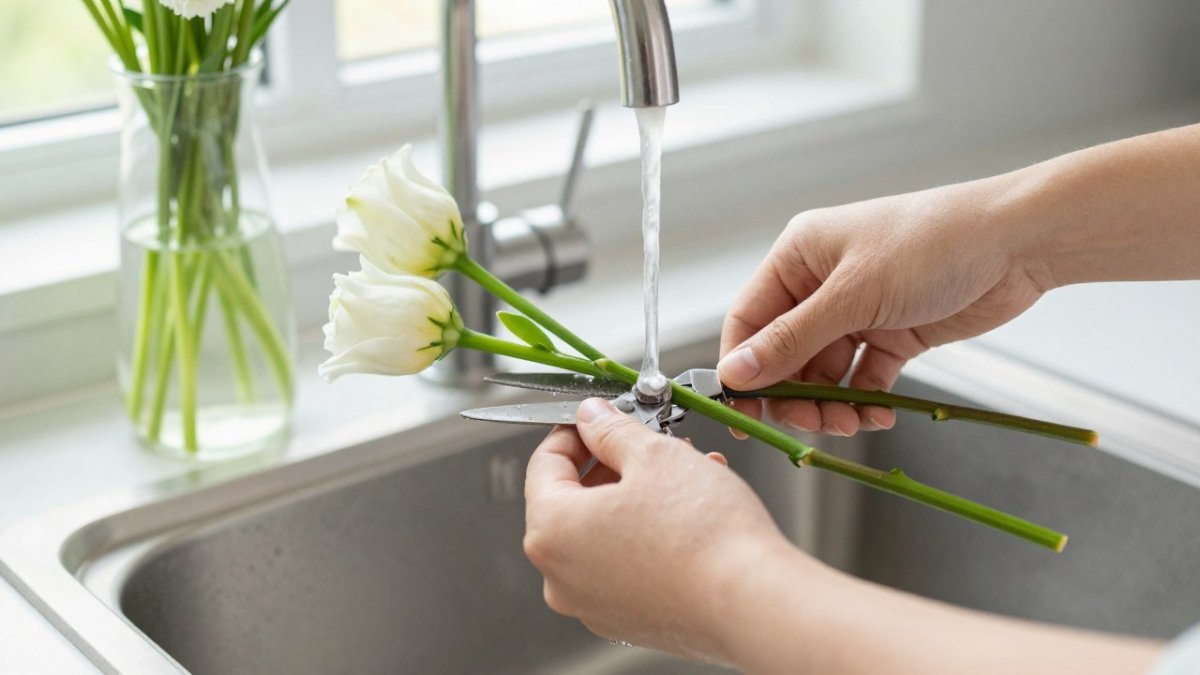
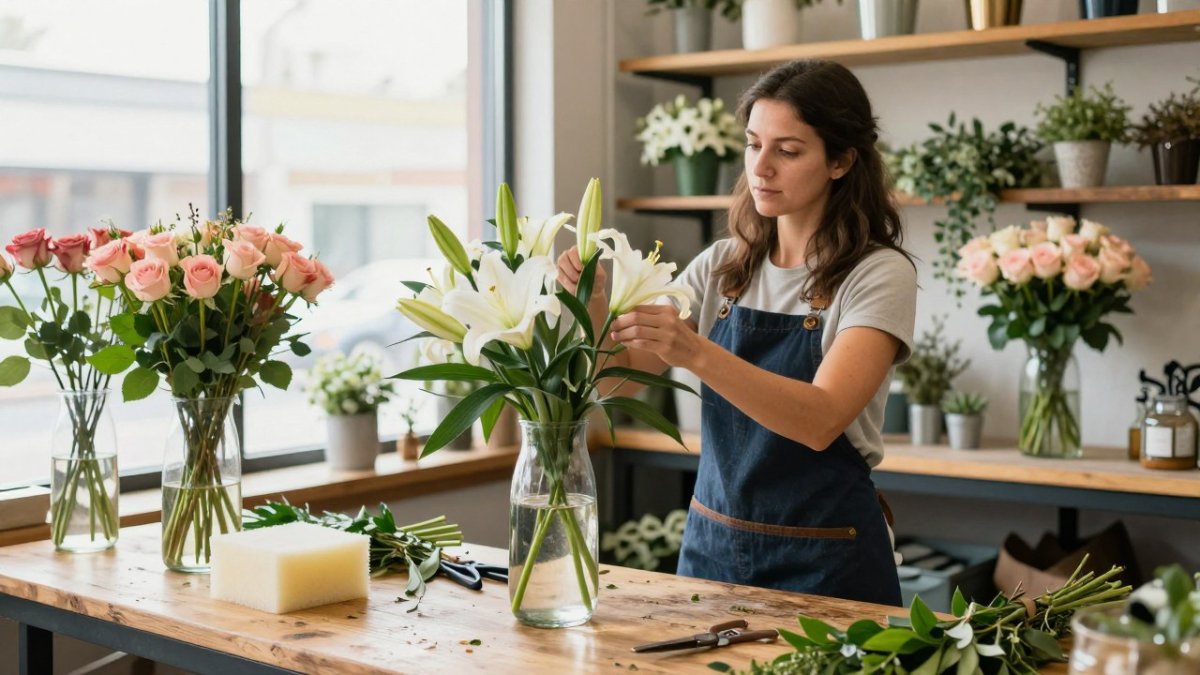
Hands trimming a seasonal flower stem at an angle under running water in a kitchen sink before placing it in a vase

Here is a routine that many florists recommend:

  1. Trim stems at an angle with sharp shears, removing about an inch. An angled cut exposes more surface for water uptake.
  2. Strip leaves below the waterline. Submerged foliage rots and clouds the water.
  3. Use a clean vase. Rinse it with hot water before arranging.
  4. Change the water every two days and re-trim stems each time.
  5. Keep flowers out of direct sun and away from ripening fruit, which releases ethylene that speeds wilting.
  6. Skip the aspirin and pennies. They do not work. A commercial flower food packet does.

Watch out: dropping stems into a vase without a fresh cut is the most common mistake. A stem that has been out of water even an hour seals over at the base and cannot drink.

Flower-by-Flower Conditioning

Different stems need different handling. Tulips and daffodils should be cut and conditioned separately: daffodil sap is harmful to other flowers, so place them in their own vase for a few hours before mixing. Poppies and poinsettias need their stem ends seared with a flame or dipped in boiling water for a few seconds to stop sap flow. Woody stems like lilac and hydrangea benefit from a vertical slit or a light crush at the base to improve water uptake. Hydrangeas wilt easily; if they droop, re-cut the stems and submerge the entire bloom head in cool water for 20 to 30 minutes. Roses should be cut under water if possible and stripped of thorns below the waterline. Dahlias and sweet peas are delicate and do best in shallow, cool water changed daily.

Water Quality and Flower Food

Tap water varies widely in mineral content and pH, and hard water can shorten vase life. If your water is very hard, use filtered water or let tap water sit overnight. Commercial flower food typically contains sugar and other additives; follow the label directions. Homemade mixes of sugar and vinegar or bleach can work in a pinch but are easy to get wrong, and too much sugar feeds bacteria. Stems in flower food often last longer than stems in plain water.

Placement and Temperature

Keep arrangements in a cool spot out of direct sun, heating vents, and drafts. Warm rooms speed aging, so a summer bouquet needs more attention than a winter one. Ethylene from ripening fruit, cigarette smoke, and exhaust can shorten life, so keep flowers away from the fruit bowl and the garage. In warm weather, you can refrigerate arrangements overnight to slow aging, but keep them away from produce.

Troubleshooting Common Problems

If stems go limp while the water is clean, the cut has sealed; re-trim and change the water. If water turns cloudy within a day, bacteria are blooming; clean the vase and re-cut. If blooms fail to open, they were likely cut too tight or stored too cold. If leaves yellow while blooms look fine, submerged foliage is rotting. For the full step-by-step version, read our guide on how to keep fresh flowers alive longer.

The Mood, Decor, and Sustainability Payoff of Local Blooms

Fresh flowers can do more than decorate a room. Many people find that a vase of blooms adds natural fragrance and a focal point to a space.

Local growing shortens the transport distance between field and vase. That means fewer miles traveled, less refrigeration, and a smaller carbon footprint than stems flown in from another continent. Many buyers also value supporting local growers directly, and the quality difference is easy to see.

The environmental case and the quality case point the same direction. A seasonal, locally grown bouquet is usually the fresher, more sustainable, and more distinctive choice. For a deeper look at why local stems outlast imports, see our grower’s guide to why local flowers last longer.

Ordering Seasonal Arrangements from An English Garden

The best way to enjoy seasonal flowers is to order from a florist who works with the season rather than against it. An English Garden has served the area for over 32 years, with secure 24-hour online ordering and delivery to over 30 cities each day.

We also handle occasions that need care and precision, including wedding design with on-site decorating, sympathy and funeral arrangements delivered to local funeral homes and hospitals, and corporate accounts. An award-winning designer is on staff.

Pricing depends on the arrangement, quantity, and delivery date, so check our site for current options or ask for a quote.


Seasonal flowers reward the buyer who plans around what is growing, not against it.

Frequently Asked Questions

Are seasonal flowers fresher than imported flowers?

Many people find seasonal blooms fresher, since they are often harvested closer to peak. Freshness also depends on handling and care after purchase.

Do seasonal flowers cost less than out-of-season flowers?

Often they do. When a flower is in abundance locally, growers and florists can offer more competitive pricing than they can for stems flown in out of season. Exact costs depend on the specific bloom, quantity, and delivery date, so check with your florist for current pricing rather than assuming a fixed number.

How do I choose flowers that are in season?

Ask your local florist what was harvested recently, or check a seasonal flowers by month guide for your region. Look for stems with firm petals, healthy green leaves, and no drooping. In-season blooms like tulips in spring or dahlias in late summer are usually the freshest and most affordable options on the shelf.

Are seasonal flowers more sustainable?

They can be. Locally grown, in-season flowers travel shorter distances, which reduces transport distance and the associated carbon footprint compared with imported or out-of-season stems. Sustainable floristry also favors reusable vessels and fewer chemical treatments, though the exact impact depends on how the flowers were grown and delivered.

Posted on — Leave a comment

Anniversary Flowers Delivered in Mokena, IL: A Local Guide

Last Updated: November 11, 2026

Quick Summary

Anniversary flowers in Mokena, IL are ordered online and delivered by a local florist such as An English Garden, which takes orders around the clock. Choose an arrangement, give the delivery address and date, and confirm the address before checkout, especially for hospitals, offices, and funeral homes.

  • An English Garden takes orders 24 hours a day through a secure online system.
  • Check the shop’s posted cutoff time before assuming same-day delivery is possible.
  • Order a few days early for more design choices and better stock availability.
  • Choose flowers by milestone, recipient taste, color, and how long the blooms will last.
  • Lilies release pollen that can stain fabric and furniture, so remove the stamens.

Table of Contents

How Anniversary Flower Delivery Works in Mokena

Anniversary flowers delivered in Mokena, IL usually arrive the same way a birthday or sympathy order does: you choose an arrangement, give a delivery address and date, and the florist handles the rest. An English Garden has operated in Mokena for many years, and its shop takes orders around the clock through a secure online system. Learn how online ordering and delivery work in Mokena. That means you can place an anniversary order late at night and still set the delivery for the next morning.

Confirm the delivery address before you check out, especially for hospitals, offices, and funeral homes, where staff may need the room number or department.

[PAGE:1]

Anniversary Flower Meanings: Choosing the Right Bloom

Most anniversary searches are really a choice problem: the buyer knows the occasion but not which flower will fit the relationship and the recipient. A workable way to narrow the options is to start with three questions: how long the couple has been together, how the recipient likes to receive gifts, and what color palette already appears in their home or wardrobe. The length of the relationship can also help set the tone, and The Crystal Gift Barn offers another perspective on matching anniversary choices to the milestone.

Infographic illustrating the symbolic meanings of anniversary flowers through a couple sharing roses and lilies.

Start with the milestone. Many couples follow loose traditions tied to years together. Paper and cotton anniversaries are traditionally associated with early years and often pair well with airy, lightly structured arrangements of white or cream blooms. Mid-length marriages often suit richer, more saturated colors and fuller designs. Long-term anniversaries frequently call for classic flowers such as roses or lilies in a formal shape. These are conventions rather than rules, so treat them as a starting point.

Match the recipient’s taste. A recipient who prefers clean lines will usually respond better to a minimal arrangement with a few stems in a single color than to a dense, mixed bouquet. Someone who loves gardens and texture may prefer seasonal blooms with foliage and varied heights. If you are unsure, look at the recipient’s existing decor: a bouquet that echoes a favorite vase color or a room’s accent shade tends to feel considered.

Use color to set the mood. Red and deep pink read as romantic and direct. Blush, peach, and coral feel warm and affectionate without being intense. White and cream suggest elegance and fresh starts. Purple and lavender carry a more distinctive, less expected tone, which can suit a couple who wants something that does not look like a default purchase.

Consider flower longevity. If the recipient is likely to keep the arrangement for a week or more, favor blooms that hold up well, such as lilies, orchids, and many roses. Flowers with delicate petals, such as some tulips, tend to open and fade faster. Ask the florist which stems are at their peak that week, since in-season flowers usually look better and last longer than out-of-season substitutes.

Watch out: Lilies release heavy pollen that can stain fabric and furniture, so remove the stamens or choose a pollen-free variety if the arrangement will sit on a light-colored table or be near fabrics.

The article suggests narrowing anniversary flower choices by milestone, recipient taste, color, and longevity.

Factor What to consider Example from the article
Milestone Years together Paper and cotton: airy white or cream blooms
Milestone Years together Long-term: classic roses or lilies in formal shape
Recipient taste Preferred style Clean lines: minimal arrangement, single color
Recipient taste Preferred style Garden lovers: seasonal blooms with foliage
Color Mood it sets Red and deep pink: romantic and direct
Color Mood it sets White and cream: elegance and fresh starts
Longevity Expected lifespan Lilies, orchids, many roses hold up well
Longevity Expected lifespan Delicate tulips open and fade faster

Same Day Anniversary Flowers Delivered Mokena IL: Cutoffs and Availability

Same-day anniversary delivery depends on the time the order is placed and the arrangement chosen. Check the shop’s posted cutoff before you assume same-day service.

How to check the cutoff. Look for the cutoff time on the florist’s website or ordering page, or call the shop to confirm it for your specific date. See the local same-day options and cutoff details.

Plan the order around the calendar. Ordering a few days early gives you more design choices and a better chance of meeting your delivery date, provided the arrangement you want is in stock. Follow concrete steps to guarantee same-day arrival.

Anniversary Flower Delivery Timing: How Far Ahead to Order

Ordering a few days ahead gives you more room for scheduling and any custom requests.

Planning ahead also helps if you want a specific card message or delivery time.

Anniversary Flower Card Messages That Fit the Occasion

The card is often the most personal part of an anniversary gift. Keep the message short and specific. A reference to a shared memory or a year together reads better than a generic line.

Try a simple structure: a greeting, one specific memory, and a closing line. For example, you might write a sentence about a trip you took together, then close with a wish for the years ahead. Avoid long paragraphs, since card space is limited.

Delivery Fees, Price Ranges, and Substitutions

Pricing depends on quantity, dates, and delivery details. For current prices and any delivery fees, check An English Garden’s website or call for a quote before you order.

Placing Your Anniversary Order With An English Garden

Ordering anniversary flowers with An English Garden is done through the shop’s secure 24-hour online ordering system. Choose an arrangement, pick a delivery date, and enter the recipient’s address. Read a step-by-step guide to placing a local flower delivery order.

[PAGE:5]

Frequently Asked Questions

What type of flowers are appropriate for an anniversary?

Roses are the most traditional choice, with red roses signaling romance and deeper love. Lilies, orchids, and carnations are also popular and often last longer in a vase. The best pick depends on how many years you have been together and the style you prefer, so consider whether you want a classic arrangement or something more modern and seasonal. Many couples choose a mix of roses and a longer-lasting flower to balance tradition with freshness.

Can anniversary flowers be delivered the same day in Mokena?

For same-day anniversary flower delivery in Mokena, IL, contact An English Garden directly to confirm timing and availability for your date. For specific timing and availability on your date, contact An English Garden directly or check current options on the website before you order.

How far in advance should I order anniversary flowers?

For popular dates such as a major anniversary or a weekend, order at least several days ahead to secure your preferred arrangement and delivery window. Ordering ahead gives you time to plan your delivery date. Pricing depends on quantity, date, and delivery details, so request a quote from An English Garden for current costs.

What should I write in an anniversary flower card?

Keep the message personal and specific. Mention the number of years together or a shared memory, then close with a simple statement of what the relationship means to you. For example, you might write a short line about your favorite memory together and a closing wish for the years ahead. Short, sincere messages tend to land better than long ones on a small card, and handwritten notes always feel more personal.

Posted on — Leave a comment

A Guide to Mokena Wedding Florist On Site Decorating

Last Updated: November 10, 2026

Quick Summary

On-site wedding decorating means your wedding florist delivers, builds, places, and later removes every floral and decor element at your venue instead of handing you boxes to arrange yourself. A typical decorating day runs delivery and staging, ceremony install, reception build, a final walkthrough, and teardown at an agreed time.

  • Bring your venue name, guest count, and a realistic total flower budget to the consultation.
  • A complete quote should itemize delivery, labor and installation, rentals, and taxes and fees separately.
  • Confirm in writing whether your florist handles the ceremony-to-reception transition and how long the venue allows.
  • Ask for the substitution policy in writing, including whether you are notified before the event.
  • An English Garden has served the community for over 32 years and delivers to over 30 cities daily.
Planning wedding flowers in Mokena?We design, deliver, install, and tear down wedding florals on site.

Book a Decorating Consultation

Table of Contents

What On-Site Wedding Decorating Actually Covers

On-site wedding decorating is the service where a florist delivers, builds, places, and later removes every floral and decor element at your venue, rather than handing you boxes to arrange yourself.

Infographic illustrating the wedding florist process for setting up floral centerpieces at a banquet hall.

A centerpiece looks simple on a table, but building it on site at the right height, with the right water source and lighting, is a different job entirely. That is what you are paying for.

From Delivery Van to Teardown: The Full Setup Sequence

A typical on-site decorating day runs in a fixed order, and knowing it helps you plan your own schedule around it.

  1. Delivery and staging. Flowers arrive in buckets and are staged in a service area, not the main room.
  2. Ceremony install first. Arbors, aisle pieces, and entry arrangements go up before the room fills.
  3. Reception build. Centerpieces, head table, bar, and accent arrangements are placed and leveled.
  4. Final walkthrough. The lead designer checks sightlines, water levels, and placement against the floor plan.
  5. Teardown. The team returns at an agreed time to strike the setup and remove rentals.

Your Wedding Flower Consultation and Design Proposal

A wedding flower consultation is a working session where you and the designer settle on floral style, color, budget, and scope, and it should end with a written design proposal. That proposal is your contract in plain language: what is being built, how many pieces, and what it costs to install.

Bring three things to the consultation: your venue name, your overall guest count, and a realistic total budget for flowers. From there, the designer can translate inspiration into pieces that fit the room. If you are still shaping centerpiece ideas, browsing best flowers for wedding centerpieces before the meeting gives you a concrete starting point.

The proposal should list every arrangement by name and quantity, note the installation window, and state clearly what happens with rentals.

How Wedding Florist Prices Are Built in the Mokena Area

Wedding florist prices are built from four inputs: the flower varieties you choose, the number of pieces, the labor to install them, and delivery distance. Two florists can price the same bouquet list differently because one includes on-site labor and one does not.

Pricing depends on quantity, dates, and delivery, so we recommend requesting a quote for each wedding individually. Couples working to a tighter number can review affordable wedding flower packages to see how piece counts and varieties shift the total.

The Cost Drivers That Move a Quote Most

When couples ask why one proposal is higher than another for what looks like the same wedding, the answer usually sits in one of these drivers:

  • Variety and stem count. A centerpiece built from garden roses and peonies costs more in stems than one built from carnations, mums, and greenery.
  • Piece count and scale. Tall centerpieces, large arbors, and hanging installations use more material and labor per piece than low centerpieces.
  • Installation labor. On-site decorating is time-based work, and the labor line is where quotes most often diverge.

Line Items You Should See on Any Quote

A complete quote separates these categories. If several are missing, ask why.

Line Item What It Covers Why It Matters
Personal flowers Bouquets, boutonnieres, corsages Often quoted as a bundle, so check counts
Ceremony flowers Arbor, aisle, entry pieces Installation labor should appear separately
Reception flowers Centerpieces, head table, bar Quantity per table must be explicit
Delivery fee Transport to venue Distance and trip count drive this
Labor and installation Setup and teardown time The most commonly omitted line
Rentals Vases, stands, arbors Confirm whether return shipping is included
Taxes and fees Sales tax, service charges Should be itemized, not folded into the total

How to Compare Two Proposals Side by Side

A lower total is not automatically the better value. To compare proposals fairly, line them up against the same questions:

  1. Does each quote include installation and teardown, or is that billed separately?
  2. Are piece counts and stem counts comparable?
  3. Is the ceremony-to-reception transition included, and by whom?
  4. Are rentals included, and who handles their return?
  5. Is delivery one trip or several, and is the venue within the standard radius?
  6. Are taxes and fees itemized?
  7. What is the substitution policy, and does it affect price?

Watch out: a quote that lists a single lump sum with no breakdown makes it impossible to compare scope, so ask for an itemized version before signing.

Questions to Ask a Wedding Florist Before You Sign

The right questions surface how a florist handles the day itself, not how they photograph. Ask about responsiveness on the wedding day, who the lead designer will be, and the backup plan if a variety is unavailable.

A common mistake is choosing on price per centerpiece alone. If you want a structured way to vet providers, this step-by-step guide on how to choose a wedding florist in Mokena walks through the full set of questions.

What Wedding Floral Setup Looks Like on the Day

On the wedding day, floral setup is a timed operation, not a single delivery. The team arrives within an agreed window, builds the ceremony pieces first, then moves to the reception while the ceremony is underway or after it clears.

What most guides miss is the ceremony-to-reception transition. To picture the finished setup, browse best wedding floral arrangements and note which elements repeat from ceremony to reception.

Venue Logistics, Weather, and Flower Substitutions

Venue logistics decide more of your floral plan than your inspiration board does. Load-in windows, service elevator access, table sizes, and open-flame rules all constrain what can be built and how long installation takes. Share the venue name at the consultation so the florist can confirm the venue’s rules with the coordinator.

What to Confirm With the Venue Before Design Approval

Most venues publish or provide a vendor packet, and the floral-relevant details usually live in a few specific places. Ask the coordinator to confirm each of these in writing:

  • Load-in and load-out windows. When can vendors enter, and is there a hard out time?
  • Access route. Is there a loading dock, service elevator, or freight entrance, and are there stairs or thresholds that affect large arbor pieces?
  • Setup restrictions. Are hanging installations allowed, and are there weight limits or rigging points vendors must use?

Watch out: a venue that allows candles at the reception may prohibit them during the ceremony, or restrict them to enclosed holders only, so confirm the policy for each space rather than assuming one rule covers the day.

Ceremony-to-Reception Transitions and Room Flips

If your ceremony and reception share a space, the room flip is the most schedule-sensitive part of the floral plan. Repurposing ceremony pieces at the reception requires hands and a scheduled window. Confirm in writing with your florist how the move will be handled and how long the venue allows for the flip.

Weather, Seasonality, and Backup Plans for Outdoor Ceremonies

Outdoor ceremonies in the region face real seasonal swings. Summer heat wilts delicate varieties such as hydrangea and sweet pea quickly, and direct sun on an arch can undo wiring and ribbon work within hours.

Ask what the backup plan is if the ceremony moves indoors on short notice. Ask whether a weather-driven relocation would change the installation window or require additional labor.

How Flower Substitutions Actually Work

Fresh flowers are agricultural, and no florist can promise an exact variety months out. A substitution policy should state what happens when a variety is unavailable: whether the florist substitutes a comparable flower in the same color and price range, whether you are notified before the event, and whether any cost difference is passed through or absorbed. Ask for the policy in writing before signing, and read the wedding flower substitution policy so you know how swaps are handled.

Planning Timeline and Booking Checklist

Booking a wedding florist works best on a timeline that starts well before the wedding, not weeks out. Peak-season dates fill first, and the consultation and proposal stage takes real time. Use this checklist to keep the sequence straight.

  • Book the venue and confirm load-in and load-out windows
  • Set a total floral budget and a per-category split
  • Schedule the consultation at least several months ahead
  • Receive the written design proposal and review every line item

Book Your On-Site Decorating Consultation

The couples who end up relaxed on the wedding day settled the logistics months earlier: a written proposal, a confirmed installation window, a named lead designer, and a substitution policy you have actually read.

An English Garden has served this community for over 32 years, with expert design services for weddings and special events, including on-site decorating. Our award-winning designer on staff, secure 24-hour online ordering, and delivery to over 30 cities each day support your planning.

Frequently Asked Questions

What does on-site wedding floral decorating include?

On-site decorating typically covers delivery and placement of the arrangements at the venue. A wedding florist brings bouquets, ceremony pieces, centerpieces, and table arrangements to the venue, then positions each item according to the approved design plan. Setup usually includes pinning personal flowers, dressing the ceremony arch or aisle, and placing reception centerpieces. Ask your florist exactly where setup ends and teardown begins so nothing is left for your family to handle.

How much does wedding floral decorating cost?

Wedding florist prices depend on the number of arrangements, flower varieties, season, delivery distance, and how much labor the on-site setup requires. A small ceremony with bouquets and a few centerpieces costs far less than a full reception with installations and rentals. Because every wedding differs, most florists build a custom quote after a consultation. Request an itemized proposal so you can see delivery fees, labor, and container rentals separately, then compare proposals on scope rather than the bottom line alone.

When should I book a wedding florist?

Book six to twelve months before the wedding for peak spring and fall dates, and earlier if your venue requires a preferred vendor or your date falls near a holiday. Start with a wedding flower consultation once you have a venue and a rough guest count, since both shape the design and the budget. Popular Mokena-area dates fill quickly, so secure your florist before finalizing smaller details. A signed contract with a deposit locks in your date and gives you time to refine the design.

What questions should I ask a wedding florist before booking?

Ask how long they have worked in the area, whether they handle setup and teardown themselves, and what happens if a flower variety is unavailable. Confirm delivery fees, labor charges, and whether containers are rented or included. Request references or reviews from recent weddings at your venue. Also ask who your day-of contact will be and how they coordinate with the venue coordinator. Clear answers to these questions to ask a wedding florist reveal whether the team can deliver on the day.

How long does wedding floral setup take?

Setup time depends on the scale of the design and the venue’s access rules. A simple ceremony and reception might take two to four hours, while installations, large centerpieces, and multiple rooms can require a full morning. Most florists arrive several hours before guests and work around the venue’s load-in window. Confirm the setup schedule in your contract and check whether the venue charges for early access. Building in a buffer protects your timeline if delivery runs late.

Can one florist decorate both the ceremony and reception?

Yes, and using one florist for both keeps your style consistent and often reduces cost. A single team can repurpose ceremony pieces, such as aisle arrangements or arch flowers, into the reception space during cocktail hour. This approach can reduce duplicate arrangements and simplify coordination. Ask your florist whether they plan for repurposing and who handles moving the flowers. Confirm the venue allows the transition and that staffing covers the extra labor.

Posted on — Leave a comment

Best Gift Baskets for a New Homeowner: A Practical Buying Guide

Last Updated: November 8, 2026

Quick Summary

The best gift baskets for a new homeowner combine gourmet treats, a bottle of wine, and a few home essentials in one delivery, covering several small needs at once. Match the basket to the recipient and set your budget before you shop, then choose from gourmet food, baked goods, wine, or fruit assortments.

  • A traditional housewarming basket carries bread, salt, and wine to wish food, flavor, and good fortune.
  • Build a custom basket in about an hour of shopping and fifteen minutes of assembly.
  • Use a basket or wooden crate roughly 12 to 16 inches wide with a liner.
  • Include one jar of flaked or coarse salt, about 4 to 8 ounces.
  • Time delivery for after the move, not on moving day itself.
Need a housewarming gift that arrives ready?We build gourmet and snack baskets for new homeowners and deliver them fresh.

Send a Housewarming Basket

Table of Contents

Why a Gift Basket Beats a Single Item for a New Home

The best gift baskets for a new homeowner solve a problem a single gift cannot: a new house has many small needs at once, and one well-built basket covers several of them in a single delivery. Gift baskets suit every kind of occasion, and housewarmings reward the format more than almost any other event.

Here is the practical case. New homeowners spend their first weeks opening boxes, hunting for a corkscrew, and skipping real meals. A gift box that includes gourmet treats, a bottle of wine, and a couple of home essentials lands exactly where the stress is.

Below, we break down how to choose the best gift baskets for a new homeowner, organized by category, budget, and recipient. If you already know a basket is the right call, you can shop a new home gift basket box and skip straight to delivery.

How to Choose the Best Gift Baskets for a New Homeowner

Choosing well comes down to two decisions made before you shop: who the recipient is and what you want to spend. Get those settled and the rest is easy.

The woman is American.

Match the Basket to the Recipient

Start with the person, not the products. A young couple in a first apartment usually wants fun and practical: snacks, a bottle of wine, something for the kitchen. A family with kids needs items that survive a busy household, so skip fragile decor and lean toward food everyone can share. For older recipients or someone downsizing, fewer but nicer items read as more thoughtful than a giant assortment.

A common mistake is buying for the house instead of the person. The best gift baskets for a new homeowner feel personal, which is why a note about their new place matters as much as what is inside.

Set a Budget Before You Shop

Gift basket prices scale with size and contents, so decide your number first. A modest budget buys a tight, well-chosen assortment of sweet treats and savory snacks. A larger one adds wine, premium fruit, or artisanal items.

Housewarming Gift Basket Ideas by Category

Housewarming gift basket ideas fall into four useful groups: gourmet food, baked goods, wine and drinks, and fruit with artisanal items. Each suits a different recipient, and most baskets mix two or three.

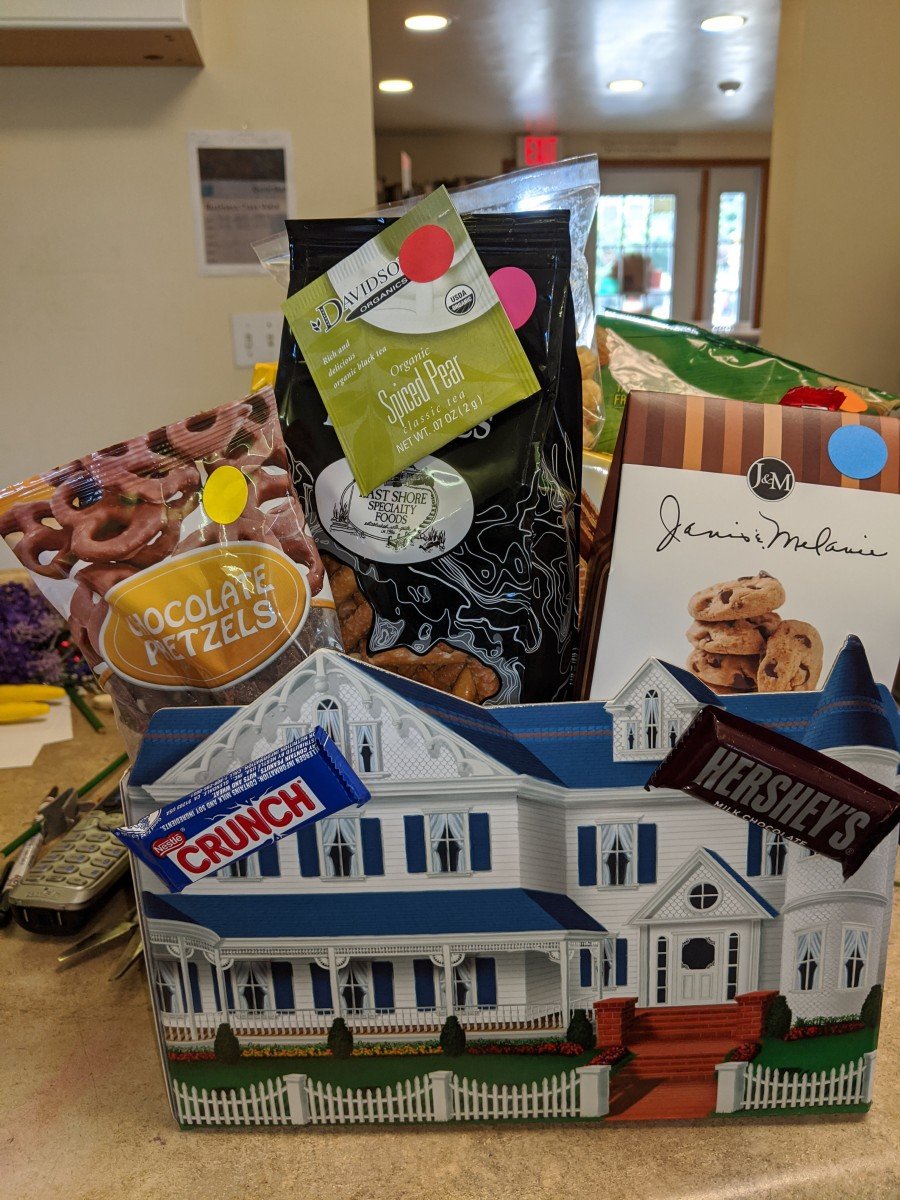
A gift basket shaped like a white Victorian house containing chocolate pretzels, Crunch and Hershey's chocolate bars, cookies, and coffee bags.
A gift basket shaped like a white Victorian house containing chocolate pretzels, Crunch and Hershey’s chocolate bars, cookies, and coffee bags.

Gourmet Food and Snack Assortments

Gourmet treats are a safe crowd-pleaser. A mix of savory snacks, crackers, and chocolate covers the gap between moving day and the first real grocery run.

Sweet Treats and Baked Goods

They are the friendliest option for a family with children, and they photograph well for the thank-you text you will probably get.

Wine and Celebratory Drinks

A bottle of wine turns a gift into a toast. Pair it with chocolates or a snack assortment and you have a ready-made housewarming moment.

Fruit, Dried Fruit, and Artisanal Items

Premium fruit, dried fruit, and artisanal items feel more elegant than baked goods. A gourmet basket built around fruit is a strong pick for a recipient you do not know well. For a ready-made option, you can browse a gourmet home sweet home gift basket built for exactly this occasion.

The Traditional Housewarming Gift Basket: Bread, Salt, and Wine

The traditional housewarming gift basket carries bread, salt, and wine, a combination with old roots meant to wish the new owner food, flavor, and good fortune. The idea is simple: bread so they never go hungry, salt so life keeps its flavor, and wine for celebration.

Why Bread, Salt, and Wine Still Work

The tradition survives because the symbolism is clear and the items are genuinely useful. A common mistake is overthinking it with elaborate additions; keep the three core items and let the presentation do the work. The same restraint applies when wine is part of the welcome: let Posh Plonk help you pair a thoughtful bottle with the practical essentials without letting extras overwhelm the gesture.

A Housewarming Gift Basket for Family: Practical and Kid-Friendly

A housewarming gift basket for family should be practical and kid-friendly, built around things a busy household will actually use. Think shareable snacks, easy breakfast items, and a treat the children can claim as theirs.

Skip fragile decor and anything that needs careful handling. Paper plates, good coffee, and a movie-night snack box beat a vase every time in a house full of boxes. If you want to build one yourself, we cover the shopping list next.

Bread Salt Wine Housewarming Gift: Building a Custom Basket

Building a bread salt wine housewarming gift yourself is straightforward, often more personal than a pre-made set, and usually cheaper for the same contents.

The three core items

  • One good loaf of bread, or a boxed cracker and breadstick selection if you are shipping. A crusty sourdough or a seeded loaf reads as more intentional than a supermarket white loaf, and a boxed selection travels better.
  • One small jar of flaked or coarse salt, about 4 to 8 ounces. Flaked sea salt looks generous in the jar and lasts for months; a flavored salt such as smoked or rosemary adds a second use.
  • One bottle of wine, red or white based on their taste. If you do not know their preference, a medium-bodied red or a dry white is the safer bet than a sweet wine.

The structure and presentation

  • One basket or wooden crate with a liner, roughly 12 to 16 inches wide. A crate doubles as storage in a new home, which a cardboard box does not.
  • Filler: one bag of tissue paper or shredded paper. You need enough to lift the items so they sit above the rim, usually two to three sheets of tissue per layer.
  • One ribbon, about 1.5 to 2 inches wide and long enough to tie a bow with tails.
  • One handwritten card. This is the item recipients mention most often, and it costs almost nothing.

The optional extras that earn their space

  • One small edible: a box of chocolates or a tin of cookies.
  • One practical home item: a kitchen towel, a corkscrew, or a candle. A corkscrew is the single most useful add-on when you are already including wine.
  • One consumable the household will use in the first week: good coffee, tea, or olive oil.

How to assemble it

Line the basket first, then place the heaviest items at the back and against the sides: the wine bottle, the jar of salt, the loaf.

What it costs

The trade-off is time: expect about an hour of shopping and fifteen minutes of assembly.

If the gift has to travel, swap the loaf for a sealed cracker selection and keep the bread as a hand-delivery-only option.

If you would rather assemble from a base, you can build your own gift basket box and add your own bread, salt, and wine.

Here is the shopping list for one standard basket that serves two to four people.

Item Quantity or size Note
Good loaf of bread One loaf Boxed cracker and breadstick selection if shipping
Flaked or coarse salt About 4 to 8 ounces Smoked or rosemary salt adds a second use
Bottle of wine One bottle Medium-bodied red or dry white if unsure
Basket or wooden crate with liner Roughly 12 to 16 inches wide A crate doubles as storage
Tissue or shredded paper filler Two to three sheets per layer Lifts items above the rim
Ribbon About 1.5 to 2 inches wide Long enough to tie a bow with tails
Handwritten card One The item recipients mention most often

Dietary Needs, Alcohol-Free Options, and Delivery Timing

Dietary needs, alcohol-free choices, and delivery timing are the three details that most often go wrong, and all three are easy to plan for.

Accommodating Dietary Restrictions

Ask before you buy, since dietary needs vary by household. You can order a deluxe all fruit basket when you need a safe, elegant option.

Alcohol-Free Alternatives

Swap wine for sparkling cider, good coffee, or a premium tea selection. The toast still happens, and nobody is left out.

Delivery, Timing, and Presentation

Time the delivery for after the move, not on moving day, when the recipient is covered in packing tape. Add a gift message so the basket arrives with context. You can add a custom card to finish the presentation.

Ordering Your Housewarming Basket from An English Garden

Ordering a housewarming basket from An English Garden keeps the whole job in one place. We have served the area for over 30 years, offer secure 24-hour online ordering, and deliver to more than 30 cities each day.

The challenge with any housewarming gift is timing and trust: you want it to arrive fresh, on the right day, looking the way you pictured it. That is the part we handle. Get started with An English Garden and send a housewarming basket that arrives ready to open.


Choosing the best gift baskets for a new homeowner comes down to matching the contents to the person, setting a budget first, and timing the delivery after the move. If you would rather hand the details to a local florist with decades of experience, we are glad to help.

Frequently Asked Questions

What should you put in a gift basket for a new homeowner?

A practical housewarming gift basket combines consumables and useful items: gourmet snacks, baked goods, premium fruit, and a celebratory drink. Add practical home essentials. For a traditional touch, include bread, salt, and wine. Skip decor that requires the recipient to find wall space. A thoughtful gift message ties the assortment together and makes the basket feel personal rather than generic.

Is bread, salt, and wine a good housewarming gift?

Yes. The bread salt wine housewarming gift is a long-standing tradition symbolizing that the new home will always have food, flavor, and celebration. It works as a standalone gesture or as the centerpiece of a larger basket. Pair bread or crackers with a small jar of salt and a bottle of wine, and choose a non-alcoholic option for non-drinkers.

How do you make a housewarming gift basket feel personal?

Start with what you know about the recipient. A family with young children appreciates kid-friendly snacks and practical supplies; a couple in a new apartment may prefer compact gourmet treats and a candle. Include a handwritten gift message referencing their move. Choose a basket theme that matches their taste, whether savory snacks, sweet treats, or a traditional bread salt wine housewarming gift. Personalization comes from relevance, not from adding more items.

What is a good housewarming gift basket for a family?

A housewarming gift basket for family should feed everyone and ease the first week. Include a mix of sweet and savory snacks, shelf-stable breakfast items, and a beverage everyone can share, such as sparkling cider. Add practical home essentials. Avoid alcohol unless you know the adults drink. Keep packaging simple so unpacking is easy, and include a note welcoming the whole family to the neighborhood.

Posted on — Leave a comment

How Do You Choose Plants for a Low Light Office?

Last Updated: November 8, 2026

Quick Summary

To choose plants for a low light office, measure the light at leaf height first: 50 to 150 foot-candles means low light, which covers most windowless offices and north-facing rooms. Then pick slow-growing, shade-tolerant plants like snake plant, ZZ plant, and cast iron plant.

  • Phone light-meter apps give rough readings, so treat the numbers as a range, not a precise grade.
  • Light drops off sharply past 6 to 8 feet from a window.
  • Typical office lighting runs 8 to 10 hours a day on weekdays, close to what low-light plants need.
  • Run a grow light eight to ten hours a day and keep it a foot or two above the foliage.
  • Overwatering is the number one killer of office plants, so check the soil before you water.
Need plants that survive a dim office?An English Garden offers hardy plants, gifts, and easy online ordering for local offices.

Shop Office Plants

Table of Contents

How to Choose Plants for a Low Light Office: Start With Your Light

Choosing plants for a low light office starts with one step most guides skip: measuring the light before you buy anything. Choosing plants that will actually survive where they live starts with understanding the light they will receive.

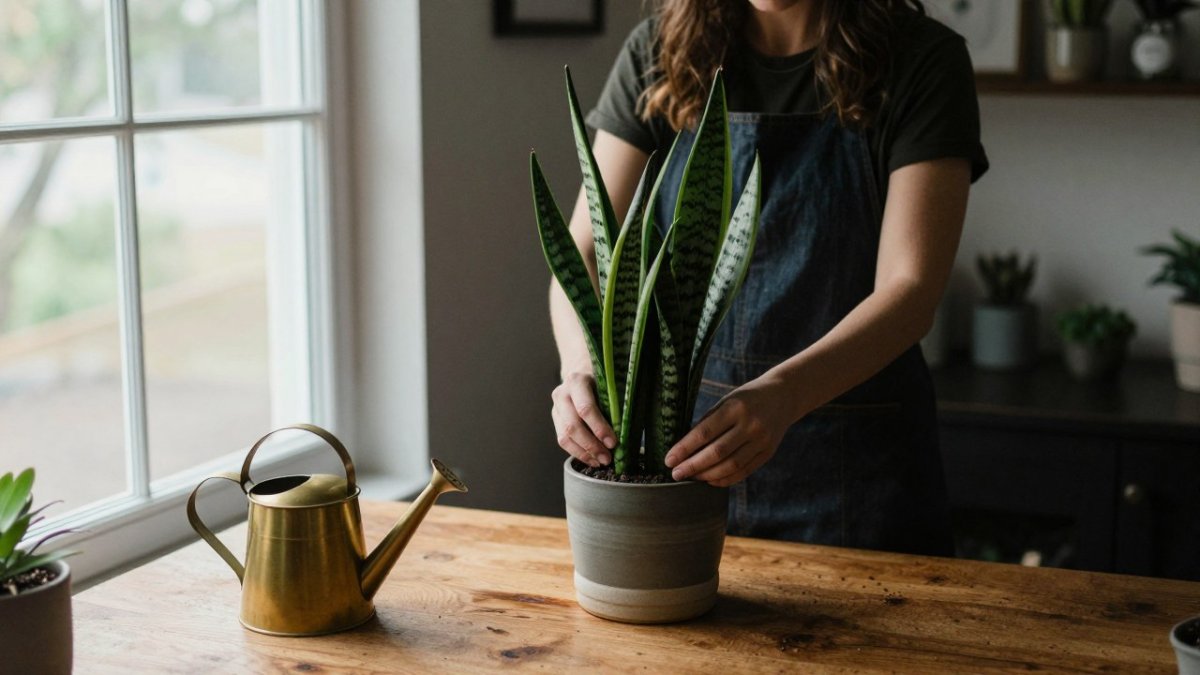
Office worker measuring light levels for a snake plant in a low light office corner

Light is the whole ballgame. A plant that needs bright, indirect light will sulk in a dim corner no matter how well you water it.

A Simple Way to Measure Office Light

A phone light-meter app gives you a rough reading in seconds, but the number only means something if you take it the same way every time.

Here is how we read the results:

  • Under 50 foot-candles: deep shade. Only the toughest plants survive here.
  • 50 to 150 foot-candles: low light. This covers most windowless offices and north-facing rooms.
  • 150 to 300 foot-candles: medium, indirect light. More options open up.
  • Over 300 foot-candles: bright, indirect light. Many common houseplants do well here, but watch for direct sun that can scorch leaves.

Check the reading at midday, not dawn. A desk that looks bright at 8 a.m. may sit in shadow by 2 p.m. once the sun moves.

Watch out: phone light-meter apps are not calibrated instruments, so treat the numbers as a range, not a precise grade.

The No-App Observation Test

If you would rather not download anything, use a simple observation test. Sit at the desk at 10 a.m. and again at 2 p.m. and answer three questions:

  1. Can you read a book without turning on a lamp? If yes, you likely have medium light or better.
  2. Can you cast a sharp shadow with your hand on the desk? A crisp shadow suggests brighter light; a soft, fuzzy shadow suggests low light.
  3. Does the spot get any direct sun through a window at any point in the day? Even an hour of direct sun changes which plants will work.

A spot that fails all three is deep shade. A spot that passes one or two is low to medium. This test is not precise, but it is consistent, and consistency is what matters when you are comparing one corner to another.

Match Plants to Specific Office Conditions

The right plant depends on more than light. Ask five questions before you choose:

  1. How far is the nearest window? A north-facing window still helps. A desk 20 feet from any glass is a different world. As a rule of thumb, light drops off sharply past 6 to 8 feet from a window.
  2. Is the air dry or drafty? Heating vents and air conditioning dry out leaves fast. A spot within 3 feet of a vent is a harder environment than the same light level across the room.
  3. Who shares the space? Pets and small children change the safety math. A trailing pothos on a low shelf is a chewing hazard; the same plant on a high cabinet is not.
  4. How much care will actually happen? A busy front desk needs a plant that forgives a missed week. A plant that needs weekly watering will suffer in a conference room that sits empty on weekends.
  5. Is the office occupied on weekends? If no one is there Saturday and Sunday, choose plants that tolerate a longer dry spell, or set up a simple watering schedule with whoever cleans the space.

Answer those honestly and the plant list shrinks to a handful of reliable names. A windowless desk with a vent overhead and no weekend care is a very different assignment from a north-facing reception area with daily staff presence, and the plant you pick should reflect that difference.

Best Plants for an Artificial Light Office

The best plants for an artificial light office are slow-growing, shade-tolerant types that handle fluorescent and LED lighting without complaint. These are the workhorses of the indoor plant world, and they ask for little.

Our short list:

  1. Snake plant (Sansevieria): nearly indestructible, upright foliage, tolerates neglect and low light. Water every two to three weeks at most.
  2. ZZ plant (Zanzibar gem): glossy leaves, drought tolerant, happy in a dim corner. Let the soil dry fully between waterings.
  3. Golden pothos: trailing vines that adapt to almost any light. Trim it to keep it tidy on a shelf.
  4. Chinese evergreen: broad, patterned leaves that tolerate shade and low humidity.
  5. Cast iron plant: the name says it. Hardy, slow-growing, and forgiving of poor conditions.
  6. Dracaena varieties: upright and architectural, good for corners and reception areas.

Do Office Fluorescents and LEDs Actually Grow Plants?

Usually, yes, but with limits. Standard office ceiling panels put out enough light for shade-tolerant plants to hold steady, not to grow vigorously.

A few practical points:

  • Hours matter more than intensity for most offices. Typical office lighting runs 8 to 10 hours a day on weekdays, which is close to what low-light plants need. The problem is weekends, when the lights go off and the plant gets two dark days. Most shade-tolerant plants handle that fine; a plant that needs consistent bright light will not.
  • LED panels are usually stronger than old fluorescent tubes at the same fixture, so a newer office may actually offer more usable light than the foot-candle chart suggests. Measure rather than assume.
  • Distance from the fixture matters. A plant on a desk 6 feet below a ceiling panel gets far less light than one on top of a filing cabinet 3 feet below the same panel. If you have a choice, raise the plant.

Watch out: a windowless office with motion-sensor lights that switch off when the room is empty gives plants unpredictable dark periods. If the sensors cut the lights for hours at a time, treat the spot as deep shade and choose accordingly.

Grow Light Schedules That Work

A small LED grow light turns a dark office into a workable spot, and it is worth the cost when you want a plant that needs more than low light or when your office lights are off for long stretches.

Keep the light a foot or two above the foliage. Too close and you scorch leaves; too far and it does nothing. Check the manufacturer’s coverage area rather than guessing, and adjust the height as the plant grows.

If you are choosing between a grow light and a different plant, the cheaper answer is usually the plant.

Plants for an Office With No Natural Light

Growth will be slow. That is normal, not a sign of failure.

The snake plant, ZZ plant, and cast iron plant are your safest bets here. All three evolved under forest canopy and tolerate dim conditions.

One honest caveat: no plant thrives in total darkness. Even a windowless office has overhead lights, and that is enough for these hardy types to hold steady.

Large Low Light Indoor Plants for Reception and Open Spaces

Large low light indoor plants anchor a reception area and soften a big open floor. The trick is choosing size without sacrificing shade tolerance.

Good picks for a lobby or open space:

  • Dracaena varieties: tall, upright, and comfortable in indirect light.
  • Large snake plant specimens: bold vertical foliage that fills a corner.
  • Philodendron: big, heart-shaped leaves that handle lower light well.
  • Cast iron plant: broad foliage that stays green in shade.

Match the pot to the space. A plant that looks generous in a corner will look cramped against a long reception desk. And check the floor: a large potted plant is heavy, so place it where it will not block a walkway or a door swing.

Low-Light Indoor Plant Care: Watering, Drainage, and Humidity

Low-light indoor plant care comes down to restraint. In dim conditions plants grow slowly, so they drink slowly.

Follow these habits:

  • Check before you water. Push a finger an inch into the soil. If it is damp, wait.
  • Always use a pot with drainage. Water should run out the bottom, never pool.
  • Empty the saucer. Sitting water rots roots.
  • Skip the misting routine. Most office plants tolerate normal indoor humidity fine.
  • Keep away from vents. Direct hot or cold air dries leaves and stresses the plant.

For deeper guidance on keeping greenery healthy, our guide on how to keep fresh flowers alive longer shares care steps that apply to plants too.

Temperature matters as well. Most houseplants prefer the same range people do. Avoid spots near drafty doors or directly under a heating vent.

Troubleshooting When Low-Light Plants Decline

When a low-light plant starts to decline, the cause is usually water, light, or temperature, in that order. Diagnose before you act.

A quick reference:

Symptom Likely Cause Fix
Yellow, mushy leaves Overwatering Let soil dry, check drainage
Pale, stretched growth Too little light Move closer to a window or add a grow light
Brown, crispy leaf tips Dry air or underwatering Water more evenly, move from vents
Dropping leaves Cold drafts or sudden change Relocate away from doors and vents
No new growth for months Low light, slow natural pace Accept slow growth or add artificial light

A common mistake is reacting to one yellow leaf by watering more. That usually makes it worse. Check the soil first, then the light, then the temperature.

Pet and Human Safety in a Shared Workspace

If animals visit the office, check each plant’s safety for pets before bringing it in, and confirm with a veterinarian.

For people, the main concern is skin and eye irritation from sap. Wear gloves when pruning, and wash hands after handling soil.

If you are unsure about a specific plant, check with your veterinarian or a poison control resource before bringing it in.

Ordering Office Plants and Gifts From An English Garden

Ordering office plants should be simple, and that is where we come in. An English Garden offers a wide selection of plants, gourmet baskets, and home decor for any budget, with secure 24-hour online ordering and daily delivery to local businesses.

For offices planning a greenery refresh or a client gift, our guide on corporate flower delivery for offices walks through the ordering process step by step.


Ready to green up a dim office?

Frequently Asked Questions

What plants do well in a low light office?

Snake plant, ZZ plant, golden pothos, Chinese evergreen, and cast iron plant are the most reliable choices for a low light office. Each tolerates indirect light and shade, needs watering only every one to three weeks, and handles standard office temperatures. Peace lily and dracaena also work well if you have a bit more ambient light. Start with two or three varieties and see how they respond before adding more.

Can plants survive in an office with no natural light?

Yes, but only with artificial lighting. Plants for an office with no natural light depend entirely on overhead fluorescent or LED fixtures, so place them close to the light source and keep lights on for a regular daily period. Snake plant, ZZ plant, and pothos handle this best. Without any light at all, no plant survives long term.

How do I tell how much light my office gets?

Use a simple light meter app on your phone, or place a white sheet of paper on the spot and check whether it casts a sharp shadow (bright indirect), a soft shadow (medium), or none (low). Take readings at midday and again in the afternoon. North-facing windows give steady indirect light, while interior desks far from windows rely on overhead fixtures alone.

How often should I water low-light indoor plant care routines include?

Low-light plants grow slowly and use less water, so water only when the top of the soil has dried, letting it dry between waterings. Always use pots with drainage holes and empty the saucer after watering. Overwatering is the most common cause of decline in low light office plants, so when in doubt, wait a few more days.

Posted on — Leave a comment

7 Steps to Send Funeral Flowers to a Funeral Home

Last Updated: November 7, 2026

Quick Summary

To send funeral flowers delivered to a funeral home, gather the deceased’s name, the funeral home’s address, and the service date and time before ordering. Aim for delivery the day before the service, or at least two to three hours before visitation begins, and confirm the delivery window with the funeral home directly.

  • Call the funeral home to ask when deliveries are accepted, where flowers should be placed, and when they should arrive.
  • If the service is within 24 hours, tell the florist immediately and ask whether same-day delivery is possible.
  • Give the florist the deceased’s full name, the funeral home’s address, the service date and time, and the family’s name.
  • Ask the florist for delivery confirmation with a time and the name of the person who accepted the arrangement.
  • Choose a local florist who knows the area’s funeral homes and their delivery windows.
Need flowers at a funeral home by tomorrow?An English Garden delivers sympathy arrangements to local funeral homes with direct staff coordination.

Send Funeral Flowers Today

Table of Contents

What You’ll Need Before You Order Funeral Flowers

Sending funeral flowers delivered to funeral home services starts with five facts in hand. The orders that go smoothly are the ones where the sender gathered these details before calling:

  • The name of the deceased
  • The funeral home’s name and street address
  • The service date and start time, plus any visitation hours
  • The family’s wishes, if you know them
  • A card message written ahead of time

Funeral flowers are a floral tribute sent to honor the deceased and comfort the bereaved family. Getting the details right matters more than the size of the arrangement.

Step 1: Choose the Right Arrangement for the Service

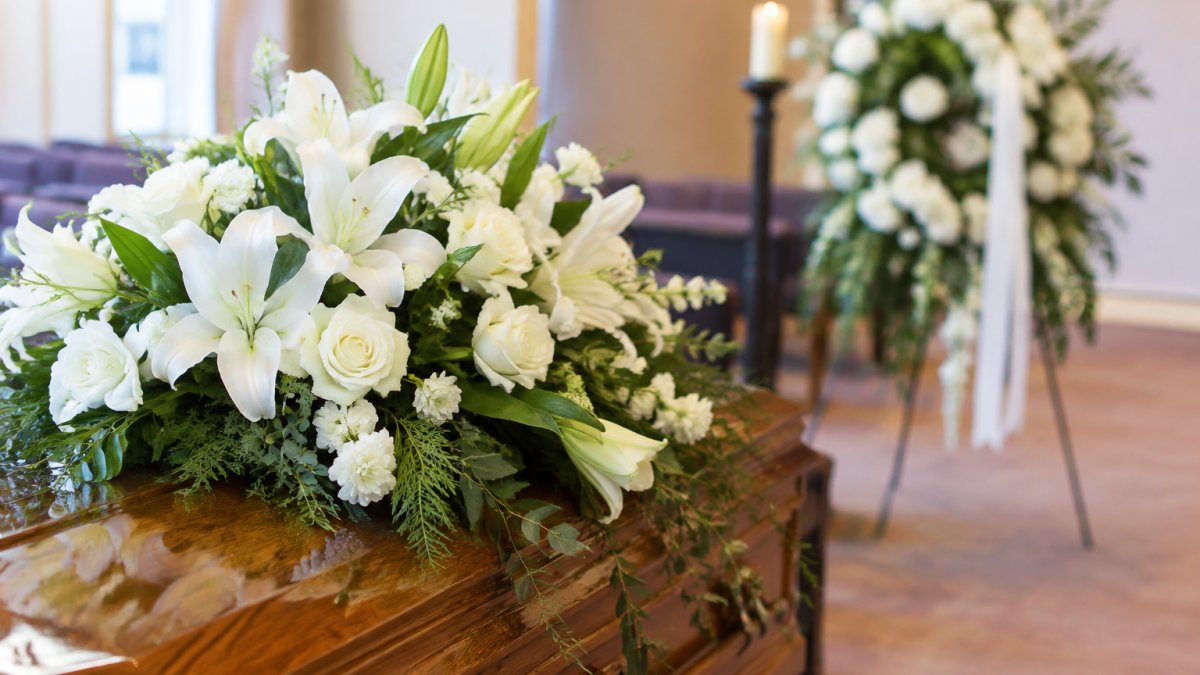
Pick the arrangement by where it will stand. A casket spray belongs on the casket, a standing spray or wreath sits on an easel near the service, and a basket or vase arrangement goes to the family’s home or the funeral home’s family room.

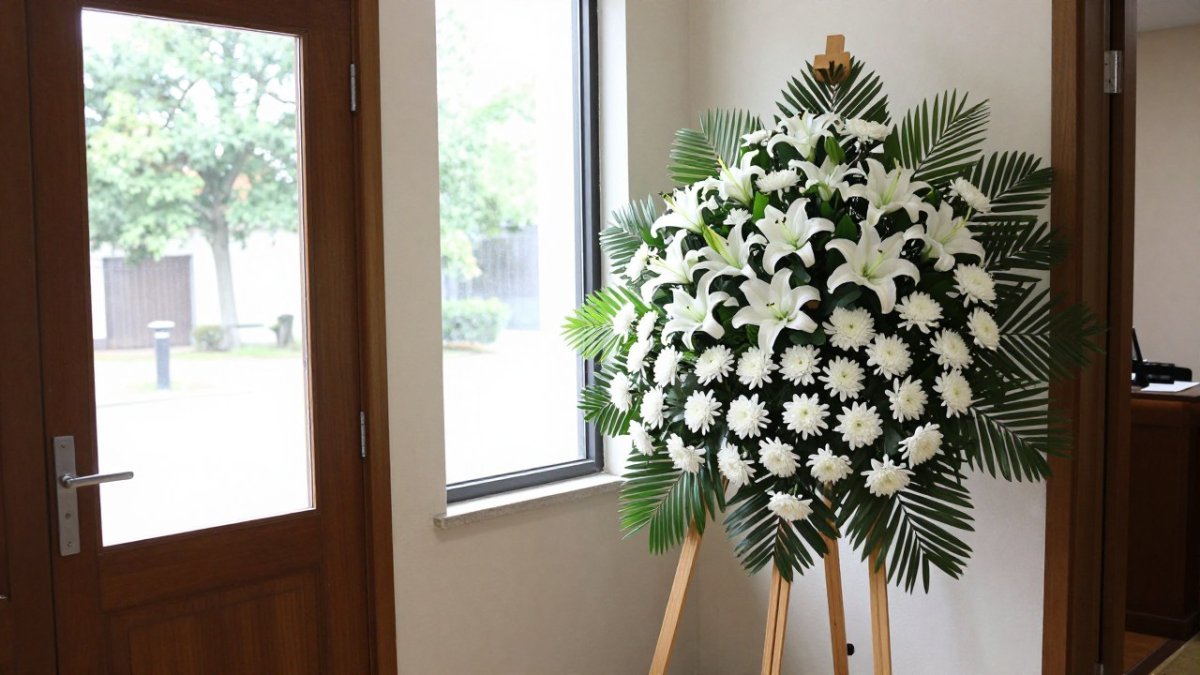
Standing funeral flowers arrangement of white lilies and mums on an easel in a quiet chapel

Casket Sprays, Standing Sprays, and Wreaths

These are the largest floral tributes, and etiquette usually reserves them for immediate family and close friends. If you are a coworker, neighbor, or distant acquaintance, a standing spray sent jointly from a group is the safer choice. You can view the Red Rose and Lily Open Heart Standing Spray as a specific example. For a full walkthrough of which flower types suit a service, see our guide to appropriate flowers for a funeral service.

Baskets and Vase Arrangements for the Family

Baskets and vase arrangements are the practical choice for most senders. They are easy for funeral home staff to place, and the family can take them home afterward. Fresh flowers can keep offering comfort in the days after the service. You can view a vase arrangement for sympathy as a concrete example.

Step 2: Nail Down Funeral Flower Delivery Timing

Timing is where most orders go wrong, and the fix is a short, specific conversation with the funeral home before you place the order. Aim for delivery the day before the service, or at least two to three hours before visitation begins. Funeral homes run on tight schedules, and an arrangement that arrives mid-ceremony creates a distraction nobody wants.

Call the funeral home and ask three questions: when do you accept deliveries, where should flowers be placed, and when should they arrive relative to the service? Ask the home for a clear window, and confirm whether flowers must be on site before the family arrives for the first viewing. Write the answers down and pass them to the florist.

Delivery Deadlines When the Service Is Imminent

If the service is within 24 hours, say so the moment you contact the florist and ask whether same-day delivery to that funeral home is possible. A local florist who already delivers to the home can often make a same-day window work; a wire service routing the order through a call center usually cannot. If the florist cannot deliver before the service, ask about two alternatives: delivery directly to the family’s home after the service, or a standing arrangement sent to the funeral home for the visitation only. Both are common and both are better than flowers that arrive after the casket has been closed.

Watch out: a florist who promises same-day delivery without confirming the funeral home’s receiving hours may be guessing. Ask them to call the home and confirm the window before you pay.

Verify the Funeral Home’s Delivery Policies

Receiving hours vary widely. Some homes accept deliveries only during business hours, some have a dedicated receiving entrance, and some restrict deliveries during an active service. Ask whether the home accepts deliveries before the visitation, whether staff will place the arrangement in the correct service room, and whether there are any restrictions on size or type. A florist who delivers to that home regularly will already know the answers.

Here are the timing targets and questions the article says to settle with the funeral home before ordering.

Item Value Note
Ideal delivery Day before the service Or at least two to three hours before visitation
Service within 24 hours Tell the florist immediately Ask whether same-day delivery is possible
Questions to ask the home Delivery hours, placement, arrival window Write answers down and pass to florist
If florist cannot deliver in time Family’s home after service Or standing arrangement for visitation only
Receiving hours Vary widely by home Some restrict deliveries during an active service

Step 3: Give the Florist Funeral Home Flower Delivery Instructions

Clear funeral home flower delivery instructions prevent almost every problem. Give the florist the deceased’s full name, the funeral home’s address, the service date and time, and the family’s name. Ask them to confirm the delivery window with the funeral home directly.

Watch out: vague instructions like “send it to the funeral home” leave staff guessing which service the flowers belong to. On a day with multiple viewings, that can mean your tribute lands in the wrong room.

Step 4: Write the Card With Funeral Flower Card Message Examples

Keep the card short, warm, and specific. Sign your full name and your connection to the deceased or family so they know who sent it. Here are funeral flower card message examples you can adapt:

  • “With deepest sympathy for the loss of [Name]. Our thoughts are with your family., The [Last Name] family”
  • “In loving memory of [Name]. With condolences and respect, [Your Name], [Company]”
  • “Thinking of you during this difficult time. May these flowers bring a small measure of comfort., [Your Name]”

Avoid humor, long stories, or anything about causes of death. Simple condolences carry more weight.

Step 5: Find Cheap Funeral Flowers Delivered to a Funeral Home Without Cutting Corners

Affordable does not mean skimped. Cheap funeral flowers delivered to a funeral home usually means a smaller arrangement, seasonal blooms, or a basket instead of a large spray. Ask the florist what is in season and request a modest but full-looking design.

Pricing depends on the arrangement size, the flowers chosen, and the delivery distance, so ask for a quote rather than assuming a number. Visit the website for current prices or to request a quote.

Step 6: Confirm Delivery and Handle Problems

Ask the florist for delivery confirmation, with a time and the name of the person who accepted the arrangement. A photo of the arrangement in place at the funeral home is even better, and many local florists now send one by text or email. If you never get confirmation, call the florist the same day rather than waiting until after the service.

If the Arrangement Is Late or Misdirected

Call the florist first, not the funeral home. The florist has the delivery ticket and can tell you whether the arrangement left the shop, when, and with whom. If the flowers went to the wrong room, ask the florist to call the funeral home and have staff move them; ask the funeral home whether staff can redirect the arrangement. If the flowers have not arrived by the time the service begins, ask the florist to deliver to the family’s home instead and to confirm the new address with you.

If the Specific Arrangement Is Unavailable

Seasonal blooms sell out, and a florist may need to substitute. Ask up front what the substitution policy is and whether they will call you before making a change. Ask the florist how substitutions are handled before you order.

If the Flowers Arrive Looking Tired

Call the florist the same day and describe what you see. Contact the florist the same day to describe the problem, and the sooner you speak up, the more options everyone has. If the arrangement needs a refresh after it reaches the family, our guide on how to keep funeral flowers fresh covers simple steps for extending their life.

Step 7: Order Funeral Flowers From a Local Florist You Can Reach

Choose a florist who answers the phone and can speak with you directly about your order. You want someone who knows the funeral homes in the area, understands their delivery windows, and can coordinate directly with staff. Ask how long they have served the community and whether they deliver to that specific funeral home.

If you are ordering from out of town, our tips for choosing sympathy flowers online walk through what to check before you buy. An English Garden offers secure online ordering around the clock and daily delivery to local funeral homes, with personalized help for sympathy arrangements.


When a service is coming up fast, the last thing you need is uncertainty about whether the flowers will arrive. An English Garden brings more than 32 years of local experience, daily delivery to funeral homes and hospitals, and a team that coordinates directly with funeral home staff so your tribute arrives on time. Get started with An English Garden and send a tribute that reaches the family when it matters.

Frequently Asked Questions

Can you have flowers delivered to a funeral home?

Yes. Florists deliver funeral flowers to funeral homes, churches, and residences every day. The key is giving the florist the funeral home’s name and address, the name of the deceased, and the service or visitation date and time. Confirm with the funeral home where floral tributes should be placed and who can accept deliveries on behalf of the family. Call ahead to confirm the home’s receiving hours so your flowers arrive when someone can sign for them.

When should funeral flowers be delivered to the funeral home?

Aim for delivery the morning of the visitation or service, or the afternoon before if the service starts early. Funeral flower delivery timing matters because arrangements need to be in place before guests arrive. If the service is imminent, call the florist directly rather than ordering online, and ask about same-day delivery. Call the florist directly and ask whether a rush request can be accommodated.

What information does a florist need to deliver flowers to a funeral home?

Give the florist the deceased’s full name, the funeral home’s name and street address, the service type (visitation, funeral, memorial), and the date and time. Include your card message exactly as you want it written, plus your name and phone number in case the florist needs to confirm details. If you know the family’s religious or cultural preferences, mention them so the arrangement fits appropriately.

What should you write on a funeral flower card?

Keep it short, warm, and personal. Examples include: ‘With deepest sympathy, the Miller family,’ ‘In loving memory of a kind neighbor,’ or ‘Our thoughts are with you during this difficult time.’ Avoid mentioning the cause of death or using overly cheerful language. Sign with your full name and relationship so the family knows who sent the flowers. If you’re sending on behalf of a group, list the group name.

Posted on — Leave a comment

How to Choose Birthday Flowers by Birth Month

Last Updated: November 5, 2026

Quick Summary

To choose birthday flowers by birth month, look up the primary bloom tied to the recipient’s month and build the bouquet around its meaning. Each month also has a secondary flower you can use if the primary is out of season or not to their taste.

  • Every month pairs a primary flower with a secondary bloom that adds a supporting note.
  • Match color and style to the recipient’s personality, not just the birth month meaning.
  • Confirm seasonal availability with your florist before committing to a specific bloom.
  • Steer clear of heavily scented blooms for allergy sufferers and check pet safety.
  • Order a few days ahead for standard dates and earlier for holidays like Valentine’s Day.

Table of Contents

Birth Month Flowers and Meanings: A Complete Reference

Learning how to choose birthday flowers by birth month starts with one simple idea: every month has its own flower, and each bloom carries a meaning.

A birth flower is the bloom traditionally tied to a person’s birth month. Like birth flowers, birthstone jewelry gifts can make a personal symbol part of a birthday celebration.

That symbolism gives you a head start. Instead of guessing, you pick a flower that already means something. Then you build the birthday bouquet around it.

Here’s the full list, month by month.

January Through June: Snowdrops to Roses

  • January: Carnation and snowdrop. Carnations stand for love and admiration. Snowdrops mean hope and new beginnings.
  • February: Violet and primrose. Violets suggest loyalty and modesty. Primrose signals young love.
  • March: Daffodil and jonquil. Both point to rebirth and fresh starts.
  • April: Daisy and sweet pea. Daisies mean innocence. Sweet peas carry a message of blissful pleasure.

The spring and early summer months are the easiest to shop. Daffodils and sweet peas are at their best in their own season. That timing matters when you plan a delivery.

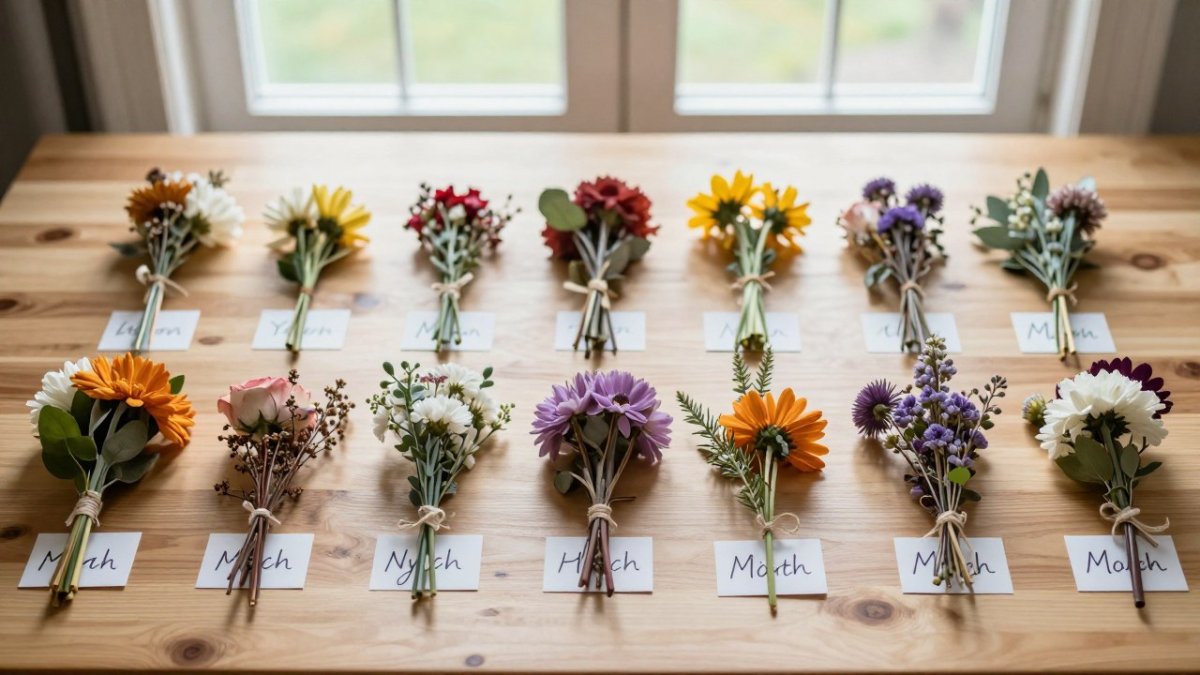
Twelve seasonal flower bunches arranged by month with handwritten tags to represent birthday flowers.

July Through December: Larkspur to Poinsettia

  • July: Larkspur and water lily. Larkspur means lightness and levity. Water lilies suggest purity.
  • August: Gladiolus and poppy. Gladiolus stands for strength of character. Poppies mean remembrance.
  • September: Aster and morning glory. Asters carry a message of patience and love.
  • October: Marigold and cosmos. Marigolds mean passion and creativity.

Birthday Flowers by Month: Primary and Secondary Blooms

Each month pairs a primary flower with a secondary one. The primary carries the main meaning. The secondary adds a supporting note and gives your florist a backup if the first bloom is out of season.

Month Primary Flower Secondary Flower Meaning
January Carnation Snowdrop Love, hope
February Violet Primrose Loyalty, young love
March Daffodil Jonquil Rebirth, new starts
April Daisy Sweet pea Innocence, bliss
May Lily of the valley Hawthorn Sweetness, humility
June Rose Honeysuckle Love, devotion
July Larkspur Water lily Levity, purity
August Gladiolus Poppy Strength, remembrance
September Aster Morning glory Patience, love
October Marigold Cosmos Passion, creativity
November Chrysanthemum Peony Friendship, joy
December Narcissus Poinsettia Hope, cheer

This table is your quick reference. Save it, and you’ll never draw a blank on a birthday again.

How to Choose Flowers Based on Personality

How to choose flowers based on personality comes down to matching color and style to the person. Flower meaning is a great starting point. Personality is what makes the gift land.

Ask yourself a few questions:

  • Does she prefer bold color or soft pastels?
  • Is he drawn to wild, loose arrangements or tight, formal ones?
  • Does the recipient love fragrance, or does scent bother them?
  • Is the home modern and minimal, or warm and traditional?

A quiet, understated friend often loves a soft white and green bouquet. A bold, outgoing personality tends to light up at bright, mixed color. The birth flower tells you what to send.

A Step-by-Step Process for Choosing a Birthday Bouquet

Turning a month and a meaning into a bouquet that fits the person receiving it takes a few deliberate choices. The steps below walk through that process, with the trade-offs spelled out at each step.

  1. Start with the birth month, but treat it as a starting point, not a mandate. Look up the primary flower for the recipient’s month. If the primary bloom is unavailable, toxic to a pet, or simply not to the recipient’s taste, move to the secondary flower for that month before abandoning the tradition entirely.
  2. Check the meaning against the relationship. A rose for June signals love; a chrysanthemum for November signals friendship and joy. If the traditional meaning clashes with the relationship (a romantic bloom for a coworker, for example), shift to the secondary flower or a color that carries a more neutral message.
  3. Match the personality and the setting. A quiet, understated friend often prefers a soft white-and-green palette in a loose, garden-style arrangement. A bold, outgoing personality tends to respond to bright mixed color and a fuller shape. Consider where the flowers will live: a desk posy, a dining table centerpiece, or a hospital bedside arrangement each call for different heights and scents.
  4. Confirm seasonal availability before you fall in love with a specific bloom. Ask your florist what is fresh that week rather than what is listed in a catalog. A birth flower that is out of season usually means a higher price, a smaller stem count, or an import with a shorter vase life.
  5. Set a budget range before browsing. Decide whether you are shopping for a small posy, a mid-size arrangement, or a statement piece. Bouquet size, stem count, and the specific blooms drive price more than the container does. Knowing your range keeps you from comparing arrangements that are not actually comparable.
  6. Choose the size to fit the occasion. A milestone birthday calls for a larger statement arrangement. A workplace birthday suits something compact and easy to place on a desk. A hospital room needs a low-scent, compact bouquet that fits on a side table.
  7. Add one personal touch. A handwritten note, a small add-on, or a color pulled from the recipient’s home or wardrobe makes the gift feel chosen rather than ordered.
  8. Book delivery with a buffer. Order a few days ahead for standard dates and earlier for holidays. Confirm the delivery address and a reachable phone number so the driver can complete the delivery.

Birthday Sprinkles Bouquet is a good example of a ready-made option that follows this process. So is Fields of Europe Happy Birthday if you want something festive and full.

Matching the Bouquet to the Recipient and Occasion

The occasion shapes the size, shape, and scent level more than the flower choice does. A milestone birthday calls for a bigger statement.

Think about where the flowers will live. A hospital room needs a compact, low-scent bouquet that fits on a side table and will not overwhelm a recovering patient. A home office can take something taller.

Choosing a tall arrangement for a dining table or a heavily scented bouquet for a hospital room are common mismatches, and both are easy to avoid by asking where the flowers will sit before you order.

Recipient Preferences, Allergies, and Pet Safety

Allergies and pets are the details most guides skip. They matter more than the flower meaning.

Get Started Today →

If the recipient has allergies, steer clear of heavily scented blooms. Lilies, for example, carry a strong fragrance. Ask your florist for low-scent options instead.

Pet safety is just as important. Lilies are a known risk to cats (Which Lilies Are Toxic to Pets?). Tulips and daffodils can upset pets too (Keep These Spring Plants Away from Pets).

If you want to help the gift last, our guide on how to preserve a bouquet at home covers simple steps to keep flowers fresh longer.

Seasonal Availability, Budget, and Delivery Logistics

Seasonal availability often shapes what a florist can deliver on a given date.

A few seasonal patterns are worth knowing before you order:

  • Peonies are a late-spring to early-summer bloom. Asking for them in winter usually means a higher price, a smaller stem count, or an import with a shorter vase life.
  • Tulips and daffodils are at their best in late winter and early spring. Outside that window, expect higher prices and looser stems.
  • Lilies of the valley are a short spring window. When they are gone, they are gone until next year.
  • Chrysanthemums and asters are fall blooms and are widely available and well-priced in autumn.
  • Poinsettias are a holiday-season plant, not a year-round cut flower.

Budget works the same way. Pricing depends on the blooms, the stem count, the size of the arrangement, and the delivery date.

Delivery logistics deserve a plan. Order a few days ahead for standard dates. For holidays like Valentine’s Day and Mother’s Day, order earlier, because those weeks fill up and selection narrows.

When the Birth Flower Is Not the Right Fit: Personalized Alternatives

Sometimes the birth flower just doesn’t work. Maybe it’s out of season. Maybe it’s toxic to a pet. Maybe the recipient simply doesn’t like it.

That’s fine. The birth flower is a guide, not a rule. Here are alternatives:

  • Swap in the secondary flower for that month.
  • Choose the recipient’s favorite flower instead.
  • Pick a color that matches their birth month’s palette.
  • Send a plant or a gourmet basket if flowers aren’t their thing.

Personalization always beats tradition when the two conflict. A gift the recipient loves is the goal.

Ordering Birthday Flowers from a Local Florist

Ordering from a local florist can give you fresher flowers and a real person to talk to. At An English Garden, we’ve served the area for over 30 years.

If you’re ready to order, our fresh flower delivery for birthdays guide walks through the full process. Curious why local matters? Read why local florists provide better quality. We’re happy to help you pick the right bloom for the month and the person.

Frequently Asked Questions

How do you know your birth flower by birthday?

Your birth flower is tied to your birth month, not your exact day, so anyone born in the same month shares the same primary bloom. Most months have two birth flowers, a primary and a secondary, so you can pick whichever suits the recipient better. For example, March is associated with the daffodil and the jonquil, while October pairs the marigold with the cosmos. If you know the recipient’s birth month, you already have enough to start choosing birthday flowers.

Are there two birth flowers for some months?

Yes, most months have two birth month flowers and meanings assigned to them. January pairs the carnation with the snowdrop, August pairs the gladiolus with the poppy, and November pairs the chrysanthemum with the peony. Having two options is useful because it lets you match the flower to the recipient’s taste, the season, and your budget. A florist can combine both blooms in one arrangement or build the bouquet around whichever one is fresher that week.

Can a birthday bouquet include more than one birth flower?

Absolutely. Combining the primary and secondary birth flowers in a single birthday bouquet is one of the easiest ways to personalize a gift. You can also blend a birth flower with a favorite color or a bloom the recipient already loves. Ask your florist to use the birth flower as the focal point and fill in with seasonal flowers that complement its color and shape. This approach keeps the bouquet meaningful while giving the designer room to work with what is freshest.

How do I choose birthday flowers if I don’t know someone’s favorite flower?

Start with the birth month flower and build from there. Consider the recipient’s personality: bold, outgoing people often suit gladiolus or gerbera daisies, while quieter, detail-oriented people may prefer sweet peas or lily of the valley. Check for allergies and pets before choosing lilies, and think about the setting, since a desk arrangement suits an office and a tall vase suits a home. When in doubt, call a local florist and describe the person; an experienced designer can translate those details into a bouquet.


Choosing birthday flowers by birth month should feel personal, not stressful. The birth flower gives you a meaningful starting point. Your florist handles the rest.

At An English Garden, we make it easy with same-day local delivery, secure online ordering, and a team that knows flowers by season and by meaning. We also offer gourmet baskets and plants when you want something beyond a bouquet. Get started with An English Garden and send birthday flowers that actually mean something.

Posted on — Leave a comment

How Do You Preserve a Wedding Bouquet at Home?

Quick Summary

The most reliable ways to preserve a wedding bouquet at home are silica gel drying, air drying, and pressing. Silica gel gives the most lifelike results, while air drying costs almost nothing. Start within 48 hours of the wedding for the best outcome.

  • Start preserving within 48 hours of the wedding, before the flowers wilt.
  • Silica gel drying takes five to seven days in a sealed container.
  • Air drying usually takes two to three weeks, hung upside down in a dry, dark room.
  • Keep preserved flowers out of direct sun, heat, and humid rooms like bathrooms.
  • Dust with a soft brush and never wipe petals with a damp cloth.

Table of Contents

Last Updated: November 5, 2026

How do you preserve a wedding bouquet at home? The most reliable methods are silica gel drying, air drying, and pressing, and each one suits different flowers and budgets. This guide walks through the options, the timing, and the mistakes that tend to ruin an otherwise beautiful bouquet. Understanding the natural decay process of your chosen blooms helps manage expectations for their final appearance, a topic explored further in our flower longevity guide.

Preserving a bouquet is worth considering because the flowers carried on your wedding day are often the only physical element of the ceremony you can keep. Fresh flowers last only days, but a properly dried bouquet can be displayed for years. Many couples choose to preserve it for an anniversary display, a shadow box, or a keepsake that sits alongside their wedding photos.

Choosing the Right Flowers for Drying

Not every bloom responds well to preservation. Flowers with thick, sturdy petals such as roses, statice, lavender, and strawflowers tend to hold their shape and color, while delicate, watery blooms are often better suited to pressing than to air drying.

Before the wedding, ask your florist which stems were chosen with preservation in mind.

How to Preserve a Wedding Bouquet with Silica Gel

Silica gel, a desiccant that draws moisture out of plant tissue, is the method most often recommended for keeping a bouquet’s shape and color. It takes longer than air drying but produces the most lifelike results.

Step-by-step process of covering a wedding bouquet with silica gel inside an airtight container

Preparing Flowers and the Right Timeline (48-Hour Rule)

Start within 48 hours of the wedding. Flowers that have been out of water for longer tend to wilt before the drying process can lock in their shape. Remove foliage, trim stems to about one inch, and keep the bouquet in a cool, dark space with good ventilation until you begin.

Step-by-Step Silica Gel Process

  1. Choose an airtight container large enough for the blooms to lie flat.
  2. Pour a layer of silica gel into the bottom, about half an inch deep.
  3. Place the flowers face up and gently cover them with more gel, working it between the petals with a soft brush.
  4. Seal the container and leave it undisturbed for five to seven days.
  5. Carefully lift the flowers out and brush off any remaining crystals.

Watch out: silica gel that has absorbed moisture stops working, so keep the container sealed between uses and replace the gel if it no longer looks crisp and dry.

Air Drying Wedding Flowers: The Low-Cost Option

Air drying costs almost nothing and works well for sturdy, low-moisture flowers. Hang the bouquet upside down in a dry, dark room with good airflow, such as a closet or attic. Drying usually takes two to three weeks. The result is softer and more muted than silica gel, which many couples find charming.

A common mistake is hanging the bouquet in a humid bathroom or a sunlit window, where it fades or develops mold.

Wedding Bouquet Preservation Kit vs. DIY Supplies

Preservation kits bundle a container, gel, and instructions, which suits first-time preservers. Buying supplies separately, such as a sealed container, a bag of silica gel, and a soft brush, lets you reuse materials for future projects.

Option Best For Effort Level
Preservation kit First-time preservers Low
DIY silica gel supplies Budget-conscious couples Medium
Air drying Sturdy, low-moisture blooms Low
Pressing Flat keepsakes and frames Medium

What Professional Wedding Flower Preservation Costs

Pricing for professional preservation depends on factors such as the size and complexity of the bouquet, the method chosen, the display finish, and the turnaround time. For current pricing and a quote, contact An English Garden directly or check the website.

A useful way to think about the decision is to compare any professional quote against the value you place on the bouquet and how long you want to display it.

Ask any preservation provider these questions before you commit:

Get Started Today →

  • What is the total price, and what does it include (cleaning, drying, design, display vessel, shipping)?
  • Is there a deposit, and is it refundable if a bloom fails during drying?
  • What is the turnaround time in weeks, and is rush service available at an added cost?
  • What happens if a flower in the bouquet cannot be preserved and must be substituted or omitted?
  • Is there a warranty or rework policy if the finished piece arrives damaged?

Watch out: a low quote that excludes the display vessel, shipping, or design labor can end up costing more than a quote that bundles those items.

Timing affects results as much as method, so confirm any drop-off window with your provider in writing. Get the quote and the terms in writing before shipping or delivering your bouquet, and keep a photo record of the bouquet as it looked on the wedding day in case a substitution question arises later.

Displaying, Caring for, and Troubleshooting Your Preserved Bouquet

The longer game is keeping color, shape, and structure intact for years, and that comes down to controlling three enemies: ultraviolet light, humidity, and physical contact.

Display. Keep preserved flowers out of direct sun and away from heat sources such as radiators, fireplaces, and kitchen stoves. A glass shadow box or a sealed display case slows dust and humidity exposure, but even an open frame should sit in a room with stable temperature and moderate humidity. Rotate the piece occasionally so one side does not fade faster than the other. Avoid hanging preserved bouquets in bathrooms, basements, or attics, where humidity swings are largest.

Long-term care. Dust with a soft brush or a can of compressed air held at a distance; never wipe petals with a damp cloth, which can lift color and soften the dried tissue. Keep silica gel packets in the display case if it is sealed, and replace them when they lose their crisp feel. Handle the piece by the frame or base, not the blooms, since dried petals detach easily.

Flower-specific expectations. Roses and statice tend to hold color and shape well for years; lavender can shed florets over time; delicate blooms like hydrangea and peonies are the first to brown or crumble, so they are better suited to pressing or resin than to open-air display. If your bouquet mixes sturdy and delicate stems, expect the delicate ones to set the lifespan of the piece.

Troubleshooting. If petals crumble, the flowers were likely not fully dried before storage; the fix is longer drying time next attempt, not more handling. If color fades rapidly, light exposure is the usual cause, so move the piece to a darker spot. If you see fuzzy gray or white growth, moisture was trapped during drying or storage; isolate the piece, improve airflow, and discard any blooms with active mold rather than trying to salvage them. If petals drop on handling, the piece is likely too dry or was exposed to heat, and the best response is to stop touching it and stabilize the environment.

Eco-friendly alternatives. If chemical desiccants or resin are a concern, pressing into a frame and air drying sturdy stems are the lowest-impact options, and both avoid the non-biodegradable materials that resin and some kits use. Whichever method you choose, the display and care routine above is what determines whether the piece lasts one season or ten.

Booking Your Bouquet Care and Design Consultation

If you would rather have professionals handle the process, An English Garden offers wedding design consultations, and our team can help you choose stems that dry well from the start. You can book a bridal consultation to discuss your bouquet and preservation plans directly.

For guidance on selecting blooms that hold up well, see our wedding flower selection guide, and if you’re weighing at-home methods, our bouquet preservation comparison covers other options that avoid wilting.

Frequently Asked Questions

How can I preserve my wedding bouquet myself?

You can preserve a wedding bouquet at home using silica gel or air drying. Start within 48 hours of the wedding, remove excess foliage, and keep the stems trimmed. For silica gel, bury the blooms in a sealed container of desiccant for roughly one to two weeks, depending on flower thickness. For air drying, hang the bouquet upside down in a cool, dark, ventilated space for several weeks. Both methods work best for flowers with sturdy petals, such as roses, hydrangeas and statice.

Is preserving a wedding bouquet worth it?

Preserving a bouquet is worth it if the flowers held sentimental value and you want a lasting keepsake. Results vary by flower type, so delicate blooms may lose color or shape. A preserved bouquet displayed in a shadow box or glass dome can hold its look for years when kept out of direct sunlight and away from humidity. If you care most about the exact look of the day, a professional photo of the bouquet may be a better fit.

What does it cost to preserve a wedding bouquet?

Professional preservation pricing depends on bouquet size, flower types, and turnaround time. For current pricing, contact An English Garden directly for a quote or check the website for available options.

How soon after the wedding should I preserve my bouquet?

Preserve the bouquet within 48 hours of the wedding, while the flowers are still fresh and hydrated. Waiting longer makes it harder to retain color and petal structure. If you cannot dry it right away, store it in a cool place out of direct sun, but do not refrigerate it for long periods.

Posted on — Leave a comment

Appropriate Flowers for a Funeral Service

Last Updated: November 4, 2026

Quick Summary

Choosing appropriate flowers for a funeral service means matching the arrangement to the setting and your relationship to the family. Friends and colleagues usually send a standing spray or basket, while a casket spray is ordered by the immediate family or closest loved ones. If the family requests no flowers, send a plant or donation instead.

  • Casket sprays are placed on top of the casket and ordered by immediate family.
  • Standing sprays sit on a tripod stand and are the most common tribute from friends and coworkers.
  • White is the safest color because it reads as peaceful and respectful across traditions.
  • Send flowers ahead to the funeral home so they arrive before the viewing begins.
  • Ask the funeral director whether the family has requested donations in lieu of flowers.

Table of Contents

What Are Funeral Flowers Called and Which Types Fit Each Service

Funeral flowers are called floral tributes, sympathy arrangements, or funeral arrangements, and the name often signals where the piece will sit during the service.

Here is the short answer. Send a standing spray or basket if you are a friend or colleague. Send a casket spray only if the family asks. Send a plant or donation if the family requests no flowers. The rest is detail, and the details matter more than most guides admit.

Casket Sprays, Standing Sprays, and Urn Arrangements

Each type carries a different weight of meaning:

  • Casket spray: the family’s piece, large and formal
  • Standing spray: the most common tribute from friends and coworkers
  • Urn arrangement: sized for a cremation service or memorial table
  • Floral basket or vase arrangement: flexible, easy to move, good for visitations

If you are considering a standing spray, a classic white design is a safe, respectful choice that suits nearly any service. You can view a white standing spray to see the style. Families exploring casket pieces often want a concrete example, and a lavender and blue casket spray shows how color can soften a formal arrangement.

Matching the arrangement to the setting starts with knowing what each type of tribute is called and where it sits.

Arrangement Placement Typical sender
Casket spray On top of the casket Immediate family or closest loved ones
Standing spray On a tripod stand beside casket or graveside Friends and coworkers
Urn arrangement Near or around an urn Cremation or memorial service
Floral basket or vase Viewing table or graveside gathering Flexible, easy to move

The most popular funeral flowers are lilies, roses, carnations, chrysanthemums, and orchids, and each carries a long-standing association with sympathy.

Daisies and hydrangeas round out the list. Daisies read as simple and sincere. Hydrangeas add fullness and a gentle, graceful tone.

Florist arranging white lilies, roses, and chrysanthemums as appropriate flowers for a funeral service in a sympathy basket

The flowers’ colors and meanings can express care when words are difficult, while thoughtful sympathy gifts offer another gentle way to show support.

For readers who want to go deeper on bloom-by-bloom meanings, our guide to the best flowers for sympathy arrangements breaks down each choice.

What Color Flowers for the Death of a Loved One

White is the safest color for the death of a loved one because it reads as peaceful, respectful, and appropriate across nearly every tradition. White flowers signal remembrance and sincerity without drawing attention to the sender. Beyond white, color carries meaning:

  • White: peace, reverence, remembrance
  • Blue and lavender: calm, comfort, quiet sympathy
  • Yellow: friendship and warmth, best for close friends
  • Pink and pastel: gentle affection, often chosen for women
  • Red: deep love and grief, usually reserved for family

A mixed bouquet of soft colors works well when you know the person’s taste. When you do not, white is never wrong. The Society of American Florists notes that white and green arrangements remain the most requested sympathy palette, and that guidance has held steady for years.

Do You Bring Flowers to a Funeral Service or Send Them Ahead

Send flowers ahead to the funeral home rather than carrying them to the service. Funeral homes generally coordinate deliveries and place tributes before the viewing.

So when should you send? Aim for delivery before the viewing begins. Funeral homes typically accept deliveries during set hours. You can order flowers online for local delivery and we will coordinate directly with the funeral home.

Funeral Flower Etiquette for the Immediate Family

Etiquette around funeral flowers depends less on hard rules than on the sender’s relationship to the deceased and the family. The immediate family sits at the center of that map, and the choices radiate outward from there. Getting the relationship right prevents the two most common mistakes: ordering a piece the family has already claimed, and sending something that reads as more intimate than the relationship warrants.

What the Immediate Family Typically Orders

The immediate family usually orders the casket spray, and that piece anchors the floral display. Adult children and siblings often coordinate standing sprays so the tributes complement rather than duplicate one another.

A few practical rules hold up across most services:

  • The family’s casket spray comes first; friends should not order one unless the family invites them to
  • Siblings and adult children may each send a standing spray, but coordinating colors avoids a cluttered look
  • Keep a list of who sent what so thank-you notes are accurate later
  • Ask the funeral director before ordering anything unusually large, tall, or fragrant

Watch out: ordering a casket spray as a friend can put the family in an awkward spot if they have already selected one. Ask the funeral director or a close family friend first.

Who Sends What: Friends, Coworkers, and Organizations

Friends and colleagues usually send a standing spray, a basket, or a vase arrangement.

Coworkers often pool money for a single larger piece rather than sending several small ones, and a group card signed by the team is common.

Get Started Today →

Neighbors and acquaintances often choose a plant, a basket, or a donation. A living plant such as a peace lily or an orchid lasts beyond the service and gives the family something to keep.

Coordinating With the Family and the Funeral Director

Before ordering, ask the funeral director two questions: whether the family has requested a particular color or bloom, and whether any piece has already been claimed. A funeral director often sees the full floral plan and can tell you where a gap exists, for example, that the family has the casket spray covered but no standing spray from friends. That single conversation prevents duplication and ensures your tribute fills a real need.

If you are close to the family, a brief text or call to a family friend is appropriate. Keep the question simple: “Is there anything specific the family would like, or anything they’d rather not have?” Families generally appreciate the care behind the question, and it gives you a clear answer to act on.

Faith, Culture, and Family Customs That Change the Choice

Religious and cultural customs can change which flowers are appropriate, and this is where most guides stop short. The variation is real: some traditions favor white and green only, others welcome bright color as a celebration of life, and some families request no flowers at all for religious reasons and prefer donations or food instead. The safe path is not to guess but to check, and to know what to ask.

Common Customs Worth Knowing

A few patterns come up often enough to be worth naming, though practices vary by congregation and by family:

  • Christian services commonly use white lilies, roses, and carnations, with white and green arrangements as the default palette. Easter services may lean on lilies specifically.
  • Jewish services often favor simple, understated arrangements, and some families prefer no flowers at all, directing mourners to charitable donations instead. When flowers are sent, white and green are the safest choice.
  • Muslim services typically do not include flowers at the funeral itself, and mourners often send food or donations to the family rather than floral tributes.
  • Hindu and Buddhist services may welcome white or yellow flowers, and specific blooms can carry meaning within the tradition. Garland-style arrangements sometimes appear at Hindu services.
  • Military and first-responder services may include specific tributes, and the family or funeral director can confirm what is appropriate.

These are starting points, not rules. A family’s own preferences override any general custom, and many families blend traditions or set their own tone.

How to Check Before You Order

Before you order, check three things with the funeral director or a close family friend:

  1. Does the family’s faith or culture have flower restrictions?
  2. Has the family requested donations in lieu of flowers?
  3. Is there a specific color or bloom the family has asked for?

The funeral director is the best single source because they coordinate with the family and see the full floral plan. If you are ordering online, note any restrictions in the delivery instructions so the florist can adjust the design. When in doubt, ask. A quick question saves an awkward misstep, and families generally appreciate the care behind it.

When the Family Asks for No Flowers

Some families request no flowers for religious reasons, for space reasons, or because they prefer donations. Honor that request. A donation to a cause the person cared about, a meal delivered to the family home, or a handwritten note with a specific memory are all appropriate alternatives.

Watch out: sending flowers after the family has explicitly requested donations can read as disregard for their wishes. When the request is clear, follow it.

Timing, Delivery, and Substitutions at the Funeral Home

Timing matters more than most people expect. Deliveries should arrive before the viewing begins, not during the service. Funeral homes usually have a receiving window, and a late delivery may sit in a back room instead of being displayed.

Substitutions are the other practical concern. Our guide on how to keep funeral flowers fresh covers what to do once the arrangement arrives home after the service.

When Flowers Are Not the Right Gesture

Sometimes flowers are not the right gesture, and sending them anyway can miss the mark. If the family has asked for donations to a charity, honor that request.

Non-floral options that work well:

  • A donation to a cause the person cared about
  • A meal delivered to the family home
  • A living plant the family can keep
  • A handwritten note with a specific memory

Flowers remain a meaningful tribute for most services. The key is to match the gesture to what the family actually needs.


Choosing appropriate flowers for a funeral service comes down to matching the arrangement to the setting, the sender’s relationship, and the family’s wishes. If you are unsure, ask.

Frequently Asked Questions

What is the most appropriate flower for a funeral?

White lilies remain the most widely accepted funeral flower in the United States. They carry a long association with restored innocence and peace, suit nearly every faith tradition, and work in casket sprays, standing sprays, and vase arrangements. Roses, carnations, chrysanthemums, and orchids are equally appropriate, so match the bloom to the family’s preferences and the arrangement type rather than searching for one perfect flower.

What flowers should you avoid bringing to a funeral?

Avoid bright, celebratory colors and novelty designs unless the family has asked for them. Skip strongly scented blooms like heavy stargazer lilies in hospital or small viewing rooms where fragrance can overwhelm. Some traditions also avoid certain flowers, so check with the family or funeral director first. When in doubt, a simple white or soft-pastel arrangement in a classic style is the safest choice.

Should immediate family send flowers to a funeral?

Immediate family typically provides the casket spray, urn wreath, or the main standing piece rather than sending separate sympathy flowers. Close relatives often coordinate one large tribute and let extended family and friends cover bouquets and baskets. If you are unsure what the family has already arranged, ask the funeral director, who usually tracks which pieces are coming and can prevent duplicates.

How far in advance should funeral flowers be ordered?

Order as soon as service details are confirmed, ideally 24 to 48 hours before the viewing or funeral. Same-day delivery is often possible for local florists, but standing sprays and casket pieces take longer to build and are best ordered a day ahead. Confirm the funeral home name, the service date, and the delivery window when you order so the arrangement arrives before the family viewing begins.

Posted on — Leave a comment

7 Ways to Preserve a Bouquet at Home Without Wilting

Last Updated: November 4, 2026

Quick Summary

To preserve a bouquet at home, choose a method that matches the flowers and the result you want: air drying keeps long stems but fades color, silica gel holds shape and color, and pressing flattens blooms for framing. Prep stems first, then dry completely and store away from light and humidity.

  • Split bouquets into bundles of five to seven stems so moisture does not trap and mold.
  • Hang air-dried bundles upside down in a dark, dry, well-ventilated area for two to four weeks.
  • Bury blooms in silica gel for three to seven days to keep near-original shape and color.
  • Press flowers between absorbent paper in a heavy book for two to four weeks.
  • Store preserved flowers in a cool, dark, dry spot away from sunlight and humidity.

Table of Contents

Pick Your Method Before You Pick a Vase

If you want to know how to preserve a bouquet at home, the answer starts with one decision: what should the flowers look like when you’re done? Air drying keeps the stems long but fades color. Silica gel holds shape and color but works best on individual blooms. Pressing flattens flowers for framing.

Most failed preservation attempts start with a method chosen by habit, not by flower type. Below, we’ll show you exactly how to choose, prep, dry, and store a bouquet so it lasts for years.

Bouquet preservation is the process of drying or casting fresh flowers so they hold their shape and meaning long after the stems give out.

Matching the Method to the Flower and the Result You Want

Not every flower dries well. Roses, hydrangeas, lavender, and statice hold up across most methods. Tulips and lilies collapse in air. Daffodils and delphiniums turn brittle and brown.

Use this as your starting filter:

Method Best Flowers Result Time
Air drying Lavender, roses, hydrangea, statice Rustic, faded color, long stems 2-4 weeks
Silica gel Roses, peonies, dahlias, orchids Near-original shape and color 3-7 days
Pressing Pansies, daisies, ferns, small roses Flat, frameable 2-4 weeks
Microwave Small blooms, thin petals Fast but uneven Minutes
Resin Sturdy, fully dried blooms Permanent cast Cures overnight

Pick the result first. A shadow box needs flat flowers. A vase display needs long stems. A paperweight needs fully dry, sturdy blooms.

Prep the Bouquet So Every Stem Dries Evenly

Moisture is the enemy. A wet stem rots before it dries, and one rotting stem can spoil a whole bundle.

Do this before any method:

  • Unwrap and untie the bouquet so stems can breathe.
  • Strip lower leaves so nothing touches water or sits against other stems.
  • Remove damaged blooms. One bruised flower invites mold.
  • Split into smaller bundles of five to seven stems. Tight bunches trap moisture.
  • Trim stems at an angle and blot them dry.

A common mistake is skipping the split. A full wedding bouquet dried as one mass will mold in the center while the outside looks fine. Break it into smaller bundles and you’ll get even drying throughout.

The Best Way to Air Dry Flowers: Hang Them Upside Down

A common way to air dry flowers is to tie small bundles and hang them upside down in a dark, dry, well-ventilated area. Gravity keeps stems straight, airflow carries moisture away, and darkness protects color.

Roses and lavender tied with twine hanging upside down to preserve a bouquet in a rustic garden shed.

Here’s the routine:

  1. Tie each bundle with twine about two inches above the stem ends.
  2. Hang them upside down from a rod, hook, or rack.
  3. Leave space between bundles for airflow.
  4. Keep the room dark, cool, and dry.

Avoid kitchens and bathrooms. Steam undoes the process. A closet, attic, or dry garage works well. Drying time runs two to four weeks depending on humidity. Check readiness by bending a stem: it should snap, not bend.

How to Preserve Flowers in Silica Gel for Full Shape and Color

To preserve flowers in silica gel, bury each bloom in a sealed container of fine silica crystals and leave it three to seven days. The crystals pull moisture out fast, so petals keep their shape and color instead of shrinking.

Steps:

  1. Pour a one-inch layer of silica gel into an airtight container.
  2. Set each flower face up, then gently pour crystals around and over it.
  3. Seal the lid and store it somewhere cool.
  4. Check after three days for thin-petaled flowers, up to seven for dense blooms.

Watch out: silica gel is a desiccant and an eye and skin irritant. Wear gloves, keep it away from children and pets, and follow the package safety instructions. Handle dried blooms with care, since they become brittle.

How to Press Flowers for Framing a Keepsake

How to press flowers for framing comes down to flat, even pressure and patience. Arrange blooms face down between two sheets of absorbent paper, place them inside a heavy book, and leave them two to four weeks. The result is a flat flower illustration ready for a shadow box or frame.

Book pressing works well for small, thin flowers. For thicker blooms, change the paper every few days so moisture doesn’t build up. Keep the book in a dry room and stack a little extra weight on top.

Get Started Today →

Press flowers soon after you receive them, since a bloom that is already wilting can press with brown edges.

Microwave Drying and Resin Preservation: Fast Fixes and Lasting Casts

Microwave drying is the fast option: bury small blooms in silica gel, microwave in short bursts, and check between each one. It can work for thin-petaled flowers, but it’s easy to overcook. Petals scorch in seconds, so use low power and short intervals.

Resin preservation casts fully dried flowers in clear resin for a permanent keepsake. The catch is that any moisture trapped inside turns cloudy or brown over time. Dry the flowers completely first, then work in a ventilated space and follow the resin manufacturer’s safety guidance.

Neither method is forgiving. If you want a low-risk first attempt, start with air drying or pressing.

Timelines, Readiness Checks, and Troubleshooting Common Failures

Drying methods commonly fail when there is too much moisture, too little airflow, or too much light. Knowing what “done” looks like for each method helps you check early and correct conditions before damage occurs.

Realistic Timelines by Method

Drying times depend on humidity, flower density, and how fresh the bouquet was when you started. Treat these as ranges, not schedules, and check earlier than you think you need to.

Method Typical Time Check First At Fully Dry When
Air drying 2-4 weeks Day 10 Stem snaps cleanly; petals feel papery, not leathery
Silica gel 3-7 days Day 3 (thin petals) Petals feel crisp and separate easily from crystals
Pressing 2-4 weeks Day 10 Flower lifts cleanly from paper with no cool or damp spots
Microwave Minutes per batch After the first 30-second burst Petals are dry but not scorched; centers are not damp
Resin Overnight cure After 12 hours Cast is hard and clear, with no cloudy or sticky areas

A common pattern is that home dryers stop too early because the outside looks done. The center of a dense bloom holds moisture longest, so squeeze the base of the flower head gently, if it feels cool or soft, give it more time.

Readiness Checks That Actually Work

A fully dry stem snaps cleanly. A stem that bends is still holding moisture. For silica gel, tap the bloom against the container, dry petals sound crisp and separate; damp petals cling. For pressed flowers, lift a corner of the paper: if the flower sticks or feels cool, it needs more time. For air-dried bundles, check the thickest stem in the bundle, not the thinnest, because the thickest dries last.

Troubleshooting Common Failures

Problem Likely Cause Fix
Mold on stems or in bundle centers Bundles too tight, humid room, wet stems Re-bundle looser, move to a drier space, blot stems before hanging
Faded color Direct sunlight, heat Dry in darkness next time; keep finished pieces out of sun
Drooping stems Hung right-side up, or hung before stems set Always hang upside down; tie bundles above the stem ends
Brittle, shattered petals Over-dried or overheated Shorten drying time, check sooner, handle dried blooms by the stem
Brown edges when pressed Flowers pressed too late or paper not changed Press within a day of receiving; change paper every few days for thick blooms
Uneven drying in silica gel Crystals not fully surrounding the bloom, container not sealed Bury the bloom completely, seal the lid, store cool
Cloudy or sticky resin Moisture trapped in flowers or incomplete cure Dry flowers completely first; follow resin cure time and temperature

Watch out: silica gel that has absorbed moisture stops working. Most crystals change color when saturated, check the package indicator and recharge or replace the crystals before reusing them, or the next batch will dry slowly and unevenly.

Long-Term Storage and Display

Preserved flowers are stable but can still be damaged. Keep them away from sunlight, humidity, and heat, a cool, dark, dry spot protects color and shape for years. Humidity is the quiet killer: a bathroom, kitchen, or damp basement will soften silica-dried blooms and invite mold in air-dried bundles.

For display, a shadow box keeps pressed flowers flat and dust-free, while a sealed glass dome protects silica-dried blooms from humidity and handling. Air-dried bundles can hang as-is, but keep them out of direct sun and away from vents.

If you’d rather display the keepsake in something beautiful, a keepsake ornament or a decorative teacup makes a charming home for dried blooms. And if you want the arrangement itself to be the centerpiece, our Pure Elegance Bouquet in a white mosaic vase gives preserved or fresh flowers an elegant vessel.

When to Hand the Bouquet to a Florist Instead

Some bouquets are too valuable or too delicate to risk on a first attempt. If the arrangement is from a wedding, a funeral, or an anniversary, professional preservation can remove the guesswork.

If you’re working with a sympathy bouquet, it helps to know which flowers suit the occasion before you consult a florist. Our guide to sympathy arrangement flowers walks through appropriate choices. And when you’d rather start fresh with a professionally designed piece, you can order a florist’s choice bouquet and preserve it yourself from day one.


Preserving a bouquet takes a little patience and the right method for the flowers in front of you.

Frequently Asked Questions

How do you preserve an entire bouquet without taking it apart?

You can air-dry a whole bouquet as one unit if the stems are similar in thickness. Tie the bunch tightly with twine, hang it upside down in a dark, dry, well-ventilated area, and leave it for two to three weeks. For mixed bouquets with thick and thin stems, split the arrangement into smaller bundles of three to five stems each so everything dries at the same rate. Silica gel works best on individual blooms rather than a full bunch.

Can you use silica gel to preserve a whole bouquet?

Silica gel is best for individual blooms, not an entire bouquet at once. The crystals need to surround each flower head completely to hold the shape and color, so pack flowers face-up in an airtight container and cover them fully with gel. Larger flowers like roses need two to three days; thinner petals take 24 to 48 hours. A whole bouquet can be done, but the heads will press against each other and dry unevenly.

How long does it take to air-dry a bouquet?

Most bouquets air-dry in two to three weeks in a dark, dry room with good airflow. Thin-petaled flowers like lavender and statice can be ready in seven to ten days, while thick roses and hydrangeas may need up to four weeks. Check readiness by bending a stem near the base: if it snaps cleanly, it is dry. If it bends without breaking, give it another week before moving it to storage.

What is the best method for preserving wedding flowers at home?

The best method depends on the result you want. For a full-bloom keepsake that holds color, silica gel drying works well on roses, peonies, and ranunculus. For flat art you can frame in a shadow box, pressing is the better choice. Air-drying suits bouquets with sturdy stems and a rustic look. If the bouquet has sentimental value, consider asking a florist for guidance before the flowers fade.